The horizon is not so far as we can see, but as far as we can imagine

Month: February 2026 Page 2 of 4

Genocide & Brown Shirts Are Being Normalized

So we have an ongoing genocide in Gaza. The death toll, as estimated by scientists, is probably north of half a million. (The official toll is laughable and obviously wrong, growth slowing over time.)

Trump was able to use oil piracy and a kidnapping to bend Venezuela to his will.

Now he’s cut off oil to Cuba, and because of how modern economies work, that means famine.

Deliberately causing a famine is genocidal.

This genocide creep. America could have done this to Cuba any time after the fall of the USSR. Sanctions were nasty and caused a lot of suffering and even deaths, but they didn’t rise to the level of “let’s just starve them to death. They’ll give in.”

Mind you, they tried to do this to Yemen, engineering a low-grade famine. Deaths were in the low to mid hundreds of thousands. Genocide. It was intentional, everyone knew that’s what was the intention.

In Israel a lot were killed by arms, but the cutting off of medical supplies, fuel and food I’m sure will have killed even more people.

Multiple times the US and/or its allies has engineered a famine. In Yemen with Saudi Arabian help. Israel with Israelis taking the lead, but the US supporting it all along the way, as when it cut funding to the primary aid agency, UNWRA.

Now Cuba.

This is the way it works. Whenever something evil is done by the powerful to the weak, they look to see if there were consequences. If not, they expand, moving inwards. Yemen is a place no one cares about in the West: there wasn’t a lot of coverage. Palestine got tons of coverage and even law cases, but in the end no one powerful suffered, and the genocide was and is pushed thru. Opponents lost their jobs, went to prison and were deported or lost their banking access (Albanese, for example.)

Since those responsible for the genocide got away with it twice, they’re now doing it a third time.

Everything the powerful do to someone else is something they are willing to do to you if they think it’s in their interest, or just fun.

In the US we have the ICE crackdowns. I wrote for years that if Trump went wild, ICE would be his brown shirts, and here we are. Substantially we have masked men in unmarked cars without badges or in most cases judicial warrants, terrorizing Americans. Not as bad as what Israelis do to Palestinians or America and NATO did in Afghanistan and Iraq, but the same sort of thing. Just call everyone an immigrant or a terrorist and do what you want to them. Refuse to obey the law, ignore judges (what can they do) and on your way.

Start internally with “immigrants” but sweep up lots of citizens and treat them abusively, without reference to their rights.

Set those precedents. And if you get away with it: if no one important winds up punished, then you can expand it. Go after the citizens next. Kick out native Americans. Keep people locked up for months on end without any real judge even knowing about it. Ignore health care problems, let them suffer and die.

Every time the elites of any country get away with abusing regular people, whether foreign or domestic, the line moves on what is acceptable.

We fight for other people to be treated well not just because we aren’t monsters, but because we know that it could be us. Every time we fail to make sure other people are treated fairly and well, we make ourselves less secure. What was done to them can now be done to us. It is for this reasons that even people accused of the worst crimes, like pedophilia and rape have rights, because an accusation isn’t proof and the government and police often get things wrong or lie.

The precedents are now firm that anyone who isn’t in the elite has limited rights: no free speech, no right to see an attorney, no right to security against search and seizure, and so on.

Genocide and ignoring the rule of law, even ignoring judicial rulings, are now the norm.

And the goal isn’t genocide of foreigners. The goal is to get to the point where they can lock up or kill anyone they want domestically.

That’s what American elites want. If an election is going to be lost, fix it. If a person is against a genocide, lock them up or deport them or de-bank them. Anyone who is inconvenient because they oppose what the elite group in power find the rule of law is increasingly no shield. It’s been broken too often, elites know they can mass murder, rape and traffic children and teens with few or no consequences.

What has been done to outsiders will increasingly be done to us, core Western citizens. By failing to protect others, we set the precedents that we were no longer protected.

Never think “it’s OK to do monstrous things to outsiders” because everyone who isn’t an elite eventually becomes an outsider.

This site is only viable due to reader donations. If you value it and can, please subscribe or donate.

Short Take On Possible/Probable War On Iran

~by Sean Paul Kelley

I don’t know if we’re going to bomb Iran or not. I hope we don’t but hope is not a policy. All I’m left with is my personal experience in Iran and how I go about analyzing foreign affairs.

As many of you know, I’m a realist. Once upon a time, my realism was based on the correlation of powers and what the United States could and couldn’t do with its capabilities so long as they were in line with political adjectives that were achievable.

Today I’m a realist, a chastened realist; more a pragmatist who has withnessed war after war after war lost. I’ve witnessed “Western powers often wage wars disconnected from achievable political outcomes (Afghanistan, Iraq, Libya),” instead of aligning the wars with achievable political aims. You know, the exact opposite of Uncle Carl Clausewitz!

Moreoever, my hardcore realism has ameliorated over the years after several long discussions with Ian. Ian’s never been afraid to upbraid me publicly and privately for my quasi imperial impulses. I’m grateful to Ian for helping me see the error of my ways.

But I digress.

I know for certain two things will happen if we attack Iran.

First, based on my experience in Iran, the Iranians will rally around their legitimate government and support it to the end. When I was there the Iranians were warm and engaging. Even the Mullahs at the mosques we visited. But when it came to the subject of US interference in internal Iranian affairs, all were a unified voice: stay out of our government. Seems like a reasonable request, if you ask me.

Take a close look at the photo. A young couple enjoying pizza with my father and I in 2006. This is who we’ll be kiling. They have faces and names.

Second, we will use an enormous amount of ordinance attacking Iran and leave ourselves even more vulnerable than we already are because we have such a shitty military industrial complex that can’t make anything without a long lead time and shit tons of profits. Our defense industry is dominated by general and flag officers on the grift.

Like I said, I don’t know if we’re just posturing or if we’re really gonna attack.

I hope we’re not but I’m afraid we are.

Nota bene: In the comments Nat mentions a depressing X thread worth a read. But if you really want to be depressed check this X thread out where Col. Wilkerson says, “I think Israel will cease to exist unless Netanyahu does turn to a nuclear weapon or two.”

A Story of Iran from 2006 That Deserves To Be Retold

~by Sean Paul Kelley

This narrative originally appeared in the San Antonio Express News on 3/17/2007, which is no longer online. 

Tehran’s Mehrabad Airport is a cheerless backwater, especially at four in the morning, after enduring a ten hour flight to Amsterdam, a nine hour delay, followed by the six hour flight to Tehran. At this hour clearing customs takes an eternity and the only stimulus in the lonely, echoing arrival hall, other than young female passport inspectors sporting lumpy black chadors and henna tattooed hands, is the faded portrait of the Ayatollah Khomenei grimly staring down at those unlucky enough to remain in the customs queue. But that’s how my pilgrimage to Iran began last October, bone-tired, bleary-eyed and ready for whatever came next.
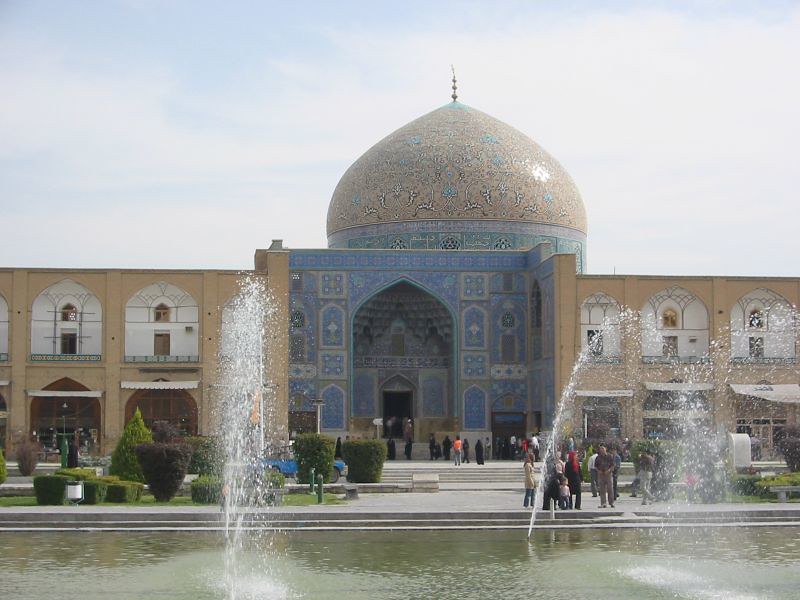
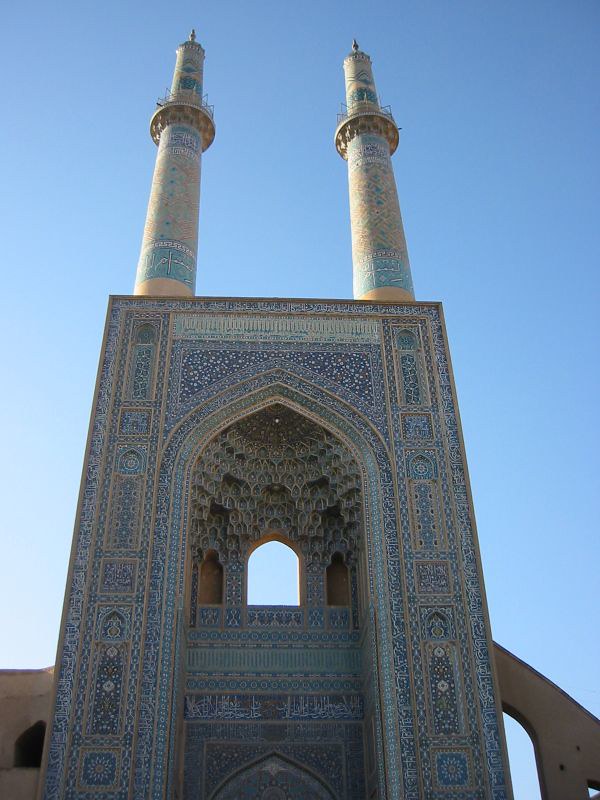
Then, like the click of a slide show I was off to the golden domes of Qom, through elegant Isfahan, the desolate, ancient beauty of Pasagardae and Persepolis and graceful Shiraz. I dashed across the Dasht-i Kavir desert, passing through Yazd long enough to explore its underground aqueducts. I spent one lonely night in Tabas, Queen of the Desert and then to Nishapur the gateway to Khorasan and Iran’s most wrecked, ruined and rebuilt city, which has survived earthquakes, Scythians, Turks, Mongols and Timurids. It was two short weeks of grasping memories from the jealous clutches of time; three thousand years of culture rushed by me in a blur until I arrived in Iran’s holiest city, Meshed, the chief object of my journey.

Once known as Sanabad, it was here, in 817 AD, that the eighth Shi’ite Imam, Reza, a direct descendant of the Prophet Muhammad, arrived after a triumphant tour of the Shi’a heartland. The Abbasid Caliph Ma’mun, a Sunni, grew jealous of the Imam’s rising popularity and imprisoned him. Fearing the Imam’s growing spiritual authority might mature into something more temporal, something the greedy Caliph could not allow, Ma’mun devised a plot involving pomegranates and poison, which were fed to an unsuspecting Imam who soon fell ill and died.

Immense waves of grief washed over the sands of Persia and the martyred Imam’s tomb quickly became a site of pilgrimage, one that attracted the scattered Shi’a of the Caliph’s far flung empire. Surviving invasions, earthquakes, rapine and ruin, the site, and even the name changed. Sanabad became known as Meshed—‘place of Martyrdom’—and Meshed turned into a booming modern metropolis sitting astride the old Silk Roads, some lead north to Samarkand and China and others west to the Levant and the Italian city states.

I crawled out of the car just as the sun set and walked into the hotel. Members of the Tajik national soccer team milled about the small, two-star hotel lobby; a curious mélange of Tajik, Farsi and Russian filled my ears.
“Passport please,” the attendant asked. I fumbled through my money belt but quickly complied.

I looked up, behind the desk stood a clean shaven young man with slightly receding hair and cheerful, pecan colored eyes.
“American?”

“Yes.”

“How awesome!” he exclaimed in perfect iomatic American English.
“Never met an one of you before,” he blurted excitedly

He came out from around the lobby desk, arms outstretched, exclaiming all in one breath, “This is the best day of my life.”

And hugged me.

After two weeks of kind salutations, warm welcomes and polite, almost infectious pride I still wasn’t prepared for an outpouring quite like this.

“So, now that I’ve hugged a complete stranger, do you have a name?” I joked, awkwardly.

“Amir Isazysadr,” he said, stretching out his hand.

“Sean-Paul Kelley,” I replied.

We shook hands vigorously. Full of contagious enthusiasm, I liked him instantly.

“Why Meshed? It is a big, dusty, ugly city, filled with too many people.”

“Gohar Shad,” I told him, as if in a whisper. “If I’m lucky I will see the Gohar Shad.”

“The mosque surrounding the Shrine of the Imam Reza is splendid,” he said.

“Are you Muslim?” he asked.

“No, I am not.”

“That is a pity my friend, because one pilgrimage to the Shrine of the Imam Reza is equal to 17,000 Meccan pilgrimages, or so say the mullahs.”

Between the late 9th and 14th centuries the area surrounding Meshed witnessed the collapse of the Abbasid Caliphate, an irruption of Turkic hordes into Persia and then the Mongol cataclysm. Through it all the pilgrims returned. Finally, Tamerlane’s son Shah Rukh, who, faced with the growing demands of pilgrims, enlarged the shrine in the early 15th century. His formidable wife, Gohar Shad, ordered the construction of a new congregational mosque around the Imam’s tomb as well, commissioning the Persian architect Qavam al-din Shirazi with the task. In the 1930s the shrine, by now a burgeoning complex in need of restoration, was again enlarged by Reza Shah. After the revolution it was enlarged once more to its present size encompassing more than 75 hectares in the heart of the city.

Since the revolution non-Muslims have been prohibited entry into the Shrine housing Imam Reza’s tomb, but the rules regarding the Sacred Precinct and mosque surrounding the Shrine are more confusing. Some guards let non-Muslims pass. Others do not. Sometimes it just depends on what day one visits. Aware of this maddening state of affairs long before I arrived in Meshed, it wasn’t until the night before my visit that I asked Amir and his brothers, who had come for dinner at the hotel, for help.
“What should I do? I want to get in, but I don’t want to see the Shrine, that would be disrespectful. I only want to see the Gohar Shad.”

“Talk to the guards, express to them your deep admiration for the art of our land,” he told me, winking.

“No,” said Ali, with a strange grin, “it would be best if he said nothing. Just act like an Iranian.”

Adel, the youngest suggested that I hire a local guide, one who might be able to bribe the guards.

“No bribes, not for this,” I replied.

The brothers looked at each other, said something in Farsi and laughed.

“What’s so funny?” I asked.

“You are funny. This is such a serious matter for you. But Ali is right. Just walk in. Say nothing to the guards. Act like you belong there.”

“So, I’ll have to brazen it out, yes?”

They laughed again, as if in on some secret.

“Yes,” said Adel. “I’m certain you will be fine.”

The next day I set off before late afternoon prayers. The walk from my hotel to the Sacred Precinct in the heart of the city was easy. I only stopped once for directions before I arrived.

I crossed the street, dodging traffic, stepped onto the large plaza and strode towards the entrance gates. A large family ambled slowly in front of me, the mother pushing a baby stroller. I followed them closely, better to blend in. A guard waved a security wand over and around me as nervous fear and excitement pulsed through me. He patted me down for good measure and sent me through the gates. Not a word was spoken until I was about ten meters away. I said nothing and kept walking.

Once inside the main gates I took a moment to absorb the outer plaza. Polished and sparkling in the sun the immense outer courtyard was paved in bluish marble. A thick wall of brick geometrical shapes rose up in front of me, not, however, high enough to block out the sun, as I shielded my eyes. Finally, I caught a glimpse of a small passageway, took three deep breaths and walked into the main quadrangle of the Gohar Shad.

For a moment all activity around me stopped. The colors were mesmerizing, as turquoise, pink, purple, yellow and green danced along the walls. Tall bands of ivory white kufic calligraphy topped four high iwans (monumental arches). Arabesques and floral patterns blended into the right angles of the courtyard. A perfect symmetry of light and beauty collided and caromed up and across the walls climaxing in a narrowing pointed arch, its niche filled with deep blue muqarnas. Sitting against a wall in a small niche I watched pilgrims enter the courtyard, hundreds of them milling about under the cerulean sky. Like the sacred spaces of any religion, they all come to participate in something personal but paradoxically bigger than themselves. Perhaps a few came, like me, hoping to snatch a hint of inspiration, to touch the walls and feel the echoes of the past on my fingertips. Or maybe there were others seeking surcease from their own troubles, finding peace at the foot of the Imam’s tomb.

A thick cloud covered the sun while the faint prayers of the devout rose up into the cool air of the courtyard. An inner calm came over me, that wondrous calm which is reserved for the summits of mountains, perfect sunsets and the birth of one’s children.
The call to prayer sounded. Thus, like many other more famous travelers before me, my time was cut short. Out of respect for traditions not my own, I left. I walked back to our hotel in contented silence.

Later that evening I ate a last meal with the Brothers Isazysadr. All three asked me the finer points of certain English words and taught me a few similar Farsi words, but cautioned me not to speak them in public or in mixed company. Towards the end of the night, Adel asked me about my day.

“I hear you made it into the Gohar Shad today, yes?”

“I did. It was worth coming all this way just to have ten minutes there.”

“Indeed, they let many foreigners in at this time, especially Americans. I think the Mullahs are trying to, how do you say it, ‘play nice’ with your government?”

Slightly crestfallen, I replied, “I didn’t know that. I thought I was sneaking in. Like a real adventurer, you know? You three knew all along I would get in, didn’t you?” The table erupted in laughter.

“Sean-Paul, my good friend,” said Ali, “nothing is ever as it appears in Iran. Surely you have learned this by now.”

Apparently I hadn’t. But I was catching on.
I Miss the Lies of the 1990s but I Don’t Want to Go Back

Watching this Richard J. Murphy podcast with John Christensen I was struck by an anecdote that Christensen shared about corruption on the Isle of Jersey in the late 1990s (note that I didn’t have time to confirm spelling of the proper names mentioned or fact check, so I’m redacting those):

John Christensen:I for quite a long time I had been very disillusioned with the government in Jersey. It’s become clear to me that by and large the the regulatory pro processes the laws in play and regulations in place were window dressing exercises and there was very very weak enforcement or compliance.

So the whole thing as far as I was concerned was a charade.

Late one January evening (and this is 1996) the phone went at my home and it was a Wall Street Journal investigating investigating journalist calling an and he started questioning me about a currency trader who was operating in Jersey and a subsidiary of the Swiss bank UBS.

The subsidiary was called [redacted] and and and a major churn client churning exercise which had cost a bunch of American investors tens of millions of (dollars).

And what he said was that the government of Jersey was thwarting any attempt at investigating this and allowing these investors who had lost tens of millions to have access to justice.

I said, “I know nothing about this whatsoever.”

He clearly thought I was bullshitting. He said, “But it’s your department that issued the license to the currency trader to trade in Jersey. (The trader) was not a Jerseyman, and it’s your department that gave him the housing or or supported his application for a housing license to rent property in Jersey.

And I said, “Well, to be honest, mate, I know everything that goes on in my department. I’ve never heard of this.”

He clearly thought I was a liar. And I did a deal. I said I will go in first thing tomorrow morning and check the files and if what you’ve said is correct then I will help you. I will cooperate.

Now I was in this extraordinary situation because I was a very senior civil servant. In fact I headed the government economic service. Part of my job was to work with international media.

I went in, checked everything he said, stood up and I realized that in order to circumvent me and my department, my boss, [redacted], the chief adviser…had gone round my back um and issued a license which should never have been issued and had given support for a housing consent which by policy should not have been supported.

And he’d done that because it turns out that at that at the time when this felony started, the most important politician in Jersey happened to be a member of the board of [redacted].

So here’s corruption in a very British form.

Another part of the corruption lay with the media in Jersey. BBC Radio Jersey never asked the the correct questions. The Jersey Evening Post never asked the correct questions; which were how the hell did this guy get a license to operate in Jersey and how the hell did he get a housing permit?

Because both were against government policy. And the reason they did that was because the Jersey Eden Post at that time belonged to a very senior politician which itself is corrupt.

This is all very British. This is the way things operate in Britain.

Journalists go to great lengths to not ask the right questions because they are themselves corrupted. …It was a staterun organ in effect at that period and it probably still is to some extent.

This anecdote raised conflicting points in my mind.

On the one hand, I admire the seriousness, technical expertise, and ethics of Murphy and Christensen. They represent the best of their generation and have multiple qualities I don’t see from younger reformers.

I also am nostalgic for an era in which a whistleblower like Christensen could actually make an impact by talking to the press. People were tried and convicted, etc.

That kind of thing is much missed in the Trump/Starmer era.

On the other hand, my lived experience of the 1990s contrasts so strongly with how the period is damned to be remembered historically that it inspires awe at the power of the dominant narrative in the West in that era.

The 1990s was the age of Sir Jimmy Saville after all.

In America we had Bill Cosby and Woody Allen, who may not have been knighted but had a comparable status as secular sages, beloved and admired.

Of course, we didn’t know then what we know now about Saville being a prolific sex predator, or Cosby being a serial rapist or in Allen’s case, people were trying to tell us, but many people were convinced his marriage to his ex-wife’s daughter was a love match.

We certainly didn’t know Woody was having dinner with Noam Chomsky….and a man we hadn’t heard of yet named Jeffrey Epstein.

It was comforting to watch the official propaganda of Ken Burns’ Civil War series on PBS and be reassured about the noble nature of both sides in that war and then follow it up with Eyes on the Prize which taught us that things had been bad in the racist past but the miraculous 1960s had solved everything.

Perhaps I was just young and naive, but in the 1990s it somehow seemed plausible to accept the mythologies of the capitalist west.

Things like the Iran-Contra Scandal or Watergate showed that there was corruption, but it was limited and could be dealt with.

After all, wasn’t that bright young Rudy Guliani bringing down the Mafia itself?

Hadn’t the evil empire of the USSR fallen without a war?

Hadn’t an American president united the whole world against Saddam Hussein’s aggression and fought and won a war to liberate Kuwait?

Even better hadn’t the Color Revolution in Serbia shown that Gene Sharp had distilled the non-violent revolutionary techniques of Gandhi and MLK into a formidable instrument for freedom?

From the vantage point of 2026, post-Enron, post-9/11, post-2008, post-Maidan, post-Trump/Brexit, post-COVID, it’s just as impossible to look back fondly at Gene Sharp and company as it is to enjoy the comedy of Bill Cosby with your kids.

Yes, it is upsetting and alarming to watch David Ellison’s CBS blatantly censoring a late night show or US Secretary of State Marco Rubio declaring a new era of colonialism, but perhaps it’s good that the lies of this era are so flagrant.

Pre-Internet Journalism Was Optimized For Information Transfer Efficiency, Post-Internet For Inefficiency

We’ve all seen the titles of articles “Big Company decides to do something BAD” or “This famous actor’ adorable dog saved his life!”.

Click bait. The information you want is “what the big company is what big company did what, or who the actor is.

Back when we had newspapers the titles would have been “X AI is making degrading nudes of people without their consent”. It would name the actor.

The rules of pre-internet Journalism were as follows: the most important information goes into the headline. The first paragraph summarizes the article and each paragraph after includes information in order of importance, with the least important information in the second last paragraph. The last paragraph sums up the article again.”

The rule of thumb I was taught is that half the readers only read the title and that you should expect to lose half the remaining readers per paragraph. I don’t think it was always that bad, and it varied by type of article, more people will read an entire book or movie review, for example, but the thrust of it was correct.

Newspapers knew that people wouldn’t read the whole article so tried to get the most important information to them first, the second next and so on.

Modern internet journalism optimized for clicks and for time on site. The title leaves out the important information to get a click. The article is often written so that the most important information is near or at the end, so you have to read all the way thru, with paragraphs before that being teases, meant to keep you reading.

One reason people are more likely to be ignorant today is simply this change from “get them the information they need as fast as possible” to “get them to click and stay on site as long as possible.” Bonus points if you can get them to click on more links inside your site. While strictly speaking internet news isn’t optimized for inefficiency, it might as well be: that’s the effect.

Overall I think that the internet has been bad for humanity. I don’t make this judgment call lightly, I make my living here, after all, and there’s a lot I love about the internet, especially the ease of looking up information.

Inefficient information transfer is just one part of why the internet has been bad for humans, I’m going to return to this issue over and over during the next few weeks.

This site is only viable due to reader donations. If you value it and can, please subscribe or donate.

Week-end Wrap – Political Economy – February 15, 2026

Week-end Wrap – Political Economy – February 15, 2026

by Tony Wikrent

They’re not capitalists — they’re predatory criminals

Why The Epstein Scandal Is Really A Billionaire Scandal – Barry’s Economics (YouTube)

Barry Ferns, Feb 8, 2026 [YouTube]

Everyone thinks Jeffrey Epstein was an aberration. The science says he was inevitable. This video breaks down the neuroscience, psychology, and economics that explain how extreme wealth concentration doesn’t just create inequality. but manufactures monsters.

00:00 – Introduction: The Elephant in the Room

02:04 – Part One: Power Rewires the Brain

03:30 – Part Two: The Empathy Gap and Isolation

05:19 – Part Three: Moral Licensing

08:13 – Part Four: Structural Impunity

10:50 – Part Five: Manufacturing Vulnerability

12.54 – Part Six: The Epstein Economy

15:53 – Stand-up Comedy Relief

The Epstein class and collapse porn 

Cory Doctorow, 09 Feb 2026 [Pluralistic]

… The latest batch of Epstein emails includes a particularly ghoulish exchange between Epstein and his business partner, the anti-democracy activist and billionaire Peter Thiel:

https://www.justice.gov/epstein/files/DataSet%209/EFTA00824843.pdf

The email is dated 26 Jun 2016, right after Brexit, and in it, Epstein writes:

  • “… return to tribalism . counter to globalization. amazing new alliances. you and I both agreed zero interest rates were too high, as i said in your office. finding things on their way to collapse , was much easier than finding the next bargain….”

This is a perfect example of what Naomi Klein calls “disaster capitalism.” It’s been the norm since the crash of 2008, when bankers were made whole through public bailouts and mortgage holders were evicted by the millions to “foam the runway” for the banks:

https://wallstreetonparade.com/2012/08/how-treasury-secretary-geithner-foamed-the-runways-with-childrens-shattered-lives/

The crash of 2008 turned a lot of people’s homes – their only substantial possessions – into “distressed assets” that were purchased at fire-sale prices by Wall Street investors, who turned around and rented those homes out to people who were now priced out of the housing market at rents that kept them too poor to ever afford a home, under slum conditions that crawled with insects and black mold:

https://pluralistic.net/2024/10/01/housing-is-a-human-right/

Note here that economic collapse helps the Epstein class only if society has no social safety net. If Obama had supported homeowners instead of banks, there wouldn’t have been a foreclosure crisis and thus there wouldn’t have been any “distressed assets” flooding the market.

So it’s no surprise that the Epstein class are also obsessed with austerity. Peter Mandelson (British Labour’s “Prince of Darkness”) is a close ally of Epstein’s, and also a key figure in the crushing austerity agenda of Blair, Brown and Starmer. He’s a machine for turning Parliamentary majorities into distressed assets at scale….

The thousand-plus children that Epstein lured to his island rape-camp were often “distressed assets” in their own right: Julie K Brown’s groundbreaking reporting on Epstein for the Miami Herald described how he sought out children whose parents were poor, or neglectful, or both, on the grounds that those children would be “on their way to collapse,” too.

The Epstein class’s commitment to destroying “The Economy” makes sense when you understand that trashing civilization is “much easier than finding the next bargain.” They want to buy the dip, so they’re creating the dip.

They don’t need the whole number to go up, just theirs. They know that inclusive economies are more prosperous for society as a whole, but it makes criminals and predators worse off. The New Deal kicked off a period of American economic growth never seen before or since, but the rich despised it, because a prosperous economy is one in which it gets harder and harder to find “things on their way to collapse,” and thus nearly impossible to “find[] the next bargain.”

[TW: On October 30, 2025 Patriotic Millionaires posted a summary of modern studies which prove the corrupting power of wealth. But the problem of the psycho-pathology of the rich has been known for centuries:

[“It is easier for a camel to go through the eye of a needle, than for a rich man to enter into the kingdom of God” is repeated three times in the New Testament, in Matthew 19:24, Mark 10:25, and Luke 18:25.

[In The Spirit of Laws, Book 5. Chapter 5, ”In what Manner the Laws establish Equality in a Democracy,” Montesquieu warned for “men of overgrown estates, everything which does not contribute to advance their power and honor is considered by them as an injury.…” ]

Why Do the Epstein Files Matter? An Expert on the Elites Explains Why

Mehdi Hasan and Team Zeteo, Feb 05, 2026 [via Naked Capitalism 02-10-2025]

In this can’t-miss ‘Mehdi Unfiltered’ interview, the Financial Times’ US editor and veteran columnist Edward Luce takes Mehdi on a deep dive into what it all means, and the who’s-who of those that appeared in the files, from Donald Trump, Steve Bannon, and Howard Lutnick, to Elon Musk, Noam Chomsky, and former Israeli Prime Minister Ehud Barak….
During the wide-ranging interview, the Mehdi and Luce also discuss:
  • The world leader that could be brought down by the latest release of the Epstein files (hint: it’s not Trump!)
  • Epstein’s deep involvement with Israeli and Russian intelligence services
  • Why Joe Biden and then-Attorney General Merrick Garland didn’t do anything with these incriminating Epstein files when they were in office….

It’s an MRI of how things work in a culture where shame has vanished,” Luce tells Mehdi.

[TW: If a reader has access, hopefully they will post a report or parts of a transcript.]

The slow Epstein earthquake: The rupture between the people and the élites

Alastair Crooke, February 9, 2026 [defenddemocracy.press]

Americans Want Accountability With the Epstein Files. Elites Couldn’t Care Less.

Dylan Gyauch-Lewis, February 10 2026 [The Intercept]

The list of elites who maintained close relationships with Epstein is long and includes prominent politicians, media figures, academics, and business leaders. In contrast, the list of people who have faced any meaningful consequences, at least in the United States, is so far quite short. Recently, Brad Karp, a top Democratic Party fundraising “bundler,” was removed as chair of the white-shoe law firm Paul Weiss after his extensive ties to Epstein were revealed. Peter Attia, the celebrity doctor and a new hire at Bari Weiss’ CBS News, resigned from a protein bar company after emails showed him making dirty jokes with Epstein. The economist Larry Summers was deemed toxic after a previous DOJ disclosure, went on leave from teaching at Harvard, and was unceremoniously dropped by numerous institutions. So far, that’s about the extent of it.

To be very explicit, this lack of serious consequences is a choice that powerful people in the United States are making. Meanwhile, in the United Kingdom, Prince Andrew is prince no more, reduced to merely Andrew Mountbatten-Windsor after King Charles removed all of his remaining royal titles; the former CEO of Barclays has been barred from the finance industry; the British ambassador to the United States, Peter Mandelson, has been forced out; Morgan McSweeney, Prime Minister Keir Starmer’s chief of staff and a Mandelson protege, was forced to resign under pressure; and Starmer risks losing his post over the Mandelson appointment. In Slovakia, the national security adviser to the prime minister has resigned. Accountability, if you care to enforce it, is in fact possible.

But on this side of the pond, elites have moved to protect powerful people with Epstein connections (themselves included). Donald Trump is the most obvious example; for any other president, the relationship between the two men would have been a fast track to impeachment. The documents also reveal how many powerful people maintained relationships with Epstein years after he was convicted of soliciting a minor for prostitution in 2008: Among them are former presidential adviser and current podcast bro Steve Bannon, Trump’s Commerce Secretary Howard Lutnick, Tesla et al. CEO and “MechaHitler” progenitor Elon Musk, LinkedIn co-founder Reid Hoffman, Palantir co-founder Peter Thiel, and Microsoft co-founder Bill Gates. Extensive redactions to the documents by the Justice Department have slow-walked matters even further, but on Tuesday, Rep. Ro Khanna took aim by reading off the names of “six wealthy, powerful men that the DOJ hid for no apparent reason” on the floor of Congress.

[TW: I want to break this out, as snark:

It is worth being quite clear here: This does not mean everyone who makes any appearance at all in the files needs to be excised from public life. For instance, the political commentators Megan McArdle, Josh Barro, Ben Dreyfuss, and Ross Douthat recently recorded a podcast episode titled “We’re All in the Epstein Files,” which notes that they all are there because of tweets that a third party shared with Epstein, mostly via a newsletter sent out by Gregory Brown. That sort of thing is not the point. In order to actually clean house, we need to be clear where the dirt is.

[A poster on Facebook argued that instead, we should use the same approach that ICE is using against undocumented aliens — round up, arrest and detain in some unknown place, everyone who appears to have had some connection to Epstein and Maxwell. Without due process, of course. What’s good for the goose is good for the gander.]

Epstein Files May Give ‘Blackmail’ a Whole New Meaning — What might Epstein buddy Leon Black have on Trump?

[Going Deep with Russ Baker, Feb 08, 2026]

Why Is Canadian Media Silent on Conrad Black Being in the Epstein Files?

Dougald Lamont, Feb 09, 2026

[TW: In the 1990s I was writing about Conrad Black’s shady business dealings at his Hollinger media cartel empire — half a billion dollars “lost” in two years in the late 90s — and helping trace his links to the British establishment that included former high level managers from MI-5 and MI-6. Black was a financial backer of one of the most destructive US neocons, Richard Perle. In the 1980s, Black gained control of the London Telegraph media group, and directed it to support Margaret Thatcher and Benjamin Netanyahu. Black’s holding also included the Chicago Sun-Times and The Jerusalem Post. Hollinger had an International Advisory Board which included Perle, Thatcher, Lord Peter Carrington, and Henry Kissinger. On the board of directors was Leslie Wexner, the man who appears to have provided the first big tranches of funds to Epstein. Black was convicted of financial crimes in July 2007, and sentenced to over six years in prison. In the past few years, he has been writing opinion pieces for the extremist conservative Epoch Times. Conrad Black is not related to Leon Black.]

Former police chief says Trump knew of Epstein abuse in 2006

[Drop Site Daily: February 10, 2026]

Former Palm Beach police chief Michael Reiter told the Federal Bureau of Investigation in a 2019 interview that President Donald Trump called him in July 2006, saying Jeffrey Epstein’s sexual abuse of teenage girls was widely known in New York and Palm Beach, according to a new report from The Miami Herald. Reiter’s account directly contradicts Trump’s public denials.

Bondi’s Binders: Failed State Ragebait — Why was the Attorney General screaming at Congress?

Jim Stewartson, Feb 12, 2026 [MindWar]

…Bondi’s motivations for signing up to Trump’s organized crime government are numerous. Her conflicts of interest are extraordinarily clear.

First, she was the Attorney General in Florida from 2011 to 2019, leaving office just a few months before Epstein was arrested by Bill Barr. For eight years, Epstein operated in her state without interference from law enforcement. In 2013, Donald Trump infamously donated $25,000 to her campaign, after which she declined to prosecute Trump University on fraud charges.

Either she knew what Epstein was doing and chose not to do anything about it, or she was too incompetent to know the most infamous pedophile in the world was still behaving like a pedophile in her state. Either way, she is personally invested in Epstein just going away.

Second, Bondi’s lobbying work is precisely aligned with the Trump regime. She was a lobbyist for private prison contractor GEO Group, whose main customer is ICE. And she was paid $115,000 per month to lobby Congress on behalf of Qatar.

Another recipient of Qatar’s largesse is Kash Patel….

Pam Bondi should be in jail for covering up for Jeffrey Epstein’s heinous crimes!

Dean Obeidallah, Feb 12, 2026

The consensus by the corporate media was that she was doing all this in the defense of her beloved Donald Trump. But what those media outlets are missing is that Bondi’s unhinged level of defensives was because she is guilty—and she knows it. Bondi has long protected Epstein and the powerful men who raped children and were trafficked women. She must be criminally investigated to determine if she broke the law doing this!

Before becoming US Attorney General, Bondi served for eight years as Florida’s AG from 2011 to 2019. That is the very state and time that Jeffrey Epstein was running his sprawling child rape and sex trafficking ring. As Trump’s own first term DOJ told us in a 2020 report, after Epstein was released from prison in 2009, he returned to his lavish lifestyle and was able to “continue his abuse of minors.”….

Attorney for Epstein Survivors Warns That Justice Is Impossible With Bondi as AG

[The Intercept, February 13 2026]

Short Take: Modern Infrastucture Miracles

~by Sean Paul Kelley

The Chinese rail network now carries 23 million passengers a day. Multiply that by 365 and it carries 8.365 billion passengers a year. And does not account for the increase in passengers during major holidays.

Now consider these two facts. First, India’s rail network carries 23 million passengers a day also. But it took the Brits and Indians 172 years to build out the network. China did it in under 30 years.

Second: California voted in 2008 to build a high speed rail network between Los Angeles and San Francisco with a completion date of 2022. Operations are projected to start in 2030 now.

Ponder that for a moment and then puke.

The future does not happen in America anymore.

Nota bene: Jan’s comment reminded me of something I saw in China. It was the summer of 2003. After the first big SARs outbreak. I was in far west China trying to get to India. At the time there was zero high speed rail. Understand? Zero. To get to Tibet and then Nepal and finally India I had to travel across Qinghai, starting in Goldmud where I ended up in Lhasa, Tibet.

If you’ll allow an old backpacking traveller a brag, I’d be grateful. At the time, every backpacker I ever met considered the Golmud to Lhasa bus trip the sine qua non of the complete backpacker/traveller. You could not consider yourself a true traveller if you had never made this journey. 40 hours above 10,000 ft. (3,050 meters), often times as high as 14,000 feet (4,267 meters) on a sleeper bus, in which every passenger has altitude sickness of one degree or another. Puke in the aisles. No clean up. Restroom breaks rare, maybe five the entire journey. It is a badge of honor I wear with pride to this day.

Late at night about 24 hours into the journey we drove in to a traffic jam of epic proportions. A crazed, disorganized, enormous traffic jam on a dirt road somewhere between Golmud and Lhasa high up on the Himalayan Plateau. It took an hour to get through. But what I saw mezmerized me like nothing else and I will never forget it. The Chinese, busy at Buddha knows what hour, building a High Speed Rail Link between Golmud and Lhasa, much constructed on damn near permafrost conditions. Look it up if you disbeleive me.

They did it. It’s a first class wonder, the new rail link, complete with oxygen bars, etc. . .

But me, I’m glad I did it the hard way. It has more meaning.

Lamentatio finalis: Our mad rush to adopt technology in every aspect of our lives has robbed us of many beautiful and rare experiences, many of which are gone forever. I’ll leave you with one example. In 2008 I took the ferry from Penang, Malaysia across the Straits of Malacca. It was a leisurely six hour ride from Penang to Medan, Sumatra. While making the crossing I saw just how strategic a waterway it was: the sheer mass of container ships was mind boggling.

When I returned to Malaysia in 2011 specifically to share with my father the experience of the ferry ride acrosss the Straits, the ferry had been shuttered by low cost airlines flying from Penang to Medan. To me that is a loss equivalent to someone torching a Rembrandt in a Dutch museum. Irrevocable. Gone forever.

Following Up My Silver Post By Answering A Damn Good Comment

~by Sean Paul Kelley

So, Marku asks:

But aren’t most of those contracts never expecting to take physical delivery? Just gambling, er excuse me, investment hedging?

Or is the problem that given that Comex price is under the real, that all those contracts *want* to be exercised in delivery so they can arbitrage to China (who has a real price?)

I’ve always found futures confusing, thanks for any help.

Answer is complex by I’ll do my best to simplify. I’m going to base my answer on much of what Dario says in this video, so it might be worth a watch for anyone interested in how the contracts are viewed at the Comex versus SHFE.

All contracts traded on Comex are designed to take physical delivery. Understood? They are designed for industrial hedging so corporations can smooth out their expenses on needed commodities. That said, under Clinton and accelerating under Bush, the CTFC made a whole raft of rule changes that changed the PRIME AIM of the commodities markets from honest price discovery into something resembling a casino. I’ll spare you the details, but I was in the business at the time and I still can’t believe what they did.

As for arbitraging Comex prices over those on the SHFE. Rumor is someone tried it–a Chinese trader–and got hammered hard. Main reason: the cost of shipping and arranging for delivery, even if, as rumored, he made the trade when there was a $20 USD premium at SHFE, and all the subsequent logistics of physical delivery, added up rather too quickly. But as a former arbitrage clerk myself, kudos to the brother for trying. Fortune does favor the bold. Until she doesn’t: fickle bitch she is.

Futures are identical to stock options: calls-are the expectation a stock will rise-and puts are the opposite. On the commodities exchanges you buy long exepcting the price to go up, but your buying price of the long give you the right to exercise it at that price not its current high, if it did go up. Buying short means you expect the commodity to go lower. You can also combine the two into a hedging bridge of sorts, where you give yourself the right to exercise the contracts within a range. This is what hedging truly is. Not hedgefund bullshit. I used to know the head commodities trader at Pioneer Flour Mills here in San Antonio and how he explained it was elegant. One of the reasons I went into the business.

I’ve never mentioned this before but what made me leave was a long time ago I was sitting first class next to a former international business man. He asked most of the questions, but the upshot is I was sitting next to John Perkins and the questions he asked me opened my eyes to what I was truly participating in. It was only a matter of time til I left.

The US commodities exchanges were originally established, and this was hammered into me when I took my commodities trader’s exam, for price discovery and sanctity of the market mechanism. Used to be you had to own or expect to take delivery of the underlying commodity you were hedging/selling/buying. Now you don’t.

At the SHFE the rules are much similar to the pre-Clinton era rule changes. And Chinese regulators are hardcore. They’ve shutdown at least 25 trading groups accounts last week alone for breaking the rules, which Dario explains in his video.

Hope this helped.


Page 2 of 4

Powered by WordPress & Theme by Anders Norén