Ian Welsh

The horizon is not so far as we can see, but as far as we can imagine

How to Think

If there is something this blog is about, it’s how to think. There’s an entire category, but it’s most of what I write about.

Thinking well isn’t about always being right, because you can’t be. It is about having models of the world that are:

  • Right often enough
  • When wrong, fail with the least harm possible and ideally with benefit.

Models are never true, they are always abstractions from the truth. Most of our models of the world are not reasoned, they are emotional and experiential. Science is a special form of experiential. The world turns out to be a very odd place indeed: It is not intuitive that there is action at a distance, that there is no transmitting medium (ether) in space, that gravity warps time and space, or that observation changes the results of quantum experiments.

There are two sets of knowledge, overlapping: knowledge of the external world and knowledge of humans and our society.

Society creates reality: The fastest way to get dead, from stone age hunter gatherers to today, is through your fellow humans beings, whether by violence or neglect. We are deeply attuned to the fact that ostracism equals death, and we will do almost anything to stay in with our group, whoever that group is. If that means believing patent nonsense, if that involves kowtowing to cruel leaders, if that involves becoming cruel and deranged ourselves, we will do it.

We will believe what we need to believe to stay with the group we identify with, to identify with the group that supports us, and be damned the consequences to anyone outside the group–or, indeed, anyone inside the groups. Norms will be maintained.

None of this is to deny change in norms over time, but only if those norms move towards greater kindness and greater truth, is changing of norms beneficial.

And only if successful regimes fail with least harm, and ideally beneficial side effects, are their claims to be better to be entirely believed.

The decision-making humans of our society almost all run a particular set of beliefs best called neoliberalism, a particularly harmful strain of capitalism. They believe in it, because they have benefited from it, and because everyone around them believes in it. If you don’t believe in it, you don’t get into power, with rare exceptions.

This set of beliefs has led to catastrophe after catastrophe, starting with the Russian transition from Communism, including the financial collapse and austerity, and certainly including ignoring the last chance to limit climate change to acceptable levels.

Because capitalism is fundamentally based on greed and selfishness, and because its metaphysics says that price is equal to value and should be used to guide behaviour, it is failing damagingly–despite however much it has otherwise accomplished.

It is not that these failures were not predicted by many, they were. But they were not accepted as failures and no action was taken to prevent them because to accept and act, in too many errors, was to make oneself unfit for power.

Not of the group. Unclean. Unclean.

Not serious.

World models have consequences. How people think has consequences. Our tribal nature and ability to identify with virtually anything has consequences.

Because our power over the natural world has increased so much, errors and characteristics which were adaptive during most of our evolution are now catastrophically dangerous. Extinction level dangerous. Not just for us, but for all too many other species with whom we share the globe, many of whom are more than capable of immense levels of suffering.

So how we think, matters. And figuring out how to think better, not just for a few, but for the many, matters.

And because feeling is most of thinking, this means figuring out how to feel better, more accurately, and more kindly, as well.

More on this soon. In the meantime, read this model of the role of reason and emotion.


The results of the work I do, like this article, are free, but food isn’t, so if you value my work, please DONATE or SUBSCRIBE.

A Note on Kulturkampf and the German Elections

(USUAL DISCLAIMER: By Mandos)

I haven’t written much about tomorrow’s German elections because from an immediate geopolitical standpoint, they don’t necessarily mean that much. Merkel will remain in power most likely, although the coalition math may not work out so easily or comfortably, with the worst case scenario being a return to elections. The constellation of parties that form the coalition are likely to be ones even more hostile to Greece and to reform in favour of southern European economies. This is partly because Merkel’s party itself has done its utmost to project the idea into the German consciousness that the problem with southern economies is not liquidity but rather corruption and inflexible employment laws (keep in mind that German employment law is itself much, much less flexible than that of any developed English-speaking country, as far as I know).

One remarkable feature of this election is the very likely entry of the Alternative für Deutschland (AfD; “Alternative for Germany”) party into the German parliament. This will be the first time in a long time that an openly national-exclusionary party will be represented in the Bundestag, and it is very likely a result of the same forces that kept Merkel in power. Remember that most non-German commentators were thinking of Merkel’s refugee stopgap (it was never a genuine, willing opening regardless of propaganda — but rather a way to deal with an emergency that European treaties had not foreseen) as political suicide, because most non-German commentators don’t read German and have less familiarity with German political culture than they do the far more legible (to anglophones) French political culture, for example.

In reality, Merkel’s choices in the refugee crisis cemented her popularity with a large portion of the German electorate while deeply alienating another portion, roughly corresponding to the old West/East divide that a lot of Germans like to pretend has been magically overcome. Overall, Merkel is seen as having made a difficult decision to deal with the immediate situation caused largely by the collapse of Syria, and then to make a series of complex, morally complicated decisions to stem the flow with minimal direct use of German or EU-based force, such as the Turkey deal and the more recent Libya deal. Especially in the time of Donald Trump, Merkel revealed qualities that a lot of the German electorate values — being capable of making “Solomonic” decisions that preserve key German interests, most importantly the external trade surplus and internal banking stability, while even managing to help a few people and keeping German hands at least cosmetically clean.

As for the alienated portion of the population (link in German), some of whom are now willing to vote for a party that more than hints that it wants to take back German regret for the Holocaust (via carefully chosen code words of course), they presently confirm what we know about present-day right-wing populism, and are therefore more “legible” to analysis along the lines of other countries than the rest of the German political spectrum. For one thing, they are largely not in relative terms poor or unemployed, although they may feel more precarious than before. The German SPD, another social-democratic European party in crisis, attempted to run a traditional campaign based on redistribution and better social services and does not appear to have made much headway against the AfD, because AfD voters are not concerned about this. Rather, they are focused on the belief that they would be even better off if there weren’t any refugees, and they largely belong to the part of the population that expects to have control over the racial and cultural composition of their neighbourhood and has a deep-seated emotional preference for homogeneity, which they justify post hoc.

Assuming poll results are true, one challenge for the stability German society with regards to forces like the AfD will be to find a way to politically cordon off this persistent segment of voters from most forms of political influence, a challenge assisted by Germany’s proportional representation system, as well as to deal with the real challenges of immigrant economic integration posted by recent and on-going geopolitical events. That, of course, in addition to the upcoming difficulty in squaring the circle of a trade surplus inside the Eurozone without fiscal transfers, which is a whole other story and will rear its ugly head doubtless in the next and future Bundestag mandates.

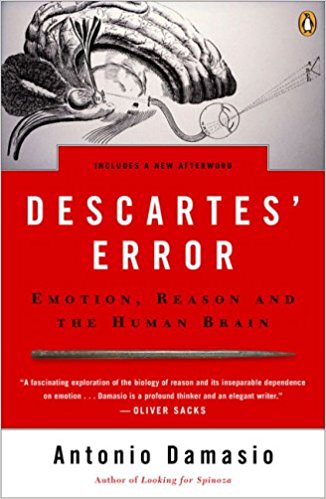
Review of Descarte’s Error, by Antonio Damasio

This book is a bit long in the tooth now, having been published in ’95. The role it suggests for emotion in the use of reason is, in generalities, no longer controversial. But it was a landmark book for me, when I read it, and it’s still relevant and worth reading.

There’s been a LOT of work around how reason and emotion work together, or don’t. One popular model is “thinking fast and thinking slow,” with emotion as primary in the first, and reason the second.

There’s truth to this, but it’s only a partial truth. In complicated situations, reason does not work alone and can’t.

The human mind is limited, it simply cannot hold a lot of information at one time. Working memory holds about seven bits of information. Some people have a little more, some a little less, and there’s some variation on how much can be held based on the complexity of what is held.

Impressive memory tricks are mostly a result of clumping information into meaningful bits. One strategy for memorizing numbers is to do them as times, for example, making each bit longer.

Logic can work in two ways: sequentially and in parallel. In parallel it can only work up to the limit of working memory. Sequentially we can work through logical chains, but long chains run up against the working memory limitation in their own way–after a time, we don’t really remember the chain.

Humans, for all that we pat ourselves on the back a lot, are fundamentally stupid. It’s just that most other animals are terrible, and those who might be about as good as us or even better are, in some ways, handicapped otherwise, in terms of hands, and/or language, and/or lifespan (octopi), and so on.

Damasio notes that the realm of pure reason is very limited. Most decisions are not obvious. One example he gives is of a patient who has lost the ability to feel emotions trying to decide when his next appointment should be.  It’s not obvious, and he can’t do it, he can spend hours trying to decide.

This same patient, however, in a potential motor vehicle accident where there is an obvious solution, has no problem. Because he feels no emotions, he does the right thing and it’s no big deal for him.

Emotions are really body-states. You feel all emotions in your body. If you don’t, you don’t feel an emotion. (Meditation will show this to you experientially, if you wish.)

We remember emotions and we re-create them as necessary. (Remember the last time you hugged someone you love, feel the emotion. To enhance it, stand and physically mimic hugging them.)

We assign these emotions even to very subtle things, like logical propositions and thoughts on subjects.

When a problem is too hard to deal with using pure reason, when it’s not important enough to subject to pure reason, or when there is no time for pure reason (because logical thinking is, indeed, SLOW), we refer to our feelings, and we go with the one that feels best (or least worst).

Thinking is rarely divided into “pure reasoning” (slow) or “pure feeling” (fast), most complicated decisions use both.

More to the point, most hard decisions are hard because they aren’t clear: There isn’t an obvious logical choice.  They’re close calls, and, in such decisions, we will go with the decision that feels best.

So pure reason is rare, slow, and usually only used for decisions that are, actually, clear cut.

This has a lot of implications, but the one I want to end with is this: Your emotional map of reality is most of your intelligence and if your emotional map of reality (or any decision space within reality) is not accurate, you’re going to make a lot of bad decisions.

This, though Damasio does not go into it, is where ideology and identity come into things. Through those two methods (and anyone who doesn’t think they have an ideology is a fool), we build emotional maps we then layer on top of reason. If our identities or ideologies are screwed, we make bad decisions.

This is an important book to read. Even if all details are not accurate, it is a necessary antidote to a lot of foolishness about how thinking and decision-making actually works.


The results of the work I do, like this article, are free, but food isn’t, so if you value my work, please DONATE or SUBSCRIBE.

Meditation, Cultivation, and Spirituality Books (Part One)

I’ve been meditating, on and off, for about 14 years. Only in the last three years or so did I start to get much in the way of results from it.

Meditation and cultivation practices do things. They have real effects on people, especially if done diligently and well. Certain practices, done wrong, can mess you up, in much the same way that physical exercise, done wrong, can injure you–sometimes permanently.

One of my friends described to me the time he ran a meditation class for yoga teachers in a major American city. My friend is fat, over 250 pounds, and the yoga teachers were the elite: fit, supple, glowing with health. As they came into the room, and looked at him, he could see what was going through their minds.

He said, “All the time you have spent perfecting your bodies, I have spent perfecting my mind. Let us begin.”

(The body and the mind aren’t really two things, but hey…)

This became so long I’ve split it into two parts. I’ll link Part Two when it is published, most likely Friday.

All that said, let’s start.
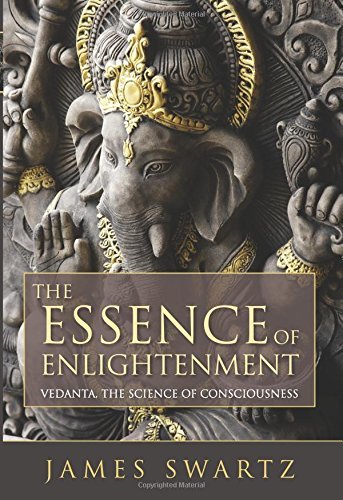
The Essence of Enlightenment, James Swartz

Judging by how dog-eared this book is, it’s probably my most read cultivation book. This is the clearest explanation of one type of enlightenment I’ve ever read.

Swartz belongs to the Jnani-Yoga style of cultivation, specifically Indian Vedanta. This is a knowledge based method, where the cultivator uses reason to understand the reality of experience, eventually arriving at witness-consciousness: You view the world and yourself as something you’re just watching.

This is an accurate portrayal of how the human mind, or rather body, on close introspection, actually works.  The feeling of making choices is illusionary, and when you look at the body, thoughts, emotions, or other sense objects, you find that none of them are you (alternatively, they all are, but that’s not what this book is about).

We aren’t trained to think that way; it is not intuitive, and Jnani Yoga and Vedanta are good antidotes: They are logical arguments which help to stop the mind from screaming “bullshit” (as many readers probably are).

This book, while brilliant, is limited in certain ways. Swartz has little time for meditation as commonly understood, other than the close examination of arguments he prescribes Karma Yoga, which is doing things without worrying about the results. While Karma Yoga definitely works for some people, and is a good attitude for anyone on the cultivation path, meditation can be useful for many people.

Another problem is that Swartz expects people to be “qualified,” which means detached and basically psychologically healthy. Most people coming to cultivation aren’t as healthy as Swartz requires for success; people come because they’re hurting.

The third “issue” is that Swartz’s enlightenment, witnessing consciousness, isn’t quite the only kind. There’s another, where one becomes “that in which everything exists and from which everything came,” and there are different interpretations than “witness,” such as Buddhist “no self.” (And blah, blah, other forms that are too complicated and tedious to go into here.)

Still, I recommend this book very highly. It may be the first clean look at where you’re trying to go you read. And, having dealt with Swartz a bit, he’s a good guy, who is genuinely trying to help.
The Mindful Geek, Michael Taft

Some people need their meditation instructions served atheistically with a side of science. If that’s you, Taft has you covered. This falls into the general class of books that explain how meditate and add scientific studies about meditation either working, or studies about the brain which support the mental models on which meditation is based.

Taft is an instructor who works primarily in the tradition of Shinzen Young, who has a very detailed and complicated system of primarily Vipassana (investigatory) meditation. Modern mindfulness, to use Shinzen’s own term. Shinzen and Taft are both the real thing, in my opinion. They’ve put in the work over decades.

This book includes quite a few different styles of meditation, but it’s primarily about noting meditation. You introspect, you examine something, you attach a word or phrase to it, you move on. I came to this style late, but it’s very effective and there are people it’s taken, essentially, all the way. (I find it boring, but that doesn’t mean it doesn’t work.) It has a very Theravada Buddhist feel to it, though Taft’s background is mostly Zen and Hindu.

And you don’t have to believe a thing about God, spirit, souls, or anything else. It’s all completely materialistic.

A good first book or a good book for those with some experience looking for other types of meditation than what they started off with.
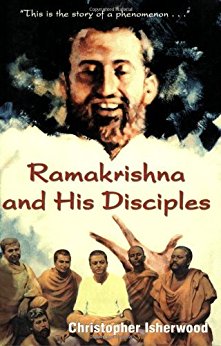
Ramakrishna and His Disciples, Christopher Isherwood

So, Ramakrishna was a famous Hindu Holy man, a Bhakti (devotional, ecstatic worshipper) of Kali. His main disciple, Vivekananda, was the first person to introduce Hindu spirituality, including a form of meditation, to the modern West.

This book isn’t useful if you’re looking for instruction. It doesn’t include much on how to meditate, and most of it is firmly in the theistic camp: For Ramakrishna, God exists, gods existed, he saw them regularly, and talked to them and so on. This is, for atheists, a full on crazy.

But Ramakrishna was a seeker, he wanted to experience every type of Awakening. He did have the full non-dual realization (and that’s much of what Vivekananda spread to the West), but he spent time worshipping as Muslim, a Christian, and seeking out experiences of a variety of Hindu Gods.

Firmly on the “right hand” side, he was celibate, lived in a temple and didn’t like tantric practices (no sexual practices here, no sitting on corpses in graveyards, etc.).

Right, so with all that, why read it?

Partly for Bhakti-style cultivation: Intense love for a divine figure or guru, works. It really, really works. That sort of absorption in one thing unifies the mind very well and heals it of a lot of its psychological issues too.

This is the sort of practice which leads to “If you see the Buddha on the road, kill him.” Pouring everything into the love of your god, to get the final liberation, you have to transcend the God. Ramakrishna had to “wield the sword of non-discriminatory knowledge” and “kill” Kali to get there. Then, having done so, he hung out with Kali a bunch more, because, hey, why not?

A lot of people on the theistic path get stuck just short of the big realization because having a personal, loving relation with God (or Guru standing in for God) is really, really nice and they don’t want to give God up.

But this book is also, well, lovely. Ramakrishna is lovely and touching. The world he lives in, of Gods and spirits and, well, magic, is lovely. The stories are great. They’re of people who live lives that most of us in the West can barely conceive, full of gods and devotion. Most see this as craziness.

I’ve read this book a bunch of times, and loved it each time.
Joy On Demand, Chade-Meng Tan

When Tan wrote his book he worked for Google. His title, printed on his business card, was “A Jolly Good Fellow, Which Nobody Can Deny.”

So there’s that.

This is a meditation manual. It’s one of the better ones I’ve read. The fact about meditation is that it can often be a shit show: There comes a point where garbage you’ve suppressed (or not) starts coming up, and it sucks. And in certain practices there can be a lot of pain and suffering.

A lot of meditators stall out when they hit this point, they quit. Meditation is so often sold as being wonderful that people can’t handle when it turns to crap.

The best antidote for that, other than truthfulness, is emphasizing joy and bliss and happiness in meditating. The right types of meditation really are wonderful experiences AND having that wonderfulness as a base from which to work will make everything else so much easier–including some of the unavoidable crap that comes up.

Tang’s manual is oriented towards getting you that base, to making meditation enjoyable as quickly as possible.

This is an excellent way to start meditating and if your practice has stalled out, it’s an excellent way to restart it. The enterprise of reducing or ending suffering shouldn’t be some sort of grim death march.

Tang has an odd sense of humour, which all readers may not like. But the book is an enjoyable, easy read, with enough explanations of technique, theory (so you know why you’re doing it and stick with it), and stories to keep you going.

Remarks

I’ll have a number more books next time, and some theoretical explanations of what you’re doing and why. In the meantime, if you want a first book, Taft’s or Tang’s will do you well. If you want to know why you’re bothering, read Swartz’s “Essence of Enlightenment,” and if you want to visit a wild and crazy–but wonderful–world, read about Ramakrishna and his disciples.

If none of these work for you, I’ll have at least two more books suitable to starting to meditate in Part Two, along with various other, scrumptious reads.


The results of the work I do, like this article, are free, but food isn’t, so if you value my work, please DONATE or SUBSCRIBE.

Obama’s Just the Enemy and Always Was

One of the most amusing things about the 07/08 primary season was how often Obama praised Reagan and how few people took him seriously. Obama thought Reagan was great and said so repeatedly.

“He put us on a fundamentally different path because the country was ready for it. I think they felt like, you know, with all the excesses of the 60s and the 70s, and government had grown and grown, but there wasn’t much sense of accountability in terms of how it was operating. I think people just tapped into — he tapped into what people were already feeling, which was, we want clarity, we want optimism, we want a return to that sense of dynamism and entrepreneurship that had been missing.

What’s important about this is that Obama agrees with Reagan about what was wrong with America.

He also felt, correctly, that Reagan was a transformative President, but Obama wasn’t one, because what Obama did was follow Bush: He enhanced the security state, cracked down further on civil liberties, deported more people, ran TARP and the bailout, and so on. Obama was the person who institutionalized Bush, not a President who turned in a different direction.

Fundamentally, Obama agreed with Republicans on a lot of key issues, he just didn’t always want to do as much (no more tax cuts). Even Obamacare was a Republican plan, something Republicans have forgotten.

None of this is to say Obama did no good things; of course he did, but overall he was disastrous.

A lot of people, however, want to say that isn’t what was in his heart. For them, I offer this:

Barack Obama rang Conservative headquarters on election night with a mistaken but reassuring message for Theresa May because Labour insiders had told him the party was expecting to lose seats, according to a new book about the election.

Shortly before the exit poll, which sent shockwaves through both party headquarters, the former US president contacted a friend in Tory central office with the soothing news that Labour was expecting to see the Conservatives increase their majority.

It’s really impossible to overstate how evil the Tories have been. These are people who literally have been taking wheelchairs away from cripples. They’ve tripled the deficit, de-funded health care and generally acted as cruelly as possible.

A particularly egregious example is the following.

The thing is, if you follow the British news, you know this is what Tory policies are designed to do: Shove the most vulnerable people off any support. Examples are legion, and for every case that makes the media, one knows there are many, many more.

This is cruelty by design. The Tories tripled the debt largely because of tax cuts, austerity, and bail outs for rich people, and then they tried to make some of it up on the backside by hurting the most vulnerable people; people who were not responsible for the financial crisis and have not benefited from the tax cuts.

This is what Obama is okay with–this is what he prefers to a social democrat like Corbyn.

Obama’s just an evil man. He has always been an evil man. He has spent his time since office hobknobbing with billionaires and getting rich off the very people he helped bail out as president, and whom he refused to prosecute despite their clear crimes.

He’s just a bad man. He was never left-wing in any sense, and he’d rather see vast amounts of cruelty than see any sort of social democrat anywhere near power.

Again, for the dull, this does not mean he is not better than, John McCain, say. It just means that he’s still evil, still a bad man, still someone whose hatred of the left is so strong he’d rather see cripples losing their wheelchairs than have the left win.

The enemy.

For America, or the world, to improve we need to start electing people who are, on balance, good, not evil.

We simply cannot expect to routinely elect evil people and have good results come from it.


The results of the work I do, like this article, are free, but food isn’t, so if you value my work, please DONATE or SUBSCRIBE.


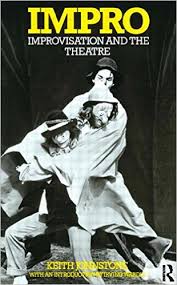
Review, Impro, by Keith Johnstone

The subtitle is “Improvisation and the Theatre,” but this is a book for far more than people involved in theatre, and one of the most profound I have read.
Johnstone started as a teacher, and specialized in “problem children,” whom he found to be the most imaginative and bright students, rather than those students who are simply compliant with teacher.

I have two favorite anecdotes from this book. The first is that when teaching drama students, Johnstone would sit on the floor, while the students were in chairs. He would tell them that if they didn’t achieve the abilities the class was teaching it was his fault, not theirs, because he was the teacher.

By the end of his introductory spiel, they would all be off the chairs, sitting on the floor with him, because they didn’t want to be “over” someone treating them as he was.

Johnstone would try and make students feel completely safe, and he found that as people learned not to censor themselves three layers would emerge.

The first was sexual: Often wildly, inappropriately sexual.

The second was a deep fear of God (remember he was teaching more than 50 years ago now) and of Hell, combined with anger and hatred.

The third and final layer was a deep tenderness.

(This is fairly similar to my experiences with meditation. Human nature, stripped of fear and desperate desire, appears to be essentially love. Most people never strip off enough to experience more than brief flashes of this, however.)

Johnstone has a long disquisition on status which is fascinating and useful far beyond the theatre. His analysis that higher status people own more space than lower status people, and that servants own no space, is brilliant.  His breaking down of conversational domination opened up whole vistas of understanding how people talk in real life.

But this is my favourite quote from the book:

I once had a close rapport with a teenager who seemed ‘mad’ when she was with other people, but relatively normal when she was with me. I treated her rather as I would a Mask – that is to say, I was gentle, and I didn’t try to impose my reality on her. One thing that amazed me was her perceptiveness about other people – it was as if she was a body language expert. She described things about them which she read from their movement and postures that I later found to be true, although this was at the beginning of summer school and none of us had ever met before.

I’m remembering her now because of an interaction she had with a very gentle, motherly schoolteacher. I had to leave for a few minutes so I gave the teenager my watch and said she could use it to see I was away only a very short time, and that the schoolteacher would look after her. We were in a beautiful garden (where the teenager had just seen God) and the teacher picked a flower and said: ‘Look at the pretty flower, Betty.’

Betty, filled with spiritual radiance, said, ‘All the flowers are beautiful.’

‘Ah,’ said the teacher, blocking her, ‘but this flower is especially beautiful.’

Betty rolled on the ground screaming, and it took a while to calm her. No one seemed to notice that she was screaming ‘Can’t you see? Can’t you see!”

In the gentlest possible way, this teacher had been very violent. She was insisting on categorizing, and on selecting. Actually it was crazy to insist that one flower is especially beautiful in a whole garden of flowers, but the teacher is allowed to do this, and is not perceived by sane people as violent. Grown-ups are expected to distort the perceptions of the child in this way. Since then I’ve noticed such behaviour constantly, but it took the mad girl to open my eyes to it.

Reality isn’t, mostly. That’s not  to say there aren’t real things, and objects and so on, most of it is filtered so heavily that we never see the world minus huge amounts of connotation and framing we picked up from other people and pass on, too often rather like a virus. A great deal of what passes for us as wrong, escalating to mad, is really just people who refuse to live in our particular reality. (Other madness is, of course, far more serious.)

There’s a vast amount of information here, of course, on how to do improvisational theatre and my theatre friends tell me it’s great, even foundational. The most important points are to always accept prompts (don’t shut down what your impro mate is doing, but run with it) and to not try to be too clever, because too clever doesn’t flow from whatever was given to you and the audience won’t buy it or get it.

But this book is one I keep coming back to because so much of it is about what it means to be human, how to retain our imagination, and how not to drown in social conditioning. It’s a fundamental book, one which deals with the deepest issues and illuminates them. Recommended for everyone.


The results of the work I do, like this article, are free, but food isn’t, so if you value my work, please DONATE or SUBSCRIBE.

Real Existing Brexit

(MANDOS POST, YOU HAVE BEEN INFORMED)

I know that on the left-wing side of the aisle, there are some people who support the idea in itself of the UK leaving the European Union and agree with Corbyn-Labour’s original pro-Brexit stand. There are some theoretical arguments in its favour that boil down to how you interpret EU law on nationalizations — I have heard arguments both for and against the idea that the EU is a practical barrier to re-nationalizing privatized British public enterprises.

But whatever the case may be, Real Existing Brexit is another story, and there’s currently every reason to believe that Theresa May’s version of Brexit is going to be an epic mess. There are ways to do Brexit “well,” and all of them start from a clear-eyed view of what it means to leave the EU and the groundwork that needs to be done to prepare for departure. That groundwork involves, among other things, ending austerity (which the UK can mostly do as it is not a Eurozone country) to make the investments in infrastructure and human capital to create greater within-border self-sufficiency and leverage for making favorable future trade deals, if desired. This preparation would have needed to start a few years before any kind of referendum.

But what the UK is getting is Tory-Brexit, the Brexit of right-wing fantasists dreaming of tax arbitrage and empire. Tory-Brexit may, in the worst case scenario, kick off with a hellish traffic jam at Dover and Calais. And the mess it may create may well propel a Corbyn-led Labour party to a Parliamentary majority. But if that happens, Corbyn will be left with not only a mess on his hands, but a lot of constraints.

Because, you see, without having done the necessary groundwork, Britain will be very much a trade-dependent country. Corbyn would not have a big “honeymoon” and may not have much time before the public would expect him to “turn things around.” And unfortunately, that will involve establishing new trade relations, but under highly unfavorable conditions.

If you catch my drift, I’m saying that what a potential Corbyn government might have to go through in the future is the sort of dilemma that plagued Syriza and Alexis Tsipras in Greece. And you probably remember how popular that was around these parts. No bargaining chips, but a desperate need to create relations.

Note that I am not arguing that Brexit shouldn’t happen — it should, in some form, because that is the only way to resolve one of the problems that lead to, well, Brexit-scenarios. That problem is that people don’t really get what they voted in favour of. They need to start experiencing the outcomes of their collective choices. It’s too bad for the many UK residents voted against Brexit, but that’s how representative democracy works. The best-case scenario for Britain would probably be some kind of Norway-style solution, but, again, that is not easy to organize, and it requires crossing what appear to be many red lines for Tory-Brexit hardliners.

Fiction We Loved as Adults

I thought it would be nice to share books we loved after leaving high school, or thereabouts. As with the previous post on childhood books, all off-topic comments will be deleted.

As before, I make no claim any of these books are “good,” only that I loved them.

The Spenser Novels, Robert Parker

Ostensibly first person “tough guy” detective novels, these are really extended meditations on the good life: what sort of person one should be, how one should act, what’s worth doing and not doing. Spenser has created the person he wants to be, and it’s a person that comes with high costs.

The dialogue is good, the plots are sometimes good, the characters become old friends and cliches over the length of the series. All the books are not as good as each other. Still, they were comfort food bestsellers for years.

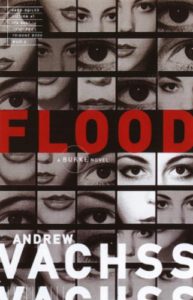
The Burke Novels, Andrew Vachss

Also first person tough guy detective novels, but very different from the Spenser novels, except for the characters pushing hard into power-fantasy territory. Burke’s down and out, his obsession is catching pedophiles, and his world is nasty. I found these depressing when I read them in my early 20s, and I stopped reading them after the fifth, as my mood no longer went with them.

But they’re good. And the shit world they depict is one too many people live in. Start at the beginning, with Flood.

The SPQR Novels, John Maddox Roberts

I wrote a long review of just these novels. They’re fun detective stories set in the late Roman Republic. Carried a couple with me whenever I traveled for years. Highly recommended.

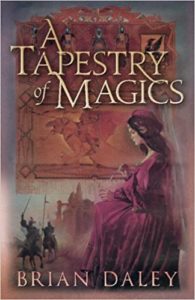
A Tapestry of Magics, Brian Daley

There is a place, which attracts pieces of other realities, ruled by an immortal king (who is almost certainly Conan), where much that is lost, be it armies, lovers, or vampires often wind up.

It is the story of Crassmor Tarrant, the ne’er do well son of a powerful family, and features three linked novellas about his life, showing his fall from his father’s grace and his heroics as a nearly outcast knight errant who wants nothing to do with heroics, but only to return home safely to the woman he loves.

Crassmor is delightful: He’s clever, cynical on the surface, and somewhat tired. Unlike a lot of protagonists he’s not stupid about, say, the opposite sex or how the world works: He’s a carouser and womanizer and gambler.

This book is a love letter–to Robin Hood, Conan, courtly knight stories, and far more besides. The author loves his world and his characters and it shines through. And it’s fun.

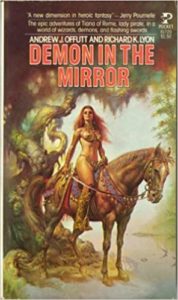
The Wizard War Series, by Andrew Offut and Richard Lyon
Offut’s one of those authors who wrote a lot, and none of it worked for me, except this one series with Lyon.  The protagonist is the pirate Tiana Highrider. She’s ridiculously overconfident, believes she never feels fear (but often does), very clever, and quite funny. In the first book, she and her foster father go on separate quests to find the pieces of the body of a deceased wizard so they can bring him fully back to life, at which point he will consume their souls and ignite a wizard war.

Her father, a black ex-cannibal, writes his part as letters to his daughter, and they are hilariously on point: Caranga may have adopted Tiana, but his character flaws are hers; she’s his daughter.

The first book sets in motion a war between the two greatest wizards in the world: Prye and Ekron, placing Tiana naturally at the center. (There’s an actual, plot-driven reason.) The second two novels aren’t quite as fun, but they’re still a gas. The world building is excellent, and the secondary characters exhibit the same sense of fun.

Sword and sandal in its feel, with Conan style magic (it’s always bad), I’ve read this series over and over and loved it every time.

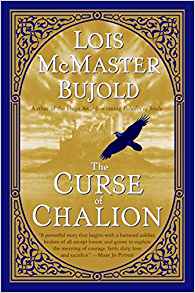
The Curse of Chalion, by Lois McMaster Bujold
Bujold has written a LOT of novels, they’ve almost all been bestsellers, and her longest running series is the Vorkosigan series.

I don’t think Bujold has ever written a bad story, though some are definitely weaker than others (those books primarily intended as romances tend to fall flat to me, and I don’t dislike romances).

But of all her books, and I love many, I love the Curse of Chalion the most.  The protagonist is a man broken by war and slavery. Once a noble commander, when we meet him he is poverty ridden, ill, and hoping only for a servant’s job in the castle of an old master he once loved.

That doesn’t turn out to be the case, of course. He wants only peace, but driven by love, he winds up in service to a princess at the heart of a massive power struggle in a corrupt court, whose weak king has given his power to an ambitious and ruthless man; because the family is under a great curse.

In terms of plot, this book is about the resolution of the power struggle and that curse, but what it’s really about is faith and divinity and what the Gods can and can’t do. Even though it’s a universe where the Gods definitely exist, their powers in the world are sharply limited: They can do little to nothing without the aid of mortals, who have free will, and can shut them out.

And the curse can only be lifted by the Gods, who need the aid of a mortal.

But the price of faith is high, and the Gods, even though good, do not act as mortals would have them do. Faith requires, well, faith, as it does in our world, and this book turns out to be probably the best meditation on faith I’ve read, despite its fantasy setting.

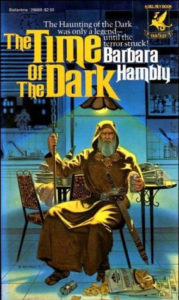
Time of the Dark Trilogy, by Barbara Hambly
Hambly’s another author I’ve loved for a long time. She’s got her obsessions, like most, and her characters tend to fall into definite types. In addition to this series, The Ladies of Mandyrign is probably her best.

This series starts off as many fantasy novels once did by taking the protagonists from our world (late 1970s California) into the fantasy world, where there is a rising threat of squamous shapeshifting horrors which float on the wind and consume mind and soul of their victims.

Civilization is shattered, the protagonists cannot be sent back and they flee towards safety. One becomes a wizard, the other a warrior, both try to survive and hope to find a way to defeat the Dark, delving into the history of their previous defeat, using the skills of the female protagonist, a doctoral student in history.

This is a bunch of things: there’s a couple love stories, both good; there’s a meditation on what it means to be a Wizard–“you must love things for themselves before they will give themselves to  you”; there’s a long story of church/state infighting and intrigue; There’s a world with politics and empires and kingdoms that make sense; there’s an investigation of what makes a good warrior and what makes someone willing and able to kill as a calling; there’s love and hate and lust for power and curiousity and magic, and; all the good stuff.

It starts a bit rough, being Hambly’s first, but roars on.

I can’t recommend everything Hambly’s written, not even every book set in this world, but the first three, the trilogy, are part of that set of books I’ve read and re-read, and carried with me on innumerable flights.

And Hambly’s interesting. Her world view is interesting. If it gets a bit tiresome by book ten, well, it’s one worth knowing.

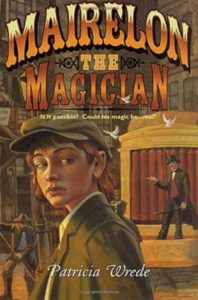
Mairelon the Magician, by Patricia Wrede

Regency England street urchin and thief Kim is hired to find out if a traveling magician has a silver bowl. The magician catches her, and offers to take her on as his apprentice.

The catch, he’s a real mage, not just a stage magician.

This lovely book is escapade after escapade, bordering on farce. Both Mairelon and Kim are delightful, scrappy and lack much in the way of a sense of self-preservation, leading to endless scrapes.

The book ranges from the back streets of London to high society; a druid lodge, a Bow Street Runner and a country estate, with the protagonists plowing gleefully on.

It’s also charming and touching; Mairelon is a good guy, and Kim’s tough and clever. Light as angel cake, but twice as fun.

Concluding Remarks

Fiction can be about ourselves, but I enjoy it most when it’s about someone who is not much like me. I’ve been me all my life, fiction lets me see the world as someone else, and it often lets me see world’s I’ve never seen, whether they’re fantasy worlds, science fiction worlds, historical worlds, or just parts of my world that Ian will never see.

Tell us about fiction you loved as an adult in the comments.


The results of the work I do, like this article, are free, but food isn’t, so if you value my work, please DONATE or SUBSCRIBE.

Page 343 of 532

Powered by WordPress & Theme by Anders Norén