
Ian Welsh

The horizon is not so far as we can see, but as far as we can imagine

The Rule of Alienation and Stability

One of my favourite sights is people complaining that marginalized people don’t understand that their support for Bad Politician-X results in fucking themselves.

“Sure,” runs the line, “their lives suck now. But they’ll suck even worse if this guy gets into power.”

This is often (but not always) true. It is also irrelevant.

The rule is simple: Alienated people are always targets for alternative political movements. Sometimes those movements are good, sometimes bad. But if you don’t want this to happen, your society has to give alienated people genuine expectations of a better future when they play within the system.

When a huge number of people, a plurality, feel that they have little hope for a better future, and a realistic expectation for a worse future, they are willing to roll the dice, even if the odds are bad. After all, they already know that the current world is shitty and the future is worse.

It does not matter if this seems irrational on cost/benefit scales; what matters is the chance, rather than what they see as a certainty.

Now, understand always, that sometimes what is offered IS better. FDR was better. So was Huey Long. Corbyn in Britain will be better than the status quo. (This is why the voting gap for youngsters disappeared for him. Young people vote when they are offered what they need.)

Sometimes it is worse, if not in the short run, then in the long run. Or, if not for you, then for other people in your society (see Hitler and Mussolini for cases of both).

People who love the status quo, who want it to continue, have to make it work for most people. If their policies, no matter how reasonable they seem to the beneficiaries of the current system, whatever it is (Ancien Regime France, for example) plunge a plurality into despair, that plurality will always be ripe for turning on the system.

It really is that simple? Love your system? Okay. Make it work for almost everyone. In excess of 90 percent. Not because you are moral or ethical, most of you probably aren’t, but out of sheer self-interest.

If you don’t, don’t whine when those you left behind decide to take almost any chance to change things.


The results of the work I do, like this article, are free, but food isn’t, so if you value my work, please DONATE or SUBSCRIBE.

 

Meanwhile in Hungary

*** MANDOS POST ***

The Hungarian government, led by Victor Orbán, the great defender of the worker from the hordes of cheap labour and cultural contamination knocking on Hungary’s doors, has decided to pass a law that:

  • Drastically raises mandatory overtime for 250 to 400 hours.
  • Allows employers to bypass union negotiations and make agreements with individual workers.
  • Allows employers to pay out overtime over three years, rather than one.

The combined changes make it possible for employers to make Hungarian workers work a six-day week rather than a five-day week.

Orbán is widely considered the leading figure of the “nationalist international,” promoting “family values” that will protect ordinary working people against the social and economic dilution brought about by liberal attitudes to culture and immigration. In reality, this type of nationalism (perhaps all types?) is not a real protection for the worker and typically presages a different set of extractive and exploitative compromises with capital.

Meritocracy? What Meritocracy?

From Saez, Chetty, et al

So, unless you think that genetic potential is that unequally distributed (and can explain eras where this chart did not apply, as in the post-WWII decades), you can pretty much forget “meritocracy.”

Meritocracy is just a way of saying, “We test for the things the middle and upper classes have the resources to prepare for their children.” And that’s before we get to the extra opportunities having wealthier parents gives one simply from network effects.

Fairness and justice are obviously big issues, but just as bad is that many of these people might contribute in a huge way, and are never given the opportunity.

Stephen Jay Gould once said:

“I am, somehow, less interested in the weight and convolutions of Einstein’s brain than in the near certainty that people of equal talent have lived and died in cotton fields and sweatshops.”

These days, McDonalds, Walmarts, and Amazon warehouses…


The results of the work I do, like this article, are free, but food isn’t, so if you value my work, please DONATE or SUBSCRIBE.

Is the Afghan War Lost?

Danny Sjursen makes the case at the American Conservative.

The piece as a whole is worth reading, but the bottom line is that the Afghan government’s own military and police are hopeless: They are losing to the Taliban. The US military, with current force levels, cannot hold most of the country. Unless the US is willing to surge again, it will lose the war.

And even if it surges, that won’t win the war, it will only delay the inevitable.

Before the Afghan war, I remember reading an interview with the Taliban ambassador to Pakistan, which I’ve since been unable to find. He said, paraphrased, “You will invade. You will take the cities. We will retreat to the countryside. You will not be able to destroy us. You will eventually leave and we will win.”

It struck me as prophetic at the time, and it has played out exactly as he expected.

The US is incapable of “nation building,” serious insurgency warfare, and is bad at occupation. (This wasn’t always the case, but it is now.)

The strategy, if there was to be a war at all, should always have been to go in, accomplish limited goals, and be out within three months–six at the most.

(This is somewhat true of Iraq, where the US should have knocked over Saddam, had a proscription list, and picked its Colonel to lead the country, leaving within six months. The difference is that a Colonel might have stood a chance in Iraq, no one but the Taliban is going to rule Afghanistan without ongoing foreign support.)

The US was always going “lose” in Afghanistan if it did not limit its goals sharply. The only question is how many people will die before the US gets tired of the ulcer and leaves.


The results of the work I do, like this article, are free, but food isn’t, so if you value my work, please DONATE or SUBSCRIBE.

Our Germophobic, Plastic-addicted Society

Recently saw this picture, and had to laugh, because you’d never see this today in the West.


Every sandwich, today, would be individually wrapped, at the least in plastic wrap, but probably with a hard plastic container as well.

We are a bunch of germophobes, but it serves us ill. When I was a child in Malaysia, there was a rule among the ex-pats. The kids who were kept from all contact with “local” germs, were sick as heck. (One friend had his toys boiled regularly. He was sick all the time.) Those of us who were allowed to have normal contact, had no more illnesses than the locals (less, because we were properly inoculated and so on.)

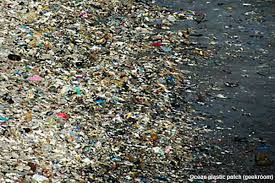
Meanwhile we have vast stretches of ocean which are clogged by plastic. Plastic is showing up in both marine and terrestrial wildlife, and making its way into our own food-chain.


The rule for all consumer goods, and indeed, all manufacturing, should be that if it doesn’t degrade, or the manufacturer doesn’t guarantee recycling, with a bond posted to ensure performance and lack of strategic bankruptcy, it doesn’t get made. In those rare (and they should be very rare), cases where as a society, we want to make an exception, waivers should be required, and they should be paid for: the cost should be multiple of the monetary damage they do by not being recyclable. (At least two times, and multiple because monetary damage is not the only damage.)

Add to this laws and enforcement of laws banning “planned obsolescence” and we might be well on our way to un-fucking our environment. Or, I suppose, we could continue to prioritize short-term profit, neurotic fear of germs, and convenience. I mean, who gives a shit if our children and grandchildren have a planetary environment which can support life at the worst, or an environment which is incredibly unhealthy (which plastic’s estrogenic effects have already created)?

(Note: I’m in the hospital (serious, but unlikely to kill me), so things like comment moderation may not happen until I’m out, or may be delayed. Likewise, typos and other errors are unlikely to be fixed.)


The results of the work I do, like this article, are free, but food isn’t, so if you value my work, please DONATE or SUBSCRIBE.

Admin Notice

I’m going to the hospital for major, but unlikely to be serious, surgery. I’ll most likely be in for ten days to two weeks, with two months recovery after that. I go in Tuesday.

The odds of death are about 1 percent. In that unlikely event, all my writing goes into the commons (with attribution), not to any heirs, and people may scrape this site or whatever. Those with preview copies of “Construction of Reality” should share them in case of death. People with author rights can post here if they want until the domain registration expires. (This is only if I die, eh? No posting or commons-ing without permission (posting permission has been given to Mandos) until you hear I have died or I’m brain dead or something.)

More likely, I’ll be fine, just not enjoying myself much. I’ve put some posts in the queue for the two weeks I’m likely to be in the hospital. Moderation of comments may be non-existent, so if you get caught in moderation (an automated process, remember) please bear up. Other people with modding rights might check in, but they might not.

I’ll likely hang out on Twitter a bit while in the hospital if you want updates–hospital is borrring!–@iwelsh. I certainly hope all my readers will be having a better time than I’m likely to be!

The French Yellow Jacket Protests

So, there are major protests across France, protesting Macron’s policies. Macron has raised fuel taxes and removed worker protections, among other things. He is a neoliberal’s neoliberal, who believes in free labor markets (a.k.a. markets where workers can be easily fired, made to work overtime, and so on.)

His popularity rating is 20 percent, there is no chance that he will be re-elected, and he is unlikely to give in to any protests–both because he is a true believer and because his future is assured if he pushes through as much destruction of France’s social state as possible. He will be rewarded by the rich.

Some of the protests have been somewhat violent (I am not all that impressed by property violence as “terrible”), and, of course, the French police have brutally beaten many protestors. It always amuses me to watch the so-called brave surrounding a man to kick him while he’s down. Any man who participates in such a beating outs himself as a coward, the same as any man who tortures someone who cannot resist.

While it seems unlikely, it wouldn’t bother me if the current French state was overthrown.

More likely, what will matter is whether La Pen or Melenchon (who is a real left-winger) wins the next election. Hopefully the French are not so stupid as to vote for another pretty neoliberal.

Little that has been done by Macron, or other neoliberal twats, cannot be undone if a government is elected with a mandate to do so.


The results of the work I do, like this article, are free, but food isn’t, so if you value my work, please DONATE or SUBSCRIBE.

Deportation

**MANDOS POST**

I notice there’s been a sort of low-key, left-wing argument going on lately about open borders. I’ll lay my cards on the table and say that when it comes to the movement of people, I consider myself an open borders supporter, and by no means consider that an inherently “neoliberal” position as some people claim, depending on your definition of neoliberalism (something that is rarely fully resolved…).

There are a lot of reasons why I take the open borders position for humans — despite being less positive about the flow of goods and capital, to say the least. Some of those are arguable, such as the impact on wages and so forth. But there’s one show-stopper issue for me with the concept of enforced national borders — the enforcement part. Enforcing national borders necessarily requires a concept of deportation. Why? Because until we have a Star Trek force field and magical entry authorization detectors and a flawless, uncorrupt border control system, “unwanted” people will always get in. And then the border only means anything if you can remove those who cross it illegally.

But removing them requires not only a police force given the responsibility of exercising physical violence to control a non-violent crime, it also necessarily requires the entire apparatus of the carceral and surveillance state. For example: Due process must be given in order to deportation power prevent abuses (very common), but this requires preventing the object of deportation from “running to ground” to avoid enforcement of a negative outcome. Which requires jails, courts, and so on, and for nation-states of any size, all these things at quite a large scale. In order to catch border-violating individuals, a surveillance state of great power and detail (indeed, such as now exists and expands) must be implemented. Indeed, if it is not, then the worst wage effects of an undocumented labour class ensue quite logically.

Do I need to explain why a comprehensive carceral and surveillance state is a very bad thing, and indeed, how bad it is?

For this reason, I find it hard to take left-wing critiques of free movement and defenses of borders seriously until they engage with the topic of enforcement and particularly the mechanics of deportation. It is all well and good to say that people shouldn’t have to leave their communities of origin for employment, for important family reasons, or for their own amusement, and here we would all like to see, I hope, a world in which that is the case. It’s another thing to argue for a regime that works to stop people from moving, for whatever reason. And I suspect the overlords of the world are, as a group (if not individually), just fine with either regime, at least depending on the ascendant faction.

Page 318 of 532

Powered by WordPress & Theme by Anders Norén