Ian Welsh

The horizon is not so far as we can see, but as far as we can imagine

FINISHED — Matching Donations up to $1,000 Total

FINISHED

The matching donations are now met, thank you to everyone who donated!

A donor has generously offered to match all donations, up to a total of $1,000 or till Friday midnight (the end of the fundraiser.)

When we’ve reached the total, if we do before the end, I’ll put up a post, subject to vagaries of being awake and at a computer.

My sincere thanks to this donor, and everyone who has given.

DONATE OR SUBSCRIBE

Open Thread

A lot of commenters have off-topic stuff, so here’s an open thread. Enjoy.

Fundraising Update and the Art of Thinking

We have raised $9,353. That means we’ve reached the first two milestones, and I’ll write sixteen reviews of books with useful information.

The final milestone is at $11,000, and is to be a booklet, “How To Think: Understanding the World.”

The fundraiser will end at midnight this coming Friday, June 28th.

DONATE OR SUBSCRIBE

I deeply appreciate all the subscriptions and donations. They will make a difference to my life. So thank you to those who have given. (And ongoing subscriptions are counted in the donation total, at three times the monthly amount.)

Let’s talk a little more about the booklet, in case we make it to the $11,000 milestone.

One of the great problems with thinking clearly is that it’s anti-survival and anti-inclusion.

It is safest in almost all circumstances, and certainly best for one’s career and better for staying good with one’s social circle, to simply agree with the beliefs of whatever groups we belong to.

If you are wrong in the same way as other people around you, and especially as important people, then you will not be blamed when things go wrong.

So to think accurately it helps to be an outsider, or to cultivate an outsider’s mindset.

At the same time, to think well about social issues, you also have to understand insiders, people who rarely have a thought or belief that is different from their social groups.

This is tricky psychologically. Generally, people who grew up or live in a society but who feel like outsiders have the best chance of pulling it off. They still have to live in that society, so for their own protection and survival they need to understand the in-groups, but the lack of identity gives them distance and some objectivity, if they aren’t too bitter.

Relatedly, in the same way that we often understand other people better than we do ourselves, there are times when we can see other societies more clearly than most people who live in or have more knowledge of that society. Because we are outside, we can see the forest.

And then, sometimes, lack of knowledge does trip us up. It’s hard. And adjusting the telescope/microscope to find the right scale is one of the tricks of analysis and understanding.

Also important is identifying what scales you’re good at, and places where you are unable to take the outside or inside view. You can then find ways to compensate, if possible, or you can simply stop trying to understand if you decide it’s not worth it. (For example I’ve simply accepted that I’m not very good at predicting elections any more. I know why, and I could try to calibrate, but it’d be a lot of work, I might not be successful, and it’s not important for me to be able to predict elections because I have very little ability to influence them or take advantage of that sort of prediction.)

At any rate, if the booklet is funded, we’ll deal with issues like this and many others.

If you want to see it written, please subscribe or donate.


Week-end Wrap – Political Economy – June 22, 2019

by Tony Wikrent

I apologize for the absence from last week. My computer crashed last Saturday night, and blew away a chunk of the operating system, so could not be rebooted until placed in the hands of a skilled PC doctor.

Strategic Political Economy

Facebook’s plan to create a global currency are insane and must be resisted. Ten good reasons: (
[Twitter by Nicholas Shaxson, author of Treasure Islands: Tax Havens and the Men Who Stole the World, via Naked Capitalism 6-21-19]The way we structure money and payments is a question for democratic institutions, not technology companies.
By Matt Stoller [New York Times, via Twitter 6-20-19]

There are four core problems with Facebook’s new currency. The first, and perhaps the simplest, is that organizing a payments system is a complicated and difficult task, one that requires enormous investment in compliance systems….

The second problem is that, since the Civil War, the United States has had a general prohibition on the intersection between banking and commerce. Such a barrier has been reinforced many times, such as in 1956 with the Bank Holding Company Act and in 1970 with an amendment to that law during the conglomerate craze. Both times, Congress blocked banks from going into nonbanking businesses through holding companies, because Americans historically didn’t want banks competing with their own customers. Banking and payments is a special business, where a bank gets access to intimate business secrets of its customers. As one travel agent told Congress in 1970 when opposing the right of banks to enter his business, “Any time I deposited checks from my customers,” he said, “I was providing the banks with the names of my best clients.”

Imagine Facebook’s subsidiary Calibra knowing your account balance and your spending, and offering to sell a retailer an algorithm that will maximize the price for what you can afford to pay for a product. Imagine this cartel having this kind of financial visibility into not only many consumers, but into businesses across the economy. Such conflicts of interest are why payments and banking are separated from the rest of the economy in the United States….

The third problem is that the Libra system — or really any private currency system — introduces systemic risk into our economy…

We should not be setting up a private international payments network that would need to be backed by taxpayers because it’s too big to fail.

And the fourth problem is that of national security and sovereignty….

Years ago, Mark Zuckerberg made it clear that he doesn’t think Facebook is a business. “In a lot of ways, Facebook is more like a government than a traditional company,” said Mr. Zuckerberg. “We’re really setting policies.” …The way we structure money and payments is a question for democratic institutions. Any company big enough to start its own currency is just too big.

Restoring balance to the economy

“Poor People’s Moral Budget: Everybody Has the Right to Live” (PDF)

[Rev. Dr. William J. Barber II and Rev. Dr. Liz Theoharis, Poor People’s Campaign, via Naked Capitalism 6-19-19]

From the “Findings”:

The United States has abundant resources for an economic revival that will move towards establishing a moral economy. This report identifies:

  • $350 billion in annual military spending cuts that would make the nation and the world more secure;
  • $886 billion in estimated annual revenue from fair taxes on the wealthy, corporations, and Wall Street;
  • and Billions more in savings from ending mass incarceration, addressing climate change, and meeting other key campaign demands.

The below comparisons demonstrate that policymakers have always found resources for their true priorities. It is critical that policymakers redirect these resources to establish justice and to prioritize the general welfare instead. The abundant wealth of this nation is produced by millions of people, workers, and families in this country and around the world. The fruits of their labor should be devoted to securing their basic needs and creating the conditions for them to thrive. At the same time, policymakers should not tie their hands with “pay-as-you-go” restrictions that require every dime of new spending to be offset with expenditure cuts or new revenue, especially given the enormous long-term benefits of most of our proposals. The cost of inaction is simply too great.

Lambert Strether notes: “This is, if not MMT, at least MMT-adjacent. It focuses on resources, not money, and it wants to drive a stake into PayGo’s heart-equivalent-if-any. The report is also a useful baseline for Democrat presidential candidates.”

Ellen Brown: The American Dream is alive and well — in China
[Public Banking Institute 6-22-19]

In her latest article in Truthdig, PBI Chair Ellen Brown asks why, if Chinese workers are desperately poor and exploited as we are led to think, a whopping 90% of Chinese families can afford to own their homes, in one of the most expensive real estate markets in the world. One major reason, she argues, is that the Chinese government and its state-owned banks support workers and local businesses, making the cost of living for Chinese families much lower than in the US.

“[Implementing] a form of monetary expansion that would allow Congress to relieve medical and educational costs, grant cheap credit to states to upgrade their roads and mass transit, and support local businesses could go a long way toward making American workers competitive with Chinese workers. Unlike the U.S. government, the Chinese government supports its workers and its industries. … Meanwhile, the U.S. model has been regressing into feudalism, with workers driven into slave-like conditions through debt. In the 21st century, it is time to upgrade our economic model from one of feudal exploitation to a cooperative democracy that recognizes the needs, contributions and inalienable rights of all participants.”

The Failure of Establishment Neoliberal Economics

An E-Book Reader

A small break from more serious posts. I’m the sorta guy who takes a book almost everywhere. When I was younger I’d grab a paperback and read it while walking wherever I was going. I certainly never get on a bus, train, or plane without a book, and often multiple books.

And as for classes at school and university, well most of them are about an 80 percent waste time to anyone who’s done the reading so I usually bring a book as well. (To this day, I still loathe people who don’t do the reading, so that the professor thinks they should recapitulate it and wastes everyone else’s time. Also, profs: Don’t do that!)

So, anyway, yes, normal books are nicer than e-books, and most e-book formats which handle footnotes or text boxes or images badly (well, all formats, but maybe I’ve missed something), so if it’s a book where those matter, a print version is important.


(I am fundraising to determine how much I’ll write this year. If you value my writing and want more of it, please consider donating.)


All that said, buying a good e-book reader, ummmm, changed my life? I hate using that phrase about a consumer purchase, but the fact is that the books are cheaper and I can buy them so much more easily that it’s vastly increased how many books I read.

I got out of the habit of reading tons of books with the rise of the internet. The problem with that is that while the internet is nice in many ways as long as you don’t become addicted to social media, reading online articles is not the same as reading books. It cannot substitute in terms of actual learning or enjoyment.

I had already started a move back to books before I bought an e-reader, but the ease of it ramped it to the point where, today, I’m back to teen rates of reading at least a book a day, and often two or three. (Four or five happen occasionally.)

Cheaper, more convenient, and the e-reader is small enough that I can stick it in a large pocket. And when I finish one book, there’s always another.

Anyway, e-readers: One of the few things I really like about the late telecom revolution. (As much as I love the internet and have made much of my living on it for two decades now, I’m not sold that it’s overall a good thing and I don’t like smartphones much at all, even though I have one.)

(Oh yeah. E-readers have been used to hurt the publishing industry. Absolutely. But that’s a policy matter and could be fixed with policy.

What pieces of tech have actually made your life better?

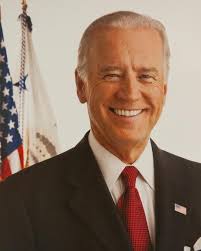
Another Biden Problem

Matt Stoller, who was a Congressional aide, wrote an important article on Biden back in April.

… Biden is a bad candidate. Obama was exceptionally disciplined, and Biden is not…

…Basically, Biden combined two traits that work against each other. He’s lazy. Staffers can deal with that, if the lazy person is willing to delegate. But Biden doesn’t delegate important decision-making authority. He won’t write a speech beforehand to clear it with political allies, and he also won’t just read the damn talking points.

This means important things don’t get done, because he won’t do them, and he won’t let others do them. It is a nightmare to work for someone like this, because the staff never knows if there’s going to be a scandal. They never know if the boss is going to straight out lie to their own staff about it and have them ruin their own reputations and connections with political allies. They will not be able to defend Biden because it’s impossible to defend someone who isn’t trustworthy, unless people go full Trump and deny reality openly.

Given that Biden has a decent shot at being the President of the United States, I’d suggest reading the whole article.


(I am fundraising to determine how much I’ll write this year. If you value my writing and want more of it, please consider donating.)


The obvious similarity is, actually, Trump. The same type of mismanagement and laziness. Biden’s politics are different, and essentially the same as Obama’s, but a bit more retrograde: Biden is a neoliberal corporatist.

He’s less retrograde on social issues than many people think, mind you. Obama was against gay marriage until gay activists and donors took him out to the curb (something people forget). But Obama would bow to pressure on things that didn’t matter to him, like social issues.

He wouldn’t bow on key items, like making sure bankers were made whole, though, and Biden will be similar.

But Biden will also be, effectively, incompetent, even though Stoller notes he’s talented. All the talent in the world means little when he won’t do the work and won’t let anyone else do it.

So, not that anyone who reads me was likely to do so, I’d suggest not supporting Biden in the Democratic primaries.

DONATE OR SUBSCRIBE

Why Would Iran Attack Tankers?

Well, if it did.

Let me tell a story, possibly apocryphal. Back in the 1970s, the Russian (USSR) ambassador supposedly had a talk with the Pakistani leader of the day. This is what he is reputed to have said.

” I do not know who will be in charge in Moscow in ten, twenty, or even 50 years. But what I do know is that whoever is there will want the same things then, that we do today. You can trust us, not because we pretend we are your friends, but because we are consistent.

Anyway, remember, that we’ll come back to it.

In the meantime, on June 13th there were reports that two tankers had been sunk in the Gulf. Claims were made they were sunk by Iran.

I shrugged. Important people want war between Iran and the United States, and in such a situation it’s hard to know what’s true and what’s not. I moved on with my day.


(I am fundraising to determine how much I’ll write this year. If you value my writing and want more of it, please consider donating.)


But yesterday I discovered an interesting fact. Before the two tankers were sunk, something else happened:

On June 5, 2019, a huge fire consumed a storage facility for oil products at the Shahid Rajaee port in the southern Hormozgan Province. Located west of Bandar Abbas, the Shahid Rajaee port is Iran’s largest container shipping port. Reportedly, a vehicle used for transporting shipping containers exploded and caught fire. Since there were oil products near the site of the explosion, the blaze spread quickly to several tanks and storage sites and caused heavy damage to the port. The spreading fire set off huge explosions which shot fireballs and heavy smoke high into the air.

On June 7, 2019, six Iranian merchant ships were set ablaze almost simultaneously in two Persian Gulf ports.

First, five ships “caught fire” in the port of Nakhl Taghi in the Asaluyeh region of the Bushehr Province. Three of these ships were completely burned and the two others suffered major damage. Several port workers and sailors were injured. As well, at least one cargo ship burst into flames and burned completely at the port of Bualhir, near Delvar. The fire was attributed to “incendiary devices” of “unknown origin.” The local authorities in the Bushehr Province called the fires a “suspicious event” and went no further.

Oh hey.

So, assuming the Iranians did attack the ships, they were retaliating.

Iran has long said that if they can’t get their oil to customers, no one will get oil to customers through the Gulf.

Yeah.

But this has bigger consequences. The real problem is simpler: The US made a deal with the Iranians, under Obama, then repudiated it when the President changed.

The US has arrogated to itself the right to impose sanctions on anyone it wants, for any reason, with no recourse by the victim. It is using this “right” in an attempt to remove Iran’s government.

The US cannot be trusted. Every few years, it changes. You can’t make a deal and be sure it will be honored for any length of time, let alone 10, 20, or 50 years.

Americans who squeal about Trump being an aberration both miss the point (your system allowed him) and are wrong: Bush attacked Iraq based on lies, and everyone knows it. Hilary Clinton promised the Russians that Qaddafi would not be removed, then removed him and gloated about him being killed after being raped by a knife.

The US can’t be trusted.

So the larger consequence is that a coalition of countries, including multiple oil producers, China and Russia are moving to sell and buy oil in a bundle of currencies which does not include the US dollar, and where no payments go through the payment system which the US can control (systems like SWIFT, to slightly oversimplify).

Dollar hegemony is one of the main supports of American hegemony. Misuse of dollar hegemony to attack other countries has brought us to this point.

I’ve been a bit of a broken record on this issue, but that’s because it’s been the obvious consequence of the US Treasury’s misuse of its powers.

Other great powers and their allies can put up with a cruel, even an evil, hegemon. What they will not put up with is a capricious one whom they cannot predict.

DONATE OR SUBSCRIBE

 

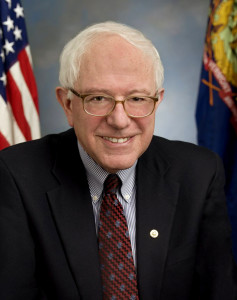
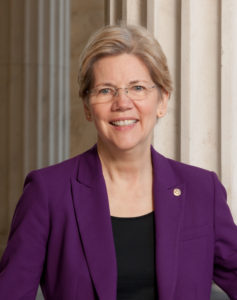
Bernie Sanders vs. Elizabeth Warren

Bernie Sanders

Many supporters of either Sanders or Warren have become rather vicious to each other. The claim from the Warren supporters is that their candidate is the candidate of ideas, having put out tons of policy proposals. (Sanders has 25 last time I looked, so he’s not shy on this.) She’s younger, and it’s important to some people that she’s a woman.

But the basic thing is that Warren feels like a technocrat, and people who want a competent technocrat as President are drawn to her.

Sanders has ideas as well, and plans, but he’s different from Warren. Warren has said that she’s “capitalist to the bones” and that the problem isn’t capitalism, it is that capitalism needs rules (enforced rules.)


(I am fundraising to determine how much I’ll write this year. If you value my writing and want more of it, please consider donating.)


Sanders is a democratic socialist. He believes that capitalism has its place, but he believes it is fundamentally flawed. He has harked back to FDR’s second bill of rights, which include rights to health, education, a home, and a good income, among others.

Matt Taibbi’s interview with Sanders makes this clear:

He goes on to elucidate probably the biggest difference between himself and Warren.

“In the words of Roosevelt,” he says, “the Republic at the beginning was built around the guarantee of political rights. But he came to believe that true individual freedom can’t exist without economic security.

Elizabeth Warren

To Sanders, capitalism isn’t a good system that we’ve managed badly, it’s a flawed system which needs to be heavily controlled. Nor does he believe that the problem with the left is a lack of ideas. It is a lack of power. The left has ideas, the left has not been able to implement those ideas for decades because the left was out of power.

So, what is required is not to just get good rules back in place. It is to completely subordinate markets to democratic control, and when they are not the best way to do something, remove them.

Leaving these domestic issues aside, Sanders is clearly superior to Warren on foreign affairs, though certainly nowhere near ideal. (Tulsi Gabbard is the only candidate who actually has good, clear, foreign policies, which oppose the US killing foreigners simply because it thinks it has the right to.)

I favor Sanders, overall. Warren or Gabbard would be fine. Foreign affairs do matter, because non-American lives matter. Even if you think they don’t, constant interference in other nations’ affairs costs the US far more than it’s worth, both politically and economically. A straight pragmatist would decide that the advantages of American hegemony, to Americans, are not worth the cost. (This is a longer article, and I’ll write it another day, as the end of hegemony does also have some costs.)

Probably an ideal ticket to me would be either Sanders/Warren, or Sanders/Gabbard. Sanders is old, and he needs a younger VP, not as a balance, but as someone who can be counted on to do much of what he would have done.

I hope, in particular, that neither Trump nor Biden becomes President.

As for the fights between Warren and Sanders followers: The differences are real, yes, but they are minor compared to the differences between either candidate and Biden. It would be good for people to remember that. It’s in the interest of no actual supporter of Sanders or Warren to make attacks on either candidate so damaging that it hurts them in the general.

I hope everyone will bear that in mind going forward.

DONATE OR SUBSCRIBE

Page 303 of 532

Powered by WordPress & Theme by Anders Norén