
As usual, feel free to use the comments to discuss topics not related to recent posts.
Whatever one thinks of the pre-war regimes of Assad and Qaddafi, the majority of people in Syria were better off before the wars. This so completely undeniable, that anyone who claims otherwise is delusional or a liar (and hopefully on a payroll).
War should have the highest bar of all because, as was noted at Nuremburg, it includes all other crimes, from rape and murder on down, within it.
“We came, we saw, he died,” said Hilary Clinton. Evil. Beyond evil. Anyone with two brain cells, after seeing Iraq and Afghanistan, could predict that the Western allies couldn’t rebuild Libya and that it would be far worse off afterwards.
While not all of Europe’s refugee crisis is Libya- and Syria-related, a lot of it is, and Europeans (who, remember, pushed hard for regime change–especially the French) and Americans are morally, and should be legally, responsible for those refugees. Rather than refusing them, in a just world, they would be required to house and feed them, having been complicit in destroying their countries.
All of this is so obvious it should be beyond question to anyone remotely sentient.
The results of the work I do, like this article, are free, but food isn’t, so if you value my work, please DONATE or SUBSCRIBE.
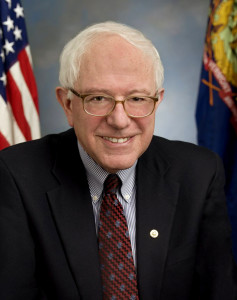
Bernie Sanders
So, Sanders had to go to the hospital and have a stent put in.
Sounds bad, but apparently it’s fairly common to be healthy and live for many years afterwards.
I’m unsure of the political impact of this. Certainly it could mean the end of his chances at the presidency.
Nonetheless, if he decides to continue, assuming his released medical records indicate his health is good, Bernie will continue to be my preferred candidate in the race.
What this does indicate is what was always true given Sanders’ age: Who his VP is matters a great deal and that VP cannot be chosen for “balance” but must be someone who shares Sanders’ politics, because the chance they’ll wind up as President is higher than normal.
The obvious person, should Sanders win the nomination, is Warren, but there are other possibilities.
In the meantime, I hope Sanders recovers well and quickly.
The results of the work I do, like this article, are free, but food isn’t, so if you value my work, please DONATE or SUBSCRIBE.
Was reminded today of a barista at a Starbucks I used to frequent, who at the end of the night would give out sandwiches which would otherwise be put in the garbabe, and fill up cups with drinks which would otherwise be poured down the sink.
A very simple kindness, and one which was against company policy.
Good man.
So, this has been covered, but is worth emphasizing:
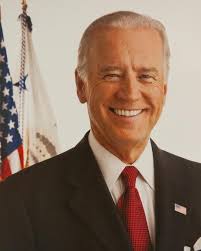
Let’s start with Hunter Biden. In April 2014, he became a director of Burisma, the largest natural-gas producer in Ukraine. He had no prior experience in the gas industry, nor with Ukrainian regulatory affairs, his ostensible purview at Burisma. He did have one priceless qualification: His unique position as the son of the vice president of the United States, newborn Ukraine’s most crucial ally.
Pretty clear. It may not be illegal, but it is corrupt influence-peddling.
Lots of people get upset at me for saying the problem with Biden, Sr., and many others, is how they prioritize family…
Recently, Hunter Biden told The New Yorker that “the decisions that I made were the right decisions for my family and for me.”
Yeah. Self-dealing and making sure your family is rich, even though they have no qualifications, is exactly corruption. Exactly.
 This family worship among public servants, politicians, and even corporate officers has to end. When you’re in a position of trust, your salary and your self is all that your family should get out of it. Not a cushy goddamn job for which they are in no way qualified.
This stuff is rampant in DC and elsewhere. A ton of corruption is semi-hidden. The politician doesn’t seem to take a lot of money, but their husband or wife, or their kids and their friends, well, they’re well taken care of.
This is a large part of how routine “in-office” corruption happens. After office, of course, those who play the game are given low, seven figure salaries, but before that, they wash it through the family.
Give me bachelors and spinsters every day. Give me people estranged from their families.
Your family love is your biz, but should have nothing to do with your public service.
And because corporations have the rights they do because they are supposed to be acting in the public interest, that applies to corporations as well.
The results of the work I do, like this article, are free, but food isn’t, so if you value my work, please DONATE or SUBSCRIBE.
by Tony Wikrent
Economics Action Group, North Carolina Democratic Party Progressive Caucus
Strategic Political Economy
[TechDirt, via Naked Capitalism 9-27-19]The Culmination of Republican Decay
Sean Wilentz [New York Review of Books, October 10, 2019 issue]
Sean Wilentz [New York Review of Books, October 10, 2019 issue]
Book review of American Carnage: On the Front Lines of the Republican Civil War and the Rise of President Trump, by Tim Albert
….After Barack Obama was elected president, the Koch brothers and the Donors Trust of dark money funders (to which the Kochs were leading contributors) would mobilize and subsidize the Republican base in the so-called populist revolt they named the Tea Party…. when Trump seized control of the GOP in 2016, he reaped the populist whirlwind that Richard Nixon began sowing nearly half a century earlier and that the Bush administration—their administration—had whipped to hurricane force….
By the time Alberta’s account gets underway, most of the political dynamics behind the events he describes were long established and extremely powerful. Some of the book’s major figures, like former House Speaker John Boehner (who was also one of its principal sources), were remnants from earlier phases of the party’s strife, and developments like the growth of the Tea Party or the uprisings of the House Freedom Caucus make sense only as outgrowths of previous internecine battles. Most importantly, by 2008, the Republican Party had already become what the political scientists Thomas E. Mann and Norman J. Ornstein would call “an insurgent outlier” in American politics: “ideologically extreme… scornful of compromise; unpersuaded by conventional understanding of facts, evidence and science; and dismissive of the legitimacy of its political opposition.” Alberta has written, in short, a book that is more denouement than drama, detailing the fall of a hollow GOP establishment that, having abandoned normal party politics in favor of relentless polarization, was already teetering. While American Carnage describes the outcome of the party’s radicalization, it completely misses—indeed, fundamentally misunderstands—a major impetus behind Trump’s ascendancy: the destructive presidency of George W. Bush….
[Alberta’s account] cannot explain how Trump could so swiftly capture virtually an entire political party. A plausible answer to that puzzle is hiding in plain sight in Alberta’s book. Although Trump came into office with majorities in both houses of Congress, and although, as Alberta notes, the White House ceded control over domestic legislation to Senate Majority Leader McConnell and Speaker Paul Ryan, the Republicans had terrible difficulty scoring legislative wins. Most galling to Trump as well as the party’s congressional leadership was the failure to repeal Obamacare, one of the GOP’s core campaign pledges since the program began. On two fronts, though, Republicans moved with absolute assurance: the approval by the Senate of right-wing nominees to the federal bench, including Supreme Court justices Neil Gorsuch and, after a brutal, unexpected fight, Brett Kavanaugh; and the rapid approval of a fiercely regressive tax bill in 2017. Control of the courts for the Christian right and the Federalist Society, tax windfalls and deregulation for the donor class: these were the causes that truly stirred the GOP majorities in Congress. It’s not simply that the recumbent Republicans are intimidated by the party base that Trump has captured; they are motivated chiefly by right-wing dogma and their own baseness, which Trump understands and manipulates.
Chris Hedges [Truthdig, via Naked Capitalism 9-28-19]
Impeaching Donald Trump would do nothing to halt the deep decay that has beset the American republic. It would not magically restore democratic institutions. It would not return us to the rule of law. It would not curb the predatory appetites of the big banks, the war industry and corporations. It would not get corporate money out of politics or end our system of legalized bribery. It would not halt the wholesale surveillance and monitoring of the public by the security services. It would not end the reigns of terror practiced by paramilitary police in impoverished neighborhoods or the mass incarceration of 2.3 million citizens. It would not impede ICE from hunting down the undocumented and ripping children from their arms to pen them in cages. It would not halt the extraction of fossil fuels and the looming ecocide. It would not give us a press freed from the corporate mandate to turn news into burlesque for profit. It would not end our endless and futile wars. It would not ameliorate the hatred between the nation’s warring tribes—indeed would only exacerbate these hatreds.
Impeachment is about cosmetics. It is about replacing the public face of empire with a political mandarin such as Joe Biden, himself steeped in corruption and obsequious service to the rich and corporate power, who will carry out the same suicidal policies with appropriate regal decorum.
GND – A problem too big to solve, or an opportunity too big to miss?
As usual, feel free to use the comments to discuss topics not related to recent posts.
 Meritocracy is the simple argument that the best person for the job should do it and that our system tends to put the best person for a job in the position.
Some jobs are more important than others, and should be paid more as a result, both to get the best person to do it, and because the best person will contribute more.
The problem with these arguments is simple: It ain’t so.
The best paid people in our economy, generally speaking, are those in the financial industry: bankers, shadow bankers, brokers and so on.
They caused a world economic crisis with their venal and idiotic behaviour in the 2000s. They currently can’t find enough good things to do with all the money they control, so interest rates are moving negative.
They are manifestly incompetent at their jobs–if the job is to do anything but enrich themselves. They cannot be the best people for the job, because they would all be out of the job if governments hadn’t bailed them out, and indeed most of them would probably be in jail if the law had been enforced.
They are paid better than those who managed the financial industry in the 40s, 50s, and 60s, who manifestly created a better economy, including higher growth rates.
Paying them more, then, has been correlated with them doing a worse job at everything except making themselves richer, and they only even managed that by corrupting the government to bail them out of their mistakes, and with endless government support, with Greenspan, Bernanke, Yellen, and so on endlessly doing whatever was necessary to keep financial markets growing in size. (The Greenspan Put.)
Studies, meanwhile, have found that the higher a CEO’s pay, the worse their company performs.
It seems that perhaps the best paid people in the world aren’t the most meritorious, except by the rules of jungle. If one wants to argue that you “eat what you kill” as Wall Street does, then all merit constitutes is the ability get a lot of money.
Merit = money is the actually state of meritocracy in the world today. Oh, there are exceptions, you can say “surgeons” or something, but they aren’t the best paid people in the world, are they?
Meanwhile, as I like to point out, if the janitor doesn’t show up, people get really, really upset, while if the CEO takes a week off most people won’t notice or care.
Seems people really, really don’t like cleaning toilets, but doing so is really, really important, and we don’t pay, errr, shit for doing it.
But, you cry, “Ian, any idiot can clean a toilet.”
Well, I’m not so sure about that, but what is true is that most janitors are competent at their jobs and most banking executives are good only at making themselves rich. They are net drain on society, massively, while janitors provide real value and are able to do their jobs.
Teachers, nurses, garbage men, civil engineers, construction workers, etc, etc., all do things that matter. When they don’t do them or do them badly, we’re fucked.
Bankers do something that matters, too. The problem is that we clearly pick completely incompetent or corrupt bozos to do the job, who then pretend they are the best of the best, destroy the economy and the environment, and reward themselves with money that would make 19th century robber barons blush.
Meritocracy is a wonderful idea. We all want the best person for each job to be doing the job, or at least, someone who is competent at the job doing the job.
But that’s not what we have. What we have is a Kakistocracy: A society run by the worst, most corrupt people. Bush, Obama, and Trump weren’t the best at running society, they were just the people best at getting into office. The people running Wall Street aren’t the best at allocating money for social benefit, or even for creating the largest actual economy, they’re just the people who fought their way to top and then appropriated the largest share of money for themselves while shattering the world economy.
They are the best only at seizing positions of power, which give them access to money. That is all.
If meritocracy is just, “The more money you have, the more you deserve to have more money,” which it is at the moment, it’s nothing worth having.
The results of the work I do, like this article, are free, but food isn’t, so if you value my work, please DONATE or SUBSCRIBE.