Ian Welsh

The horizon is not so far as we can see, but as far as we can imagine

We Are Going To Go Thru Hell, So What Now?

I was born in 1968, the year Wallerstein calls one of “world revolution”. It was a revolution that both failed and succeeded: women and minorities got more rights, often a lot more, but the end result was an oligarchy, where most people were equal in their lack of power, and where every year saw ordinary people becoming poorer, no matter what the official statistics claimed.

The 70s were the heyday of environmental possibility: everyone understood the stakes, and it seemed for a time that we would act.

President Carter famously put solar panels on the White House, and President Reagan famously had them removed.

And really, that was that. A lot of people fought, and fought hard, to stop environmental collapse and climate change, but really it was all over when Reagan and Thatcher took power and neoliberalism came to the fore. The ideology simply did not, could not and would not care about something so far in the future when there were rich people to make richer.

The larger point is that climate change is baked in. It’s going to happen, it’s going to be very bad. Numbers are hard, but I expect billions of climate refugees over the next 60 years, at least a billion dead, and probably more, and the collapse of multiple countries into anarchy and warlordism while most of the rest become poorer.

There are those who call this “doomerism”, but it’s simply a matter of facing the facts as they are. We are increasing drilling for oil and gas, not decreasing it. Animals and plants are still dying off; the Amazon is almost certainly past the tipping point for viability and is now producing more CO2 than it stores, while everyone know the Great Barrier Reef is doomed. In India we have ground temperatures in the 50s and 60s in May and the government has made it illegal to export grain.

There’s no stopping this. We will only act decisively when it is far too late. The glaciers will be doomed, etc, etc.

So, the question is what to do?

The answer is to stop pretending it isn’t going to happen and to prepare for it. We know there will be less water. We know there will be more heat. We know that weather will be more extreme, with more and more powerful storms and more rain in many places. We know that there will be marine inundations in low lying coastal cities. We know that we will lose our commercial fisheries. We know that far fewer areas will be suitable for agriculture and that most of those will be less fertile than they are today.

And so on.

We need to prepare for this. Start building the seawalls and the desalinization plants and so on.

Those who are concerned with the political future should understand that what will matter is who survives and how well. If a group you approve of survives disproportionately well, in both numbers and quality, they will have power in the world to come.

It’s no longer about some version of “save everyone”, it’s about “who will be saved, and how well will they be saved.”

You are going to have to make decisions: you are going to have to choose who you want to help live and maybe even prosper, and who you’re washing your hands of; who you’re going to let die, or maybe even give a shove. (I’m in favor of giving our elites a shove when the time comes, we don’t need the psychopath faction around.)

For a long time we’ve lived in a world where if we gave a damn we could have easily fed and housed everyone and given them healthcare. We didn’t, since psychopaths run our societies, but we could have and it would have cost nothing noticeable except to people who want others scared.

Soon this will no longer be true globally, and then it will be true in almost all countries, even ones considered rich today.

We talk a lot about what individuals can do, and what groups can do, but we rarely talk about groups. It is at the group level that most individuals can have the most influence: perhaps by creating communes or agrarian societies, perhaps thru churches, perhaps through other organizations like monasteries. Individuals, really, are always weak, but groups can be strong.

Look for those groups to join, or consider joining with others to create them. This is where your greatest point of leverage can be found and it’s where you can contribute most to changing the shape of the future to a better one.

We’re going to go thru hell, that’s now a given. But how will we treat each other while in Hell? And what societies will come into being at the other end?

DONATE OR SUBSCRIBE

Refreshing Honesty About Bank Loans & Environmental Destruction

I actually appreciate this, from the HSBC AM Global Head of Responsible Investing, Stuart Kirk:

“At a big bank like ours, what do people think the average loan length is?” he asked. “It is six years. What happens to the planet in year seven is actually irrelevant to our loan book. For coal, what happens in year seven is actually irrelevant.”

That’s honesty. People in the financial industry are trained to follow the incentives. Their bonuses (most of their income for seniors) are based on financial results and internal power in the company. The more they make, the more they can give themselves.

To expect people whose entire careers are based on following financial incentives to not follow financial incentives is insane. While I’m generally down on incentives for control of behaviour, these are folks who are hyper-optimized for them. They don’t know any other way to operate, and if individuals were to try they would be replaced by people who do follow them.

This is why I’m a radical: I believe we need change from the roots. You can’t get a man or woman trained like Kirk to act any other way than he is acting.

Oh sure, you can try and change the incentives, and you should, but better is to create a system; a society, where financial return isn’t the most important thing. If it isn’t environmentally appropriate there should be a hard stop, an absolute ban. It should be unthinkable and anyone who does it should never be allowed to have any power ever again.

A capitalist system can’t do this. It simply cannot. It cannot “think” far enough ahead, because people are mortal, and they figure they can avoid the damage. In the run up to 2008 there was a saying on wall street, IBG, YBG—”I’ll be gone, you’ll be gone.” In other words “we’ll both get the rewards and we won’t be here when the shit hits the fan.” (And if we are, well, we’ll still keep most of the money we made with this shitty fraudulent deal.)

Kirk’s a product of very close to a pure Skinner-box environment, trained to obey his conditioning till there’s little left but that conditioning. Oh, he has rationalizations, you can and should read them, but at the end of the day, he’s following the rewards.

People tend to do the right thing if they are mostly disinterested better than if you’re manipulating them with rewards and punishments. We don’t believe that, because we’re all warped. The warping started in school with grades, or perhaps with our parents and it continues till many of us know no other way of living.

But if we continue like this, we’ll burn the planet down. Oh, humanity will probably survive, but at the end, we’ll have genocided half the species on earth and reduced Earth’s carrying capacity massively. There’ll be less good agricultural land, few rivers with less water, most aquifers will be drained and poisoned, and large parts of the world where humans live now will be effectively uninhabitable for months every year.

That’s insanity, but it happens after six years and hey, if you’ve made enough money, you figure you and your kids will be able to live in one of the remaining good places.

DONATE OR SUBSCRIBE

Week-end Wrap – Political Economy – May 22, 2022

by Tony Wikrent

Buffalo mass shooting

[Twitter, via Naked Capitalism Water Cooler 5-16-2022]

https://twitter.com/kenyonfarrow/status/1526171009052815360?ref_src=twsrc%5Etfw%7Ctwcamp%5Etweetembed%7Ctwterm%5E1526171009052815360%7Ctwgr%5E%7Ctwcon%5Es1_&ref_url=https%3A%2F%2Fwww.nakedcapitalism.com%2F2022%2F05%2F200pm-water-cooler-5-13-2022.html

.

Real Scarcity Informed Buffalo Shooter’s Racist Conspiracy 

[Intercept, via Naked Capitalism 5-18-2022]

Addressing this violence, though, also requires considering the role of scarcity — not a conspiracy theory, but a very real system of extreme inequality and ecological destruction. It is a system in which the most wealthy and powerful continue to see their wealth and power grow — at the expense of the masses. Faced with actual strained resources and environmental calamity, some of these forsaken people are turning to dark fantasies like the “great replacement theory” to make sense of it all.


It’s Time To Talk About Capitalism — The shooting in Buffalo spotlights the taboo topic we must discuss: the link between hypercapitalism and racism.

Matthew Cunningham-Cook, May 16, 2022 [The Lever]

Particularly in the U.S. — where the socialist branch of the labor movement that brought us the eight-hour workday, the weekend, and Social Security was crushed in the McCarthy era and never recovered — we must start explaining the virtues of worker control over production and worker power in politics, and how it addresses the problem we face: The rich make every economic decision in society, while treating workers as subhuman.

“Call it democracy, or call it democratic socialism, but there must be a better distribution of wealth within this country for all God’s children,” King said.

The one percent — like Rupert Murdoch, the misanthropic owner of Fox News, and TV host Tucker Carlson — uses racism to get a portion of the white 99 percent to act against their own economic interests.


Strategic Political Economy

Who is leading the United States to war? 

[Monthly Review, via Mike Norman Economics 5-20-2022]

Open Thread

Use to discuss topics unrelated to recent posts.

Personal Resilience, Gardens, Water And Heat

Generally about the second thing people do when they start getting worried about supply chains and the effects of climate change and economic issues, is start a garden, if they can.

This is good, but…

For a long time my primary concern has been water, though there are places, like India right now, where you’ll simply drop from the heat. Rainfall is becoming intermittent, perhaps even heavier but less reliable. Glaciers are getting smaller, but increased melt will increase river flows at times, and again, on average there’ll be more water, until the flow starts falling off a cliff. In the Western Rockies that’ll apparently start in about 20 years.

Heat itself is a problem for gardening: too hot or too cold are both bad.

Rainwater reservoirs used to be common in houses. They were dug out, and underground, which had the advantage of keeping the water cool. These days they’re above ground. In some places they are illegal. I’m going to strongly suggest that if you can, you should get one (or more of the modern ones), and spread your water collection as wide as you can. You’ll need a filtration system so you can use it personally as well as for gardening.

As for the gardens, for those who can figure out how, something that has some measure of climate control seems necessary, or heat waves or even cold snaps can wreck you. While the main concern in heat waves, climate change has lead to more wild and variable weather, including cold weather at times. Doing this in a way that also gets sunlight is the trick, of course, and the rain collection system you set up for the reservoir(s) should help you keep using rainwater.

For temperature control, if you’re building something new, build into hills or dig into the ground. The earth moderates both hot and cold temperatures. Many years ago I looked into “earthships” but there are many models, including traditional ones, and ones that go deeper, including natural and artificial cave homes.

Obviously this may be beyond many people’s means, though there may be low-tech, low-cost, labor intensive solutions as well as more expensive ones.

For people, like myself, for whom this is all pie-in-the-sky, well, just bear in the mind that climate change means old patterns don’t hold and variability increases. Try and stock up enough food to last months and do what you can about water and staying cool. That may mean figuring out some sort of communal solution with other people, or just doing what little you can.

Updated to include earthships and dug in homes.

DONATE OR SUBSCRIBE

Prologue of Spring of a Dawn, A Novella By Stirling Newberry

“I sit in one of the dives

On Fifty-second Street

Uncertain and afraid

As the clever hopes expire

Of a low dishonest decade:

Waves of anger and fear

Circulate over the bright

And darkened lands of the earth,

Obsessing our private lives;

The unmentionable odour of death

Offends the September night.”

W.H. Auden “September 1, 1939” Lines 1-111

Червоний ліс2

The road was green and bloomed with fresh ruined gray high rises. Trees were thick with abandon and squirrels played along the conifer branches. In the center of the overgrown city square a hammer and sickle taller than any other logo stood atop the rectangular office building. The hammer had fallen out long ago.3 Along the road into the complex were mechanized infantry carriers with the loud “Z” on the sides of each and every one.4 Red rain came pouring down all over them.5 μῆνιν ἄειδε θεὰ Πηληϊάδεω Ἀχιλῆος.6

None of the MBTs even slowed at the barrier.7 Snap.

In the fifth carrier was a Russian infantry officer, his head masked with a helmet and goggles. The uniform was black with blotches.8

“Get the guard out here, or we will do to you what we have planned for Bucha.!”9

Slowly the guard station popped open to reveal a helmetless man. The Russian officer bellowed, in slang: “Are you drunk?10 I am not paying grandmas for your time.11 I don’t have time to waste.” The peacekeeper came up to the side and was truly ready for a Russian tirade. He almost got it in heaps and gobs – but the infantryman behind the officer put a hand on his superior’s back. The officer swatted away the hand but did not castigate the peacekeeper. The power of slang remained dry.

The peacekeeper eyed the Russian officer. Behind him, in the distance, was the tall white smokestack that marked the corroded nuclear power plant. The peacekeeper shivered – it was official now, a war, whatever Putin called it.12

“I am warning you that there is radiation.”

“Stuff it.13 You are now under Russian control.”

The peacekeeper blinked and then said, “I understand.”

“Even a horseradish will know it.”14

“That is the Red Forest.15 It is the dangerous region here.”

“Let the anesthetic cover it all. 16 Get the chief on the phone.”

The peacekeeper moved past the guard, there were wires on the doors. Going through the wires, he reminded himself of when he was a child learning the game of hide-n-seek: the trick was to pick the nastiest way to go. Days later he played with an uncle and found a plum. And he was then barely sixteen years old. He pick-up the phone and dialed the undialable: never had he summoned the head office.

“Yes.” He could feel discomfort coming down the linesr.17

“Chornobyl is being overrun by Russian troops.”18

“Are you sure?”

“The lady mercy won’t be home tonight.”19

“History won’t be kind to us.”

“History won’t care at all.”20

It was along the Red Forest in a Russian troop carrier. The trees were all the same size, an indication they were planted together.21

Two Russians were blabbing:

“See the outside is chromoplast goulash.”22 Ivan was satisfied with his joke.23

“Not like those grew up and proud under the mushroom cloud.”Egor who calmly replied. The spruce trees danced by outside the small window as they sped towards Chornoby.

“We are going to make black bombs with dust.”

“Still a little piece of me dies.”24

“Better than the whole body – which we will do.”

“Our officer should not have screamed out our plans.”

His friend picked lint from his black uniform. “They won’t live to tell. The operation is go.”25

They plodded through the dilapidated dachas in the Red Forest – or was it Rad?26 Red dacha roofs with ivory plaster stucco and lawns festered with new white birches cloying to the sun. As yet, there were no leaves. Orb webs grew on the boughs. Then fields with high grass and the dead trees took over. The dust clung up and bunch up in the front of the vehicles from the road. A driver dodged a rabbit on the road. Build your muscles as your body decays.27

Then they were at the full enclosure. Egor looked but Ivan talked first:28 “We need to get what we came for.”

A lump grew in Igor’s throat.

Then Ivan looked at him. “Are you worried? All the lies they tell you about this place are eating at your brain.”

Egor looked at the semi-cylindrical shape, on its side longer than many football pitches. “I am long past worrying.” They rolled out and took positions. Their officer was at the front. Konstantin was always straight and upright with a proud jaw.29 He paced to the gate. Long cranes still dotted the outside. There was no vegetation, just ivory concrete.

Konstantin went up to the guard. “This area is under Russian protection. Get the officer in charge. Face to face.”

The guard only nodded – he was informed and would obey – what else was there to do?

In less than half an hour black infantrymen held all the gates. Only then did men enter. They passed the sarcophagus which some knew was collapsing.30 Flourescent lights stained the walls. The infantrymen put on hazmat suits and went to work. Within 2 hours trains were packed with brown boxes to go out the tracks and over the bridges. Then they went and dug foxholes in the forest.31

A day later, green infantrymen replaced the black.32 None of them said anything about the op. They may not have known.

Back in Russia, Egor was back on base. His right hand was red.33

(Footnotes are after the jump.)

Civilization Ending Long Covid Pt. 2 — 320K Long Term Sick In UK Labor Force

Starting in 2020, an increase of 320K long term sick people. We tend to do percentages off the population, but the UK Labor Force is 34.7 million people. That means, in 2 years, what is probably most Long Covid, caused about a .92% decrease in the labor force just due to long Covid. Another .38% of the population left the UK Labor force for other reasons.

Where’d I get this from? The Bank of England!

Since end of 2019- we’ve seen a fall of 450,000 (1.3% of labour force- a very large decrease in labour force … The persistence & scale in this drop has been a surprise to us. We’ve seen an increase in long-term sickness in that number – around 320,000 people…

…Falling participation in the labour market is not a lack of job opportunities, but a rise in long term sickness linked to the pandemic. The issue of Long Covid is very serious.

Last week I wrote that a big part of rising labor costs was a tight labor market and…

much of why the labor market is tight is because they let a million people die and probably millions be disabled by not handling Covid

I’ve been emphasizing for a long time that Long Covid was going to be the real problem. .92% may not seem like much, but remember:

  • You can get Covid over and over again;
  • There is no long lasting or complete immunity from Covid either from vaccines or natural immunity;
  • New variants are being born all the time and the ones which survive and thirve are generally optimized against whatever is the biggest barrier to current spread;
  • Each time you get Covid you can get long term damage. It may not be sympomatic, but it’s there.
  • So the next time you get Covid, you’re more likely to get symptomatic Long Covid.

Let us assume, for the sake of argument, that UK and US reductions in the labor force are about the same, in percentage terms. (Death rates in the UK are slightly lower than the US, but I don’t trust either country’s stats all that much.)

The US Labor force in 2021 was about 161.2 million. Multiply that by .0092 and we have a reduction of approximately 1 million, four hundred and eight-three thousand people (1.483 million). Now, imagine the US loses that number of people from the workforce every two years?

Doesn’t take long from those numbers to be catastrophic, does it?

Understand that marginal rates control the capitalist market.

The good side of this is that taking so many people out of the workforce absolutely will increase wages without wage controls. And it will keep doing so for as long as we refuse to control Long Covid and have no effective AND widely deployed cure. Problem is, while we do way too much bullshit labor and could get by with less workers, I doubt it’s going to be Wall Street parasites whose jobs we don’t fill, it’ll be people who actually make, grow, mine or distribute goods that matter, and people like nurses and orderlies and teachers and so on who are actually productive, rather than parasites at best.

Meanwhile, China, who supposedly wrecked their economy with Zero-Covid, will not be suffering under this reduction. (The Shanghai outbreak is now almost completely under control, much to the dismay of pro-death and disabling neoliberals.)

And this is before the fact that we will need to take care of all those sick people, though I suppose the American solution will be to let them use up all their savings, get thrown off any private healthcare, perhaps manage to get on Medicaid and eventually wind up on the street and die.

Blah, blah, blah.

The point is that our civilization CANNOT survive this sort of disabling if it just keeps going on and on. Multiply by all the problems we’re going to have with climate change, and stir in a mix of nuclear-armed Great Power competition and the results are catastrophic.

It’s Long Covid or a real cure or a miracle where Covid dies out by itself (not seeing how that happens when natural immunity is limited), or we are in for a world of hurt.

Take precautions. It’s not death you should worry about, it’s disabling. I don’t know what happens after death, but I do know that a lot of very bad things can happen to you while you’re still alive.

DONATE OR SUBSCRIBE

Who Wins and Loses Because of the Ukraine War?

I’m basing this on current trends and what I see as the most likely outcome.
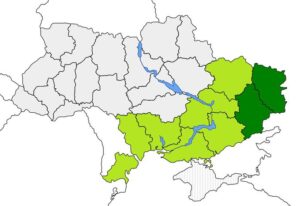
Russia will take about 30% to 40% of Ukraine: the East and the coast along the Black Sea, areas that are generally Russian ethnic or speaking. While they were pushed back from Kharkiv, I think they’ll take the Oblast by the end of the war. Basically, see where Russians are the majority and that’s the land that Russia will feel it can keep and not fight an endless guerilla war.

They make have to take more land than that to force a peace on terms they can stand, but they won’t want to keep it because everyone knows the West is trying to draw them into a long term guerilla war. (Such a war could be won in Ukraine because of the terrain, but doing so would require a lot of killing, deportatons and camps and many years. It’s not worth it for Russia.)

The Russians original goals will not be met, and Finland and Sweden will joint NATO (although they were already quite integrated), so in one sense it can be said that Russia has “lost”. In certain other senses it can be said to win.

But let’s look at the major players, one by one.

Ukraine: the big loser. Unless this war goes far different than I expect (possible and I’ll admit it if it does) they’re going to come out of it a smaller country with no coast, who has lost their industrial heartland and even if the gas is turned back on, they will lose most of the transit fees in a couple years max as the EU transitions away. They will find that the “rebuilding” they were promised is IMF style neoliberalism and the average person will wind up worse off.

Verdict: Disastrous Loss.

The EU: In the win column, the EU should have built up a larger military long ago and will now do so. They will be more unified, at least initially, feeling they have all supported a war and with fear of Russia acting as unifying glue.

In the lost column they have firmly moved into the US satrapy column. In order to move out they would have to create their own army that is not dependent on US built military equipment and that’s the opposite of what they’re doing. (Foolish, because the US is losing its ability to build either ships or combat planes. The F-35 was a boondogle, Boeing has lost its engineering chops, and they recently decided to decommission built ships because they are so bad.)

The increase in price of fuel (US gas is about 50% more expensive than Russian), commodities and food as well as the general inflation shock from the Ukraine war will lead to a poorer Europe. Spending more money on the military will make ordinary people feel worse off and so will inflation. Industry will be badly damaged by increased fuel and mineral prices. All of this will lead to increased political instability and is likely to help the fascist right and possible the more radical left (if the left ever gets its act together.)

Joining the US in such huge sanctions and seizing Russia’s reserves (“frozen”) means that they are choosing to join the US side of the new cold war world rather than being a third pole, and this will eventually limit their trade options, as they, like the US, cannot be trusted with money.

The EU is, overall, likely to come out of this war poorer, more isolated and with increased political instability, but with a much larger military and feeling more unified at the elite and country to country level (at least until and if political instability changes that.)

Veridict: Slight Loss.

The US: The US has gotten Europe firmly back as a satrapy. NATO expands, the Europeans will spend more more on US military goods and buy expensive US gas and oil. The possibility of Europe becoming independent and forming a third pole in the upcoming cold war between the US and China is now minimal, and essentially zero for at least a decade or two.

On the negative side, Russia is now firmly in the Chinese sphere. Because the US’s strategy in the case of a war with China would be to strangle China with a military enforced trade embargo, this is a big problem. Russia can supply China with massive amounts of food, fuel and commodities, making the “choke them out” strategy against China unlikely to succeed. Likewise a friendly Russia means China has a relatively secure flank to the Northwest. There are even signs of Chinese-Indian rapprochement, and though I’ll believe it when I see it, India not joining against China would be a huge boon to China.

Since China is the “real” threat, not Russia, the one country that can replace the US as the world’s most powerful nation, strengthening China’s position is a loss.

The US also will suffer due to inflation from knock on effects of the Ukraine war, and that will cause increased domestic instability. Elites continue to funnel massive money to the domestic security apparatus (police of various varieties, spies who target US residents), however, and elites feel fairly secure, though I think they’re wrong as they’re funneling resources to police who stand a good chance of joining a right wing uprising.

The final major effect for the US is that freezing Russian reserves and encouraging the massive level of sanctions, is seen by most of the world as evidence it’s not safe to keep money in the US lead banking system, or even to trade with them. This has accelerated de-dollarization and I suspect will be seen as the precipitating event of losing reserve status for the American dollar. The world will split into two financial blocs, one centered around China-Russia, the other around the US-EU. The US receives huge benefits from reserve status and from being at the center of the world financial system, and as with Britain after WWI, it will suffer mightily when it loses this position.

My evaluation is that what the US will likely gain from the Ukraine war is less than it has or will lose: dollar hegemony and being the financial center of the world are a big deal, and confirming Russia as a junior Chinese ally makes their main geopolitical rival far stronger.

Verdict: Loss

Russia: Russia has weathered the initial economic storm well, but most EU countries will move off Russian gas and oil. Some of that gas and oil cannot be brought to market anywhere else for a few years (probably 3) until new pipelines are built and while there are customers, they will pay less than the Europeans did.

Sanctions will not cripple Russia, but there are goods like advanced semiconductors and, more importantly, some tech needed for gas and oil extraction, that they will be cut off from. China cannot immediately replace those oil and gas related goods, and they are at least ten years behind in semiconductors (and themselves cut off from some key capital equipment they can’t yet build). That said the oil and gas tech is probably within quicker reach, and Russia doesn’t need the most advanced semiconductors in large quantities so far as I know.

In most economic terms Russia will be OK: they have a big food surplus; they have more than enough fuel, of course, and they can buy almost everything they don’t make from China, who is not going to cut them off; indeed, rather the reverse. India is also rushing to cut deals with Russian businesses. Sanctions will force more import substitution and help overcome the “resource curse”, making it cost-effective to make more things in Russia (if they aren’t overwhelmed by cheap Chinese goods.)

Sanctions will not cripple Russia the way they have many other countries, though they will be felt. Nor will they cause a revolution and if there is a coup it will be because Putin is old now and may be ill with Parkinsons or something else.

In territorial terms Russia likely to wind up larger. They get the industrial part of Ukraine and the coast, they can send water to Crimea (which has been cut off from years, and whose agriculture was devastated as a result) and while many will say they didn’t win the war, etc… people who want to stand up to them will not be keen on “winning and losing 30% of our country.” If that’s victory, it looks pretty bad.

A unified Europe with more countries in NATO and a bigger military is a loss for Russia, and one can expect that NATO will move more missiles and ABMS close to the Russian border, including hypersonic missiles as soon as they have them. In that sense the war is a clear loss: Russia wanted those weapons removed from near its border, and there will probably be even more of them.

In the end Russia will be able to credibly claim it won the war as a war: it took territory and kept it and it’s hard to say that a country which took its enemy’s territory lost a war. That said, there will be a case that it is a Pyrrhic victory, in that there is an economic hit, NATO has expanded, Europe will have a bigger military and so on.

The counter-case is simple: Ukraine was talking about getting nukes and had started shelling Donetsk in what looked like a prelude to invasion. Russia didn’t get its maximal goals, but it did gut Ukraine as a threat and did secure Ukrainian land in what is likely to be a semi-permanent fashion absent an all out NATO/Russia war.

The maximal goals didn’t happen, but in a bad situation Russia may reasonably claim it got quite a bit. As for sanctions, every year there had been more of them, none had ever been rescinded and all the war did was move them up.

Verdict: Marginal victory.

China: Yes, strictly speaking China isn’t involved in the war, but the war affects China greatly. China needs about 10 years to get to a reasonable parity with the US in semiconductors and aviation, the golden technologies of US hegemonic rule. The Ukraine war has made it clear they probably have less time than that, and that the world economic order is likely to split sooner because China is stuck between US demands to support sanctions and its own strategic needs, which require Russia as an ally, or at least a reliable supplier. Russia being decisively defeated or economically crushed would be catastrophic for China, so they must keep it alive and viable.

Still, all in all having Russia unable to sell to or buy from the West is unbelievably good for China: there is no alternative for Russia. If they can’t go to the West they must go to China. India may be willing to trade, but India’s economy is tiny compared to China’s and its industry scarce. China can make almost everything Russia needs and everything it can’t make it’s working on learning how to make. And, as previously discussed, Russia as an ally makes it impossible for the US to choke China out in a war.

Verdict: Victory

Concluding Remarks: Of course all of this based on a model of how they war will go which may not be the case. Perhaps the maximalists in the West are right, and the Russian military is fundamentally incompetent, can’t do logistics to a disastrous degree, and is on the verge of collapse. If you think Russia can’t even win the conventional war, all of this is is nonsense because a definite loss is likely to lead to regime change and possibly even collapse.

Likewise if you think that sanctions will have much more effect than I do, or that China will not integrate with Russia economically, then this is all wrong.

But overall, this war looks like a case where Russia gets a marginal victory; the US and the EU get some wins but their victories are effectively Pyrrhic, and China is the big winner.

DONATE OR SUBSCRIBE

Page 187 of 532

Powered by WordPress & Theme by Anders Norén