
The horizon is not so far as we can see, but as far as we can imagine

Category: Surveillance Society

Socially how the next 20 odd years will play out

Ok, let’s get down to brass tacks.  The riots in Britain are an important event, and combined with the decision to double down on austerity they tell us a lot.  This is my baseline, loose model for the next generation.

The decision has been made by Cameron and society in general that the way to respond to the riots is to crack down, hard.  They are sentencing people to long sentences for minor crimes (a year for stealing a bottle of water) and they are extending the punishment to families, kicking people out of housing if a member of their family was arrested.  They are discussing cutting people off from social networks, and in Calfornia today the powers that be cut off cell phone service during an entirely non-violent protest.

The decision has been made to double down on repression.  To extend repression to families, a logical extension of our socieity’s obsession with family as above all else, and a very aristocratic thing to do, which reeks on the 17th century.  In terms of social media, Wikileaks was the bleeding edge of this, when Paypal, VISA and Mastercard cut off Wikileaks, despite them having been convicted of no crimes, it was clear that access to the modern economy would be held hostage for those who didn’t play the way the oligarchs wanted them to play.

Repression of this sort always spirals.  Cut-offs from the internet, from cell phone use, from specific sites, will continue to spread.  Sometimes they will be temporary and blanket.  Sometimes they will hit individuals.  Sometimes they will hit specific sites in specific areas.  Access to the modern credit economy will continue to be used as a weapon.  There will also be continued removal of the right to travel, with no-fly lists moving to trains, and later to bus stations and eventually there will be a ramp up of stops of automobiles.

This sort of stuff is easy to get around, right now, by anyone relatively bright and even slightly technologically savvy.  So there will be a renewed, and successful push towards what might be called the biometric surveillance state.   You will carry ID, your biometric data will be centrally located as well as stored on ID, and this data will be used to control what privileges you have access to (you have no rights.)

Meanwhile, on the other side of the equation, throwing youngsters into prison for very minor crimes is a mistake.  It will harden them, and connect them.  This is especially true in British prisons, because British prisoners are a hardened bunch of criminals.  But it is a mistake no matter where, because in America and Britain, having ever be thrown in jail means your life is over.  Every decent job does a criminal record check, and if you have a criminal record, you will never ever have a good job again.  At that point you might as well become a criminal, and why not a revolutionary?

Which leads to the crackdown on hackers.  Throwing young, bright, technically savvy young adults in with the criminal element is, again, a mistake.  The rise of the surveillance state means that tech savvy is going to become very important to anyone who doesn’t want to live by what might be called “Society’s new rules”.  And  the young hackers have a revolutionary mindset.  The combination of men with nothing to lose, with men who have tech skills and believe society is corrupt and needs to be brought down, will be explosive.  And since the biometric security state will be done on the cheap, by the sort of incompetents who run the current wars and the current security apparatus, there will be plenty of cracks in the system to exploit.

Likewise the increase in punitive sentences is a mistake, pure and simple, because it means people have less to lose.  If a relatively minor crime gets you in for years, and destroys your life, many will make the calculation that they might as well fight, might as well use violent force, rather than be taken.

Meanwhile the ranks of the permanently unemployed will swell.  At this point companies simply don’t want to hire anyone who has been unemployed for longer than about 3 months, and have a strong preference for the currently employed. If you don’t find a new job in 3 months, you are probably never going to have a good job again.  The data is clear on this, what is also clear is that the developed world has made a hard turn for austerity, one which will do damage for years to come.  A decade is modestly optimistic.

This will increase social disorder, of course, and our lords and masters and the remnants of the middle and working class who scream “they’re criminals, pure and simple”, will double down on repression, again and again.

This is, of course, a big mistake.  It may turn into a relatively stable solution set in some countries, but they won’t be places you want to live unless you have the morals of totalitarian, and in others it will lead to revolutions, while in others it will lead to outright failed states.  We can hope that a few will turn aside from this path.  So far in Europe only one country has, Iceland.

As with most of my predictions, folks will scoff at this one, think I’m hysterical, and doom-monger, and so on.  But this is just social mechanics played out over time.  This is the glide path, it can be stopped, but it is unlikely to be.
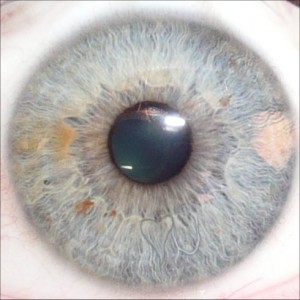
Big Brother is Watching

Image by Vernhart

Image by Vernhart

More panopticon news raises the specter of not having any privacy left.  First America, following in Britain’s footsteps, will keep the DNA on file of people who are arrested but not convicted.

Next, Britain

The mobile calls, emails and website visits of every person in Britain will be stored for a year under sweeping new powers which came into force this month. The new powers will for the first time place a legal duty on internet providers to store private data.

What really troubles [Brighton-based investigative journalist Duncan Campbell] is the automatic numberplate recognition (ANPR) system implemented by the police across the country to track vehicle tax evaders and criminals, but also potentially to record where you’ve been. Currently it can only be accessed by the police and intelligence services, and you can’t yet do it in real time – when that moment comes, it will be truly dangerous, says Campbell.  The system does pose a threat to sources’ anonymity, agrees [David Leigh, the Guardian’s investigations editor]: if you assume that CCTV is watching any public journey, the only way left to meet is through a private journey in your car

So. Closed circuit TV (CCTV) watches everything in public transit and most public spaces in Britain, and license plate scanners track where you’re driving your private vehicle.  Anyone with access to those two databases can, in theory, track anywhere you go.

Leigh is right about real time monitoring being a threat; the other half of the threat is recognition software which is able to reliably identify individuals and scan records, whether in real time or not.  Once this occurs (and it will), combined with the ubiquitous CCTV that it is virtually everywhere in Britain and spreading in the US, from the second you step out of the door to the moment you return there will be a record of everything you’ve done in public spaces. Since most privately owned stores, malls, offices and so on tend to have CCTV,  you will basically be under surveillance everywhere you go outside your house.  Even inside your house is not completely off bounds, since shades don’t protect against infra-red and so.

Add this to the tracking everyone you phone, everyone you email, everyone you chat with and every website you visit, and there really isn’t very much that you do which governments, and any major corporation which can get access to the databases, won’t know.  If they want to track you in real time, they can do so, and there will be very little you can do to stop it.

Privacy is very swiftly becoming a thing of the past. For whatever reason, Britain has led the way (something else the wonderful Tony “middle way” Blair has to take responsibility for starting), but the new government hasn’t stopped it, and other nations are following suit, albeit at a slower pace.

Universal surveillance is the first step towards a Big Brother state.  Folks may scoff at the possibility, but as America’s founders understood, only people who don’t care about their liberties put this much power into the hands of government.  Power such as this will be used, and eventually someone will succumb to the temptation to use it to its full potential.

In the meantime, after seeing the last eight years, those who are tempted to say “but if you’ve done nothing wrong, you have nothing to fear”, might want to think again.

As for myself, my business is my business, and no business of some government bureaucrat, whether George Bush or Barack Obama is President.

Brits Attempt to Snoop On Everything And Tell Anyone

The UK is already the most surveiled society in the world, with more cameras per capita than any other country.  There’s no evidence that this reduces crime, but that isn’t stopping the government from wanting to spy even more.

Recently they’ve proposed  spying on social networking sites:

“The UK government, which is becoming increasingly Orwellian, has said that it is considering snooping on all social networking traffic including Facebook, MySpace, and bebo.

They have also attempted to bypass current privacy protections and share private info with the private sector, other governments, departments and, well, pretty much anyone:

“Clause 152 of the Coroners and Justice Bill, currently being debated by the UK Parliament, would allow any Minister by order to take from anywhere any information gathered for one purpose, and use it for any other purpose. Personal information arbitrarily used without consent or even knowledge: the very opposite of ‘Data Protection.’ An ‘Information Sharing Order’, as defined in Clause 152, would permit personal information to be trafficked and abused, not only all across government and the public sector — it would also reach into the private sector. And it would even allow transfer of information across international borders.

Fortunately public uproar made them withdraw this particular anti-privacy provision.

The UK has been leading the US and other Western nations in the march closer and closer toward surveillance states.  I hope the rejection of the sharing provisions means a reversal in trend, but I suspect it’s only a small setback to those who believe that taking away citizens’ privacy and liberty is the route to security.

Page 5 of 5

Powered by WordPress & Theme by Anders Norén