The horizon is not so far as we can see, but as far as we can imagine

Category: Class Warfare Page 1 of 37

Trade Is Not The Primary Driver of Currency Rates

The misunderstandings packed into this little bit of writing are stupendous:

Over the past few years, China has been in deflation, while the US has been in inflation. Yet despite this stark divergence, the CNH has still depreciated more than 10% against the US dollar. This combination — falling relative prices in China and a weaker currency — has made Chinese goods and services extraordinarily cheap in global terms. A vivid example: a night at the Four Seasons Beijing costs roughly $250, compared with more than $1,160 in New York

First, a 10% drop does not make a hotel room cost one quarter as much in Beijing as in New York. That’s ridiculous on the face. Almost everything costs less in China than in America. America has an economy optimized to drive prices high to extract maximum profit. China has economy with actual competitive markets: if you raise prices someone else will come in underneath you. Almost all of America is operating in or as if it is in an oligopoly. There is little actual price competition because even when there are competitors they figure that competing on price is stupid: it hurts both of them. Why not both raise prices to usurious heights? Win/Win.

This doesn’t happen in China because it has competitive markets and it has competitive markets in large part because China will throw executives in prison or execute them if they engage in this sort of price collusion, whereas in the US, though ostensibly illegal based on the laws on the book, such collusion has been made legal by decades of court decisions and prosecutorial decisions. (Prosecutors mostly don’t, and when they do courts almost always refuse to convict.)

China also has lots and lots of firms and genuine low barriers to entry. If you try to collude, someone from outside your industry will enter and undercut you, and often this will be someone with deep enough pockets that you can’t win a price war with them.

Second, currency values outside of hyperinflation are driven primarily by demand for currency. That isn’t primarily about trade, it’s about investors and financial carry trade. China unquestionably has a more dynamic and larger economy than any Western nation, but it isn’t financialized: Chinese companies don’t produce the sort of returns that American companies have over the last 50 years. This is deliberate policy: if they did, then China’s economy would suck for ordinary people, like Western economies suck for ordinary people because prices would be much higher. (See that Hilton room, though it cascades thru the entire economy, with rent and food at the low end much cheaper in China too.)

It is also pretty hard to invest in China as a foreigner, while the US is set up for foreign investors. Even if you want “China exposure” it’s hard to get.

So the Yuan isn’t in massive demand, because there aren’t bullshit over-sized returns like the AI bubble. The central bank doesn’t run its policies based on “the stock market must always go up.” America has spent 50 years burning down its real economy to produce outsize “profits” due to asset pumping. China keeps asset prices under control, and when a bubble does occur, as it did in real-estate, they deliberately deflate it, bearing the cost.

None of this is particularly unique, by the way. It’s basically the way the US economy was mostly run from the 30s thru the mid 70s or so. The policy details, the ways things are done are different, but American policies were meant to encourage real economic growth and if you look at a stock market graph you’ll see it traded sideways. No 50 year bull market. Asset bubbles were discouraged. You can’t have a good economy with high real-estate prices, just can’t be done and the stock market is a secondary market, not a primary one. Emphasizing it is sheerest insanity.

There is very little that China has done which is genuinely unique, despite jingoistic assertions otherwise. The playbook they have run is the same one almost every successful industrializing nation after Britain used, and very similar to the Japanese model. What is different are two things. First, the scale, when 1.4 billion people industrialize and modernize, it shakes the world. Second, a genuine desire to help the poor, which is extremely rare during industrialization, though not unheard of. (The Gilded Age did not care about the poor. Britain’s industrialization period was driven by hurting the poor as much, or more, than they could bear. They were far better off as peasants than in factories.)

Anyway, countries can be real rich (lots of genuine productive capacity with low prices and dynamic markets) or they can be fake-rich, with financialized markets that squeeze the last penny out of consumers and immiserate workers, leading to non-competitive markets and oligarchy. China is rich. America is fake-rich.


This site is only viable due to reader donations. If you value it and can, please subscribe or donate.

The Promise Of Automation and Abundance

For a long time after the Industrial Revolution, many thinkers believed that automation would lead to us living lives of leisure. Twenty hour work weeks, or even less, and many people wouldn’t need to work at all, but would still live good lives.

It never happened.

Economists will tell you this is because there’s always more work to be done, but economists are the priesthood of capitalism, not scientists, not even social scientists.

Most of us are well aware that many jobs are, in David Graeber’s memorable phrase, bullshit jobs. They either don’t really need to be done or are actively harmful. Everyone working in private equity. All the engineers optimizing ads. Almost everyone who works on Wall Street or in shadow banking. Most bankers, for that matter. The jobs which are actually necessary, “essential workers”, are badly paid and treated, but if they don’t show up, as we find out in a garbage, nurse, transit or teamster strike, disaster ensues.

If the janitors don’t show up, everyone’s in shit. If the CEO doesn’t show up, life continues and most people don’t care. Indeed, without CEOs most companies would run better than they do, and you’d be in a lot less danger of losing your job.

We could easily work 20 hour weeks already, if that was a priority.

But the structure of capitalism makes this impossible. We create goods which are designed to wear out quickly and be replaced. “Planned Obsolesence.” We need people to have jobs to get money to buy these shoddy goods. We buy fast food crap because we’re too busy, rather than cooking good food, and most people spend their lives doing work they’d never do if they didn’t need money to survive.

So we find more bullshit jobs, and more harmful jobs for people, and the machine churns on, destroying the environment, making people sick and unhappy and forcing us into wage slavery. Most people spend most of their waking hours doing what they’re told. Or else. Then when you’re old, you might be allowed to retire, and enjoy your declining health. Might.

We have more houses than we need, far more than the number of homeless. America throws out one-third of its food, yet people go hungry. There’s more than enough, literally more than enough food for everyone in the world to have a full and healthy diet.

KT Chong recently wrote an article about humanoid robots, in which he hopes that the Chinese will use them to allow lives of leisure, to institute a good guaranteed income. 

Perhaps they will, I hope so. To do so, however, they will have to move away from capitalism towards true communism, where everyone shares in the benefits of automation, and not just a few.

There is no reason why this isn’t possible. It could have been done any time in the last century or so, had we wished to.

Remember this: you work like a dog, obey some manager’s orders and don’t do what you really want to do because our system, and our leaders require it when it isn’t actually necessary.

Capitalism might (or might not) have been necessary for industrialization. But it is a set of leg irons weighing all of us down now, and threatening to destroy the very conditions required for life to continue on Earth.

But it doesn’t have to be that way, and the task of the next generation of leadership is to figure out how to run modern societies without it, without wasteful over-consumption and without destroying the environment, while making sure everyone has what they need and can live fulfilling lives: lives they choose, where most of their time is their own to do with as they would, not as some boss desires.

May it be so. The other options are far, far worse, likely catastrophically so.

This site is only viable due to reader donations. If you value it and can, please subscribe or donate.

Trump Has Achieved Biden Levels of Delusion and Denial

I mean…

Not to mention firing BLS workers because he didn’t like the stats, which even Biden didn’t do. Given how dubious most BLS stats relating to inflation are already, that’s some impressive cope.

The fact is that prices keep going up, and if you aren’t in the golden AI Ponzi Scheme, the economy sucks.

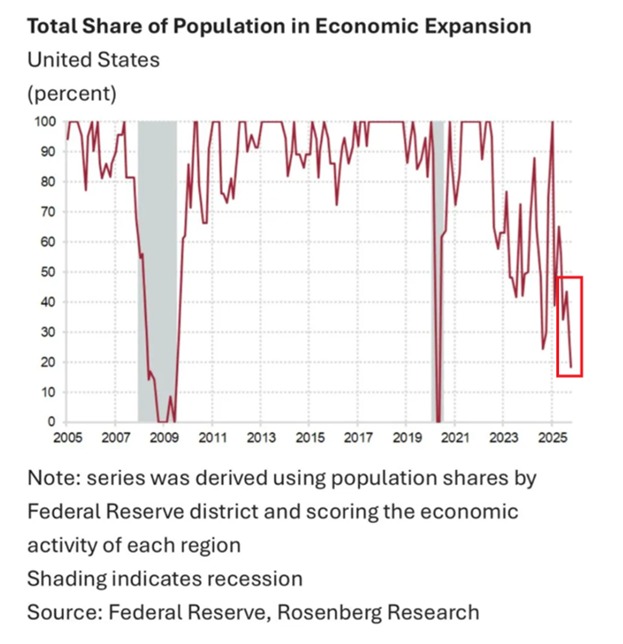
Rosenberg Research did some analysis:

If they aren’t in expansion, they’re in contraction. This is also known as a recession, even if they didn’t shade it.

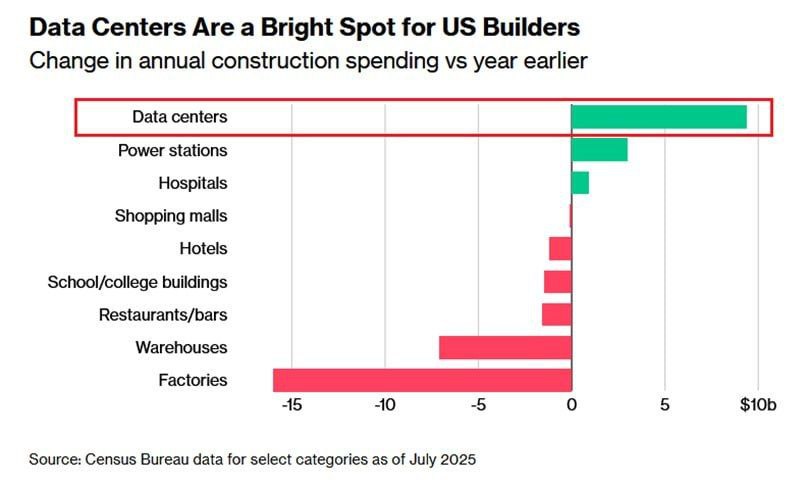
Some further supporting data:


Sure doesn’t look like those tariffs are causing manufacturing to flood back into the US, does it? Data centers and power station building are both AI-related, and as for hospitals, they are part of a protected oligopoly, or, they were until the ACA subsidies were cut. That’s not likely to be good for the health “industry,” which would be wonderful — except that people will die and suffer as a result. “Get rid of part of the shitty way we provide health care now without replacing it with something else.”

Anyway, unless you’re in a monopoly/oligopoly, and have some control, or you’re connected to the AI spigot, the economy is ass. And remember, major tech companies are engaging in mass layoffs, so just working for tech companies won’t protect you; the reverse is true. Unless you’re actively working on AI, you’re first to the gallows, as their workers are where they’re starting with the replacements.

For decades, I warned coders (“engineers”) that their days of being King Shit of Turd Island, pretending their skills were super-special, would eventually come to an end. The moment senior management could figure out how to replace them, they would. Unless you’re truly at the very top of your field, you’re always replaceable — mediocre isn’t as good as average, but it’s usually a LOT cheaper.

Anyway, the end days are nigh. There isn’t much left of the middle class in America, with little left for the rich to steal. The US either changes its politics radically (and Trump has always been a billionaire whose policies are good for billionaires) or the US continues its descent to becoming an unutterable shithole for about 80 percent of its population.

This site is only viable due to reader donations. If you value it and can, please subscribe or donate.

It’s Difficult to Overstate How Concentrated Wealth Is in the US

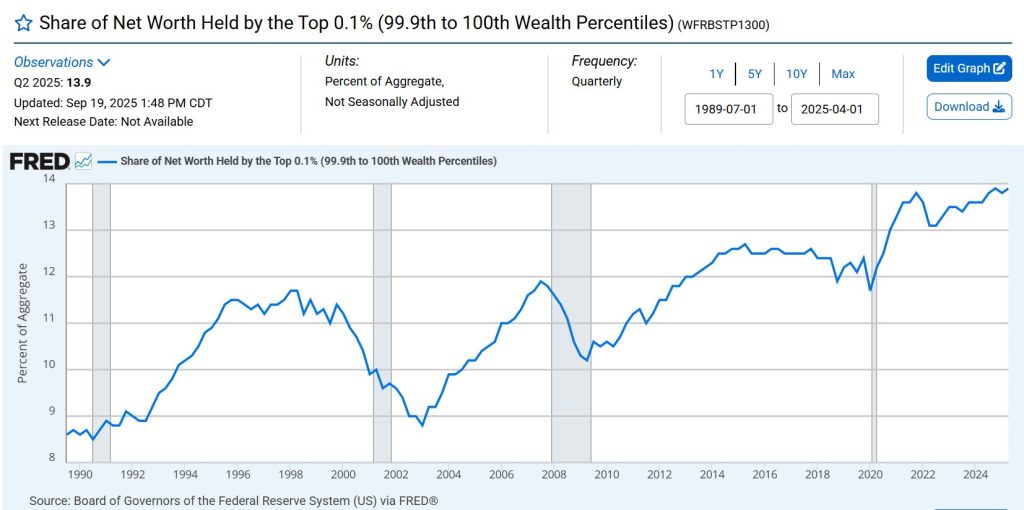
These two charts tell a story. First, the top .1%.

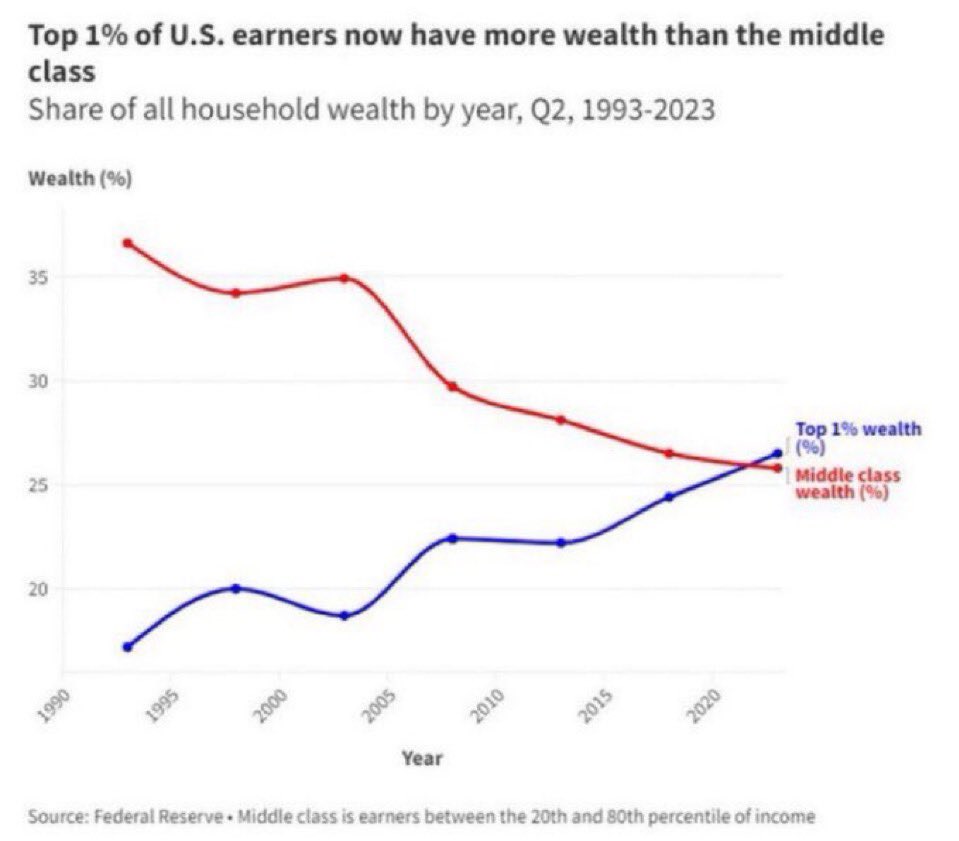
Next, the top 1%. This chart is only to 2023.

Now what you’ll notice is that the top .1% holds about half the wealth of the top 1%.

It’s like this all thru the economy. Everything is flowing to the top, because that’s how the economy is set up. This is sheer insanity, among other things, especially when combined with AI sucking up jobs, its likely to lead to a demand depression. Most rich people don’t get, but a few are waking up.

Meanwhile Trump just went to the Supreme Court to not pay for SNAP food aid. “Starve, peons!” History tells us that food riots are the greatest danger to rulers and it doesn’t take long for them to happen.

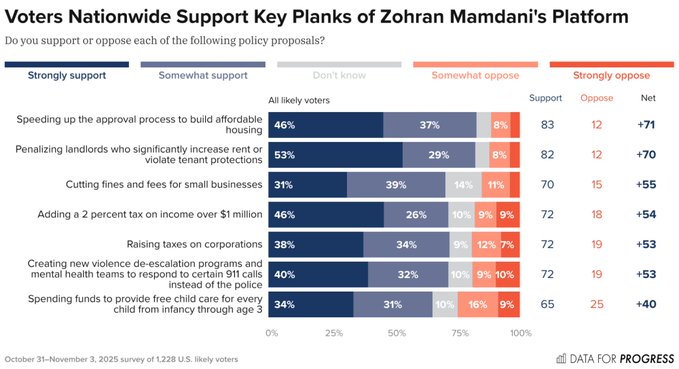
As I said before, there is only ONE issue now. Cost of living. People keep telling me Zohran style policies can’t win outside of NYC. Well…

And the Republicans have a shutdown going to make health care even more unaffordable.

Crazed.

Things are going to start changing politically now, and over the next few years. This is the change, which I said decades ago would start in the mid 2020s. Again, it’s here now, though there’s a lot of slogging to go. It’s not a sure win, of course. Neoliberals or fascists may win (more likely fascists), but really the two main options are left wing populism or right (fake) wing populism. The generational pivot is here, and the “we can’t take it any more, you’ve destroyed the middle and working class” is here.

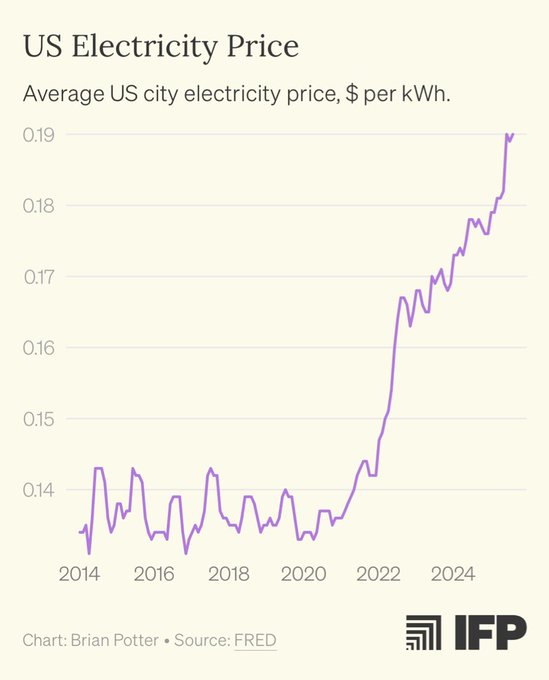
Oh, and one more pretty chart: the effect of our AI overlords on electricity bills:

What can’t go on, doesn’t. There’s not enough middle class wealth left to steal. The US either un-develops or there is a radical change in politics. Either way, politics is going to get a lot more turbulent. There’s a reason why most Trump’s cabinet lives (hides) on military bases now. They know how much they’re hated.

The Personal Politics of Hopelessness

We’re about 3 weeks into our annual fundraiser. Our goal is $12,500 (same as last year). So far we’ve raised $8,180 from 72 people out of a readership of about 10,000. 

If you read this blog, you’re usually ahead of everyone else. You know, years in advance, much of what’s going to happen. The intelligence from this blog is better than what people pay $10,000/year for. Without donations and subscriptions, this blog isn’t viable. If you want to keep it, and you can afford to, please give. If you’re considering a large donation, consider making it matching. (ianatfdl-at-gmail-dot-com).

As I write this I’m eating a sub I bought from across the street. While it was being prepared I chatted with the young woman making it, and she told me about moving from the Canadian Maritimes to Toronto, to, in essence, get a job that pays a little more than minimum wage. Because out in the Maritimes she had trouble getting even that.

I thought to myself that her experience is one that politicians need to have. Many politicians, of course, have never ever had a bad job. They went straight to a good university and from there to a good job or internship. They probably worked hard for it, and think they deserve what they have, never really seeing all the people whose feet were never on that road, who never had the same shot they did.

Then there are a fair number of pols, though less and less every year, who will tell you about the lousy jobs they had as teenagers, or maybe in their early twenties. But in most cases something is different between them and many working class and even middle class folks.

They knew they weren’t staying there.

When I was poor and working in lousy jobs I used to look in the mirror and see myself at 50, or 60. I expected to still be working at grindingly hard jobs, being treated badly by bosses (because there is no rule more iron than that the worse you are paid the worse your employer will treat you), and still being paid little more than minimum wage. That was the future I saw for myself.

And when I was on welfare, after having failed to find a job for 6 months, and even being turned down by McDonalds (in the middle of the early nineties recession) I wondered if I’d even ever have a shitty job again. I ate cheap starchy food, turned pasty and put on weight. My clothes ran down. When my glasses broke beyond the point where tape would keep them together I literally had to beg the optometrist to make me his cheapest pair and I’d pay him later. (I eventually did.) My life was a daily grind of humiliation.

And that’s what I expected my life to be.

When politicians participate in one of those “live on Welfare for a week/month” programs I’m happy, but I’m also dubious. The difference is that they know they’re getting out in a week or a month. They know it’s going to end. Much as I applaud someone like Barbara Ehrenreich, who lived for months working at lousy jobs, again, she knew it was going to end. She knew that, if push come to shove and she became seriously sick, she could opt out. She knew that if she really couldn’t eat for days, that was her choice.

Living without that safety net, knowing that if something goes wrong, that’s just too bad, changes you. Living without any real hope of the future, knowing that the shitty job you’ve got now is probably about as good a job you’re ever going to have, changes you.

And it changes your sense of what hard work is, of what it means to be deserving. I remember working on a downtown construction site as temp labor, and I’d watch all the soft office workers with their un-calloused hands come out for lunch, and I’d wonder why they got paid two or three times what I did for work that was so much easier (and which, of course, I could do, even if I didn’t have a BA.) At the end of the day they might be stressed, but I’d go home physically exhausted from hard labor and so would my co-workers.

Of course, I got out of that. I’d say “I went back to university”, but even though that’s true, it’s not what got me out, since I never finished my BA. Instead what got me out is that I finally got a couple chances to prove what I could do—I got a temp job in an office, and was one of their most productive workers (they measured it.) Later I got invited to blog, and hey, I can write, even if I don’t have a BA. I got lucky. Like most people who get lucky in work, that luck involved a lot of hard labor, but it also involved luck.

But a lot of folks never get lucky despite the fact that they work hard. Perhaps they aren’t really all that bright (half the population, after all, is below average intelligence.) Perhaps they’ve got some personality issues or weak social skills. Perhaps there’s something not quite right in their brain chemistry. Or perhaps they just never catch a break because they aren’t lucky and their parents weren’t well enough positioned to help them get those breaks.

But still, most of them work hard and earn their money, whether it’s barely more than minimum wage or they did get a bit of luck and got one of the few remaining good blue collar jobs.

But when they look in the mirror, they know that the guy or gal looking in the mirror ten or twenty years from now is probably going to be doing the same thing. And they know that they’re one bad break away from losing even the little they have—one illness, one plant closure, one argument with their boss.

They don’t have a lot of hope for the future, except that it won’t get worse. The life they live now is the best it’s probably gonna get.

Living like that changes you. It makes you see people differently. You understand that there are a lot of bad jobs out there, and that someone’s going to be stuck with them. You know that most of those jobs are either hard or humiliating, and often both. You know that for too many people, a shitty job where they’re abused by their boss is as good as it gets.

This all comes to mind because of how Congress and other politicians have acted throughout the auto bridge loan debate. Folks who passed a bill giving their sort of people: wealthy people who went to good colleges, who work with their minds and not their hands in the financial industry, 700 billion dollars without any real oversight wanted to force a cram down of wages and benefits on auto workers. Journalists on TV who were sympathetic to the bailout, dripped with palpable contempt for the idea of “subsidizing unprofitable companies”, something that didn’t bother them when it was soft-handed professionals like themselves on the dole.

The narrative of the GI generation was “first person in my family to go to college”. They came up from poverty, they probably expected to live in poverty all their life, but when the world changed so changed their chances.

It was a generation of opportunity, but what has happened since them is the “closing of the American elite”. Every generation the odds of someone born poor making it into the elite decrease. At this point about 80% of the working class don’t get degrees. The US now has the least inter-generational social mobility in the Western world (it used to have the most). The elites have become self-perpetuating, and they never had to stare in a mirror and know that they may never have more than minimum wage job; that probably this is as good as it gets.

As a result they have no real empathy or understanding of the vast majority of the middle and working class. The elites know they worked hard to be where they are, what they don’t see is that their feet were put on the path from birth, and that every opportunity was given to them. Opportunities that were not so open to those below them, who have to virtually bankrupt themselves to go to university and whose schools were completely broken, even as the value of BA declines to multi-generational lows. Put yourself in debt for 20 years, and it may still not buy you the good life.

That existence, hand to mouth, with no hope, is something America’s elites have never experienced and don’t understand. For them there’s always another opportunity, always another chance: always hope. And what matters to them is when the “deserving”, which is to say, their own class, is in trouble. So they’ll bail out the financial sector, even though it hasn’t made any more profit than the Big 3 in the past 8 years, and unlike the financial sector, didn’t bring down the world economy, but they won’t help out the undeserving whom they don’t understand.

America has become the most class ridden society in the Western world, far worse than Britain. Congressional seats are passed on to family members and friends like corrupt boroughs in 18th century England. The rich are bailed out and ordinary people left to sink. Responsibility is enforced on the least in society while the privileged are allowed to skate. Sell a gram of pot, go to jail; but kill hundreds of thousands in an illegal war and it’s no big deal.

The elites don’t live in the same world as ordinary people. They have become completely disconnected from that world. This is entirely logical on their part, because for 30 years they’ve gotten rich, rich, rich at the same time as ordinary people haven’t had a single raise. When you’re sitting on the top it’s very clear that all boats don’t need to be lifted and that Americans aren’t all in it together. The elites have done just fine, for over 30 years, while the rest of society went to hell.

So there’s no empathy born of shared experience, of the knowledge that sometimes life sucks and no matter what you do, it’s going to suck, and that that’s the way many people live. And there’s no acknowledgment of a need to make America work for everyone, because for the elites, that’s simply not true: America doesn’t need to work for everyone for things to be good for them.

This then, is how they’ve acted. Plenty of help for themselves, for the people they see as part of their group. And very little help for everyone else. Because the elites aren’t like ordinary people, they don’t believe they have many shared interests with you, and they no longer have any real shared experience.

Expect to eat a lot of cake over the next few years if this attitude doesn’t change. The elites, of course, are wrong. At the end of the day a nation without a solid working and middle class always falls into steep decline.

But, as Adam Smith once said, “there’s a lot of ruin in a nation.”

Nonetheless, as many nations have discovered, that amount isn’t infinite.

This is a republished article from 2009.  I think it’s worth putting some of these up occasionally, because most readers won’t have seen the original.

Subscribe or donate.
Trump’s Budget & The NATO 5% Of GDP Requirement Have The Same Effect

Despite all the flakiness and back and forth Trump’s actions have a unified purpose. Like the Democrats, but even more so, they disproportionately benefit the rich. (We’ll leave aside the pandemic response, which is complicated and an emergency.)

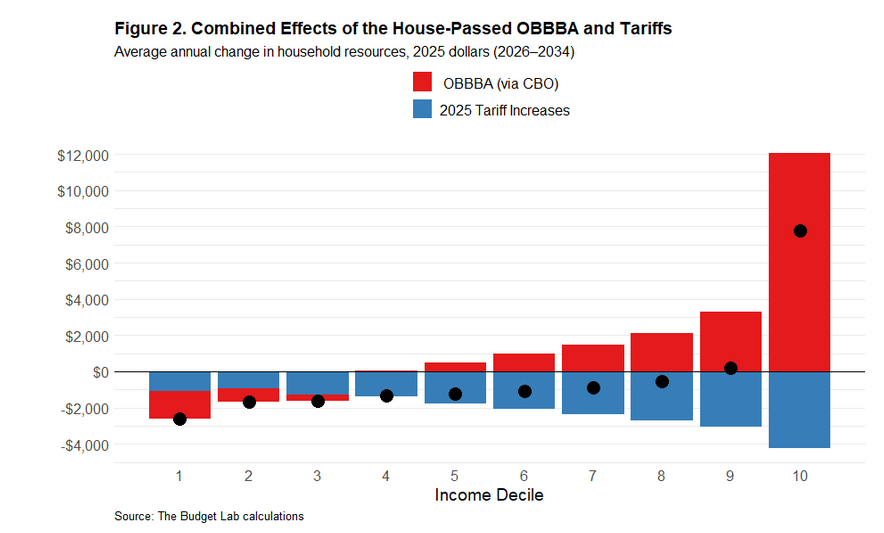
This table is older, and based on the House version of Trump’s budget and tariffs, but should be substantially correct:

Tariffs effect the rich less, because they spend less of their income on goods. The biggest companies often get exceptions to the tariffs as well. Currently that includes Apple, Coca-Cola, Stellantis and GM.

We are also seeing signs of “Greedflation”, using the tariffs as an excuse to raise prices faster than costs. This was huge during the pandemic,and it will be huge this time. Overall the really reach will benefit from tariffs, not be hurt by them. Trump talked a good game about making sure companies wouldn’t use tariffs as an excuse to raise prices, but that’s all it was, talk. For tariffs to improve the lives of the working and middle class, they would have to translate into well paid jobs, and there is no effective mechanism for that in America.

Let us turn then to the “NATO nations must spend 5% of GDP on their military.” That’s a lot, and it means that either taxes must be raised (they won’t be except for consumption taxes on the poor) or other priorities must be slashed. So the poor and middle class in those countries will get it in the neck.

Now, if that 5% was spent on domestically produced weapons and on hiring more soldiers and support staff, at least it would get back into recirculation. Indeed, there’ll be some of it, but most countries have agreed to buy Americans weapons and equipment.

And who will that benefit the most? The American rich.

In some cases buying American is so foolish it boggles the mind. Canada’s only real active military threat is America, and American weapon systems these days are mostly online and can’t be used if America doesn’t want them to be, even leaving aside the possibility of simply bricking them with an update.

But in general, increased military spending was an opportunity for industrial policy and to cut the aprons to the US, and actual statesmen would smile at Trump, make the promises and use the 5% in ways that would benefit their own country. Instead most of the benefits will flow to America.

As for the idea that America is a reliable security partner, well, they couped Ukraine, built its army up massively, encouraged it not make peace when easy and favorable terms were offered and is now cutting a deal with Russia after extorting mineral concessions from Ukraine.

Never ally with America if there is any other option.

But the core point here is simply that the “does it make the rich even richer” metric, which works for American politicians as a group, is even more predictive of Trump. Oh sure, he’ll throw the hoi polloi some social policy red meat, and yes, some of the moderately rich are being hurt by his policies, but the real rich, they’ll mostly make out like bandits.

Until China eats their lunch, which they are and will.

Right now America’s policies appear to be “loot the satrapies and form a non-Chinese bloc which is smaller, weaker and poorer than the China bloc.”

Smells like the USSR to me, except the USSR started out very strong and with higher economic growth than the West. America is trying the strategy as its in terminal decline.


***

If you’ve read this far, and you read a lot of this site’s articles, you might wish to Subscribe or donate. The site has over over 3,500 posts, and the site, and Ian, take money to run.


The Unifying Goal of Right & Center Elites

Getting elites attention

What the right wants from its followers is for them to be riven by hatred of any difference, thus making them easy to manipulate and willing to sell out their economic values in exchange for seeing brown people beaten, and women and trans people losing control over their own bodies.

What neoliberals want is for their followers to be convinced that each group, even each micro group, is on its own, unable to understand each other and thus that solidarity is impossible and all one can hope for is that some member of the identity group is allowed to join the elite, while most of all groups remain in poverty.

They’re very similar, really. In both cases hatred of other groups is inculcated as the core value, as a way of making manipulation easy and avoiding having to actually deal with broad issues of well being.

Both of these are variations on “divide and conquer”. It costs a lot less to give a few people something than to give many people something. “Want some women and minorities in power? Sure. Costs us almost nothing.”

“Want women to be forced to bear rape children and die in pregnancy due to lack of necessary abortions? Sure, costs us nothing. Our women can still get abortions.

“Want trans people excluded and denied health care? Sure, they’re a tiny part of the population and rich trans people will be fine.”

On the other hand giving everyone healthcare would cut a lot of profits. Giving everyone a liveable wage or assistance to those who can’t work or find jobs: that would cost a lot of profits.

“You can have anything you want, as long as it doesn’t make elites poorer.”

On that the right and center are unified.

This blog has always been free to read, but it isn’t free to produce. If you’d like to support my writing, I’d appreciate it. You can donate or subscribe by clicking on this link.


Capitalists Only Respond to Threats

Stumbled on this chart recently:

It kind of tells its own story.

It’s worth reading The Communist Manifesto. People have weird ideas about it, but a lot of it is really unexceptionable. For example, Marx and Engels demanded pensions for old folks.

Capitalists looked at this, and said, “Oh, we can do this if the alternative is worse,” and introduced them. Someone as hard-headed as Bismarck responded this way.

The threat of a credible enemy ideology which treats ordinary people better than capitalists do forces capitalists to change. For a long time, we haven’t had that, but the single party “Marxist-but-with-capitalism” CCP offers another. And yes, they do (overall), treat their workers better, as well as being better at capitalism than capitalists. No one is as obsessed with how markets actually work as Marxist economists.

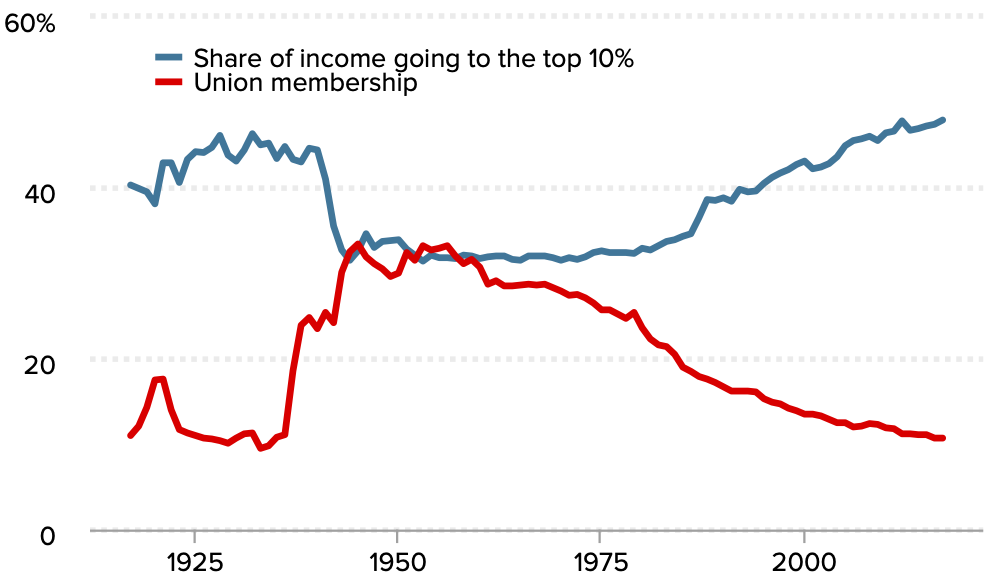
Let’s look at another of my favorite charts:

Oh hey! Having powerful organizations taking the part of workers matters.

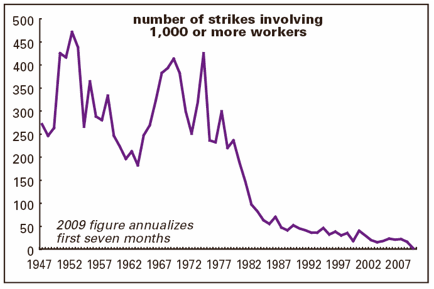
Something happened right after Reagan took power:

Strikes involving more than 1,000 workers

Strikes involving more than 1,000 workers

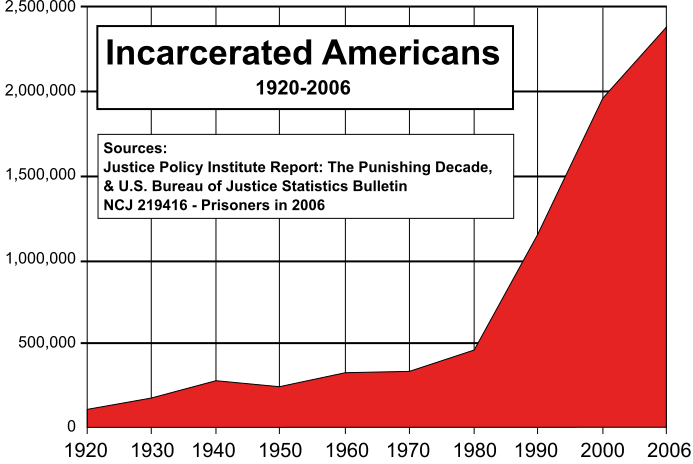
Then there’s this:

(The numbers have gone down since then, but they’re still vastly high, and far, far higher than China.

Break the unions and lock up the people who won’t obey bullshit (a.k.a. drug) laws.

Class war is real, and constantly ongoing, and elites have won that war.

Power and fear is all that capitalists ever respond to.

Always remember that.

This blog has always been free to read, but it isn’t free to produce. If you’d like to support my writing, I’d appreciate it. You can donate or subscribe by clicking on this link.

Page 1 of 37

Powered by WordPress & Theme by Anders Norén