The horizon is not so far as we can see, but as far as we can imagine

Author: Tony Wikrent Page 46 of 48

Week-end Wrap – Political Economy – July 28, 2019

by Tony Wikrent

Strategic Political Economy

These journalists exposed the corruption that led to Puerto Rico’s mass protests
[CNN, via Naked Capitalism 7-24-19]

The World’s Biggest Lawsuit, Juliana v. United States, will force US government to stop climate change
Lambert Strether, July 25, 2019 [Naked Capitalism]

Juliana v. United States is a big and complicated case that has now advanced through two administrations. The original complaint was filed in September 2015; Judge Ann Aiken of Oregon district court rejected the government’s motion to dismiss the case in November 2016…. The American Bar Association, in “Can Our Children Trust Us with Their Future?,” describes the scale of the case and the stakes:

The 2016 ruling in Kelsey Cascadia Rose Juliana v. USA is one of the greatest recent events in our system of law. (See Opinion and Order, Case No. 6:15-cv-01517-TC, US District Court for Oregon, Eugene Division. Anne Aiken, Judge, filed 11/10/16.) A group of children between the ages of eight and nineteen filed suit against the federal government, asking the court to order the government to act on climate change, asserting harm from carbon emissions. The federal government’s motion to dismiss was denied. Although I am not involved in the case, I am a lifelong environmentalist, and I teach environmental law (to non-law students). This case is a shining example of what law can be. This case gives me hope that we will not continue to cooperate in our own destruction, and future generations will be able to rely on us to uphold the spirit of the law and purpose behind government….

So Juliana v. United States is a lawsuit that’s being sponsored and facilitated by Our Children’s Trust, which is a nonprofit organization in Eugene, Oregon, that’s been working on atmospheric climate litigation to try to deal with the climate crisis for a while. So our lawsuit was filed in August of 2015, with 21 plaintiffs from all over the country that each have their own complaint, as part of a large declaration that gives a standing to sue the U.S. Federal Government. And basically, we’re asserting that the U.S. Federal Government has known since 1960 that climate change could be potentially disastrous. We have proof from administrations going back all the way to the Johnson administration, saying that they knew climate change could be an issue and they knew that fossil fuel infrastructure was causing it. And the U.S Federal Government still chose to take direct action to continue to perpetuate the fossil fuel industry and the U.S. fossil fuel economy that we have.

And we’re asserting that by taking that direct action, they’ve disproportionately put the rights of young people at risk, and the rights of life liberty and property as promised to us in the Constitution….

….
From The New Yorker, in “The Right to a Stable Climate Is the Constitutional Question of the Twenty-first Century“:

Week-end Wrap – Political Economy – July 20, 2019

by Tony Wikrent

Strategic Political Economy

“Can the Left Even Understand Why the Right is winning?”

Philip Mirowski, who has detailed the history of the “neoliberal thought collective,” the Mont Pelerin Society, posted the first draft of a new paper,  “Can the Left Even Understand Why the Right is winning?” It can be viewed if you register with www.academia.edu and Mirowski grants you permission. Explaining the rise of Trump and a conservatism that is increasingly open about its bigotry,  Mirowski rejects the “bromidic term ‘populism’” and points instead to

the recent bounty of exceptional work on the history of neoliberalism [including] Quinn Slobodian, Globalists (Harvard, 2018); Wendy Brown, Undoing the Demos (Zone, 2015); Thomas Biebricher, The Political Theory of Neoliberalism (Stanford, 2018); Nancy MacLean, Democracy in Chains, (Viking, 2017); Melinda Cooper, Family Values (Zone, 2017); and Jessica Whyte, The Morals of the Market, (Verso, 2019).

Mirowski observes:

…it seems many activists on the left hold out few ambitions for any sort of ‘fusionist’ project themselves, and instinctively shy away from an explicit political economy, and therefore have not been capable of understanding the relative unity of the forces arrayed against them. If someone suggests otherwise, the tendency has been to disparage such thinking as tainted by ‘conspiracy theories’….

The biggest intellectual failure of the left is its demonstrated incapacity to theorize the role and significance of markets. Curiously, unlike the most sophisticated neoliberals, much of the left still buys into the myth of the government vs. the market. That is, they imagine a separate entity called government existing outside of something called ‘the market’, with the former possessing the wisdom to identify ‘market failures’ and rectify them with judicious ‘regulation’.

After discussing how neoliberals themselves have not agreed on any exact definition of “markets” — perhaps intentionally (“to render political action by the masses so difficult as to be permanently stymied, both by restricting the franchise but also by the strategic production of ignorance, which renders political understanding inchoate”) — Mirowski gets to his key critique of the left’s ignorance concerning neoliberalism:

There are two very important facts about neoliberals that the left needs to take to heart: [1] They do not believe in laissez faire, but are unrepentantly constructivist about government—that is, they acknowledge the tenet that their minions must occupy the government at whatever level (local, national, transnational) and in whatever ways are deemed effective to bring about the sort of ‘reforms’ they believe are urgent; and [2] They take seriously the epistemic premise that people are generally imperfect cognitive beings, and that (their definition of) The Market knows more than any human being ever could about the world. Both principles may seem rather paradoxical given their publicly stated doctrines, something that numerous writers have explored in detail.  But those on the Left seem especially incapable of taking either one seriously, and thus to attain understanding how these two principles interact.

Ever since Hillary Clinton lost a presidential election that was uniquely hers to lose, I have thought it almost comical that we have Democratic Party elites and liberal leaders who, on one hand, have repeatedly rejected the argument that the creation and promotion of movement conservatism amounts to a dedicated conspiracy by wealthy reactionaries with manifold ties to Wall Street, and on the other hand, have been almost hysterical in their insistence that the election was stolen from Hillary by a conspiracy run by Vladimir Putin and his Russian minions. Why they reject the one conspiracy theory but embrace the other, is not too difficult to understand, in the context of the USA political system’s utter dependency on the rich for campaign contributions.

During my community organizing days in the 1980s, when I was with a radical group within the Democratic Party trying to stop NAFTA, I repeatedly encountered an unwillingness among leftists to even consider direct political action targeting specific individuals responsible for political atrocities. This unwillingness to “name names” approached hysteria when facts were presented that much of the USA industrial base was being bought and looted by “leverage buyout” corporate raiders with significant financial backing from organized crime. I remain of the opinion that this unwillingness to face these facts was a reflection of personal and institutional cowardice to confront the immense political power of Wall Street, and the potentially violent retribution of organized crime. Especially by the late 1980s, when it was clear to those willing to see that Wall Street and organized crime had pretty much merged. (See for example the conclusion by Catherine Austin Fitts, managing director of Dillon, Read & Co. at the time, that the $25 billion buyout of RJR Nabisco in 1989 only made sense if Kohlberg Kravis and Roberts — and whoever KKR actually was acting on behalf of — needed to launder billions of dollars of dirty money).

Week-end Wrap – Political Economy – July 14, 2019

by Tony Wikrent

Alarming after-effects of Republican budget cutting in North Carolina 
Savage tick-clone armies are sucking cows to death; experts fear for humans
[ars technica, via Naked Capitalism 7-13-19]

Ravenous swarms of cloned ticks have killed a fifth cow in North Carolina by exsanguination—that is, by draining it of blood—the state’s Department of Agriculture and Consumer Services warned this week….

The tick—the Asian longhorned tick, or Haemaphysalis longicornis—was first found terrorizing a sheep in New Jersey in 2017 and has established local populations in at least 10 states since it sneaked in. Its invasive sweep is due in large part to the fact that a single well-fed female can spawn up to 2,000 tick clones parthenogenetically—that is, without mating—in a matter of weeks. And unlike other ticks that tend to feast on a victim for no more than seven days, mobs of H. longicorni can latch on for up to 19 days.

The state government is North Carolina no longer has any capability to respond to this type of new public health threat – the Republicans who took control of the state legislature in 2010 eliminated the  Public Health Pest Management Section — which included the state’s tick control and research programs — in their 2011 budget. 

Strategic Political Economy

Week-end Wrap – Political Economy – July 6, 2019

Week-end Wrap – Political Economy – July 6, 2019
by Tony Wikrent
Economics Action Group, North Carolina Democratic Party Progressive Caucus

I tremble for my country when I reflect that God is just

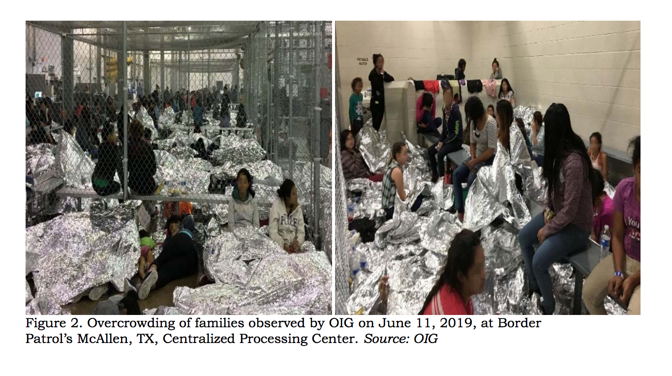
What a Pediatrician Saw Inside a Border Patrol Warehouse
[The Atlantic, , via Naked Capitalism 7-5-19]

Dolly Lucio Sevier evaluated dozens of sick children at a facility in South Texas. She found evidence of infection, malnutrition, and psychological trauma.

At Ursula, however, the children Sevier examined—like the panting 2-year-old—were “totally fearful, but then entirely subdued,” she told me. She could read the fear in their faces, but they were perfectly submissive to her authority. “I can only explain it by trauma, because that is such an unusual behavior,” she said. Sevier had brought along Mickey Mouse toys to break the ice, and the kids seem to enjoy playing with them. Yet none resisted, she said, when she took them away at the end of the exam. “At some point,” Sevier mused, “you’re broken and you stop fighting.”

….Border Patrol has long maintained that it is not equipped to handle children, who are supposed to be transferred into the custody of the Office of Refugee Resettlement within three days. After that, many kids are housed in licensed child-care facilities that look more like the average public school than a jail. The federal government has attributed slow transfers to the sharp uptick in the number of migrants at the southern border; in May, 144,200 migrants were taken into custody—the highest monthly total in 13 years.

Days before Sevier’s visit, reports of poor conditions at a similar facility in Clint, Texas, drew outrage around the country. Kevin McAleenan, the acting head of the Department of Homeland Security, told reporters the outcry was based on “unsubstantiated allegations regarding a single Border Patrol facility.”
But his own agency’s watchdogs soon contradicted him—the problems are not restricted to Clint.

Predatory Finance

Bloomberg Businessweek, via The Big Picture 7-6-19]

The British Virgin Islands is home to more than 400,000 companies that hold $1.5 trillion in assets…. Even though he helped get it up and running, Geluk doesn’t have permission to scan the whole database. In fact, only two people, a pair of unnamed employees of the BVI’s Financial Investigation Agency, are able to search the entire system, which holds details on about 600,000 owners who have directly or indirectly controlled companies here. It’s thought that roughly a third of all offshore companies globally are registered in the BVI….

Week-end Wrap – Political Economy – June 29, 2019

Week-end Wrap – Political Economy – June 29, 2019
by Tony Wikrent
Economics Action Group, North Carolina Democratic Party Progressive Caucus

Strategic Political Economy

Jan Fichtner, Eelke Heemskerk, Javier Garcia-Bernardo, May 11, 2017 [The Conversation, via Alternet]

Disrupting mainstream economics

The new left economics: how a network of thinkers is transforming capitalism
[The Guardian, via Naked Capitalism 6-27-19]

There is a dawning recognition that a new kind of economy is needed: fairer, more inclusive, less exploitative, less destructive of society and the planet. “We’re in a time when people are much more open to radical economic ideas,” says Michael Jacobs, a former prime ministerial adviser to Gordon Brown. “The voters have revolted against neoliberalism.

Climate and environmental crises

Week-end Wrap – Political Economy – June 22, 2019

by Tony Wikrent

I apologize for the absence from last week. My computer crashed last Saturday night, and blew away a chunk of the operating system, so could not be rebooted until placed in the hands of a skilled PC doctor.

Strategic Political Economy

Facebook’s plan to create a global currency are insane and must be resisted. Ten good reasons: (
[Twitter by Nicholas Shaxson, author of Treasure Islands: Tax Havens and the Men Who Stole the World, via Naked Capitalism 6-21-19]The way we structure money and payments is a question for democratic institutions, not technology companies.
By Matt Stoller [New York Times, via Twitter 6-20-19]

There are four core problems with Facebook’s new currency. The first, and perhaps the simplest, is that organizing a payments system is a complicated and difficult task, one that requires enormous investment in compliance systems….

The second problem is that, since the Civil War, the United States has had a general prohibition on the intersection between banking and commerce. Such a barrier has been reinforced many times, such as in 1956 with the Bank Holding Company Act and in 1970 with an amendment to that law during the conglomerate craze. Both times, Congress blocked banks from going into nonbanking businesses through holding companies, because Americans historically didn’t want banks competing with their own customers. Banking and payments is a special business, where a bank gets access to intimate business secrets of its customers. As one travel agent told Congress in 1970 when opposing the right of banks to enter his business, “Any time I deposited checks from my customers,” he said, “I was providing the banks with the names of my best clients.”

Imagine Facebook’s subsidiary Calibra knowing your account balance and your spending, and offering to sell a retailer an algorithm that will maximize the price for what you can afford to pay for a product. Imagine this cartel having this kind of financial visibility into not only many consumers, but into businesses across the economy. Such conflicts of interest are why payments and banking are separated from the rest of the economy in the United States….

The third problem is that the Libra system — or really any private currency system — introduces systemic risk into our economy…

We should not be setting up a private international payments network that would need to be backed by taxpayers because it’s too big to fail.

And the fourth problem is that of national security and sovereignty….

Years ago, Mark Zuckerberg made it clear that he doesn’t think Facebook is a business. “In a lot of ways, Facebook is more like a government than a traditional company,” said Mr. Zuckerberg. “We’re really setting policies.” …The way we structure money and payments is a question for democratic institutions. Any company big enough to start its own currency is just too big.

Restoring balance to the economy

“Poor People’s Moral Budget: Everybody Has the Right to Live” (PDF)

[Rev. Dr. William J. Barber II and Rev. Dr. Liz Theoharis, Poor People’s Campaign, via Naked Capitalism 6-19-19]

From the “Findings”:

The United States has abundant resources for an economic revival that will move towards establishing a moral economy. This report identifies:

  • $350 billion in annual military spending cuts that would make the nation and the world more secure;
  • $886 billion in estimated annual revenue from fair taxes on the wealthy, corporations, and Wall Street;
  • and Billions more in savings from ending mass incarceration, addressing climate change, and meeting other key campaign demands.

The below comparisons demonstrate that policymakers have always found resources for their true priorities. It is critical that policymakers redirect these resources to establish justice and to prioritize the general welfare instead. The abundant wealth of this nation is produced by millions of people, workers, and families in this country and around the world. The fruits of their labor should be devoted to securing their basic needs and creating the conditions for them to thrive. At the same time, policymakers should not tie their hands with “pay-as-you-go” restrictions that require every dime of new spending to be offset with expenditure cuts or new revenue, especially given the enormous long-term benefits of most of our proposals. The cost of inaction is simply too great.

Lambert Strether notes: “This is, if not MMT, at least MMT-adjacent. It focuses on resources, not money, and it wants to drive a stake into PayGo’s heart-equivalent-if-any. The report is also a useful baseline for Democrat presidential candidates.”

Ellen Brown: The American Dream is alive and well — in China
[Public Banking Institute 6-22-19]

In her latest article in Truthdig, PBI Chair Ellen Brown asks why, if Chinese workers are desperately poor and exploited as we are led to think, a whopping 90% of Chinese families can afford to own their homes, in one of the most expensive real estate markets in the world. One major reason, she argues, is that the Chinese government and its state-owned banks support workers and local businesses, making the cost of living for Chinese families much lower than in the US.

“[Implementing] a form of monetary expansion that would allow Congress to relieve medical and educational costs, grant cheap credit to states to upgrade their roads and mass transit, and support local businesses could go a long way toward making American workers competitive with Chinese workers. Unlike the U.S. government, the Chinese government supports its workers and its industries. … Meanwhile, the U.S. model has been regressing into feudalism, with workers driven into slave-like conditions through debt. In the 21st century, it is time to upgrade our economic model from one of feudal exploitation to a cooperative democracy that recognizes the needs, contributions and inalienable rights of all participants.

The Failure of Establishment Neoliberal Economics

Week-end Wrap – Political Economy – June 8, 2019

This post is by Tony Wikrent

You read it here first

The Green New Deal has forced into public discourse the fact that solving the crisis of climate change is going to require trillions of dollars of new investment. A recent example: 

Ocasio-Cortez: $10 trillion needed for effective climate plan
[The Hill, via Naked Capitalism 6-6-19]

Freshman Rep. Alexandria Ocasio-Cortez (D-N.Y.) said Wednesday that any plan to sufficiently address the climate crisis will need to cost at least $10 trillion.

“I think we really need to get to $10 trillion to have a shot,” the progressive firebrand said in response to a question from The Hill in the Capitol.

“I know it’s a ton,” she added. “I don’t think anyone wants to spend that amount of money, it’s not a fun number to say, I’m not excited to say we need to spend $10 trillion on climate, but … it’s just the fact of the scenario.”

If you had been reading Real Economics, in December 2014:
Dear Dems: Give me $100 trillion and I’ll save your sorry ass

“$100 trillion to build a new economy” will be another test, but one that we need to impose over the coming two years. It can completely transform what issues are defined, and how, for the 2016 election. We need to get general public awareness of the need for “$100 trillion to build a new economy” – and how doable it actually is. Once we do that, it will be a relatively simple matter to determine if someone is serious about solving the problems we face. The next time we meet someone who is a leader in the Democratic Party, mention the fact that we need “$100 trillion to build a new economy” and watch carefully how they react. If they are hopeless neo-liberal water carriers for our would-be corporatist overlords, they will recoil in horror, or try to argue that such a huge amount is simply preposterous. Anyone who is stuck talking about programs of a few billion, or even a few hundred billion dollars, is simply completely uninformed about the problems we face – or just not willing to face reality – because reality is that we can no longer afford to let Wall Street play funny money games. We must figure out how to impose new laws and regulations that force banking and finance to serve the general welfare, not just private gain.

And about Trump and USA politics: if you had been reading this blog, Real Economics, in June 2014:
The best of times. The worst of times.

….what is needed to survive, we have already at hand. We have the science, and we have the technology. What we do not have is the political will to create crash programs to apply that science and technology, because that would require crushing our present rulers and leaders. Indeed, one half the formal political system in the USA has devoted itself to opposing science. And much of the other half has devoted itself to opposing technology.

But what we lack most of all, is VISION. We do not have a coherent, plausible, positive vision. And without vision, the people will perish – another hard-learned lesson of human history the world’s major religions warn us about.

The 2008 Obama campaign showed us how powerful a vision of hope can be, no matter how much of a charade it might be. What do you think would be the electoral results if Democratic candidates starting telling people we are actually on the verge of a massive new economic boom? Because there is $100 trillion of work we need to do to solve the problem of climate change. This new boom will last for decades, just like the boom unleashed after World War 2 by meeting pent-up consumer demand and rebuilding Europe and Japan. I believe, in a few years or decades, the harshest and most important historical judgement of President Obama will be that he took office at a point where he could have led the nation and the world into a new golden age of capitalism, but instead chose to defend the status quo, and as a result the populist upsurge against the status quo veered right instead of left. (Bolding not in original 2014 posting.)

Strategic Political Economy

Corn That Won’t Get Planted This Year Could Shatter All U.S. Records
Michael Hirtzer , Isis Almeida , and Dominic Carey, May 30, 2019 [Bloomberg]

Rabobank is predicting an unprecedented number of unplanted acres of corn, the most widely grown American crop. A Bloomberg survey of 10 traders and analysts indicates growers could file insurance claims for about 6 million corn acres they haven’t been able to sow, almost double the record in 2013.

Intense Rainfall Is As Damaging to Crops As Heatwaves and Drought, and Climate Change Is Making It Worse

[Yale Environment360, via Naked Capitalism 6-5-19]

It is fundraising time. I hope to be able to keep writing at a fair pace (an article almost every day.) To justify doing so, I need to see that people care enough to give. If you do, Please Donate.


Warren’s Astonishing Plan for Economic Patriotism
The Massachusetts senator presents by far the most serious proposal to bolster American industry.
Robert Kuttner, June 4, 2019 [American Prospect, via Naked Capitalism 6-5-19]

Warren’s proposal does nothing less than turn inside out the globalist assumptions pursued by the past several administrations, Democrat and Republican alike. Where they have pursued more globalization of commerce as an end in itself (and as a profit center for U.S.-based multinational corporations and banks), Warren’s goal is to bring production and good jobs home.

Even better, she knits it all together with a coherent plan, beginning with a new Department of Economic Development “with the sole responsibility to create and defend quality, sustainable American jobs.”

The new Department will replace the Commerce Department, subsume other agencies like the Small Business Administration and the Patent and Trademark Office, and include research and development programs, worker training programs, and export and trade authorities like the Office of the U.S. Trade Representative. The new Department will have a single goal: creating and defending good American jobs.

Globalization didn’t just happen, Warren points out.
“America chose to pursue a trade policy that prioritized the interests of capital over the interests of American workers. Germany, for example, chose a different path and participated in international trade while at the same time robustly—and successfully—supporting its domestic industries and its workers.”

By contrast:
Biden girds for clash with Trump over China
Politico, via Naked Capitalism 6-6-19]

Donald Trump’s campaign is itching to take on Joe Biden over his pro-free trade past and his comments downplaying the China threat — an issue Republicans see as especially potent in critical Rust Belt states where Trump is struggling and the former vice president has strength…. [Biden:] “Our workers are literally three times as productive as workers … in Asia. So what are we worried about?”

A Cross-Atlantic Plan to Break Capital’s Control

Week-end Wrap, June 2, 2019

by Tony Wikrent

Strategic Political Economy

[Valdai Discussion Club, via Naked Capitalism 5-26-19]

When analyzing the place that Russia and China occupy in each other’s bilateral trade, there is an imbalance arising from the difference in the size of the two economies. But it is hard to think of a way China could use it to blackmail or pressure Russia. Fuel and energy resources dominate Russia’s exports to China as well as Russian exports in general – fossil fuels accounted for 73 percent of its 2018 supplies. Russia is one of the main suppliers of oil to China, competing for first place with Saudi Arabia.
This does not speak well of the structure of the modern Russian economy. But, from a political standpoint, all prior experience tells us that trade in energy products creates a strong interdependence between supplier and buyer. Unlike other types of goods, any pressure on energy exporters is always associated with immediate and significant losses for the importing country, so it is only used as a last resort in rare cases.

Tech cold war: how Trump’s assault on Huawei is forcing the world to contemplate a digital iron curtain

[South China Morning Post, via Naked Capitalism 5-26-19]
I distinctly remember 20 and more years ago repeatedly arguing with conservatives in AOL message boards that utilizing cheap Chinese labor for manufacturing was going to cause long-term strategic shifts and problems that would greatly afflict USA interests. Their responses were unequivocal and never varied: an ideological recitation of the benefits of free trade, most especially how trade with USA would sneakily introduce changes into China and force adoption of “democracy.” The only variation from this line was the occasional addition of complaining that American workers were paid too much, and expected too much. 
 
[FifthDomain, via Naked Capitalism 5-26-19]
Mark Sumner, June 1, 2019 [DailyKos]

China’s Plan To Influence Global Commodity Pricing

[SafeHaven, via Naked Capitalism 6-1-19]

The Electric Vehicle Revolution Will Come from China — not the US
by Lambert Strether [Naked Capitalism 5-26-19]

[Asia Times, via Naked Capitalism 5-27-19]

(I am fundraising to determine how much I’ll write this year. If you value my writing and want more of it, please consider donating.)


The Failure of Establishment Neoliberal Economics

Page 46 of 48

Powered by WordPress & Theme by Anders Norén