The horizon is not so far as we can see, but as far as we can imagine

Category: The Twilight of Neoliberalism Page 1 of 16

China Thinks Ahead To Reduce Its Reliance On Petroleum

Near the start of the war I noted that the real issue with petroleum shortages wasn’t gasoline, it was diesel, bunker fuel (ships) and jet fuel.

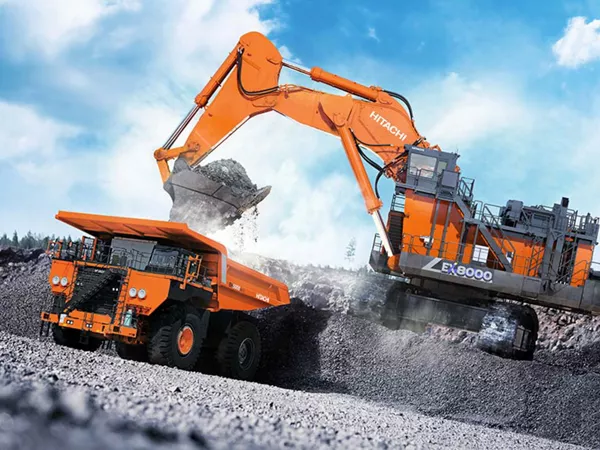
Diesel is, despite what many say, feasible to get off of: even some of the massive machines used for mining are already being switched over, and China is moving hard on electric freight trucking.

Hitachi Electric Excavator

But large freighters and super tankers are a lot harder. Electric can work for coastal freighters, but it doesn’t work for long haul shipping because you need constant recharging.

Enter Green Ammonia. This is part of China’s push on hydrogen tech. It’s currently more expensive than bunker fuel, but projections show it might hit parity by 2030, at least for the Chinese, since they’re scaling it hard. It’s made from hydrogen extracted from water, and nitrogen extracted from air, and it has zero emissions (though that’s not what this about.)

What’s important here is that if your shipping fleet uses Green Ammonia, it doesn’t matter if the supply of hydrocarbons is cut. It can still move. China’s been buying up ports all over the world, refueling can occur at them, and it works almost as well as bunker fuel, so you can make long trips across the Atlantic or Pacific if needed. (Indeed, if it’ll reach price parity by 2030, we can assume it will be cheaper by 2035, given the Chinese record on scaling.)

That means the only major vulnerability left is jet fuel, and I’m aware of no real substitues that can scale in the immediate term, though there are efforts underway. Fundamentally, however, air shipping is far less important than ocean shipping, and air travel is a luxury good. Nice to have, but not necessary to have. Jet fuel is important, strategically, for the military.

The point here is that China thinks ahead. They look at strategic vulnerabilities and they do something. This is, in part, about de-carbonization, of course, but strategically it’s a movement towards more self-reliance and less vulnerability. It also emphasizes that hydrocarbons are a wasting asset. You cannot, long term, base your economy on them. You must find a replacement if they’re your main source of foreign exchange.

The world’s changing, and in part it is changing because China is changing it. The great tech revolution of the last 40 years was telecom/chip based, but the fundamental blocks of our society remained hydrocarbon engine based. It’s China, more than anyone else, who is moving as fast as it can to an electrified economy that is not reliant on hydrocarbons, a change in the economic engine which has run our societies since the 40s or so. (The switchover from a coal/steam based economy started much earlier but took a long time.)

China makes the future, the rest of us fight over the bones of the past.

Everyone reads these article for free, but the site and Ian take money to run. If you value the writing here and can, please subscribe or donate.
American Profits Are One Of The Causes of American Decline

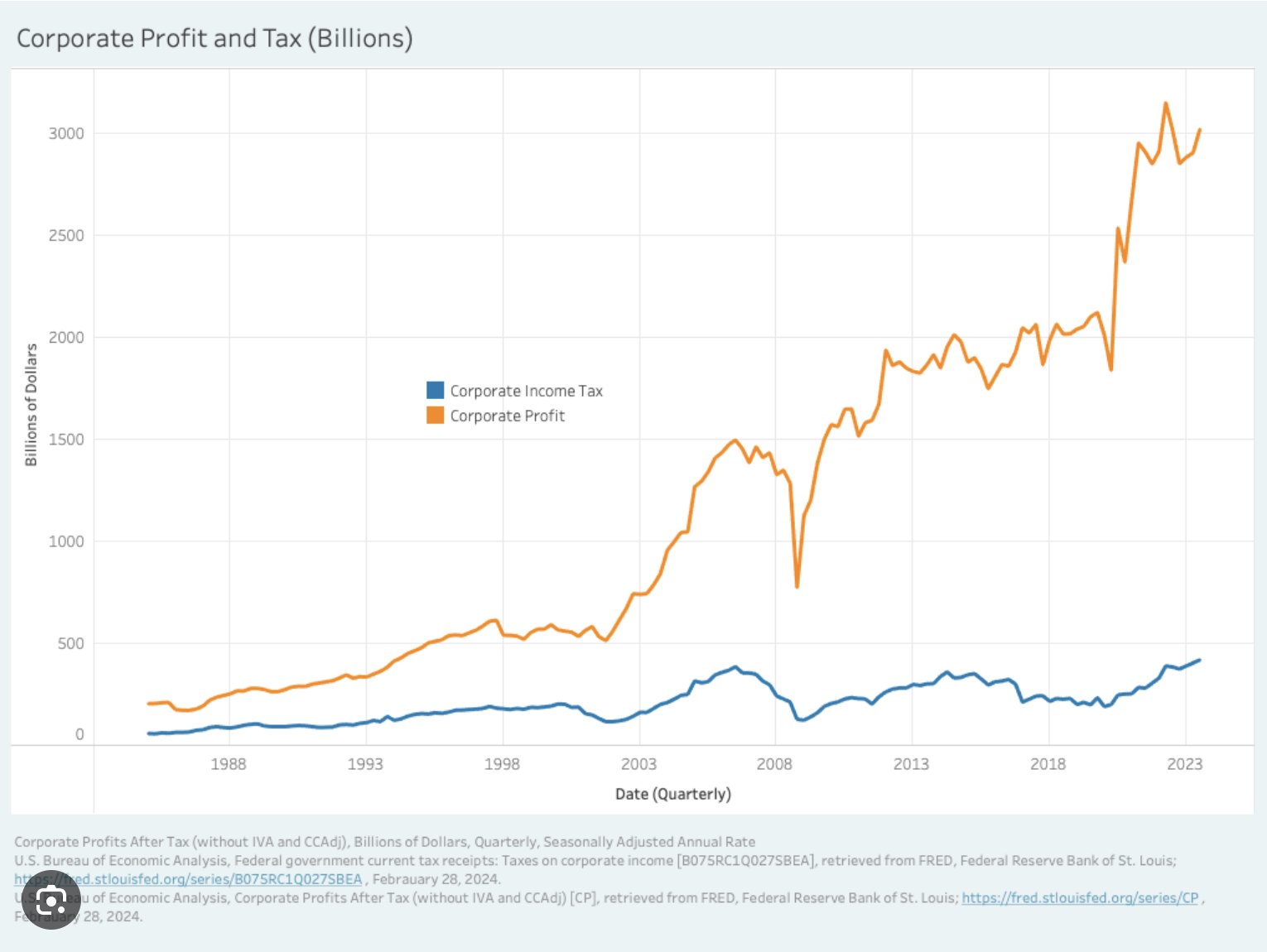
Stumbled upon this chart of US corporate profits vs. corporate taxes. The important part isn’t the taxes, it’s the profits. (Note that this is nominal and doesn’t include inflation adjustment, not that American inflation numbers mean anything anyway.)

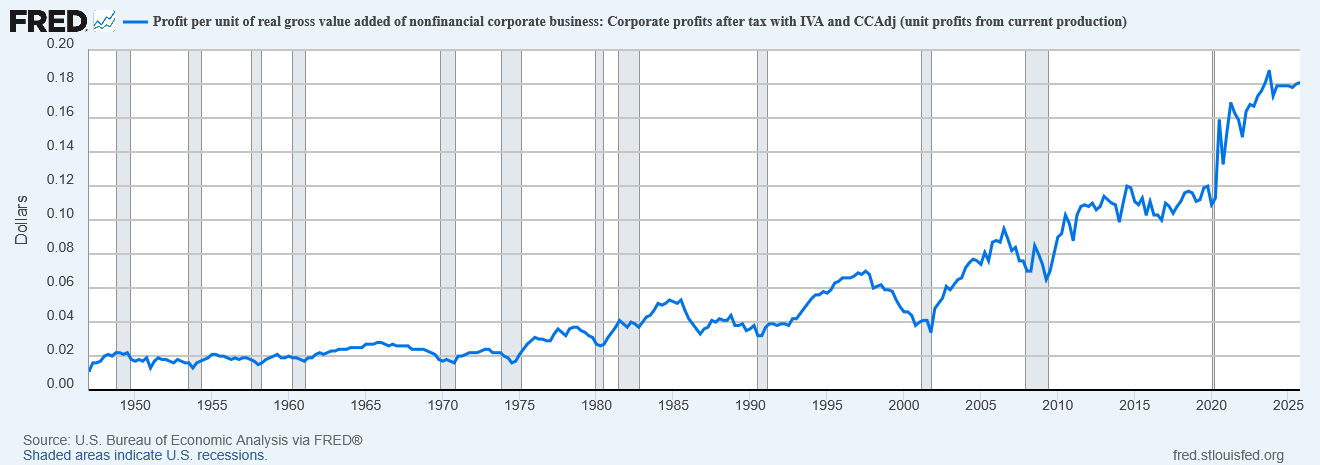
Now let’s look at another chart. This one of his how much profit companies that produce actual products (aka. not finance, insurance and so on) make per dollar of GDP added.

Notice that the long term rate through the “good” period of American prosperity (where there was a huge middle class and wages rose at the same rate as productivity) is pretty steady, and never goes above about 13cents to a dollar. It starts rising around 76 (Carter, who was very neoliberal)and continues a sustained rise, with a huge spike after Covid.

What you see in America are constant fears of inflation. Every single BLS adjustment to inflation rate measures that I am aware of since 1980 has had the net effect of reducing stated inflation. The real inflation rate in America is massive.

Meanwhile, in China, the constant fear is deflation.

Why? Because China has competitive markets and America does not. Barriers to entry are high, and everyone is looking for high profits thru barriers to competition. American firms took economic studies that showed that in competitive markets profits were low and spent all their time trying to make markets un-competative so they could have high profits. This mostly meant capturing government, because it is government regulation and enforcement which keeps markets competitive.

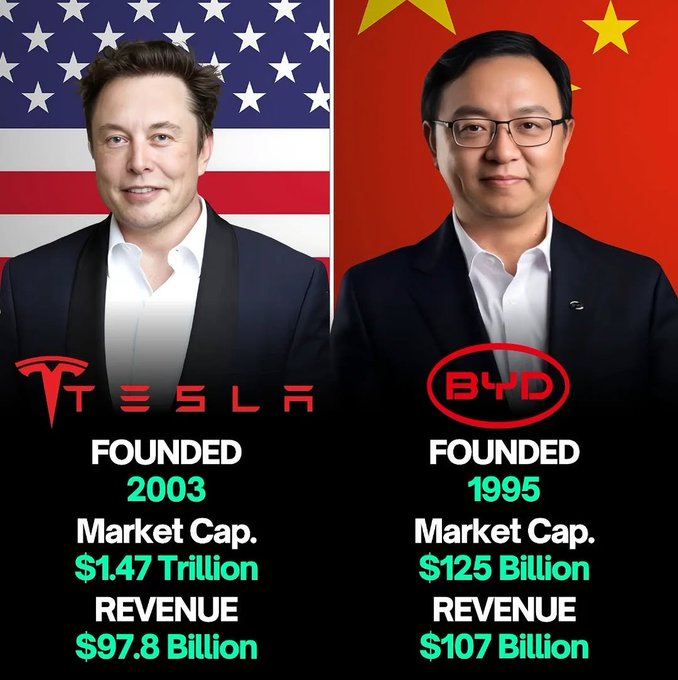
China wants competitive markets in most sectors, except those which provide public goods. They are aggressive about it. Chinese firms compete on quality and price and often engage in price wars, so much so that sometimes the government steps in to stop them from driving themselves bankrupt. Last time I checked the the EV manufacturing market I found over a hundred companies. The competition is savage.

So Chinese companies have low prices, “over production” and constantly introduce new models and products to try and either increase quality or price. Tesla goes years between new models, Chinese companies sometimes introduce multiple new models a year.

Everyone wants to get a share of high US profits, that’s one reason why money floods into the US. But US companies have become uncompetitive. They keep effectively shrinking: more profits, sure, but only by slowly, then quickly, destroying the companies. This is why the US has 100% tariffs on Chinese EVs, if they let them in at all. And now they’re losing their foreign markets, as Europeans and Canada start letting in Chinese EVs.

The story is similar in most industries. America and Europe can’t compete. Period. Because instead of trying to be competitive, they’ve tried to create non-competitive markets and then soaked their customers as hard as possible. This works, till there isn’t any competition, or until you destroy your customers, who are also your employees, because US companies have also been keeping wage increases for everyone except executives and a few key employees (used to be programmers, but they’re about to get it in the neck) below price increases.

And this is how you wind up with 50% of all spending being done by 10% of the population, making most of America’s population economic cripples. It’s why you can’t afford tickets to a rock concert or a sports game, even though those were once solidly middle class pursuits and affordable to the poor.

This is a specific example of a general rule that you can always extract more profit if you’re willing to drive your company or your country into the ground.

About 20 years ago I wrote an article titled “there was a class war. The rich won.”

They’re still winning, but by doing so they have destroyed America’s place in the world, and indeed, the entire West’s. Hundreds of years of Western dominance are coming to an end because these greedy bastards wanted high profits for fifty years, and didn’t care what they did their country or most of their fellow citizens.

Everyone reads these article for free, but the site and Ian take money to run. If you value the writing here and can, please subscribe or donate.
When Does Money Matter?

The core reason for America and Europe’s decline (and, in a way, Japan’s) was the belief by our elites that money was the only thing which mattered.

Money is the ability command resources from anyone who will, or must, sell. People who need to sell their labor or starve—Marx’s famous “whip of hunger.” Countries who must sell to get your money because you either make them militarily (see Venezuela right now and Iraq, both of which must sell their oil in US dollars and let the US treasury keep the money on account for them, then decide what they can spend it on, plus, of course the entire colonial era); or because they need to buy what you have.

For a long time the West had a monopoly on much of what you had to have: medicines, engines, planes, cars, tractors, fertilizer and so on. The Petrodollar was about having a monopoly on oil and all its products: gasoline, diesel, bunker fuel, jet fuel, plastics and fertilizer again. If you wanted electricity, well the equipment to make it came from the West too. If you wanted advanced weapons — the West, especially after the fall of the USSR.

During the early post war period you had options: you could get most of this from the West or the Soviets. But starting in the 70s, the USSR went into decline and then it fell, and the West was the only option.

Back to American elites: since everyone had to buy in dollars, and because they needed to get so much from the West, also had to sell in dollars, well having dollars was all that mattered. The more dollars, the more power.

What the elites forgot, thanks to complete retards like Francis Fukuyama, and sheer stupidity and greed was that smarter people than them had arranged the system this way: that it was contingent on the West having what everyone else needed, and having the military whip-hand.

Japan, poor fuckers, built an incredible industrial base and was pushing on taking the industrial lead. American leaders in the 80s, not having been taken over by complete retards made the Japanese sign the Plaza Accords, in which they would give that tech to America, open factories in the West and so on: give up their momentum, because it matters where you build.

As I’ve said many times, the tech lead follows the manufacturing floor: this is the LAW. Japan wasn’t strong enough to tell the US to go to hell. So they spent the last 4 decades in slow decline. This wasn’t primarily because of their big crash, though that was mishandled, but because they were no longer allowed to continue their industrial and technological snowball.

But by the 90s the last smart competent American elites were dead or retired, and the triumphalism over the fall of the USSR made them think, a la Fukuyama, that their system was superior, their shit didn’t stink, and they’d be on top forever. Everyone would have their system, and everyone would just keep buying and selling in dollars no matter what: it no longer mattered where things were made.

The key moment was when Clinton let China into the World Trade Organization (WTO) with developing world status. Western financiers (they weren’t capitalists, capitalists aren’t so stupid) looked at how cheap Chinese labor was and how willing they were to pollute and let workers get maimed, and they salivated. (And yes, lack of worker protections was part of it. One of my friends, in the 90s, visited a battery factory where the batteries were made by hand. Batteries are basically full of acid. Think it thru.)

So they sent industry to China and told themselves “well, we do the design here. That’s what matters.”

The Chinese leadership nodded, smiled and among themselves said, I’m sure, “what a bunch of suckers. Thank God they’re such idiots.”

And in learning to make all these things the Chinese learned the design and so on, and in time took the manufacturing lead. Then about 20 years later they took the tech lead decisively. Even three years ago American sanctions worried them. 

(In 2023) Xi Jinping warned that U.S.-led technology restrictions posed “unprecedented severe challenges” to China’s development.

Today:

Han Wenxiu, the senior official overseeing day-to-day operations at the Central Commission for Financial and Economic Affairs (CCFEA) — the Party’s top economic policymaking body — told the China Development Forum (CDF):

“After years of effort, China’s indigenous innovation capacity has passed a critical inflection point, making it difficult for external forces to derail our development”

As for overcapacity, the Chinese are no longer apologizing for it or dancing around it. They say our companies are uncompetitive and that’s our problem.

The bet seems to be that most countries, or trading blocs, won’t get their acts together enough to materially push back against China’s export juggernaut.

  • Even the U.S. tariffs on Chinese goods — unprecedented in recent history — have only succeed in diverting low-value manufactures (think toys, textiles, and fast fashion) away from the U.S. and toward new markets.
  • They’ve had less impact on higher-value exports to the U.S. — either because those goods were never sold there at scale (i.e. NEVs) or were exempt from the tariff regime anyway (i.e. smartphones and medical equipment).

To put it simply, the world needs what China has and can’t make it themselves. If they can make it themselves, well, it’s much cheaper coming from China and how many Western countries are willing to take a big hit to re-start their industries, and are competent enough to pull it off? (My approximate count is zero.)

And that, folks, is the end of the Western order. No one needs to buy from us any more. They’d still like to sell to us, sure, but they don’t need to because they don’t need dollars. If it’s something they need they can get it from China or, to a lesser extent Russia, India and so on. We don’t have a monopoly on anything that matters any more: the last real one was chip manufacturing, but the Chinese are catching up fast and confident that in a few years they’ll be there. In the meantime, they can make all but the most advanced chips and those are the ones that go in almost all manufactured good: the most advanced stuff is only useful for things like AI, and China’s find its way around that.

Now we come to Iran. Iran is showing that a fairly modest kit: missiles and drones, is sufficient to keep the US navy and air force far away and make any attack prohibitively expensive in men and material. Plus everyone knows that expensive US military gear needs Chinese supplies: the West doesn’t have the full kit any more, the Chinese can and in some case have, cut the West off any time they want. All those expensive radars the Iranians blew up? Well it’s not the cost (that’s irrelevant) it’s that they require materials on the Chinese have. They get rebuilt if the Chinese let America and there’s basically nothing the US can do about that.

Keynes famously said “anything we can do, we can afford.” The corollary, as I’ve written before is that it doesn’t matter how much money you have, anything you can’t do you can’t afford—or rather you can’t afford it if the people who can do it won’t sell it to you.

America had a great thing going, for America and for its allies. But American elites got stupid and didn’t understand the actual structure upholding their power. They though it was innate to a superior system and superior people, not a structure built by very smart and ruthless people over a period of about a hundred and fifty years: a structure that required maintaining.

And so, it’s over. It’s just over and anyone who tells you otherwise has zero idea what they’re talking about.

And everyone else is realizing this. Let’s take Australia, run by ‘tards even stupider than America. Twenty years ago, they had eight refineries. Now they have two. They’re running out of diesel and even if they could get crude oil (certainly not impossible, though hard) it doesn’t matter, because they can’t refine it.

This lesson should have been learned during the Covid Pandemic when the West restricted medical supplies and the logistics system stopped delivering enough international goods.

Anything really important: fuel, machinery required to maintain your infrastructure, food, medicine, etc… is something that you should be able to make yourself. If you truly can’t, you must have huge stockpiles. I would never want a country to have stockpiles less than three years of medicines, food, parts for important machinery like the electrical grid, and fuel.

None of us do.

Anyway, the structure of Western dominance is now dismantled, by Westerners. Perhaps the Chinese could have industrialized fully without us, but it would have taken a lot longer and as long as we had our own industry and tech stack, it would have just meant a cold war situation with two blocs and, absent de-industrialization, perhaps the West could have held its own, though China is innately stronger than the USSR ever was, especially with Russia as an ally.

We did this to ourselves, or our elites did, because of sheer stupidity and arrogance. Don’t underestimate how bad this will be. I’m in the “better China as hegemon than America” crowd. I think they’ll kill a lot less people. But be clear, they are going to be a hegemon, at least in industrial terms and this is going to mean a serious standard of living drop in much of the West. Europe will get hit the hardest (especially Britain) but everyone’s going to get hit hard. A few of us may make the switch over to the hegemon on favorable terms. Canada and Australia have the best chance of doing this being large countries with tons of resources and relatively small populations, but it’s not a sure thing.

Dominance and prosperity are both structural. They are always created by competent leaders and populations and when their successors become complacent they are always lost.

That’s where we are.

Everyone reads these article for free, but the site and Ian take money to run. If you value the writing here and can, please subscribe or donate.


Donald Trump and the Apotheosis of Chimpanzee Politics

The most salient observation in Lawrence Freedman’s book Strategy: A History, comes early, paraphrasing Frans De Waal’s seminal study Chimpanzee Politics, Freedman writes, “De Waal concluded that rather than changing the social relationships, the fights [to become or overthrow and alpha or to wage war] tended to reflect the changes that had already taken place.”

This “Chimpanzee Framework” is a useful way of understanding the catastrophe unfolding in the Persian Gulf today and the accelerating collapse of American power globally. The “Chimpanzee framework” clarifies just how and why American foreign and economic policy actions resemble a honey drenched giant fighting off an hungry sleuth of bears more than a smart, historically informed nation. American policy and its actions are uncoordinated, moored in shared delusion and filled with several metric shit-tons of hopium. (See, more proof ‘Muricans can do Metric!)

Why would American actions be otherwise? America inhabits a fundamentally different world than it did a decade ago. The unipolar moment is gone; multipolarity is fact, not wishful thinking. BRICS grow faster every day, searching for the perfect red-pill of knocking the dollar off its hegemony throne. Meanwhile, the United States cannot affect international policy change to its liking regardless where it acts. Not in the Ukraine. Not in Iran. Worse, the inevitable defeat in Iran will cascade into Venezuelan and Cuban failure as the small shrug off the rotten shackles of a wounded giant.

America’s inept inefficacy is not limited to international policy: economic policy vis-a-vis tariffs is an abject failure as it was under Biden. The United States will find re-industrializing an impossible adjustment when the reality of a nationwide collapse of its standard of living happens. Reindustrializing starts with a vigorous textile industry, not more computer and AI chip plants.

So, just how many Americans are willing to work for peanuts in sweat-shops? How many machinists can we realistically turn out in five, ten, even fifteen years? Do Americans even know what machinists do? How many high school graduates can use a lathe, much less know what one is? Our domestic reality is as equally grim as our international one, except our international collapse will compound already enormous burdens pervading an economy of misaligned priorities and a poorly performing one at that.

In Strategy, Freedman also discusses the utility and efficacy of coalition building among chimpanzees, their alphas and those tribes they war against. In his most striking note, he describes the political complexities, violence and the necessity of building stronger, effective coalitions, be they to wage war for a nearby fig tree or to install a new alpha. His conclusion is counterintuitive and profound: chimpanzee violence doesn’t represent an overthrow or revolution. It confirms a preexisting reality.

Henry Kissinger made the same argument in his doctoral dissertation, later published as A World Restored, not regarding chimpanzees, but in the context of Metternich’s formation of the Sixth Coalition against Bonaparte. The Befreiungskriege, as it was called in Metternich’s native German, confirmed the reality on the ground that Bonaparte’s 1812 invasion of Russia was a mortal own goal for the French; the War of the Sixth Coalition merely confirmed it; and the subsequent peace codified it for almost a hundred years.

The same argument can be made regarding the United States and its quickly deteriorating Western coalition of the unwilling. Not to mention its Far East allies who are quickly tiring of American shenanigans, outright betrayal and economic, tariff-related fuckery. That this coalition, a coalition that dominated the post-Cold War world, cannot now manufacture more artillery shells than a single nation, the Russian Federation, is proof positive of a deeply misunderstood alignment of power and an pre-existing altered reality is met with blank stares and outright denial.

That this coalition is blindly following a great power lead by the nose by a tiny, recalcitrant and criminal regime running Israel has historical precedent. Think Serbia and Russia in the days before August 1914. The Serbs were deeply complicit in the assassination of the Austrian Archduke (read Sleepwalkers by Christopher Clark for proof). And Russian mobilization in support of their little Slav Brothers (or if you really need me to spell it out in today’s terms, those who we share Judeo-Christian values with) guaranteed German entry into the war.

Freedman’s “Chimpanzee framework” goes far in explaining the escalating devastation of petroleum related infrastructure and targeting of natural gas fields in the Persian Gulf. The world desperately needs to move away from fossil fuels. And many nations have made great efforts to do so. Thus, the destruction in the Persian Gulf of petroleum assets, refineries, gas wells, LNG and oil terminals, represents a symptom of a larger global reality: the world has turned an epoch making corner on fossil fuels. The day of fossil fuels is far from over, but this is the beginning of the end. There will be winners and losers, cliché I know, and yet countries that have made strong investments in renewable energy will make the inevitable and painful adjustments successfully. The losers like the USA, are those who will maintain their reliance on petroleum, come hell or high-water.

Most Americans dispute the idea that we higher primates and chimpanzees have a common ancestor or share any commonalities for that matter. They are in need of a rethink. Our politics are too similar, our warmaking just as brutal and our collective decision-making is too catastrophe prone to deny.

So, anyone got a fig? Or know where a fig tree is?

The Weirdness Of Getting Old

So, I’m now fifty-eight years old. My body feels it, though that’s more residual damage from various health problems than age, but my soul doesn’t: I feel like I’m still who I was when I was five years old, staring at multicolored fish in tide pools, making sand castles and telling myself stories about the freighters I saw steaming past my grandmother’s beach home.

When it comes to my life work, to understand the forces of history and civilization, it’s mostly given me a sense of the pace of change, and a feeling for momentum in human affairs. A human life, even a long one, isn’t very long. Human history operates on generations, with three and seven seeming to be the numbers which matter most.

A normal sub-ideological cycle (New  Deal and post-war liberalism, neoliberalism) is about 3 generations. Sometimes they can go longer, but making a bet of about fifty to sixty years for a run will usually work. The changes FDR made stayed substantially in place till 1980 with Reagan. Neoliberalism is dying as we speak. There’s always an overlap period, where the old order is dismantled, but substantial spars remain in place. It takes till the late 90s to repeal the major market reforms of New Deal liberalism, for example.

I was born in 1968. I was twelve when Reagan was elected. I lived the very end of the post-war order, and my entire teenage and adult life has been under neoliberalism. I watched as social services were cut, as every building went from “just walk in” to having security guards. I saw Universities go from being open to the public to closed. I remember the old “middle class” economy and I lived thru the transition to one where the top 10% does over 50% of all spending.

I predicted the ways that the neoliberal order would end, and was right about almost all of it: the rise of China, the end of dollar hegemony, elite capture, the effects of surveillance and electronic money, but in terms of a human life it has all felt like very a long time.

It isn’t, really, in historical terms. Fifty years isn’t very long, unless you’re living thru it.

Young adults today have the same relationship to the 80s and 90s that I do to to the 50s and 60s. They don’t remember them, but they grew up with adults who lived thru them. Heck, I knew adults who remembered the Great Depression, the 20s, World War I and II. My span—what I either experienced myself or what I heard about from people who were there goes from about 1910 to the current year. My teachers included Old Edwardians, Lost Generation types, Hippies and square jawed GI and Silent Generation types.

My parents had me late, so I was really raised mostly not by Boomers, but by the Silent Generation. My father was in training as a pilot when the war ended. Had it gone on another six months he’d have been deployed.

They were very foreign people, not at all like those who are adults today. There was an acceptance of personal violence that has faded, but also a sense of honor which no longer exists. The male adults who were most important in my life were all men whose word you could trust. They might be assholes, many of them were, but if they said they’d do something, they did it. They rarely lied, and they believed in duty and honor.

That’s all gone now in the West. I hardly meet anyone who has principles I trust them to stick to under duress. There isn’t even a pretense any more. Hypocrisy as the tribute vice pays to virtue is gone in America. Trump and the people around him don’t even pretend to be honest, good or honorable. They’re all cruel bastards looking out for number one and willing to hurt or kill anyone, and they don’t even pretend otherwise.

One can see that as preferable to the hypocrisies of Clinton, Bush and Obama, and in some ways it is, but it’s also an indication of how far we’ve fallen, that our lords and masters (and they are our masters, and we are their slaves) don’t even pretend to have any virtues. The only virtue left is being rich or powerful, if you’re neither, you’re nobody and if you’re nobody, in the eternal words of George Bush Jr, “who cares what you think?”

They have, of course, in becoming virtueless scum, destroyed their host nations. Both Europe and America are going down, and hard and it is precisely because of the loss of virtue in the ruling class and the inability and unwillingness of the ruled to do anything about it.

It’s not that you have to be “good”, precisely. It’s that if your culture is lead by people who are cowards, faithless and concerned only with personal wealth and power, well, they can’t run a society effectively. They will always run it into the ground. The punishment for neoliberalism is China’s rise and the end of hundreds of years of European superiority.

And I (and most of my readers) have had to watch this. The destruction of our societies and the aggrandizement of the worst among us. I assume these days that if someone is very successful, either in politics or private enterprise, that they are untrustworthy and effectively a psychopath, and the vast majority of the time, I’m right.

It’s felt very long. I knew it could not last. I knew how it would end. I fought to change it, and failed (no surprise).

This is nothing new, of course. Confucius felt this way, and died convinced he was a failure. “Stop doing all these evil things,” he screamed, and no one listened. The Chinese are good at this. They recognize there are times when public affairs are so evil that good men and women can do nothing but withdraw and try and live good lives, because any success in public affairs can only come at the cost of one’s character. To succeed, to become a billionaire, in America today, is to scream to the heavens “I am evil. I make money hurting people. I care only about myself and perhaps a few friends or family.”

But the torch passes on. China has its problems, but the Chinese leadership has, in fact, mostly made their people far better off. When they say they’ll do something, it isn’t a lie, they track what they do and publish the results against their promises. If they say they’ll build a thousand parks, be sure a thousand parks will be built.

And so it is this I have seen over the span of my life: the civilizational torch passed from the West to the East, from Europe (America is European, sorry) to China. I’ve seen the West lose its virtues, get rid of the civil liberties which were our greatest glory, and in losing its virtues lose its place.

Now we come to the rise of the Chinese century. I wonder how much I’ll see, and how weird it will be to no longer be a member of the important, ruling civilization, but only a barbarian, watching my civilization collapse and the glory and the future move elsewhere.

May the Chinese do more good than evil with their time in the Sun, and may they remember too, that the sun always sets.

And I’ll keep watching, because while most of this has sucked, the one virtue of interesting times is that they are interesting, and age’s great advantage is perspective.

This site is only viable due to reader donations. If you value it and can, please subscribe or donate.

How Dependent Is Canada On The US?

This “issue” has flaired up again as Trump attacks Canada again.

The short answer is that in the short term Canada is moderately dependent on the US and the long term it is hardly dependent on America at all.

Right now we (Canada) have a lot of trade with the US. We buy mostly finished goods, and pay fees to American tech and copyright holders. The US buys oil (which it cannot easily substitute away from in the short term). The US buys cars from us (#2, but deceptive, since they’re made by US companies in Canada), a small amount of machinery like nuclear power equipment, and a grab bag of other industrial goods. We also sell Potash (about 80% of what the US needs) and aluminum to the US, for which there is no easy substitute: these things are in global shortage, and the best alternative for potash is Russia and despite various bullshit about American/Russian alliances, Russia doesn’t trust the US at all and would not be a reliable trade partner. Without potash American farmers are screwed, since it’s used for fertilizer. America can’t significantly improve domestic potash production, there isn’t enough in America.

There’s substantially nothing we buy from the US that we can’t get from China for less or Europe for a bit more. And what the US sells Canada is high value add goods, not resources. We’re a valuable customer.

And, at the brass tacks level, if all trade stopped tomorrow, Canada could feed itself and would have plenty of energy. Our houses would stay hot in the winter and cool in the summer, our trucks would have gasoline and diesel, our trains would run and our planes would fly.

Canadian dependence on America is about 80 to 90% a legacy issue. We currently do a lot of trade with America, but we don’t have to. We can sell manufactured goods to Europe, and resources to China and buy from China and Europe and various other nations. Nothing we get from the US is a “must have with no feasible replacement.”

So the game is very much along the lines of the old joke about saying nice things to a barking dog while you find a rock. Not that we will ever fight the US unless they invade, but we just need time to disentangle our economies and move to reliable trade partners.

America could hurt us a lot if they cut of trade, but it wouldn’t be a mortal blow and we would recover. We’d prefer to do it slow, but if we have to do it on an emergency basis it can be done.

Canada doesn’t need the US. It just needs some time to change trade partners, and that’s what Carney is doing, because as he has said, it no longer makes sense to do business with the US.

We’ll talk a bit more about trade with the US from a global perspective soon, but basically the US has a legacy trade position: no one needs to buy from it any more unless they’re stupid (Europe refusing to buy Russian gas). Selling to it is still necessary for many nations, but that will become less true over time.

America’s prosperity and power are both legacies, they have no solid foundation to stand on any more. Ironically Canada is in a better position in the middle to long term than America simply because it only has 40 million people and is a continent sized country with a continent’s worth or resources. The only significant danger is an American invasion.

This site is only viable due to reader donations. If you value it and can, please subscribe or donate.

Understanding the Competent Concierge: Canada’s Prime Minister Mark Carney

Carney gave an important speech yesterday, which you can read here. That lead to a lot of people praising him for his honesty in noting that the rules-based order was accepted by developed nations because they benefited from it, even though everyone knew it was bullshit: if you weren’t in the club, the rules didn’t apply to you. And even if you were in the club, the rules didn’t always apply to you, but most of them did and overall the benefits outweighed the costs, at least as far as our ruling class was concerned.

Carney points out that this deal has been violated in a rupture. The old world order is dead. People who say that it died in Gaza are WRONG. Mass murder of brown people in a non-developed country is acceptable to the rules based order. (It would not be acceptable in South Korea or Japan.)

But there’s something very important in Carney’s speech: he brags about having dropped taxes and that’s a clue.

Carney is clear eyed and honest enough to recognize the hypocrisy of the old system. He was a participant, but he was one of the rare powerful participants who was able to function and realize some of the injustices of the old system. He knew it was bullshit. Most people need to entirely believe in a system, they can’t handle the moral dissonance. To Carney the trade off was worth if it you were part of the Global North, and he was willing to live with that and participate in it.

Now long before Carney was Prime Minister I had criticized him. As a central banker he blew two housing bubbles, one in Canada and one in Britain, which massively hurt ordinary people and he bailed out bankers and rich people during the financial collapse. In fact, his performance in Canada was abysmal, in that it set up a new housing bubble basically immediately.

But housing bubbles are good for rich people. They get the benefits, not the costs.

And that’s the key to understanding Carney. He’s not a left winger. He’s not a post war liberal. He’s a neoliberal technocrat, and the job of neoliberal technocrats is to keep making the rich richer. It really is almost that simple and if you use that as your guide to their actions you’ll be right most of the time.

Let’s go back to those taxes. One of Carney’s goals is to reindustrialize Canada. It’s a real goal, he’s taking action on it, spending money on it and cutting deals pursuing it. But low corporate taxes and low marginal top individual tax rates undercuts that goal. The higher corporate taxes are the more it makes sense to reinvest earnings in production. If top individual rates are low, the rich want money cashed out thru stock buybacks (which should be illegal if you want industrial growth, because they too encourage wasting money that could be reinvested in production) or dividends.

You should also have high capital gains taxes on short term gains. Ninety percent if cashed out under five years, dropping 10% a year after that is a good benchmark, with exceptions for primary residences and a few other niche cases. Again, you want people investing for the long term, and this also cuts out a lot of the bullshit that happens due to stock options.

So if Carney’s only goal was re-industrializtion, and he was method-agnostic, not an ideologue, he would raise certain taxes rather than lowering them.

But he didn’t do that, because Carney, like most politicians and senior technocrats in our system, is a concierge for the rich. His job is to make them better off. They don’t want to be annexed by the US or to have to live in fear of a fickle US changing deals at a whim. But they still want to be super rich. In the old world order that meant having access to the US, because US returns were outsized compared to non-US returns. Every elite in every other country wanted access to US financial markets. But that access is not worth the price any more.

What makes Carney different from most current elite concierges is that he is actually competent, not a worthless courtier, and that he’s able to see the hypocrisies of the system. He’s self-aware.

I supported Carney in the last election and I still support him because while he’s far from what I want, he’s at least doing some of the right things. Enough of the right things to be worth supporting. That doesn’t mean I like him, or even think he’s a good person. He isn’t. But he’s competent and has enough guts to move away from the US. While he does so he’s making a lot of compromises like joining the Board of Peace. That’s an evil act and I’m sure he knows it is, being clear eyed, but it’s a minor evil act because Canada doesn’t have a potential veto on how Palestinians are treated.

I wish he was better and my support is very conditional. Perhaps I’m not as pure as I should be. Feel free to flay me in the comments. But a man who helps break up the American Empire, and that’s what Carney is doing by being the first to make a real break with the US and with his speech calling for the middle powers to abandon America, is doing enough to make it over to the “on the balance, more good than evil” book in my mind. Now if he had a veto on Gaza the way an American President does, it’d be different.

He doesn’t and he’s helping destroy the old world order while being by far and away the best current option for Canada.

We need better if we’re ever going to move back to a truly good economy in western countries or a more good than evil world order. Carney’s still a concierge for the rich. But in helping protect Canada’s rich, he’s helping destroy the American Empire and that will be good for billions of people, including Palestinians, and he’s protecting Canada from America and some of what he’s doing will be good for ordinary people.

Even if Carney’s motives for helping destroy the old order are crass, the fact that he’s doing so is enough for me.


This site is only viable due to reader donations. If you value it and can, please subscribe or donate.

Carney’s Speech Transcript + Comments: Time For the Truth & For the Middle Powers To Align

I think this is worth posting in full. Once again Carney and Canada are moving faster than any of America’s vassals, which is fascinating because Canada is the most vulnerable to the US of all the vassals. But then, that’s why, plus some luck.

Carney was the UK’s and Canada’s central banker. He did a terrible job, blowing two housing bubbles. I backed him in the last election because he was saying the right things, and the alternative was a Trump style conservative with a room temperature IQ who would spread wide for Trump.

Carney spends much of his time in this speech pointing out that the old order was full of hypocrisy. He should know, he had to say all the mealy mouthed lies, you can’t have the jobs he had otherwise. But he didn’t have to say this now, he didn’t have to point this out, he could have just moved to the fact that there’s a rupture.

His point is that the old world provided a lot of benefits to many nations like Canada and Europe, and even though everyone knew it was in many ways unjust, if the price of admission was hypocrisy, then so be it. But that world is dead, the benefits are gone and we don’t have to pretend it wasn’t in some ways awful. We also shouldn’t pretend that world is coming back or that the benefits of that world some nations received can be regained by appeasing Trump and America.

As for Carney’s plan, it’s simple: the middle powers should ally with each other so they can’t be pushed around. In other words, don’t just switch vassalage over to China. But certainly do cut deals with China.


Carney’s Speech

Every day we are reminded that we live in an era of great power rivalry. That the rules-based order is fading. That the strong do what they can, and the weak suffer what they must.

This aphorism of Thucydides is presented as inevitable — the natural logic of international relations reasserting itself. And faced with this logic, there is a strong tendency for countries to go along to get along. To accommodate. To avoid trouble. To hope that compliance will buy safety.

It won’t.

So, what are our options?

In 1978, the Czech dissident Václav Havel wrote an essay called The Power of the Powerless. In it, he asked a simple question: how did the communist system sustain itself?

His answer began with a greengrocer. Every morning, this shopkeeper places a sign in his window: “Workers of the world, unite!” He does not believe it. No one believes it. But he places the sign anyway — to avoid trouble, to signal compliance, to get along. And because every shopkeeper on every street does the same, the system persists.

Not through violence alone, but through the participation of ordinary people in rituals they privately know to be false.

Havel called this “living within a lie.” The system’s power comes not from its truth but from everyone’s willingness to perform as if it were true. And its fragility comes from the same source: when even one person stops performing — when the greengrocer removes his sign — the illusion begins to crack.

It is time for companies and countries to take their signs down. For decades, countries like Canada prospered under what we called the rules-based international order. We joined its institutions, praised its principles, and benefited from its predictability. We could pursue values-based foreign policies under its protection.

We knew the story of the international rules-based order was partially false. That the strongest would exempt themselves when convenient. That trade rules were enforced asymmetrically. And that international law applied with varying rigour depending on the identity of the accused or the victim.

This fiction was useful, and American hegemony, in particular, helped provide public goods: open sea lanes, a stable financial system, collective security, and support for frameworks for resolving disputes.

So, we placed the sign in the window. We participated in the rituals. And largely avoided calling out the gaps between rhetoric and reality. This bargain no longer works. Let me be direct: we are in the midst of a rupture, not a transition. Over the past two decades, a series of crises in finance, health, energy, and geopolitics laid bare the risks of extreme global integration.

More recently, great powers began using economic integration as weapons. Tariffs as leverage. Financial infrastructure as coercion. Supply chains as vulnerabilities to be exploited. You cannot “live within the lie” of mutual benefit through integration when integration becomes the source of your subordination. The multilateral institutions on which middle powers relied— the WTO, the UN, the COP—the architecture of collective problem solving — are greatly diminished.

As a result, many countries are drawing the same conclusions. They must develop greater strategic autonomy: in energy, food, critical minerals, in finance, and supply chains. This impulse is understandable. A country that cannot feed itself, fuel itself, or defend itself has few options. When the rules no longer protect you, you must protect yourself. But let us be clear-eyed about where this leads. A world of fortresses will be poorer, more fragile, and less sustainable.

And there is another truth: if great powers abandon even the pretense of rules and values for the unhindered pursuit of their power and interests, the gains from ‘transactionalism’ become harder to replicate. Hegemons cannot continually monetize their relationships. Allies will diversify to hedge against uncertainty. Buy insurance. Increase options. This rebuilds sovereignty— sovereignty which was once grounded in rules—but which will be increasingly anchored in the ability to withstand pressure.

This classic risk management comes at a price. But that cost of strategic autonomy, of sovereignty, can also be shared. Collective investments in resilience are cheaper than everyone building their own fortress. Shared standards reduce fragmentation. Complementarities are positive sum.

The question for middle powers, like Canada, is not whether to adapt to this new reality. We must. The question is whether we adapt by simply building higher walls — or whether we can do something more ambitious.

Canada was amongst the first to hear the wake-up call, leading us to fundamentally shift our strategic posture. Canadians know that our old, comfortable assumption that our geography and alliance memberships automatically conferred prosperity and security is no longer valid.

Our new approach rests on what Alexander Stubb has termed ‘values-based realism’ — or, to put it another way, we aim to be principled and pragmatic. Principled in our commitment to fundamental values: sovereignty and territorial integrity, the prohibition of the use of force except when consistent with the UN Charter, respect for human rights. Pragmatic in recognizing that progress is often incremental, that interests diverge, that not every partner shares our values.

We are engaging broadly, strategically, with open eyes. We actively take on the world as it is, not wait for the world as we wish it to be. Canada is calibrating our relationships, so their depth reflects our values. We are prioritizing broad engagement to maximize our influence, given the fluidity of the world, the risks that this poses, and the stakes for what comes next. We are no longer relying on just the strength of our values, but also on the value of our strength.

We are building that strength at home. Since my government took office, we have cut taxes on incomes, capital gains and business investment, we have removed all federal barriers to inter-provincial trade, and we are fast-tracking a trillion dollars of investment in energy, AI, critical minerals, new trade corridors, and beyond. We are doubling our defence spending by 2030 and are doing so in ways that builds our domestic industries.

We are rapidly diversifying abroad. We have agreed a comprehensive strategic partnership with the European Union, including joining SAFE, Europe’s defense procurement arrangements. We have signed twelve other trade and security deals on four continents in the last six months. In the past few days, we have concluded new strategic partnerships with China and Qatar. We are negotiating free trade pacts with India, ASEAN, Thailand, Philippines, Mercosur.

To help solve global problems, we are pursuing variable geometry— different coalitions for different issues, based on values and interests. On Ukraine, we are a core member of the Coalition of the Willing and one of the largest per-capita contributors to its defence and security. On Arctic sovereignty, we stand firmly with Greenland and Denmark and fully support their unique right to determine Greenland’s future.

Our commitment to Article 5 is unwavering. We are working with our NATO allies (including the Nordic Baltic 8) to further secure the alliance’s northern and western flanks, including through unprecedented investments in over-the-horizon radar, submarines, aircraft, and boots on the ground.

On plurilateral trade, we are championing efforts to build a bridge between the Trans-Pacific Partnership and the European Union, creating a new trading block of 1.5 billion people. On critical minerals, we are forming buyer’s clubs anchored in the G7 so that the world can diversify away from concentrated supply. On AI, we are cooperating with like-minded democracies to ensure we will not ultimately be forced to choose between hegemons and hyperscalers.

This is not naive multilateralism. Nor is it relying on diminished institutions. It is building the coalitions that work, issue by issue, with partners who share enough common ground to act together. In some cases, this will be the vast majority of nations. And it is creating a dense web of connections across trade, investment, culture on which we can draw for future challenges and opportunities. Middle powers must act together because if you are not at the table, you are on the menu. Great powers can afford to go it alone. They have the market size, the military capacity, the leverage to dictate terms. Middle powers do not.

But when we only negotiate bilaterally with a hegemon, we negotiate from weakness. We accept what is offered. We compete with each other to be the most accommodating. This is not sovereignty. It is the performance of sovereignty while accepting subordination.

In a world of great power rivalry, the countries in between have a choice: to compete with each other for favour or to combine to create a third path with impact. We should not allow the rise of hard power to blind us to the fact that the power of legitimacy, integrity, and rules will remain strong — if we choose to wield it together.

Which brings me back to Havel. What would it mean for middle powers to “live in truth”?

It means naming reality. Stop invoking the “rules-based international order” as though it still functions as advertised. Call the system what it is: a period where the most powerful pursue their interests using economic integration as a weapon of coercion.

It means acting consistently. Apply the same standards to allies and rivals. When middle powers criticize economic intimidation from one direction but stay silent when it comes from another, we are keeping the sign in the window.

It means building what we claim to believe in. Rather than waiting for the hegemon to restore an order it is dismantling, create institutions and agreements that function as described. And it means reducing the leverage that enables coercion.

Building a strong domestic economy should always be every government’s priority. Diversification internationally is not just economic prudence; it is the material foundation for honest foreign policy. Countries earn the right to principled stands by reducing their vulnerability to retaliation.

Canada has what the world wants. We are an energy superpower. We hold vast reserves of critical minerals. We have the most educated population in the world. Our pension funds are amongst the world’s largest and most sophisticated investors. We have capital, talent, and a government with the immense fiscal capacity to act decisively. And we have the values to which many others aspire.

Canada is a pluralistic society that works. Our public square is loud, diverse, and free. Canadians remain committed to sustainability. We are a stable, reliable partner—in a world that is anything but—a partner that builds and values relationships for the long term.

Canada has something else: a recognition of what is happening and a determination to act accordingly. We understand that this rupture calls for more than adaptation. It calls for honesty about the world as it is.

We are taking the sign out of the window. The old order is not coming back. We should not mourn it. Nostalgia is not a strategy. But from the fracture, we can build something better, stronger, and more just. This is the task of the middle powers, who have the most to lose from a world of fortresses and the most to gain from a world of genuine cooperation.

The powerful have their power. But we have something too — the capacity to stop pretending, to name reality, to build our strength at home, and to act together. That is Canada’s path. We choose it openly and confidently. And it is a path wide open to any country willing to take it with us.

Page 1 of 16

Powered by WordPress & Theme by Anders Norén