Ian Welsh

The horizon is not so far as we can see, but as far as we can imagine

Trump vs. Clinton

This is the problem that Democrats are ignoring:

It is simply not clear that Trump will harm more brown people than Clinton, because she has a record of being good with killing brown people in large numbers.

Now Trump has said all sorts of things at this point. Who knows what he’ll do? I get that, but here’s what I also get: We all know what Clinton will do.


If you enjoyed this article, and want me to write more, please DONATE or SUBSCRIBE.

Identity Politics and Interest

identity2Identity is not nonsense.

The stats on rape or attempted rate for women are somewhere between one in four and one in six. Those are high stats.

Women earn less money than men in general. Yes, an unmarried, white professional woman without children probably does as well or even better than an equivalent male, but a lot of women want to get married or have children and not suffer financially for it. (Males do better when married.)

If you are black, you get about half the interview request from resumes that a white would on the same resume. You are subject to “driving while black.” For the exact same crime, you are more likely to be arrested, you are more likely to be convicted, and, if convicted, you will almost certainly suffer a greater penalty than a white would.

As a result, you have interests in common with other people with the same ethnicity. This is true of males, whites, Latinos, and so on. White males are an identity group with shared interests.

Identity is not a bad parser of interest. You do have interests in common with the average person of the same identity. Especially given identities which usually cannot be chosen like your biological sex or your skin color.

There are three issues with identity and interest.

The first is that not everyone who has the same identity markers as you puts their identity as their most important interest. Obama is black. He has done very little for blacks as blacks.  There are plenty of woman politicians who do nothing for other women, including on basic women’s issues- like abortion.

This is the second issue. Identity as, say, evangelical Christians may be more important to them, or they may simply be acting out of more narrow self-interest.

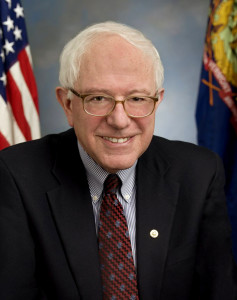
Since it is the topic du jour, let’s discuss Sanders and Clinton.

Bernie is as good as Clinton in feminist issues, better on race issues (at least according to Black Lives Matters and, well, Clinton’s record), and better on economic issues.

There is a tendency to assume clustering. If a person is a lesbian (in Ontario Premier Kathleen Wynne, in the US, Liz Cheney), many assume she is also a left-winger in general. Wynne has been very good on gay issues in Ontario, but she is terrible on economic issues. She is a neo-liberal economically, a left-winger socially.

This is super common. Clinton is a left-winger for women, and a conservative for pretty much everything else. She has no actual beliefs on non-female social issues. If it is politically expedient, she’ll talk about black super predators and support terrible criminal policies which punish blacks. She’ll be against gay marriage. But she’ll be for this stuff, too, if she thinks it’s expedient.

Identity does not have to cluster. It is less likely to cluster in important people, who identity strongly with other important people.

This leads to the third issue: You have interests as your primary identity, but you have other interests with which you may not identify as strongly (or not strongly enough to vote or act on them).

Poor whites who want to keep down ethnicities and thus vote hard conservative are hurting their economic class interests, yes. But they are competing with new immigrants for a lot of the same bad jobs. Business owners whine that native born Americans don’t want shitty jobs, but they’ll do them if they pay more, and are treated better. Minus immigrants, a lot of jobs that couldn’t be moved overseas would have to pay more and treat people better.

This is not irrational. It is based on daily lived experience. It is, I believe, a mistake.  Immigration is a secondary effect, and there are better ways to make labor markets tight, which generally involve what an economic left-winger would call “class solidarity.”

From an identity point of view, class solidarity is just taking your class identity as a primary interest.

Still, there is no question, you can hurt yourself really, really badly by parsing the world in identity terms. Most of the people who voted for Clinton in the primary will do worse under her than they would have with Bernie as President.

Clinton can be expected to continue neo-liberal policies. Under Obama, those policies made only about the top three to five percent of the US population better off. If you aren’t in that class, Bernie is a better bet. Again, he’s as good as Clinton on women’s issues, and better on race and economics.

Most people don’t think this way. They don’t go the extra steps. They choose a primary identity, assume anyone else with the markers is like them, and vote on that identity.

They may also simply decide that the identity IS more important than their other interests. I doubt most Clinton supporters would admit “I”ll lose money under Clinton, a lot more people will die overseas, but I think having a woman as President is more important because it will change how people think about gende–even if Bernie’s policies were every bit as good.”

Most wouldn’t, but some certainly do. And that is the implicit argument.

If you want to change behaviour, your job is to change the cluster with whom people identity. This isn’t some post-modern realization; communists, socialists, and Marxists have been obsessed with this issue for as long as they have existed (read Mobilization theory for the Marxist/Conflict Theory take).

People use shorthands to think. They mostly don’t think, actually–they use emotion to make decisions. This is a really good way to make decisions as a hunter-gatherer in a band where you’ve known everyone since you or they were born, whichever is shorter, and where most decisions are about environments you know very well and where, if you fuck up, you’re very likely dead.

It is a bad way to make decisions in our world, where you don’t really know important people, where most decisions will kill you years down the road, not now, and where lots of people are effectively con-artists using your mental shortcuts to fleece you.

Being gay, or female, or colored is a really strong asset when dealing with most modern left-wing types because they tend to assume clustering, discount sell-outs and not understand that their assumptions are being used against them by con-artists.

This is the critique of modern identity. That it has led to a lot of bad decisions about who to trust and that biological marker identity is often not the most important identity.

Is that right? I suppose it depends. Some groups have done very well in this era–gays, for example.

But others, like women in the US (losing effective abortion treatment, but a general reduction in rape), have mixed records; while still others have done terribly over the last few decades (African Americans). The Black Congressional Caucus has been particularly bad for poor blacks, and includes some of the biggest recipients of, for example, payday loan industry money.

Visible identity is a terrible parser of whether someone will act in your interests, especially if you assume clustering. This is especially true when someone has a record, like Clinton and Sanders do. We know who they are, because they have very long records.

So, identity is basic to humans. It is a way of quickly making sense of the world and choosing who you can trust because they have interests and experiences in common with you. But it has serious limits. It is subject to manipulation. And which identity you take as primary is very important if you’re going to make decisions based on identity.

Women are right to think men keep them down; blacks are right to think that whites keep them down; gays that straight people are a problem.

Etc.

But that does not always mean that someone who has the visible signs of that identity will act on those interests when in power (i.e., Blacks and Obama). Even if it does, it does not mean they will act on clustered interests (economic, local, your industry).

Those interests might, an outside observer would think, outweigh the pure identity interests. If you lose your job and wind up on the street, an economic populist might point out, the rest of it is crap.

But for those who are trying to change how people act, the real lesson of identity is that changing how people think about identity matters.

And perhaps the other lesson is to teach people just not to trust anything powerful people say, but instead watch what they do, because powerful people are far more likely to be con-artists than Jane or Joe on the street.

If you enjoyed this article, and want me to write more, please DONATE or SUBSCRIBE.

How Bernie Gives Hope for the Future

Sanders-021507-18335- 0004

Sanders-021507-18335- 0004

A self-identified socialist won 22 states.

He did FAR, FAR better than any left-wing candidate has in years. Yes, he lost, but he showed very clearly that the country IS changing.

He won super-majorities of young people.

The model under which I have been operating for some time, following Stirling Newberry, is that the US doesn’t have a real chance at change until 20-24, because older cohorts need to die and younger cohorts need to replace them.

I am uninterested in “convincing” most people who voted for Clinton of anything. They are not reachable. To reach them, a candidate like Bernie would have to compromise himself so far that he couldn’t do the right things upon getting into office.

This is not the 2000s or 90s. This is not the age of compromise. The fruits of neoliberalism, neoconservatism, and oligarchy are being reaped; the youngsters have now grown up and never known a good economy. Many barely remember a time when the US wasn’t at war.

Clinton or Trump will have their time. There will be another socialist candidate and another, whether called that or not. Odds are that either fascism or socialism will win the US. The conditions in the US make that most likely.

As for Clinton supporters, they won. That is reasonable. Most Democrats did want Clinton. More Republicans did want Trump–and most Independents (now the most left-leaning group in America) wanted Sanders.

The Democrats are the conservative party right now. They are about the status quo: Keep neo-liberaling, keep bombing and invading brown people’s countries, keep shoveling money to the rich.

Republicans under Trump are the right-wing populist party.

Clinton supporters were not Sanders to win, because Sanders could not be Sanders and win them.

Most of the worst catastrophes are already locked in. Acidification of the oceans, loss of essentially all fish stocks, far worse climate change than the current consensus models, and the rise of fascism, men-on-horseback, and radical leftists.

The time to cut that stuff of was the 2000s. Obama was the last chance, and Obama chose to bail out oligarchs.

So now we play it out. But Bernie has been a hopeful sign, a sign that the youngs have had enough. Whether they will stay that way, we will see. But I think they will, because they have little choice: They are not the children of prosperity like the Boomers–their backs are against the wall. They win, or their lives are garbage. Those are the stakes for them.

So we wait, and we see. But Bernie lost in a genuinely hopeful way, showing that a socialist is now viable in the US and that young people are massively against the status quo.

That matters.


If you enjoyed this article, and want me to write more, please DONATE or SUBSCRIBE.

Well America Has Their Thatcher; Congratulations?

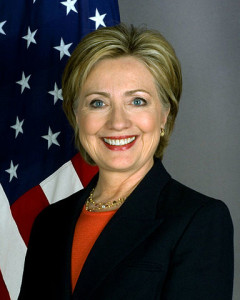
Hillary Clinton Secretary of State PortraitIf Clinton becomes President she will kill and impoverish a lot more people than Sanders would have.

If Trump becomes President, well, Sanders was more likely to win a general election against him.

Bernie might be flawed, but he was significantly better than Clinton on almost every axis than Clinton.

If you are one of Clinton’s retainers, she will take care of you. ‘Grats.

If you are in the top 3 percent of the population, you should do well under her policies.

Everyone else will do badly under her policies, or no better than they would have under Bernie.

As for brown people overseas, well, no one who voted for Clinton actually gives a shit about whether they live, die, or suffer.


If you enjoyed this article, and want me to write more, please DONATE or SUBSCRIBE.

Brexit and the European Union: What’s Actually at Stake

European Union FlagThe EU is a trash fire. To see what the EU is about, you have only to see what they did to Greece, and what they are doing to the rest of the south.

Insane austerity policies have wrecked economies for no good reason other than a failed ideology and a deep-seated desire to give more money to the already-rich.

The EU may have been created to prevent a future European war, but the austerity policies it is pushing are fueling the rise of Catalonian independence, and of both the far left and the far (a.k.a. fascist) right. Now, I’m ok with the far left, in the European context, because so far all it has meant is Corbyn: A 1960s-style liberal, updated with social concerns.

The rise of the far right is rather more worrisome, however, since these lads tend to be nativists–not more than one step from neo-fascists and often less than that.

Austerity creates economic despair, and economic despair creates the breeding grounds for movements like fascism.

When I was about ten or so, I said to my father, who had grown up in the Great Depression, that I saw very little racism in Vancouver.

“Just wait till times are bad, “he said,” you’ll see plenty of racism then.”

Again, the EU is a trash fire. It started off liberal, in the best sense, and there is still plenty of good it does, but it is currently creating the conditions for a great deal of political violence and even war.

So, does that mean that Brits should vote leave?

Not necessarily. Depends on your pain tolerance.

While the EU is a trash fire, Britain isn’t in the Euro, which is the worst part about the EU. If Corbyn was Prime Minister, I’d say leave. Leave now!

But he isn’t. What the Conservatives will do under Cameron or Boris Johnson (or whomever, there are no “good” options for the next leader if Cameron steps down), is truly horrible. Even worse than what they are already doing.

As for the doomsayers: No, the world will not end if Britain leaves the EU. The fact that economists and pundits are screaming in unison that it will means nothing. Economists are trained seals who say what they are supposed to say. Most of them have been wrong about everything of significance related to the economy for their entire professional lives; why should we believe them now?

It’s all a trash fire. Of course, the people who benefit from the status quo want the status quo to continue and continue to trend the way it has been (which hasn’t been good for most ordinary Britons).

That doesn’t mean you should vote to leave. It doesn’t mean you should vote stay. It means they aren’t credible. What they say should not be listened to as anything but people squealing for the world to stay favorable to them.

If you leave the EU now, things will be worse than staying, not because of economic apocalypse but because the EU does have a fair number of good regulations and laws by which Conservatives will no longer be bound.

If you stay, and someone like Corbyn gets into power, he will be handicapped by the EU in the opposite direction.

International institutions in the age of neoliberalism exist mainly to further neo-liberal policies. This is true of the IMF, the World Bank, the WTO, and yes, it is true of the EU.

It’s all a trash fire, because, post-Bretton Woods, it was all changed or designed to be a trash fire (this is especially true of the Euro, which at least Britain dodged). Its purpose is to impoverish developed world workers and transfer money to the rich. I judge its purpose based on its results.

Vote as you will, but understand what is actually at stake.


If you enjoyed this article, and want me to write more, please DONATE or SUBSCRIBE.


Third World Nation: 33 Cities Cheated to Pass Lead Tests

And not just small cities, either:

  • Despite warnings of regulators and experts, water departments in at least 33 cities used testing methods over the past decade that could underestimate lead found in drinking water.
  • Officials in two major cities – Philadelphia and Chicago – asked employees to test water safety in their own homes.
  • Two states – Michigan and New Hampshire – advised water departments to give themselves extra time to complete tests so that if lead contamination exceeded federal limits, officials could re-sample and remove results with high lead levels.
  • Some cities denied knowledge of the locations of lead pipes, failed to sample the required number of homes with lead plumbing or refused to release lead pipe maps, claiming it was a security risk.

Straight up cheating was not uncommon:

At least 33 cities across 17 US states have used water testing “cheats” that potentially conceal dangerous levels of lead, a Guardian investigation launched in the wake of the toxic water crisis in Flint, Michigan, has found.

Of these cities, 21 used the same water testing methods that prompted criminal charges against three government employees in Flint over their role in one of the worst public health disasters in US history.

Lead poisoning is not a minor health problem. It can chop 20 points off someone’s IQ.

Straight up, this indicates cover-your-assdom from the highest to lowest levels, including regulators. No regulator worth its salt, who is doing their job, could have missed entire States and large cities cheating, because any regulator worth its salt does its own audits and testing. Only a fool believes the results handed to them by internal testing and audits. I’ve been on the internal side of regulation (in the life insurance industry) and companies cannot be trusted. Period.

Once you start concealing, you have to keep concealing. Because if something like lead contamination comes to light, figuring out where it is and why will include figuring out how long the water has been contaminated, how long you should have known about it, and how long you’ve been concealing it.

In many of these cities I’ll bet the concealment has been going on for decades, handed down from generation to generation of bureaucrat. Someone, when it was first discovered, didn’t want to go public and didn’t want to fix it, and from that point, the bureaucracy was locked in to their decision to keep cheating.

This doesn’t mean bureaucracies can’t run such systems; they were created in spite of the great objections of private industry, who also opposed municipal sewage for all they were worth. But it does mean you need to stay on top of it, and be willing to pay and be scrupulously honest about issues which matter.

I hope that those who have covered up are charged, and in cities where this has been going on for a long time, I hope investigators look back as far as necessary to charge those who covered up in the past.


If you enjoyed this article, and want me to write more, please DONATE or SUBSCRIBE.


Is Hypocrisy Preferrable to Honesty?

Ok, this.

Right. Now, Bill Clinton, whom some call the “first Black President” signed a crime bill based on the myth of teen (black) superpredators, which included three strikes laws and a huge amount of money for local policing and prisons.

That crime bill was emulated and led directly and indirectly to huge incarceration of blacks, massive-over policing of black communities, and the destruction of black families.

What Bill Clinton DID, which Hillary Clinton supported, was terrible for African Americans. Absolutely devastating.

Now, no question, Donald Trump is saying shit important people aren’t supposed to say. I despise racism, and Donald is saying a lot of racist shit.

But the Clintons did stuff that terribly hurt poor black communities. Now, maybe Bill loved blacks but just happened to accidentally fuck them sideways. That’s certainly possible. I don’t know the man’s soul. But his actions towards blacks were terrible.

I don’t know if honest racism is better, in the sense that it makes racism more socially acceptable. But it does have the simple virtue of being honest and getting it out. American politics has been driven by racism since, well, forever. But there is a hypocritical stream of racist action and rhetoric from Nixon that has never ended.

It was all dog-whistle. Say “welfare moms” and wink, and voters knew you were saying blacks. Welfare Reform was also about punishing blacks (poor whites just got caught in the crossfire).

America’s economic history since the end of the post-war era can be read in racial terms. Blacks came to the city, whites fled to the suburbs, and enough of them switched votes to Republicans (the Reagan Democrats) to elect Reagan, in order to keep their suburban home prices up.

This is all of a piece.

Racism is stupid. It is contemptible. But few politicians have done more harm to blacks than Clinton or Mario Cuomo, the great Liberal governor with his three strikes law.

So I’m not going to get super-worked up that Trump is honestly saying what many think, and the attitudes which “liberal” politicians acted upon.


If you enjoyed this article, and want me to write more, please DONATE or SUBSCRIBE.

Do Great Men and Women Change the World?

Most of us, when we were young, were taught history as a series of events, with the names of important men and women attached. In effect, we were taught the “Great Man” theory of history, that history is the result of the actions of great individuals.

Do the great matter? Do they make a difference?

Sometimes, I think.

In some cases, a person we call great fills a role someone else would have filled, and does it no better than anyone else would have. Sometimes they fill a role someone else would have filled and perform it so well it makes a huge difference.  And sometimes they wrench history about, in a role someone else would not have filled.

Let us start with a man who filled a role someone else would have, but did it brilliantly, and it mattered.

Napoleon.

The Revolution almost inevitably ended with a dictator. I don’t think, given the sort of revolution France had, that could have been avoided.

That it was Napoleon, one of the greatest generals in history, mattered. He didn’t have to be a great general to get the job, he had to be in the right place at the right time. A competent general could have gotten the job.

Napoleon almost never lost a battle. Other French generals lost often. That mattered. Napoleon, wherever he went, changed everything: from ending the Holy Roman Empire, to shattering various other bonds of feudalism, Napoleon changed Europe far, far beyond France. A man who lost even a few more battles than Napoleon did, wouldn’t have.

Let us take two modern great men who, I think, changed little. Start with Mark Zuckerberg, CEO of Facebook. Someone was going to win the “social friends” space. For a while it looked like it would be MySpace, and there were contenders before Facebook. Indeed, Facebook is not dominant in every country in this space.

All Zuckerberg did was win a space someone would have won. The details are different, sure, but not enough to really matter to anyone. Having won it he has done nothing particularly different anyone else would have done in that space.

Though still worshipped as a genius, I think Bill Gates is in the same category. MS DOS (in which I was an expert) was little different from any other OS that IBM could have chosen at the time. Windows (like the Macintosh) is just Xerox Park tech, which if Gates had not been around, would have been stolen/co-opted by someone else (aka. Jobs).

Gates was very good at creating a near-monopoly for a couple decades, but other businessmen in the same situation might well have done the same thing.   Perhaps they wouldn’t have, and he made a difference. If so, that difference was negative, it seems to me.

If something is inevitable, someone will do it. The specific individual Who does it only matters if they are extraordinary. If they are just very good at what they do, well, someone else very good could have stepped up and the difference would have been minor.

I suspect this applies to a lot of earlier “Lords of Industry.” Ford, for example.

In the “inevitable” but it mattered who it was category I’d slot, say, Genghis Khan. He wasn’t the only one trying to unify the Mongols, but his degree of success rested on his own particular genius, which, oddly, was mainly that he was an extraordinary judge of ability and character in other men and women. Temujin’s generals and administrators were extraordinary, and he made loyal followers out of people he had been enemies with. Similar to Shaka (but much more succesfully since he didn’t have to face 19th century weapons), he was also able to turn his society into an extraordinarily efficient war machine.

So who came out of nowhere and changed the world? Who forged a position which wouldn’t have existed otherwise, then did something extraordinary with it?

I find it hard to think of anyone. In the intellectual sphere, Socrates, Plato and Aristotle, for example, came out of a specific time and place where philosophers and teachers were very highly valued because they taught people how to argue.  (Read Plato’s dialogues and tell me, for all his sneering at “sophists” he is not an amazing debater.)

Perhaps one can make a case for Newton, but Leibniz created calculus almost at the same time. Were the rest of his discoveries made much sooner than they otherwise would have been?

Or perhaps the great religious figures? Buddha, Christ, Confucius. Does a Buddha have to happen? Certainly the circumstances are there for one in the newly urbanized cities of northern India with their loss of faith in the old Vedic religion. Indeed, modern Hinduism really comes out of that period as well, for all they claim the Vedas they have little in common with that religion.

Someone would have done what Buddha did, but I think a strong argument exists that how well he did it, and how he did it matters.

So, what do my readers think? Who would you nominate as coming out of nowhere and changing the world? Who is the great one who did not fill a slot someone would have filled?


If you enjoyed this article, and want me to write more, please DONATE or SUBSCRIBE.

Page 378 of 532

Powered by WordPress & Theme by Anders Norén