
Ian Welsh

The horizon is not so far as we can see, but as far as we can imagine

France’s Macron Wants a Technocratic Presidential State

Rizal Park Tricolor

So, Macron has a huge majority, won on an historically low turnout. He has spent the summer fighting France’s Labor unions, his first priority being to overhaul France’s labor laws. For example, right now, workers can’t be made to answer emails outside of work hours. Macron will end that.

Of course, the changes are far more wide-ranging than that. The long argument has been that France’s economy isn’t all that it could be because it is not flexible: It’s hard to fire people, and you can’t make them do anything you want them to when you manage them. Arguably, you can make them do very little.

Macron, who ran the vastly unpopular economic policy of the last government (something people seem to have forgotten) is a dedicated technocrat.

In his recent speech, Macron said he wanted to shrink the legislature by one third, from over 900. And he thinks that the legislature should legislate less, and just judge what the executive does. This amounts, of course, to passing only bills suggested by him. Additionally, and of course, his party controls both houses of parliament right now, but this goes beyond normal French politics, where bills are not just suggested by the President and Prime Minister.

(The President appoints the Prime Minister, and the PM is then generally seen as following the President in most things.)

So this isn’t a small thing, it’s Macron saying he wants the power of a Westminister-style Prime Minister with a solid majority. Generally and theoretically, in this type of country, parliament can not simply do what the President orders. But in these days of tight party discipline, a PM with a majority is, in practice, close to being an elected dictator.

Such strong executives have their advantages, no doubt, but Macron does want a change that gives him more power, and he’s willing to go to a plebiscite to get it.

Then he will use it to remove French workers’ rights and reduce their wages and benefits. Because that is what he wants; it is the core neoliberal project, in which Macron is a true believer.

Macron is “young” but he’s not that young; he’s of the generation in which if you wanted to be taken seriously, and have any power, you had to sign on to neoliberal verities.

The French are going to get what they voted for, good and hard.

But little to none of what Macron does cannot be undone, and his making the executive more powerful may turn out to be a mistake in five or ten years, when someone like LaPen or Melenchon becomes president and wields those powers for which Macron fought.

Simply put, neoliberal policies never actually work. They can produce brief sugar highs of frothy economies, and France may get some of that, as money boils away from the middle and up to the top and housing bubbles and others stupidity are engaged. But this is late neoliberalism, the French middle class and poor are already suffering, and I don’t think enough bribes will be given to them to keep them onboard. They gave Macron a huge majority, yes, but on low turnout. This is neoliberalism’s last big chance in France.

When it fails, and it will, the French will turn either to the right or to the left. Within a decade, most likely.

And the boy prince, riding so high now, will be left spluttering like Tony Blair, wondering why all his wonderful plans didn’t work out, and assuming that those who reject his brilliance are buffoons.

So it shall be.


The results of the work I do, like this article, are free, but food isn’t, so if you value my work, please DONATE or SUBSCRIBE.
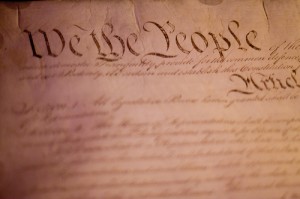
Happy Independence Day

US Constitution by KJD

I sometimes wonder if the world would have been a better place of the rebels had lost their war against Britain. Be clear, I’m not saying it would have been, I’m just wondering. In general terms, the released settler colonies turned out reasonably well; Britain got rid of slavery before the US and with less violence, though I’m guessing an attempt to ban it in the US would have caused a second rebellion, and so on.

On the other hand, it’s unquestionable that Britain did try and keep colonies from industrializing up until quite late. Mind you, during the Victorian period this became less of an issue, and, indeed, British money and resources were key to industrializing a number of countries, including Canada and the United States, though Canada never did fully industrialize. That, however, can probably be put down more to its low population and large land mass with associated resources than to anything malign.

In any case, I wish my American readers a happy Independence day. Your country has done some good in the world, and great evil, but that’s true of many nation. The last few decades have been hard for you, and by you, and it is my wish for America that you treat both yourselves and other better. The two are related: One of the reasons Americans are mean to others is that they are mean to themselves; and the reverse is true.

May you be well, and the cause of the wellness of others.


The results of the work I do, like this article, are free, but food isn’t, so if you value my work, please DONATE or SUBSCRIBE.

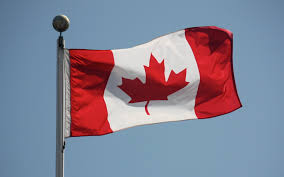
Happy Canada Day

Canadian Flag

Canadian Flag

Sure as heck not a perfect country, but one of the better places you can be born in the world today.

One Deep Reason Why the US Does Not Have a Sane Way to Pay for Health Care for All

(PLEASE CHECK THE BYLINE ABOVE. YES, IT’S MANDOS AGAIN.)

Single-payer is proposed by many as the most ideal way to reform the payment/insurance process for health care in the US, for reasons with which I mostly agree, based on personal experience. The Canadian experience is drawn up, again mostly appropriately, as part of the evidence-base for this view. But if one is going to use Canada as an example, it is important to understand, in some detail, how single-payer was accomplished and what lessons this has for the US.

Canada has single-payer health care, but it did not come out of nowhere. It came from a left-wing government in the province of Saskatchewan, and it came after quite a dramatic fight, including a strike by medical doctors, who were its fiercest opponents.

The history of opposition to Saskatchewan was documented in a very detailed and high-quality MA thesis from 1963 by Ahmed Mohiddin Mohamed at the University of Saskatchewan, which, as far as I can tell, is the authoritative original history on opposition via media to the Saskatchewan single payer plan.  Mr. Mohamed (I am unable to locate his present-day particulars or even if he is still alive) managed to get his hands on a treasure-trove of documents from various “players” not that long after the original events.

That opposition involved a great deal of media and propaganda, including astroturf organizations called “Keep Our Doctors” (KOD) committees. It is important to note that even if a lobby group is “astroturf” in the sense of being supported by vested interests, it is not the case that the people who run it, work for it, support it, etc., don’t have genuine beliefs in line with activities of the group. The KOD committees actually and genuinely originated with mothers, particularly rural mothers, who had the vaunted “personal relationship” with their local doctors and the ideological belief that their doctors would be justified in leaving Saskatchewan and abandoning their patients if they were forced into a monopsony. The song should be familiar to Americans — professional liberty and all that. Their local doctors convinced them that the Saskatchewan government would be responsible for denying them access to health care.

Of course, not only were they egged on by their own doctors, eventually medical organizations and ideological businessmen got into the game via their wives and organized province-wide KOD committees, radio propaganda, etc. The public focus and concern of all the protest and propaganda were very simple, as above: Professionals should have the right to choose their working conditions, and the pricing power that single-payer insurance gave government effectively made the government the dictator of doctors’ working conditions, and the ordinary Saskatchewan patient would suffer from this in various ways.

There is one important feature, however, of the anti-single-payer campaign: All the Saskatchewan government’s antagonists went out of their way to agree that people who could not afford access to medical care themselves, should still receive it. Their counterproposal was instead that there be voluntary regulated insurance, and the government would instead use its funds to pay the premiums of those who could not afford it. Doctors would charge patients directly — remember, we’re talking about a health care system that involved direct cash payments — and patients would submit the bills to the insurance agency, if they didn’t just want to pay the cost themselves. The medical associations agreed then only to charge poor patients what the insurer would pay out, so that poor patients would not have to swallow the costs.

The problems with this are obvious, of course. The Tommy Douglas government didn’t buy it, and proceeded to institute single-payer and break that doctors’ strike. The rest is Canadian history. But what is remarkable, and what I would like to emphasize, is that at no time did anyone make the public argument that the indigent should simply go without care.

In point of fact, the Canadian health care system still has ideological opponents in Canada, both among doctors and rich patients who think their wealth should allow them to skip the queues that do indeed sometimes result from the monopsony more easily than they do now (by going to the US). The difference is that it is still not possible in Canada to admit in public that you don’t think that those who can’t afford it shouldn’t have access to quality care. Almost all domestic Canadian attacks on single payer acknowledge the need for universal coverage, even if their proposed solutions won’t work as well as single payer.

That is a deep and fundamental difference with the United States of America and its health care debate.  Admitting to a belief that someone should suffer medically for lack of funds does not put you beyond the pale of politics. I lived in the US during the Obamacare debate and had many acquaintances who expressed envy of the Canadian system under which I had lived my life previously; but I also had acquaintances who were willing to at least entertain the right-libertarian argument that property is an essential characteristic of being, and that to dilute my property for someone else‘s life — is a theft of my life. And they could make that argument in polite company and not be shunned.

To me, that is the most fundamental barrier preventing humane health insurance reform in the US. I find it difficult to believe that the US will achieve a single-payer health insurance system until nearly all opponents of single-payer, down to the college libertarian level, still feel obliged to make a halfway sincere-sounding argument that their preferred reform idea will pay for universal access to affordable care. From what I see in the health care debate in the US, that day is not here yet, although the discomfort that the Republicans have in trying to find a way to delete Obamacare suggests that some progess has been made; people are uncomfortable with taking away what has been given, and what has been given is at least some insurance for some of the uninsurable. But if arguing to leave some uninsured is socially acceptable, then that will usually be the path of least resistance.

More Death Is Worse than Less Death, Amirite?

(MANDOS POST AGAIN…)

That less death is better than more death and less suffering is better than more suffering is something that Ian has emphasized a number of times throughout the years, just to clear up the odd ethical confusion that people sometimes have. It sounds obvious, but it’s easy to get lost in the weeds, and there are moral orders that view the suffering of other people as socially purgative, spiritually redeeming, as well as other ideas of non-scalable ethics, and so on.

But I’m always still a little taken aback when I read arguments to the contrary or that trivialize that distinction.  Such as in this article at Naked Capitalism:

4) Liberal Democrats have yet to answer the question why it’s terrifying that 540,000 people will die in the next decade under the AHCA/BCRA, but not terrifying that 320,000 will die under the ACA. They have no moral standing at all.

and particularly this one:

Don’t get me wrong. Trumpcare is undoubtedly worse. The estimates are that by 2026 as many as 51 MILLION Americans would be uninsured. As of 2016 there were still 27 million Americans without health insurance. But saying Trumpcare is worse and Obamacare is better is like saying, “It’s better to catch crabs from sleeping with a hot young lady, than to get it from a used gym towel.” Sure. I guess. But shouldn’t we just be focusing on the fact you have crabs? Who gives a shit about the towel? And shouldn’t you also switch gyms?

If you’re in the, uh, 220 kilopeople additionally likely to die under the Trumpcare regime or the 24 megapeople additionally likely to be uninsured, then surely the difference between Trumpcare and Obamacare is worth more than the difference between getting an STD from a sexual encounter or without one. (And what if you’re one of the 24 million additionally uninsured, and you’re the one who got the STD…?)

Certainly, it cuts both ways. Single payer will dramatically cut the death rate from lack of health care access (although I am skeptical that it will cut it to 0, there is still complexity and austerity in the Canadian system that means that some necessary care is not perfectly accessible, even though I would never recommend trading the Canadian system for any other existing system…) So, Obamacare is certainly worse than single payer.

Thus, by all means, advocate for why single payer is better than Obamacare (it is). Absolutely, make the argument that a Republican Congress dominated by people who really like the ritual of tax cutting for visible increased suffering (remember what I said above: there is a widely held moral position that increased suffering is a moral good) should consider something that reduces the suffering for which they openly wish. Certainly, make the argument that a neoliberally-dominated Democratic party should yield up control to people who reject the market-fascination of neoliberalism. Or whatever strategy takes your fancy.

But don’t pretend that Obamacare vs. Trumpcare is not a real choice and that the distinction between the two doesn’t mean something, that the fact that the immediate political choice is between the two and not between Obamacare and single payer doesn’t say something very important about US society.

The Black Book Of Capitalism

There is a famous book, the Black Book of Communism, which claims to total up all the deaths communism responsible for.

Strangely, there is no Black Book of Capitalism.

This is odd, because capitalism has been around longer than communism, has been more powerful, and has controlled more of the world, and the world was hardly a utopia before communism.

Surely one should look at what deaths can be attributed to capitalism?

Can one, for example, total up the deaths of the Opium War? It was a war fought entirely over whether Britain ought to be able to sell opium to the Chinese. The Chinese government didn’t want that, but the Chinese people were happy to buy opium.

It was, in effect, a war for free trade.

What about all the colonial wars, and all the colonial famines and massacres? Oh, this is an old argument, “Is imperialism part of capitalism?”

It was certainly understood that way by many actual imperialists, and it was certainly run that way. Before Britain conquered India, India had more manufacturing capacity than Britain. The British, however, wanted Indians as customers, not competitors, and made sure to shut most of that down.

And there were certainly a lot of famines in India under the British. Is it fair to attribute those to capitalism? If it isn’t, why not? A large number of the deaths in the original Black Book are deaths due to famine.

Europeans conquered other nations to obtain control over resources and markets, and they weren’t shy in saying this was the case. Cotton flooded in from colonial North America, sugar from the Carribean, fur from the northern North America, ruled, in effect, by the Hudson’s Bay Company for centuries just as India was ruled by the East India company.

Oh, they were government granted monopolies, to be sure, but to pretend they weren’t capitalist smacks of “Russia wasn’t actually communism.” Britain was a capitalist country, and either what it did was capitalism or what Russia did wasn’t communism when it didn’t align with what Marx prescribed (in which case none of what Russia or China did was communism, because according to Marx you can’t jump from agrarian to communist).

Imperialism was part of Capitalism, and was seen as such. Even after WWII, when overt imperialism was put aside, the Western powers still felt they had a right to overthrow governments, launch coups, and force specific economic policies on other nations. Those policies often included “don’t subsidize food,” and a lot of people starved because of them.

Let us say you want to write off imperialism as not “true capitalism.” An aberration. I think you’re full of it, but let’s pretend.

Ok, then, what about the Great Depression? Was that not a capitalist failure?

There is no straight-faced argument which says that it wasn’t. Nor am I willing to, with a straight face, pretend that World War II happens without the Great Depression.

So, how many of the deaths from World War II are attributable to capitalism’s failure in the Great Depression?

“Ah,” say those who love capitalism, “but we have learned since then.”

If so, presumably, communism can learn from its failures.

But has capitalism learned? Are great disasters caused by the failures of markets a thing of the past?

We all know they aren’t, because we all know that markets failed to handled climate change, and anyone with sense knows that climate change will cause between hundreds of millions and billions of deaths.

That’s a lot of deaths in the ledger.

As I have noted before, the idea that everyone acting primarily selfishly and greedily leads to general welfare, will go down in history, should we still have historians, as one of the most unbelievably stupid ideas, and ideologies in our history. Even if you believe that “capitalism” gets credit for all the gains of the last 200 years (as opposed to democracy, or industrialization), that will be vastly outweighed by what comes after, and, perhaps, by all the deaths and suffering along the way.

All systems have their flaws. I see a great deal of capitalist triumphalism, still, without a willingness to acknowledge its failures–or even that its successes came at the cost of great human suffering and massive numbers of deaths.

In a certain sense, I think that this misses the point. People with power did what they wanted and the weak suffered. As usual. And the gains were driven mostly by improved technology: which is industrialization, not by specific ideological systems.

Still, when you make markets your main economic decision making engine, you can’t then turn around and say they aren’t responsible for what happens. When your foreign policy is run by economic concerns and by ideological considerations you can’t say that your ideology had no effect.

By any reasonable definition, in my opinion, a Black Book of Capitalism‘s death toll probably far outnumbers those of The Black Book of Communism already. And once the climate change butcher’s bill comes due, it won’t even be close.

The fact is simple: All our decision making methods–governmental and ideological, communist, capitalist, democratic–have produced monstrous outcomes, and at most the best period for large numbers of peoples, the late 20th century, was a temporary phenomenon whose cost will be a vast reduction in welfare in the future. All we did is beggar, and kill, our grandchildren.

We, humans, cannot handle the power of industrialization, of this level of technology. We have proved it. But we had best figure out how. Perhaps the next few generations, who will not be able to ignore the dead and pretend only “the other side” killed them, will finally figure it out.


The results of the work I do, like this article, are free, but food isn’t, so if you value my work, please DONATE or SUBSCRIBE.

The Fall of the USSR

The best book on both successes and failures of the Soviet Union is Mancur Olson’s Power and Prosperity. If you haven’t read it, you should. The second best is Randall Collins’ Essay in Macrosociology.

The great problem with most critiques of the USSR is that they do not explain its successes. In the 20s and 30s, it did far better in most respects than the West. In the 40s and 50s–and even into the early 60s, it was still doing very well. They put the first satellite in orbit, produced tanks that were as good as the West’s, and produced the most successful assault rifle in history. As late as the early eighties, there were points at which Russia’s best tanks were better than the West’s.

The USSR was one of the few nations larger than a city state which had industrialized through a process other than the use of mercantilist policies. During the Great Depression, the USSR vastly outperformed the West.

So, why did it fail? There are two perspectives. I believe both have a lot of truth to them. Let’s start with Olson’s: The failure of the USSR was a feedback problem. At the beginning of the USSR, local cliques and power groups had not formed. The central planners knew exactly how much was being produced, as well as exactly how much could be produced, and were thus able to coerce people into producing what they knew was possible to make.

As time went on, this became increasingly impossible. Put simply, the locals controlled the information flow to the center, and lied about what they could produce and what they did produce. Workers worked less than they could have, local bosses appropriated production to themselves, and the secret police couldn’t keep up, or became corrupted themselves. Absent accurate information, the central planners lost control. Everyone slacked off, corruption soared, production dropped, and the products produced were crap, especially the consumer goods. (The USSR remained able to produce some of the best military equipment right to the end.) Food production tumbled.

The second perspective is the geopolitical one. The USSR had less population than the Western alliance. It was faced with enemies on every side, while the US was isolated by sea from any possible assault and Europe only had to worry about attack from one direction. It had a smaller economy than its enemies. To keep up with its enemies militarily, it had to spend a larger percentage of its economic production than the West did. With a central position and a smaller economy, why would you think it wouldn’t crumble under the strain? I will note that Collins made this argument BEFORE it crumbled. By every normal “Great Power” metric, the USSR was weaker than its enemies. Fiscal strain is normal in such a situation, and it is to be expected that the economically weaker power will eventually lose. From a pure power perspective, and ignoring nuclear weapons, the USSR should have launched an all-out attack on Europe no later than the 70s.

This is basic guns-and-butter economics, understood by Adam Smith. The more you spend on your military and your security apparatus, the more your civilian economy suffers, especially as the most brilliant scientists and engineers are hived off from civilian production. The longer this goes on, the more you suffer. If you’re facing economies that are much larger than yours, you’re screwed. And the US economy was the largest in the world starting in the late 19th century, let alone a recovered European one.

As the USSR failed under these twin problems, exacerbated by the bleeding ulcer of the Afghan war, they also suffered ideological decay: They stopped believing in their own form of government, and became less and less willing to kill for it. When push came to shove, rather than use the Red Army to maintain control (something it was still capable of doing), they didn’t believe in the USSR and the Warsaw Pact enough to do so.

Now let us turn to capitalism. The advantage of capitalism v. central planning, is that information is sent through prices, supply and demand. This information feedback, however, is still gameable by power blocs. The exact strategies are different than in a command economy, but the end result is the same. The West and the US are currently undergoing this exact problem. The entire financial crisis was about inaccurate feedback and broken feedback loops–it was about the financial and housing industries deliberately damaging the feedback system. Then, when it finally went off a cliff, they destroyed the capitalistic feedback system (which, when properly operating, forces companies into bankruptcy) by obtaining bailouts due to owning western governments.

There are myriad other problems with feedback in the developed world right now, from massive subsidies of corn and oil, to oligopolistic practices rife through telecom and insurance, to the runaway printing of money by banks, to the concealment of losses by mark to fantasy on bank books, to the complete inability and unwillingness to price in the effects of pollution and climate change.

The great problem with humans is that we lack time perspective. In a hundred years, when historians and whoever deals with economic issues look back (hopefully not economists as we understand them), they aren’t going to be that impressed that Western Capitalism outlasted Soviet Communism by forty or fifty years. Instead, they are going to look back and say that both were doomed, in large part, by their inability to manage the exact same problem. In both cases, the feedback systems which controlled economic production were so perverted by various internal power blocs that the societies were unable to reproduce the material circumstances necessary for their continuance.

(This piece was originally published February 2014. I think it still says some important things, and many new readers will not have seen it, so back to the top. Ian.)


The results of the work I do, like this article, are free, but food isn’t, so if you value my work, please DONATE or SUBSCRIBE.

That Tax Cut Talking Point

(MANDOS POST – YOU KNOW THE DRILL)

The Republicans are working hard to pass an amendment to the ACA called the AHCA. Assuming it succeeds, which I wouldn’t take for granted, it would take Obamacare, with all the latter’s deficiencies and faults, and make it even worse. Meaning: It will probably kill a lot of people through health care denial due to pre-existing condition denials and the reinstatement of lifetime coverage limits. If they fail to pass it, it would be because Obamacare is designed to make itself hard to retract; as Obamacare contains the bare minimum required to improve the status quo ante, anything significant they take away from it renders it unworkable. If it passes, it would be because they had decided that it was the closest to the status quo ante that they could achieve.

The status quo ante was terrible, but contrary to the beliefs of many, it wasn’t “unsustainable” in some sort of fundamental way. It could be contained by gradually excluding more and more people from insurance coverage, and therefore, down the line, care. This is not a debate about health care, but about how to pay for health care.  It is about austerity, and the status quo ante was ultimately just a slow ratcheting-up of austerity. (Yes, I know, Obamacare is a ratcheting-up of austerity, but it is a slower one.)

One of the talking points against the AHCA is that it appears to be designed to give the rich a tax cut. However, the tax cut is, in proportion to many of its beneficiaries, quite small, even as it dwarfs the incomes of many. It’s not a giveaway that in itself should raise the political passions of its beneficiaries. Many of them won’t spend it or won’t notice the effect on their lives or wealth planning. Even the insurance industry is skeptical of key portions of the bill, and they’re not prone, as they say, to altruism.

The Republicans have invested a lot of political capital in the idea of undoing Obamacare. Instead of that small a tax cut, if they were rational political actors, they could easily have come up with a bill that targeted large swathes of their constituencies for a substantial improvement in their (bad) standard of coverage, even if they wanted to target Democratic constituencies for tribal reasons. They could have done this without even instituting single payer (aka public monopsony) and ruining their constituents among the insurance and corporate medical sector. It doesn’t appear that this is on order.

The picture only makes full political sense if you see the cutting of health insurance coverage as a political goal in itself, if not some kind of fundamental ideological “end.” Or for the symbolic appearance of trading coverage for a token tax cut, in a way that is likely to create further damage to the US economy. And that successful Republican politicians think that they can expel millions of people from the ability to pay for health care, including their own constituents, is a sign both of the significance of that symbolic appearance and the cultural limits of the US health insurance debate.

Page 349 of 532

Powered by WordPress & Theme by Anders Norén