Ian Welsh

The horizon is not so far as we can see, but as far as we can imagine

China and Saudi Arabia Show Anti-Corruption Is Often About Seizing Power

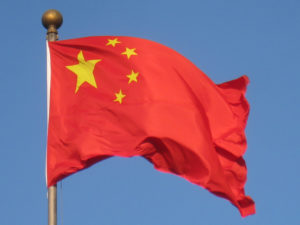
Recently, the Chinese Communist Party proposed removing the normal ten year limit on how long someone can stay President. Xi Jingping looks likely to be President for life.

Xi is notable for a massive anti-corruption drive, which put a lot of senior party members in jail and terrified many others.

Anti-corruption is good, of course, but in nations where, well, essentially everyone is corrupt, one must watch who is hit for corruption charges and who isn’t. Somehow Xi’s enemies seemed to get hit disproportionately.

Meanwhile, Xi put himself as the leader of every committee of any significance, and lo and behold, he is the indispensable leader now.

And in Saudi Arabia, we have Crown Prince Mohammed bin Salman. Salman is the designated heir, and has been replacing everyone who isn’t loyal to him. Last year, bin Salman took over a Four Seasons hotel, “invited” a number of his relatives and other important people to stay there, then by at least one account (which I find credible) tortured some of them.

Even very powerful Saudi princes, like Alwaleed, the most personally rich of the princes, were not entirely immune.

His release came hours after he told Reuters in an interview at Riyadh’s opulent Ritz-Carlton hotel that he expected to be cleared of any wrongdoing and be freed within days.

A senior Saudi official said Prince Alwaleed was freed after he reached a financial settlement with the attorney general.

“The attorney general has approved this morning the settlement that was reached with Prince Alwaleed bin Talal, and the prince returned home at 1100 a.m. (0800 GMT),” the official told Reuters, without giving details of the terms.

The decision to free him, and the release of several other well-known tycoons on Friday, suggested the main part of the corruption probe was winding down after it sent shockwaves through Saudi Arabia’s business and political establishment.

Alwaleed was careful to make his bow:

Prince Alwaleed, who is in his early 60s, described his confinement as a “misunderstanding” and said he supported reform efforts by Crown Prince Mohammed bin Salman. (my emphasis)

Mohammed has taken some actions that Westerners approve of, like somewhat improving rights for women, but he is also busily committing genocide in Yemen, screwed up by trying to blockade Qatar (which did not bring Qatar to its knees), kidnapped the President of Lebanon, and is proceeding with a vast privatization of money-earning Kingdom assets, which will earn Saudi Arabia money (but which will be insufficient to offset the loss of earning power).

But it appears as though the Crown Prince is more of a dictator than any ruler in ages (even if he isn’t officially king yet). He has the power, internally, to do things that were simply not possible when some consensus was expected among the royal family.

All of this should be reminiscent of what Putin did when he gained power: He broke a number of oligarchs, sent them to jail or into exile, and took most of their fortunes. But he made deals with others, so long as they were loyal. As a result, his “anti-corruption” efforts weren’t about eliminating corruption at all, they were about loyalty to Putin and the state. Russia continues to be a corrupt mafia state (mafia states have rules, they are just mafia rules). This corruption has hurt its economy, though Putin’s policies are still better than those that came before.

In India, what Modi has been doing bears some resemblance to this pattern as well: Consolidating control disguised as anti-corruption.

Anti-corruption is rather different from seizing power by using corruption charges to break one’s enemies or bring them to heel as new, terrified, allies while warning everyone else not to get out of line.

Real anti-corruption goes deep, hits almost everyone, and generally comes with increases in the wages of bureaucrats at the lower and middle levels, as much corruption is a result of inadequate compensation leading to bribes replacing the actual salary.

Much of this critique, minus the strong man bit, could be applied to the US, I might add, but perhaps another day. In the meantime, appreciate the good those seizing power do, when it exists, but recognize their motives and the dark side, as displayed in Yemen, or when Putin very likely set up the second Chechen war.


The results of the work I do, like this article, are free, but food isn’t, so if you value my work, please DONATE or SUBSCRIBE.

Those Who Fall with Steve Bannon

One interesting note about the Cambridge Analytica story was on Bannon’s role:

A few months later, in autumn 2013, Wylie met Steve Bannon. At the time, he was editor-in-chief of Breitbart, which he had brought to Britain to support his friend Nigel Farage in his mission to take Britain out of the European Union.

Steve Bannon

What was he like?

“Smart,” says Wylie. “Interesting. Really interested in ideas. He’s the only straight man I’ve ever talked to about intersectional feminist theory. He saw its relevance straightaway to the oppressions that conservative, young white men feel.”

Wylie meeting Bannon was the moment petrol was poured on a flickering flame. Wylie lives for ideas. He speaks 19 to the dozen for hours at a time. He had a theory to prove. And at the time, this was a purely intellectual problem. Politics was like fashion, he told Bannon.

“[Bannon] got it immediately. He believes in the whole Andrew Breitbart doctrine that politics is downstream from culture, so to change politics you need to change culture. And fashion trends are a useful proxy for that. Trump is like a pair of Uggs, or Crocs, basically. So how do you get from people thinking ‘Ugh. Totally ugly’ to the moment when everyone is wearing them? That was the inflection point he was looking for.”

Absent Bannon meeting Wylie, there is no Trump Presidency. That’s not the only inflection point, of course, but it is there.

Bannon’s a weird bird: nativist populist, very smart, rich himself, and apparently quite likable in person, which surprised people in Congress.

It was Bannon’s ideas which undergirded Trump’s rise, which gave him a leverage point. While initial reports suggested that Cambridge Analytica was related to Kushner, the core operation which mattered traces back to Bannon.

Meanwhile, since Bannon left Breitbart after falling out with Trump, it has lost half its readership.

I mention all this because one of the most important things is to grant our enemies their virtues: Bannon is smart, has social insight, can get along with most people (interviewers usually find him quite likeable), and he can execute on his ideas. He also is able to understand popular rage.

This is not to say that Bannon has no flaws. He couldn’t handle Trump. He was taken out by his own inclination to shoot his mouth off and not stay in the background. When people started seeing him as the power behind the throne it was obviously something that Trump would not stand for.

His world model is actually, pretty good. It doesn’t have to be entirely accurate, and it’s not; what it has to be is something with which enough people agree, and to the extent they will act on it, and it is.

Bannon saw where the pain was. He saw where the rage was. He assembled a team, found a front man, ran with it, and he won.

Then he lost, because his front man could win, but was a very flawed tool when it came to actually ruling.

I don’t know if Bannon has a second act. Second acts are hard. If he wants one, he has to position himself as the operator other people can work with.

And right now it looks like he’s doing that. He may well be back, after Trump, with a second attempt, learning from these lessons.

But he may be too damaged. There may be too much fallout from his methods. I don’t actually think that Analytica is the unprecedented act people are making it to be, I believe that many others will turn out to have scraped Facebook in much the same way (developers I know find it amusing that people think this is new).

But unprecedented act or not, it is a scandal, and depending on how Trump falls, the damage to Bannon may make him beyond the pale.

Meanwhile, the money behind the scenes, Robert Mercer, will look for another brilliant executor.


The results of the work I do, like this article, are free, but food isn’t, so if you value my work, please DONATE or SUBSCRIBE.

 

Cambridge Analytica, Facebook, and Inevitable Abuses that Inevitably Happen

So, you’re probably aware of the furor over Cambridge Analytica. They scraped Facebook’s database and used the psychological information to craft their campaign. They have also been caught on tape admitting they do dirty tricks like honey traps, and propaganda (knowing lies).

And there is much wailing and gnashing of teeth.

First of all, it is essentially impossible that they are the first group to scrape Facebook’s database, as Atrios points out.

The data is there for the taking, and I am sure many others have done so, including both Democrats and Republicans.

Second, the techniques Analytica used against the US are extensions of techniques used against other countries regularly, and especially against the Muslim, Russian, and post-USSR world. To the extent that Russia is involved, they likely regard this is a fair play–they’re just doing what the West has done to them, post-USSR Republics, and their allies for many years.

Third, Facebook is a data-gathering organization, as is Google. What they do is create psyshological and life-event profiles so that advertisers can manipulate people to sell to them. This is hardly different from using the same data to manipulate people to sell candidates or policies.

Cambridge Analytica is just one part of an entire industry set up around this sort of information. Peter Thiel’s Palantir does much the same general sort of stuff, but Thiel is smart, and does it for the US military and spies, so he is protected, even though Palantir does far more evil.

There are certain doors that should not be opened. Collection of this sort of data is probably past one of these doors. The problem isn’t just scraping, the problem is that it will inevitably, and I do mean inevitably, wind up available to anyone. Every leak, every hack, is available, and so many records from so many companies have leaked that you have to simply assume your information is available to anyone who cares enough to plunk down a little money, or who is a little code savvy.

Just as information on who was what religion was used by Nazis to hunt and kill Jews, and just as when it was destroyed, it saved lives, this information will inevitably be abused. So one has to ask if the public good of knowing it and having everyone able to know it, is superseded by the public bad of knowing it, and having everyone able to know it.

As with moving from physical cash to electronic cash, I think the answer is no. (I know the answer is no with respect to cash.)


The results of the work I do, like this article, are free, but food isn’t, so if you value my work, please DONATE or SUBSCRIBE.

The Bleak View of the World’s Problems (Or: They’re All Going to Have to Die)

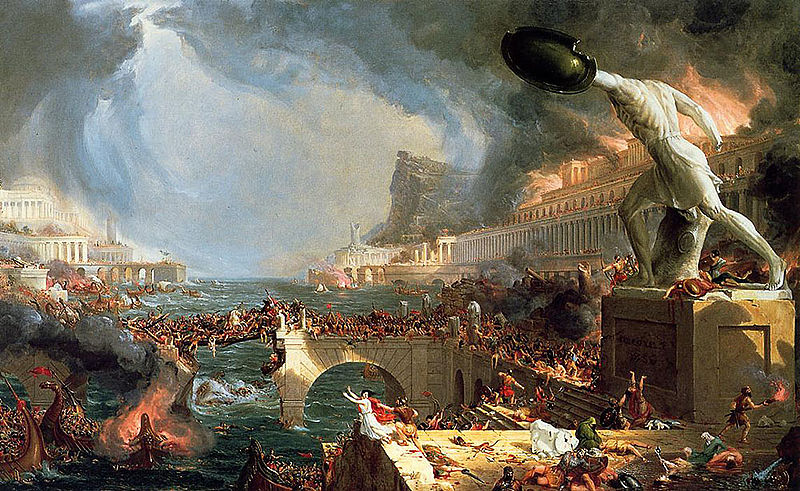
The Course of Empire by Thomas Cole

The Course of Empire by Thomas Cole

So then, the simplest gloss of humanity’s problems is that the world’s problem is humans.

We have clear threats to our existence, threats which, at the least, will credibly kill hundreds of millions to billions of people. We have known about these problems for a long time (recently, a friend told me about learning the science of climate change in 70s high school) and we have done nothing.

Well, not nothing…in most respects, we made it worse. When we did do something, we knew did what we were doing was not enough.

This is a human problem, caused by humans. It is simple to say “Well, the more powerful bear more responsibility,” and this is true, but as a whole, these are the leaders humanity has selected (this doesn’t imply most people want them).

As a race, we have proven incapable of managing the collective action problem and the leadership problem.

This is true despite what appear to be our great success: We can take massive actions, but we cannot control our actions for the common good.

Common good does occur at times; sometimes it is even intended, but we repeatedly drive ourselves off cliffs.

WWII being the easily predicted consequence of WWI is a good example. But take another example: the cradle of civilization, Mesopotamia. Understand that from the invention of agriculture, to today, about 10K years, Mesopotamia was probably the most advanced region in the world. Only Egypt and India were competitors.

Mesopotomia declined because they kept chopping down trees and draining swamps, and eventually turned their land into a desert or near-desert.

They had to know they were doing it, it was obvious. But they kept doing it.

We simply have never been good at collective action with a time-span beyond a generation. Sometimes we can act for three generations. And that, essentially, is it.  And those periods during which we manage to act for three generations are rare, and come out of successfully handled crises, like the Great Depression and World War II. They last as long as the generations which experienced and understood the causes of the crisis exist, and then as long as the momentum of whatever works they created last.

So the New Deal generation and the post-war liberals created institutions and infrastructure, which despite their problems, worked. When these entities started to fail in the 70s, they did not collapse and they continue to stand, buttressing against the worst. As each component has been destroyed, a crisis has ensued; the most recent example being the financial crisis, which was the result of the removal of laws that control the financial industry, put in place after the Crash of ’29 (the removal of these laws was signed by Bill Clinton).

The New Deal generation over-built: They created bridges and roads meant to last a long time. They laid down more infrastructure than needed. But they didn’t, and couldn’t, build forever-infrastructure.

Their great work has concealed the nature of the decline, the nature of the ongoing collapse.

But the accounts of work they put away is mostly gone, in many cases in deficit.

Those who replaced them, having never survived a real crisis by pulling together, do not know how to do so. They cannot run a society for the common good, nor a society for the future.

And so billions will die and there is a great die-off of non-human species.

The common good and future generations matter because they are a way of making sure that what economists call negative externalities don’t get out of control. When we think only of ourselves and a few people we care about, rather than thinking about everyone and everyone’s grandchildren, we don’t properly manage society’s real wealth: people, knowledge, and the environment.

And we haven’t.

And the problem is this keeps happening. Over and over again.

We have too much power, and we cannot control it, because as a species we cannot control ourselves.

We claim, at times, to be creatures of reason, but not only are we driven by short-sighted, selfish desires, even when we use reason, we use it as a slave to those selfish desires.

And so the only solution to our problems is going to be a lot of death. It is nature’s solution, “you have exceeded carrying capacity, now you will die.”

It is too late to stop a lot of it. But mitigation requires different leadership than we have now. That leadership must be replaced, and it must be replaced by whatever means necessary.

Meanwhile, we need to understand that we, the masses, are complicit. The leaders are worse, of course, but they are the leaders which have arisen from humanity. They are not separate, they are a symptom of our pathologies.

We must become different people, different humans, if this is to end. That is, perhaps, possible, since we do most of our adaptation socially.

It’s that or die, and possibly wiped out.


The results of the work I do, like this article, are free, but food isn’t, so if you value my work, please DONATE or SUBSCRIBE.

Martin Shkreli Proves that Your Life Is Meaningless to Elites

So, a lot of people are happy that Shkreli, the infamous “pharma bro” who raised the price of Daraprim, a 62 year old life saving drug used for serious parasite infections and to treat HIV, by 5,500 percent has been sentenced to jail for seven years.

The catch is that he was sentenced for securities fraud not for jacking up the price of the drug.

Yes, that’s because securities fraud is illegal, but killing people by jacking up drug prices isn’t.

And that’s the point.

Your betters don’t want someone cheating them, but they don’t care if you live or die.

They really, really don’t. Understand that in the core of your being.

There are others who have jacked up the price of life saving drugs. For example, Heather Bresch, the CEO of Mylan, who makes Epi-pens, isn’t in any danger of seeing the penitentiary. Then there are the jacked-up prices for insulin, which, while not quite so dramatic in percentage terms, comes to $400/month in the US, for a drug that the inventor gave away.

People have definitely died, my “favorite” was a guy begging on Twitter for people to fund him or he couldn’t afford his insulin next month.

He’s dead now.

Yeah.

Folks, they don’t care if you live or die. If dead means more money for them, they’re okay with it. This is true in the US, but it’s also true in Britain and increasingly true in the developed world.

If your masters think you’re worth more dead than alive, dead is fine by them.


The results of the work I do, like this article, are free, but food isn’t, so if you value my work, please DONATE or SUBSCRIBE.

Doctors Paid More by Opiate Manufacturers Prescribe More Opiates

Quelle Surprise?

In 2014 and 2015, opioid manufacturers paid hundreds of doctors across the country six-figure sums for speaking, consulting and other services. Thousands of other doctors were paid over $25,000 during that time.
Physicians who prescribed particularly large amounts of the drugs were the most likely to get paid.

Now the article and researchers are quick to point out that causation is not proved, but…

This isn’t an unknown effect. Doctors who get paid more for surgery are more likely to perform surgery, even if non-surgical alternatives are considered a better idea. If they own a share in the institution doing the surgery, even more so.

I don’t like to get down on opiate prescribing, because I think the larger problem is all the doctors who won’t prescribe them. Even in Canada, it seems like every doctor’s office has a notice saying they don’t prescribe narcotics.

Huh? And if the patient is obviously in a lot of pain, you’re just going to let them suffer? We’re in a period of hysteria over narcotics.

That said, it’s also important to note that, yes, you tend to perpetuate the behaviour that you reward.

This is why money should largely be kept out of doctors’ decisions about appropriate care (and everyone else’s). It should not be a consideration except in the most extreme cases. A doctor with no skin in the game, monetarily, will tend to make better patient care decisions, because patient care will be their primary concern.

And, oddly, not only is that good for patients, in most cases that don’t involve end of life care, it is also cheaper, though that’s not why you do it.

Money doesn’t belong in large number of places. It should not be a concern for frontline care workers in almost all cases.

Exhibit five million somethingty.


The results of the work I do, like this article, are free, but food isn’t, so if you value my work, please DONATE or SUBSCRIBE.

Trump Is Right to Talk to Kim

“Only Nixon could go to China.”

North Korea and America never made peace after the Korean war. It’s just an armistice.

The North Koreans have repeatedly said they want a peace, Americans have repeatedly said no–long before it was about nukes.

Bill Clinton had a nuclear deal, Bush Jr. tore it up. Then he invaded a country that had no nukes: Iraq after the UN made damn sure there weren’t any.

Then Qaddafi gave up his nuke program. His reward for that was death, but only after being sodomized by a knife. Hillary Clinton and Obama get the nod for that one. (Clinton convinced Obama, who was initially inclined not to support “regime change” in Libya.)

So, frankly, I’m not sure that, if I were Kim, there’s any way I could be convinced to give up my nukes. It looks dangerous. Still, perhaps a deal can be made, and North Korea is armed to the teeth conventionally, with huge amounts of conventional artillery pointed at Seoul.

But the bottom line is this: Whether you like Trump or not, trying to make peace with North Korea is the right thing to do. Another president should have done it long ago. I have my doubts that Trump will manage it, but he’s right to try, and if he succeeds he will deserve praise.

Now if he’d just grow up about Iran and stop talking about tearing up that nuke deal.


The results of the work I do, like this article, are free, but food isn’t, so if you value my work, please DONATE or SUBSCRIBE.

What the Tao Teaches Us About the Good Society’s Devolution to the Bad

In the Tao Te Ching there is a famous passage, as follows:

When a truly kind man does something, he leaves nothing undone.
When a just man does something, he leaves a great deal to be done.
When a disciplinarian does something and no one responds,
He rolls up his sleeves in an attempt to enforce order

Therefore when Tao is lost, there is goodness.
When goodness is lost, there is kindness.
When kindness is lost, there is justice.
When justice is lost, there is ritual.
Now ritual is the husk of faith and loyalty, the beginning of confusion.

The idea that when one is in the Tao nothing is done causes a lot of confusion. This is a psychological / physical state, where there is no feeling of effort. One takes the actions appropriate to the circumstance without any sense of doing anything, even though things are still done. Because this is a very clear mental state, what is appropriate tends to be obvious.

The key word, for social ethics, however is “appropriate.” What is appropriate isn’t always what is good, but what is good makes up the vast majority of what is appropriate.

When one no longer knows what is appropriate, one devolves to the good and is still doing most of what should be done.

Kindness makes up most of what is good, so when one loses what is good, one devolves to kindness and retains most of what is good.

Losing kindness, one retreats to justice. The loss here is steep. Justice is maybe half of what is kind, because justice without kindness is about balance and tends to not restore people, but punish them: “an eye for an eye” and all that.

And then there is ritual, and ritual, in this context, is without any of the higher virtues, and thus leads to injustice, cruelty and evil, because it has lost almost all of appropriateness: it simply accepts that action A should lead to action B, and that will often be the wrong action, unguided by appropriateness, goodness, kindness or even justice.

I would add that when even ritual is lost; when people no longer obey the rules and are guided by no sense of ethics, that all chances of a good society and good results are lost.

Regular readers will know that I tend to emphasize kindness as a golden rule. I think it’s the highest guiding star the vast majority of people in our society can use: most people still know how to act kind, they just don’t do it and they have many justifications for not doing so. But they do know what it is, with exceptions like warped market disciples, libertarians, and so on, who are so identified with ritual ideologies (market outcomes are just) that they cannot see when they are not even that.

The reform of society comes through the proper use of ritual, ironically. You work your way back up. Ritual done right attaches appropriate emotions to appropriate circumstances to appropriate objects of attention, and once that is the case, one can climb back up the ladder. Indeed, done right, one can jump past justice back to kindness.

But only when done right. Ritual is an obsidian knife: It cuts everything and it’s dangerous, and it’s only a useful tool when both made and used just right. Only someone operating at a level higher than ritual can design rituals which will do more good than harm.

In the meantime, unless you’ve been deformed by the wrong ideology, you probably still understand kindness. I suggest living there. It’s also a rather nice place to live.


The results of the work I do, like this article, are free, but food isn’t, so if you value my work, please DONATE or SUBSCRIBE.

Page 331 of 532

Powered by WordPress & Theme by Anders Norén