Ian Welsh

The horizon is not so far as we can see, but as far as we can imagine

Rate of Antarctic Ice Loss Has Increased Three Times Since 2007

So, yeah. Again, as I have said for a long time, the consensus reports are always wrong and when new data comes in it is almost always worse than predicted. There appear to be self-reinforcing cycles involved. I expect that we will see significant rises in sea level well before 2100.

We will also see widespread droughts, large areas around the equator that are uninhabitable for months at a time due to being too hot for humans to cool down and entire current breadbasket regions no longer producing significant food.

This will be exacerbated by how much we have drained and poisoned our aquifers.

This will effect, among others, the United States, China and India, all of whom will take huge hits. I expect the death of hundreds of millions of Indians before the century’s end, in massive famines and droughts.

This will also lead to waves of migration like we’ve never seen–exceeding even the migration from Europe to the New World in the last half of the 19th century. There will be wars. I fully expect a war between Russia and China, over Siberia, because much of China’s cropland will become defunct.

Nothing we are doing is more effective than a spit into a hurricane. The Paris Accord is a joke: It wouldn’t be enough even if implemented, it’s not mandatory, and most countries won’t make their voluntary targets.

There are a lot of moving parts, the most important of which will be the arctic methane release (once that starts, it will self-reinforce and the game will be over), but for people on the ground it’s going to be about heat, rainfall, and water. Also, about water. And water.

This can no longer be stopped, in any meaningful sense, but we could prepare and try to mitigate. We aren’t even doing that.

If you have children, or if you’re young, you need to factor this stuff into your life plan. I’m 50 and unhealthy, I’ll probably miss most of it. But if you’re 20 or even 30, probably not.


The results of the work I do, like this article, are free, but food isn’t, so if you value my work, please DONATE or SUBSCRIBE.

The North Korea Summit

So, again, this is good. The US and North Korea have never signed a peace treaty to end the Korean war, and they should. It is unclear what, exactly, hawkish critics are scared Trump is going to “give away” to Kim.

China has tightened sanctions (not sure I like this, but if it lead to the talks, fine). North Korea has suspended its tests and released prisoners.

As for all the hand-wringers whining about human rights, what can be said about North Korea is that it is not aiding a multimillion person genocide in Yemen, and the US is. Shut up, you flaming hypocrites.


The results of the work I do, like this article, are free, but food isn’t, so if you value my work, please DONATE or SUBSCRIBE.

The Destruction of Latin America’s Left and Lessons for Everyone

I’ve wanted to write about this for a while, and this is a good place to start:

The so-called marea rosa, or ‘pink tide’, of allied leftist governments which held sway across Latin America in previous years is being rolled back. Brazil’s Dilma Rousseff was removed from power in a right-wing coup, co-conspirators of which have now managed to imprison the current presidential frontrunner, Luiz Inacio Lula da Silva. Ecuador’s Lenin Moreno has stabbed his former leader Rafael Correa in the back by barring him from seeking re-election, while seemingly purging his cabinet of remaining Correa loyalists and beginning the process of allowing the US military back into the country.

Meanwhile in Argentina, the former President is also under criminal investigation.

This all seems, well, “they did bad things, they should be prosecuted,” but somehow other politicians, often clearly more corrupt, aren’t prosecuted. The prosecution of Lula, in particular, was clearly a way to stay in power, since all polls show he would have won the election.

The norms are breaking down in many nations, including the United States. What is done to win is illegitimate, as with Republican vote manipulation and the 2000 Supreme court decision; what is done afterwards to opponents is also often illegitimate, and if the wrong person wins, they are gone after legally.

Americans will immediately think of the efforts to get Trump, and some will assume it is in the same vein. To some extent it seems to be, in others it isn’t (again, he’s clearly in violation of Emoluments.) But it didn’t start with Trump, it started with Clinton, who had clearly done nothing that affected him as President. (That said, he and Newt Gingrich had an agreement in place to gut Social Security and Medicare, which impeachment sidetracked, so I’m not crying too much. Clinton was a right-winger in every important way.)

Corruption is bad, and should be purged, but when I see corruption investigations which are clearly aimed at one side and not both (as with Xi’s anti-corruption drive in China, which was overall good but somehow took out the other major power blocs in China) I suspect that it isn’t primarily about corruption.

And in Brazil, where most seem to agree that those attacking Dilma were, in fact, more corrupt than her, it’s more than hmmm.

This is an ugly game. In Latin America it is bi-partisan with respect to the US. Having Latin America be left-wing was something neither Democrats nor Republicans wanted.

Meanwhile Argentina is inking an agreement with the IMF for 50 billion in exchange for structural adjustments and the Ecuadoran President is clearly moving towards forcing Assange out of Ecuador’s London embassy. (Yes, yes, you may hate Assange for a variety of reasons, some legitimate, but he is not being targeted because he is not a nice man, but because both Democrats and Republicans, on record, want to punish him various leaks, especially Collateral Murder.)

This is a very dirty game, and left-wingers keep treating it as if it is not; as if there are rules, and both sides play by them. Increasingly, in the US that is not the case, and it is clearly not the case many other places. If your enemies win, they will destroy you by any means. You should think long and hard about what you will do to them if you get into power, because they know what they will do to you.


The results of the work I do, like this article, are free, but food isn’t, so if you value my work, please DONATE or SUBSCRIBE.

Canada’s Trump Now Premier of Canada’s Largest Province

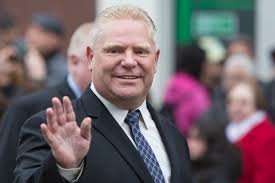
So, Doug Ford, brother of the Toronto’s crack-Mayor Rob Ford, is now Premier of Ontario.

It wasn’t particularly close: 41% to 34%, although polls had shown it neck and neck. At a guess, youngsters didn’t show up at the polls, which always a risk. Without a Corbynite rock star politician who they actually believe in, they tend to vote less than they intend. Horwath, the NDP leader, is no Corbyn, but a relatively left-centrist pol with little charisma.

Doug Ford is accused of having stole from his brother’s wife, of driving his business into the ground, and was a drug dealer when younger. He didn’t bother to put out a costed platform, about a third of his candidates are under criminal investigation, and etc, etc…

He’s a stupid buffoon, and his policies, such as they were, don’t even make as much sense as Trump’s did (because he has no Bannon). However, what we can know for sure is that they will involve a lot of privatization and budget cuts, fire sales to cronies and so on.

Given the percentages, caveats about proportional voting and first past the post aside, it’s hard to say this isn’t what the most committed plurality of Ontarians want. I notice that Liberals don’t appear to have strategically voted all that much, as they always want NDPers to do (and as about a third of NDPers generally do do in close elections.)

Oh well, gonna be a sucky 4 years in Ontario, but that’s what a plurality of us voted for. And, yeah, Canadians, willing to vote for really shitty people, just like Americans. (Trudeau, by the way, has run a terrible policy regime in many ways. He just knows how to look good doing it.)


The results of the work I do, like this article, are free, but food isn’t, so if you value my work, please DONATE or SUBSCRIBE.

Why Republicans Are Unlikely To Impeach Trump

This is why the bar for impeachment is so high.

In Alabama, GOP voters delivered a rebuke to incumbent Rep. Martha Roby, who is headed for a runoff against former congressman Bobby Bright — whom Roby defeated in 2010 when Bright held office as a Democrat.

Roby angered constituents by un-endorsing then-candidate Donald Trump after the 2016 release of the “Access Hollywood” tape in which he bragged about groping women. In TV ads, Bright accused Roby of “[turning] her back on President Trump when he needed her the most.”

The Access Hollywood tape was the “grab them by the pussy” tape.

The base supports Trump. You have to get past the base in primaries to be a candidate in the general. This is why the fact that Democratic primary voters are basically ok with Democrats makes change from the left hard: they did mostly vote for Hillary, Bernie’s won independents.

The right did take over the Republican party, and they did it by winning primaries. Every recent attempt by the left to do the same in the Democratic party has failed.

Trump has very consistently acted to frame Mueller’s investigation as partisan, so that whether to impeach him becomes a political decision. In any Congress where Republicans have enough votes to stop impeachment, it will be very hard for Republicans to vote to impeach Trump: doing so will mean a serious primary challenge they may well lose.


The results of the work I do, like this article, are free, but food isn’t, so if you value my work, please DONATE or SUBSCRIBE.

The Yemeni Holocaust

We often ask, what would we do if there was another Holocaust? Surely we would do something? Surely, at least, we would not be complicit?

The question might have been answered in Rwanda, where the UN commander begged the UN for orders to intervene, orders which never came. The general, Romeo Dallaire, has spent the rest of his life curled around his failure to act despite orders.

Meanwhile, we have the blockade of Yemen, which despite claims, continues:

Mark Lowcock, the UN’s emergency relief coordinator, expressed his concern regarding the “recent decline of commercial food imports through the Red Sea ports” — adding that, if conditions do not improve, the number of Yemenis at the brink of starvation would rise from the current figure of 8.4 million to 18.4 million by this December. Given that there are approximately 28 million people in Yemen, a continuation of the Saudi-led blockade would mean that nearly two-thirds of the entire country’s population will soon face starvation.

Not sure how many of those who face starvation will starve to death, rather than simply sit on the edge of death, but millions of lives are at risk, this is deliberate, it is happening in slow motion, and the rest of the world is doing nothing.

Well, if they aren’t helping the mass murder, like America (and America was helping under Obama, so no, this isn’t a partisan issue.)

America could stop Saudi Arabia cold if it wanted to; and it certainly could at least not participate.

But, of course, we all know that in the run up to World War II no one cared what was happening to the Jews: we refused to let in Jewish refugee ships, after all. If all Hitler had done was the Holocaust, no one would have gone to war with him over that.

Not that the US needs to go to war; the simple credible threat of sanctions would bring Saudi Arabia to its knees. Nor does the US, post shale oil, need Saudi Arabia’s oil, but the Saudis, in any case, are no longer in a position to not sell. Their own society would implode in months.

Europe could do this too: SWIFT is located in Europe and subject to European law. Apparently Iran’s non-existent nuclear weapons program, which Netanyahu has stated was 5 years from a nuclear bomb since the early nineties, was worth Europeans forcing SWIFT to cut them off (SWIFT objected), but not millions of Yemeni deaths.

Since Europe = Germany (no, don’t pretend, if Germany wants it, it happens), that means the Germans, having done the Holocaust are now sitting aside when they could stop millions of deaths, and doing nothing.

Lovely.

Well, I guess we’ll just watch.

And no, Saudi Arabia’s Crown Prince is not a good guy even if he has decided to let Saudi women drive.

The only bright lining on all this is that Saudi Arabia will be in civil war itself by 2030, I suspect.

Couldn’t happen to a nicer country.


The results of the work I do, like this article, are free, but food isn’t, so if you value my work, please DONATE or SUBSCRIBE.

Ethics 101: The Difference Between Ethics and Morals

EthicsThe best short definition I’ve heard, courtesy of my friend Stirling, is that morals are how you treat people you know. Ethics are how you treat people you don’t know.

Your morality is what makes you a good wife or husband, dad or mother. A good daughter or son. A good friend. Even a good employee or boss to the people you know personally in the company.

Your ethics are what makes you a good politician. It is what makes you a statesman. It is also what makes you a good, humane CEO of any large company (and yes, you can make money and pay your employees well as Costco proves.)

When you’re a politicians or a CEO, most of what you do will affect people you don’t know, people you can’t know, people who are just statistics to you. You have no personal connection to them, and you never will. This is at the heart of Stalin’s comment that “a single death is a tragedy, a million deaths a statistic.” Change the welfare rules, people will live or die, suffer or prosper. Change the tax structure, healthcare mandates, trade laws, transit spending–virtually everything you do means someone will win, and someone will lose. Sometimes fatally.

Ethics is more important than morality in creating a functioning society. This comes back to what I was discussing earlier, that it is worse to kill or harm more people than to kill or harm fewer people.

Morality dictates that you take care of your family, friends and even acquaintances first. It is at the heart of the common admonition to “put  your family first.” Whenever I hear a politician say “I put my family first,” I think “Then you shouldn’t be in public office.”

We call the family the building block of society, but this is nonsense except in the broadest sense. The structure of the family is entirely socially based, generally on how we make our living. A hundred years ago in the US and Canada, the extended family was the norm, today the nuclear family is, with single parent families coming on strong. In China, this transition, from extended to nuclear family, took place in living memory, many adults still in their prime can remember extended families, and were raised in them. The wealthy often have their children raised by servants (I was for my first five years), tribal societies often put all male children into the same tent or tents at puberty, and so on. A hundred and fifty years ago, children were taught at home, by the extended family, and not by professional teachers. They spent much more time with family until they were apprenticed out, if they were. To be sure, children must be born and raised for society to continue, men and women must come together to get that done, but there are many ways to do it, and God did not come down and mandate the nuclear family.

This may seem like an aside from the main point, but it is not. Family is not fundamental, it is not first.  Society is first, and family is shaped by the needs and ideology of the society.

For a large society–a society where you can’t know everyone–to work, ethics must come before morality, or ethics and morality must have a great deal of overlap. By acting morally, you must be able to act ethically.

Our current ethical system requires politicians to act unethically, to do great harm to people they don’t know, while protecting those they do. This can hardly be denied, and was on display in the 2007/8 financial collapse and the bailout after. The millions of homeowners and employees politicians and central bankers did not know were not helped, and the people the politicians and central bankers and treasury officials did know, were bailed out.  Austerity, likewise, has hurt people politicians don’t know, while enriching the corporate officers and rich they do know.

The structure of our economy is designed to impoverish people we don’t know. For developed nations’ citizens, this means people in undeveloped nations. For the rich, this means cutting the wages of the middle class. For the middle class, it means screwing over the poor (yes, the middle class does the day to day enforcement, don’t pretend otherwise.) We are obsessed with “lowering costs” and making loans, and both of those are meant to extract maximum value from people while giving them as little as they can in return.

We likewise ignore the future, refusing to build or repair infrastructure, to invest properly in basic science, and refusing to deal with global warming. These decisions will overwhelmingly affect people we don’t know: Any individual infrastructure collapse won’t hit us, odds are, and global warming will kill most of its victims in the future. The rich and powerful, in particular, believe that they will avoid the consequences of these things. They think it will affect people other than them.

To put the needs of the few before the needs of the many, in public life, is to be a monster. But even in private life, if we all act selfishly, as our reigning ideology indicates we should, we destroy ourselves. If we all put only ourselves and those we love first, and damn the cost to everyone else, our societies cannot and will not be prosperous, safe, or kind.

The war of all against all is just as nasty when it is waged by small kin groups as when it is waged by individuals.

(Reprinted from 2013: this is the most popular article, by traffic, I ever wrote.)


The results of the work I do, like this article, are free, but food isn’t, so if you value my work, please DONATE or SUBSCRIBE.

How People Crack or Succeed

After a recent school shooting, the shooter’s father deflected blame from his son, saying that he had been bullied, but was a good kid.

He was immediately jumped on by critics. Most of them  had an argument that ran as follows, “I was bullied all the time and never turned into a mass shooter.”

This argument is a corollary of the standard one for not caring about poor people, “I grew up poor/sick/whatever and I still got rich.”

Now obviously a kid who goes on a mass shooting isn’t a good kid, and obviously also, I hope, a father who loves his son, in the immediate aftermath of something like this, may be in denial and that denial should lead to more sympathy than mockery. If you can’t manage that, at least understand.

But the larger argument is important: the bullying may have been necessary but not sufficient. In other words, the kid, had he not been bullied a lot, might not have gone on a killing spree.

For other people the bullying was not enough.

People are different. What breaks one person doesn’t break another. One succeeds in circumstances another wouldn’t succeed in. A broken down loser like the Civil War’s General Grant (before the war) becomes the war’s greatest general and a two-term president. No war, he’d probably have stayed a loser.

No bullying and that kid might not have gone on a killing spree, even though bullying doesn’t make most people go on killing sprees. But chronic bullying is high stress, and it does break some people, and some of them will be violent.

There are always the extremes: the people on the edges, who are close to breaking or exploding anyway. Push them, poison them, and something goes wrong.

This should be obvious.

What should also be obvious is that explaining something isn’t excusing it. Of course being bullied doesn’t justify going on a killing spree.

But since it is a known factor in causing mass killing sprees maybe we should admit that, and try not to push the one in ten million kid (or adult) over the edge?

Life is luck. Your genetic endowment was luck. Your parents were luck. Your character is luck. It all comes from being born with a specific body in a specific place and time, and everything flows from that.

We want to run from this. We want to believe were are in full control, that we would never do something like “that”, whatever that is. That we would never obey Hitler’s orders (most of us would have, and if you don’t have a record of standing up even when you knew you would be hurt for doing so, you probably would have.)

The kid did something monstrous. The father, understandably, tried to hold onto his view of his kid as good. And while bullying is no excuse, it may be a reason.

And just because you’re rich and were once poor doesn’t mean everyone else should be able to pull themselves up by their bootstraps.

And yeah, although following a mob is a different thing, you almost certainly would have done what Hitler told you to; would have been chopping with a machete in Rwanda, and so on.

This doesn’t mean no one is good, of course. There are those who didn’t obey Hitler. A small minority. There are those who won’t shock a subject in the Millgram experiment, no matter  how hard the authority figure pushes (about 5% at the extreme end.) There are always good people.

But most people aren’t good, and they aren’t bad. They are weak, and they follow their personal mob, doing whatever other people they identify with do.

And some people are close to breaking, and one day something, usually some cruelty, pushes them over the edge.

And they become monsters.


The results of the work I do, like this article, are free, but food isn’t, so if you value my work, please DONATE or SUBSCRIBE.

Page 326 of 532

Powered by WordPress & Theme by Anders Norén