

Ian Welsh

The horizon is not so far as we can see, but as far as we can imagine

Scenarios for America’s Political Future

Big Brother Award

Let’s run through the most likely possible victories in the upcoming federal election and consider what they mean for the US’s future.

Put them in four baskets:

Trump wins. He does more bad stuff, the situation continues to get worse, American post-WWII-style multilateral hegemony and trade order takes huge hits.

Biden or Harris win. Harris will be a more effective President, but both will be neoliberals. More Obama/Clinton style politics. I very much doubt that Harris, who was a brutal prosecutor, will turn out to keep many progressive promises if elected. Both of these people perpetuate the conditions which created the possibility of a Trump worse.

Sanders wins. An actual left-wing President. He may have issues with Congress, but there is a lot that can be done by the aggressive use of executive power. Sanders is who says he is, he’s been that guy, with some updating for modern identity politics since the 60s and 70. He hasn’t changed, he can be trusted.

Warren wins. Don’t expect to get real universal healthcare, she’s talked out of both sides of her mouth on the issue too much. But she’ll be good on a lot of other issues.

Both Sanders and Warren will probably be good on the environment. None of the others who are likely win will be (and if you think they will…)

There are two important, longer-term issues at play here: (1) A real, right-wing totalitarian who seeks to end American democracy is the first (I maintain that Trump is not this man, largely because he is not organized enough), and;

(2) The environment. With permafrost melts happening 70 years ahead of schedule, we are out of time. Steps–aggressive steps–need to be taken now, and they aren’t being taken.

So let’s play this out a bit longer. Say Harris or Biden wins. The next chance to get a good President then becomes 2028 because there will be no primary challenge in 2024. So domestically, the situation will get worse (and better for a right-wing, totalitarian demagogue). Nothing of significance will be done about the environment.

Potentially catastrophic on both fronts.

What if Trump wins? Well, there’s another chance to have a decent president in 2024. That’s not good, and he’ll do damage in the meantime, but there is a schedule here with regards to climate change. As for a totalitarian demagogue (someone who sees what Trump did, combines it with Bannon’s politics, and is disciplined and charismatic), well, the risk is there, but odds are the next President will be a Democrat.

As for Sanders or Warren, well, they’ll be reelected if they deliver and won’t if they don’t. So it’ll be war, because Republicans will know that. But it’s always war with Republicans, so whatever.

I am not arguing, “Don’t vote for Harris or Biden.” I am pointing out the foreseeable consequences of certain electoral outcomes.


The results of the work I do, like this article, are free, but food isn’t, so if you value my work, please DONATE or SUBSCRIBE.

The Problem with Neoliberal “It’s Never Been Better” Triumphalism

Saying that humanity is currently the best off it has ever been (a dubious proposition in any case) is like saying “I’ve never been warmer” as you burn down your house.

Globe on FirePeople like Pinker have been trotting out stats to claim that we’ve never been better off. Those stats are questionable, based on a definition of  poverty that is beyond questionable. Meanwhile, in India, people eat less calories than they did 30 years ago. (I traveled in India and lived in Bangladesh 30 years or so ago. Eating less calories is unimaginably bad. That a small middle class and a new wealthy class has been created means little to those eating… less.)

But let’s wave that all aside. Let’s posit that human life now is the best it’s ever been.

Meanwhile, in India, people are dying in 50 degree C weather. France had a massive heatwave. Indian farmers are committing suicide in droves, in large part because of issues with ground water.

Extreme weather is getting worse, the permafrost is melting 70 years ahead of the consensus forecast, and so on. Ecologically, fish stocks are collapsing, the Amazon is being chopped down at a ferocious rate, more than one study has found collapses in insect populations at 80 percent or so, and others have noticed that without insects, you don’t have birds, and so on and so forth.

Blah, blah, blah.

Not only is no human an island, but humanity lives among other species, and they make our lives possible in ways we are barely aware of. Most oxygen in the world, for example, is produced by small ocean organisms, organisms which could have a mass die off.

Sigh.

So let us say that this is the bestest of best worlds, a Panglossian paradise.

Present prosperity is being paid for with future poverty, future mass death, and a non-trivial risk of human extinction. As for non-human species, they are already dying at a rate which will show up as the fastest mass extinction in Earth’s existence.

This is only a good bet if you are sure that you’re going to die before the bill comes due. That was a good bet for the GI Generation. A decent bet for the Silents and not a bad bet for about the first half of the Boomers. It’s a bad bet for everyone afterwards who expects to live to 70 or 80 or so (a normal human lifespan in most developed countries).

And, of course, it’s a bad bet if you actually, y’know, care about your children, or other people’s children, or the future of humanity when you’re gone. (Gonna be a shitty place to reincarnate too, if reincarnation exists.)

Now let’s bring this back to neoliberal “greatest time to be alive” triumphalism.

The sub voce message there is, “We don’t need to change, everything’s fine and getting better.”

But, if we’re living not just unsustainably, but in a way that will call Biblical level catastrophe within the lives of most people now alive and their children, perhaps we do need to change, and radically.

So this sort of triumphalism, even if it were true, would be a disservice to not just humanity, but life on Earth.


The results of the work I do, like this article, are free, but food isn’t, so if you value my work, please DONATE or SUBSCRIBE.

Week-end Wrap – Political Economy – July 14, 2019

by Tony Wikrent

Alarming after-effects of Republican budget cutting in North Carolina 
Savage tick-clone armies are sucking cows to death; experts fear for humans
[ars technica, via Naked Capitalism 7-13-19]

Ravenous swarms of cloned ticks have killed a fifth cow in North Carolina by exsanguination—that is, by draining it of blood—the state’s Department of Agriculture and Consumer Services warned this week….

The tick—the Asian longhorned tick, or Haemaphysalis longicornis—was first found terrorizing a sheep in New Jersey in 2017 and has established local populations in at least 10 states since it sneaked in. Its invasive sweep is due in large part to the fact that a single well-fed female can spawn up to 2,000 tick clones parthenogenetically—that is, without mating—in a matter of weeks. And unlike other ticks that tend to feast on a victim for no more than seven days, mobs of H. longicorni can latch on for up to 19 days.

The state government is North Carolina no longer has any capability to respond to this type of new public health threat – the Republicans who took control of the state legislature in 2010 eliminated the  Public Health Pest Management Section — which included the state’s tick control and research programs — in their 2011 budget. 

Strategic Political Economy

Open Thread

As usual, use this thread to discuss topics not related to recent posts.

Matt Stoller Writes BIG: Anti-Trust

Matt was one of the writers at BOPNews, in what seems like a long time ago now. He also wrote for MyDD for years. After that he, among other things, spent time on the Hill as a Congressional aide, to learn how politics and governance actually works.
He left and joined an anti-trust think tank, Open Markets Institute, and in January he started an email newsletter about anti-trust issues.

I’ve been reading it, and it’s good. Matt’s knowledge is encyclopedic, and he writes clearly and well. Matt’s chosen “bigness,” which is to say concentrations of power as the, er, big, issue he’s going to devote himself to defeating, and he’s spent years learning everything about it.

So, you can read BIG’s back issues here, and if you scroll to the bottom, you can sign up for the emails. Matt’s also on Twitter and quite active. You can follow him at @matthewstoller

Matt’s a friend, to be clear, but I don’t push even my friends stuff if I don’t think it’s good. This list is far beyond good, it is excellent and will give you an education you can’t get anywhere else.

Admin: Internet finally back.


The results of the work I do, like this article, are free, but food isn’t, so if you value my work, please DONATE or SUBSCRIBE.

Simple Decision Making

The simplest decision making loop is “only do things you like.”
Sometimes getting something we want (presumably something which will let us do things we like) we must do something we dislike, or wouldn’t otherwise do.

So the next decision is “is what I get from doing something I don’t like worth doing this thing I don’t like?”

Close to the state of nature, this might include hunting, gathering, planting crops and so on. Without food, water and shelter we can’t do anything else, because we’re dead.

In modern societies this means finding a way to get money. Most of us probably wouldn’t do our current job if we didn’t need money.

But what I see is that many people hate their jobs, spend all their time working, and buy stuff they don’t have time use to do things they like.

That big house in the suburbs, with a 2 hour commute either way, so they’re hardly there and can’t enjoy it.

A spouse, who they never see, but who (let’s be honest) they make money so they can have.

Various toys they rarely actually use.

Children they never see. (Presumably you got children because you thought you’d like having children? I mean, clearly many parents don’t actually, but…)

The problem of subsistence is complicated by the fact that we live in capitalist societies. What capitalism means is that a few people own the means of production: land, machines, the right to create money out of thing air, etc… So most of us can only sell our labor. Yeah, a few people can get around this, but most people can’t, or our society would stop being capitalist, since capitalism requires this concentration.

Since someone else is taking most of the surplus we produce, we have to work longer than we otherwise would. (There’s a long argument here about whether capitalism leads to being more productive and therefore less labor, we’ll pass that by for now.)

Even if you want to bugger off and set up a little subsistence society, you usually can’t, both because you can’t just go take some land, even if it’s not being used by anyone, and because taxes will destroy you. (This is what taxes are for, to force you into the capitalist economy because you need money to pay them. This is why many wars were fought over the right to pay taxes with goods or labor, and not money, or vice versa.)

And then there is the question of coercion. Police, tax collectors, the military, private security like the Pinkertons.

People who are there to stop the hoi polloi from using force against people who have a lot of stuff, and got it without other people really approving of how they got it. Natural societies are egalitarian because there are no cops, armies or private retainers, so if other people don’t want you to have it, you don’t. (This isn’t always a good thing, but sometimes it is. It varies.)

Still, at the end of the day, the natural human impulse, which we have buried under a mountain of cultural conditioning about how wonderful work is, and to not be lazy and so on, is to work only to fill needs and to spend our time doing things we love.

Mind you, I know people who love hunting, fishing and farming (never got loving farming myself, but I’ve met ‘em.) It’s not like you can’t love doing what also gets you stuff.

But maybe you don’t. And I’m not sure that it’s wrong to not want to spend most of your life doing things you don’t want to do (and often evil things) to get stuff you may not even have time to enjoy much.

Just a thought.

So perhaps remember the basic loop. And ask why we’ve set up our society to spend tons of time doing work we hate, so a few people can be very rich and the rest of us can have stuff we don’t have time to enjoy.

Admin Note: Due to vagaries of phone company and neighbours I have no internet at home. This may be resolved in a few days or take a couple weeks. Until I have internet at home comments will be approved, likely, only once a day and posting may be a bit sporadic.


The results of the work I do, like this article, are free, but food isn’t, so if you value my work, please DONATE or SUBSCRIBE.


Basic Ethics and When Violence Is Justified

The simplest of maxim in all of ethics is: “I don’t harm others, I don’t harm myself.”
The problem with this ethic arises when someone else hurts you.

What do you do?

Perhaps the first step is to ask them to stop. If they don’t, attempt to move away from them.

If you can’t or if moving away harms you, the next step is violence.

“If you won’t stop hurting me, I’ll have to make you stop.”

In a complex society like ours this becomes complicated. There are people doing harm to you and me right now. Rich people, mostly, and powerful people like politicians and senior corporate officers. They kill people, impoverish people and make people sick for their own benefit. They don’t stop when asked nicely, or even rudely.

They also use a lot of violence to get their way and keep hurting people. I trust this is self-evident. The police and military don’t serve “the people,” except incidentally. Some schmuck who does some drugs goes away for years, while the crooks who brought down the economy and left millions homeless and impoverished because of their fraud and corruption pay a few fines that are less than what they stole.

But, the bottom line is they hurt people and won’t stop when asked, nor can one move away from the hurt they are inflicting. This hurt is likely to kill some billions of people.

So violence is justified. This isn’t a moral/ethical problem, it is a tactical strategic question. It is no longer a question of whether violence is justified against people who are doing great evil and won’t stop when asked, but a question of whether it will work and what is required to make it work.


The results of the work I do, like this article, are free, but food isn’t, so if you value my work, please DONATE or SUBSCRIBE.

Week-end Wrap – Political Economy – July 6, 2019

Week-end Wrap – Political Economy – July 6, 2019
by Tony Wikrent
Economics Action Group, North Carolina Democratic Party Progressive Caucus

I tremble for my country when I reflect that God is just

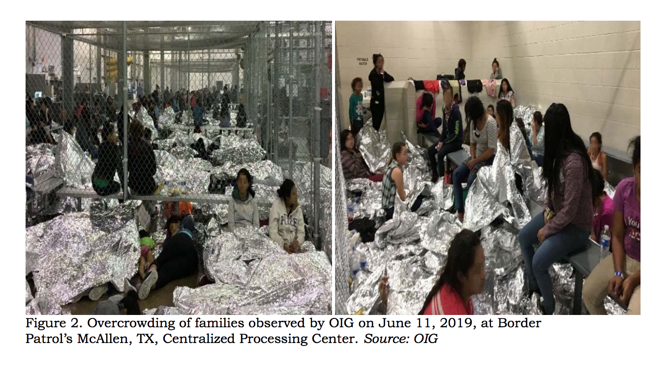
What a Pediatrician Saw Inside a Border Patrol Warehouse
[The Atlantic, , via Naked Capitalism 7-5-19]

Dolly Lucio Sevier evaluated dozens of sick children at a facility in South Texas. She found evidence of infection, malnutrition, and psychological trauma.

At Ursula, however, the children Sevier examined—like the panting 2-year-old—were “totally fearful, but then entirely subdued,” she told me. She could read the fear in their faces, but they were perfectly submissive to her authority. “I can only explain it by trauma, because that is such an unusual behavior,” she said. Sevier had brought along Mickey Mouse toys to break the ice, and the kids seem to enjoy playing with them. Yet none resisted, she said, when she took them away at the end of the exam. “At some point,” Sevier mused, “you’re broken and you stop fighting.”

….Border Patrol has long maintained that it is not equipped to handle children, who are supposed to be transferred into the custody of the Office of Refugee Resettlement within three days. After that, many kids are housed in licensed child-care facilities that look more like the average public school than a jail. The federal government has attributed slow transfers to the sharp uptick in the number of migrants at the southern border; in May, 144,200 migrants were taken into custody—the highest monthly total in 13 years.

Days before Sevier’s visit, reports of poor conditions at a similar facility in Clint, Texas, drew outrage around the country. Kevin McAleenan, the acting head of the Department of Homeland Security, told reporters the outcry was based on “unsubstantiated allegations regarding a single Border Patrol facility.”
But his own agency’s watchdogs soon contradicted him—the problems are not restricted to Clint.

Predatory Finance

Bloomberg Businessweek, via The Big Picture 7-6-19]

The British Virgin Islands is home to more than 400,000 companies that hold $1.5 trillion in assets…. Even though he helped get it up and running, Geluk doesn’t have permission to scan the whole database. In fact, only two people, a pair of unnamed employees of the BVI’s Financial Investigation Agency, are able to search the entire system, which holds details on about 600,000 owners who have directly or indirectly controlled companies here. It’s thought that roughly a third of all offshore companies globally are registered in the BVI….

Page 301 of 532

Powered by WordPress & Theme by Anders Norén