
Ian Welsh

The horizon is not so far as we can see, but as far as we can imagine

First, Elect Someone Who Wants to Do the Right Thing (Sanders Edition)

So, I wrote the simple argument for Sanders. He plans to help the most people, and more so than any of the candidates by a rather large margin .

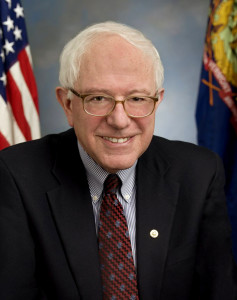
Bernie Sanders

To me, that’s the role of government: To help the most people. There are things that only government can do or does best, and making healthcare universal (whether single payer or not), fixing student debt, and fighting climate change are three of those things. The private market isn’t going to do those things by itself, it needs the government to set things up so the private market can profit by doing them (for whatever pieces of health care or fighting climate change the private sector’s help makes sense).

Many argue, “But he may not be able to pass this stuff.”

Here’s the thing: A candidate who isn’t strongly committed to passing universal health care won’t pass it. A candidate who isn’t strongly committed to fighting climate change won’t.

And Presidents have a LOT of power that doesn’t go through Congress. Simply letting the Environmental Protection Agency do its job goes a long, long way. Deciding that conforming mortgages require energy-neutral, low-carbon houses goes a long way. Choosing who runs the Federal Reserve goes a long way. Treasury policy matters. Anti-trust policy against companies jacking up insulin prices is entirely possible, if desired.

Likewise, the President has an effect on mid-terms. A popular President simply makes the case that the Senate is blocking him. If Sanders does popular things in the first two years, more people will come out for his candidates in 2022.

But the simpler point is just that someone who doesn’t want to do the right thing won’t even try for it. Obama didn’t. We now know he had completely written off the public option for his health care plan before negotiations even started, for example.

Sanders has been fighting for these causes for decades. We can trust he believes in them because he fought for them when he was nearly alone, and when it would have been easier for him to conform to the neoliberal consensus.

He’ll keep fighting. Maybe he won’t win, but a President who can be counted on to actually fight to do the right thing is a HUGE step towards the right things being done and makes a win far, far more likely. The power of the Presidency is huge, and people forget that because people like Clinton and Obama pretended weakness when trying to do left-wing things because they didn’t actually, ever, want to do them.

Elect Sanders. Support him. If he does good things in the first two years, he’ll gain support, and that will translate into seats in the Senate and House. That will mean more good things, and more support.

That’s how it works.

But to get the right things done, you first have to elect someone who wants to do the right things.

The democratic nominee who consistently wants to do the most important thing in the biggest way is Sanders.

So support him.


Money would be rather useful, as I don’t get paid by the piece. If you want to support my writing, please DONATE or SUBSCRIBE.
 

The Ethics of Not Supporting Sanders

Bernie Sanders

I’m going to keep this one real short and simple.

Sanders has by far and away the best plans for healthcare, climate change, and student loans out of all the candidates. It is not close–even Warren is a distant second.

He will help the most people. Make the most people’s lives better. By a large margin.

If you do not support him, you want a lot more to people to suffer and die, or at least you’re willing to trade their deaths and suffering for something you think is more important.


Money would be rather useful, as I don’t get paid by the piece. If you want to support my writing, please DONATE or SUBSCRIBE.


Week-end Wrap – Political Economy – January 26, 2020

by Tony Wikrent
Economics Action Group, North Carolina Democratic Party Progressive Caucus

Strategic Political Economy

Why the New Silk Roads are a ‘threat’ to US bloc
Pepe Escobar [Asia Times, via The Big Picture 1-23-20]

Asia and Europe have been trading goods and ideas since at least
3,500 BC. Historically, the flux may have suffered some occasional bumps
– for instance, with the irruption of 5th-century nomad horsemen in the
Eurasian plains. But it was essentially steady up to the end of the 15th century. We can essentially describe it as a millennium-old axis – from Greece to Persia, from the Roman empire to China.

A land route with myriad ramifications, through Central Asia,
Afghanistan, Iran and Turkey, linking India and China to the Eastern
Mediterranean and the Black Sea, ended up coalescing into what we came
to know as the Ancient Silk Roads….

Rationalist hegemony in Europe progressively led to an incapacity to understand diversity – or The Other, as in Asia. Real Euro-Asia dialogue – the de facto true engine of history – had been dwindling for most of the past two centuries.

Europe owes its DNA not only to much-hailed Athens and Rome – but to Byzantium as well. But for too long not only the East but also the European East, heir to Byzantium, became incomprehensible, quasi incommunicado with Western Europe, or submerged by pathetic clichés.

The Belt and Road Initiative (BRI), as in the Chinese-led New Silk Roads, are a historical game-changer in infinite ways. Slowly and surely, we are evolving towards the configuration of an economically interlinked group of top Eurasian land powers, from Shanghai to the Ruhr valley, profiting in a coordinated manner from the huge technological know-how of Germany and China and the enormous energy resources of Russia. The Raging 2020s may signify the historical juncture when this bloc surpasses the current, hegemonic Atlanticist bloc.

Now compare it with the prime US strategic objective at all times,
for decades: to establish, via myriad forms of divide and rule, that
relations between Germany, Russia and China must be the worst possible.

No wonder strategic fear was glaringly visible at the NATO summit in
London last month, which called for ratcheting up pressure on
Russia-China. Call it the late Zbigniew “Grand Chessboard” Brzezinski’s
ultimate, recurrent nightmare….

Moscow and Beijing have come to the conclusion that the
US trans-oceanic strategic ring can only be broken through the actions
of a concerted block: BRI, Eurasia Economic Union (EAEU), Shanghai
Cooperation Organization (SCO), BRICS+ and the BRICS’ New Development
Bank (NDB), the Asia Infrastructure Investment Bank (AIIB).

The Lords and Ladies of Discipline: An Interview with Matt Stoller
[Naked Capitalism, January 21, 2020]

…Matt Stoller is referring to the contemporary incarnation of mainstream economics, which is neoclassical economics. It is worth remembering that neoclassical economics started being formalized in the late 19th century by thinkers like Leon Walras, Carl Menger, and William Jevons. One of the reasons their ideas took hold was first, that they aspired to establish that economics was a science that could be described in mathematical terms. Second, to do so, they had to assume ergodicity, which in layperson terms means that the system has a propensity to achieve a stable equilibrium. This typically hidden assumption produced results that were very useful in beating back idea promoted by Marx and other pro-labor forces, that modern economies were unjust and needed reforming. The counter-story was that if left alone, as in in the hands of businessmen, they were naturally self-correcting….

Rogan Joshing

MaNdOs PoSt

I have even less truck with political YouTube than ordinary TV. But it has come to my attention that there is someone named “Joe Rogan” who has achieved a certain level of fame and popularity by doing independent online interviews of politicians, so much so that Democratic primary candidates feel the need to appear on his show.  Another thing I have learned is that this Rogan person appeals to a particular demographic that is, at present, not considered a reliable source of votes for the Democratic Party–or indeed any party that is perceived by television media as being accommodating to any concern considered “left-of-centre” by the prevailing dispensation.

But what brought this Rogan person to my attention was the fact that the current left-wing Democratic primary star, Bernie Sanders, gave an interview on Rogan’s show and obtained some kind of positive review (endorsement?) from him, and this has led to a certain degree of consternation and argument in the online left that has broken down on the usual lines: roughly speaking, “guns-and-butter” leftists vs. “woke” identitarians. I haven’t seen the interview and probably never will. So I guess I can’t really take a side, as I’m not willing to do the basic research of watching Rogan’s show. However, watching the meta-show, so to speak, has proven moderately illustrative about the meta-issues that divide the online left.

The conflict is basically this: As Sanders is the nominally “socialist” candidate in the US presidential elections, and circumstances have (like Corbyn?) coalesced to give him at least a plausible shot at the Oval Office, his appearance on Rogan’s show as well as apparent endorsement can be seen as a necessary step at accessing support from demographics that, as I mentioned above, are not seen as easily accessible to left-wing candidates. Without increased support from this group, left-wing Democrats are forever doomed to failure as an identity-purist bastion representing marginalized groups, who, alas, can never form a political majority that takes power. Consequently, if Sanders is serious about taking power, he has no choice, and in some sense, it would be practically immoral to refuse to appear on this widely-viewed show when the platform is being offered to him under friendly conditions.

At this point, we must examine why someone may expect Sanders to refuse an appearance on a show like Rogan’s. Again, from discourse that surrounds it, I gather that not only does Rogan appeal to demographics deemed to have generally retrograde views, he does so by publicly sharing some of those discriminatory opinions. (I haven’t bothered to figure out what those are but I’m guessing stuff like a little light racism, and transphobia, and so on.) Consequently, Sanders’ presence on the show may be construed as prima facie evidence of complicity with these oppressive discourses. The counterargument is obvious: Sanders is being given a friendly opportunity to draw in support from groups who live in a media environment that predisposes them to retrograde views, and thereby eventually mitigate (by winning power) the harm done by those viewpoints.

But this counterargument does not satisfy the critics of Sanders’ actions. Some of them are motivated by sheer hypocrisy, because their own preferred candidates often participated in the stigmatization of minority groups or associated with those who do. Other critics, however, have more sincere personal motivations motivated by experience or feeling towards Rogan’s target demographic. That is, they see Rogan fans as representative of a group that has collectively made their lives more difficult or acted in a manner harmful to them. The association of the principal left-wing candidate with Joe Rogan awakens an old fear: that this is the point at which they and their concerns are dismissed as inconvenient, unhelpful, or corrosive to the holy grail of a power-taking electoral politics motivated by class interest.

This is not an empty fear. Quite a lot of “economic” leftists have a lot of difficulty taking the justice claims of (for example) gender identity seriously, as opposed to subsuming them into a general concept of economic well-being and ignoring the bits that don’t fit:

This and other reactions are precisely what many people who object to Sanders’ participation in Rogan’s show fear is already happening — that once again, the claims to justice that they finally felt were being recognized were again going to be sidelined or dismissed as frivolous or luxurious*, faced with the pressing need of recruiting the “down-to-earth,” “alienated” Real People.

I don’t know if this is true. It’s possible that a sort of political contagion will take hold, such that the stereotypical Rogan listener will start to care about women’s pay equity or cultural appropriation by increased affiliation with Sanders’ politics. I suppose it largely depends on how Sanders ends up running his campaign, should he win the primary. But I do know that this is an instance of a larger issue that cannot easily be swept under the carpet of unity.

* For example, pronouns and the like. Once upon a time, I myself might have seen English gendered pronoun issues as frivolous until I actually discussed the matter with some of their proponents and found that to them, these and related issues of recognition have tangible consequences.

Open Thread

Please use the comments to this post to discuss topics unrelated to recent posts.

The End of Public Anonymity Is Close

So, you may have heard of Clearview:

The app, says the Times, works by comparing a photo to a database of more than three billion pictures that Clearview says it’s scraped off Facebook, Venmo, YouTube, and other sites. It then serves up matches, along with links to the sites where those database photos originally appeared.

Clearview is only for law enforcement for now, but this is the future. Facial recognition, combined with other metrics like gait analysis, means the end of public anonymity.

There’s a strand of thinking which claims that no one has an expectation of anonymity in public, but the loss of it will be catastrophic. If someone knows who you are, and where you are, they can easily stalk you or rob you when they know you aren’t at home. This sort of technology in the wild (and even in the hands of cops) will lead to rapes and assaults. “I like how she looks. I wonder who she is? Cool, now that I know it’s easy enough to find out where she works and lives.”

It will wind up in the wild. It’s not too far from a reverse image search to this, and the images required for the training are in the wild, as Clearview notes.

Add this to corporate and government databases, with real-time scraping of public phone data and heat maps of public travel become possible. Add it to financial information (every time you use your credit, debit, and charge cards) and even finer grade surveillance is possible. Add in GPS data and/or security cameras and where you are at all times of day will be known.

The potential for abuse by corporations is massive: They already attention farm us, using conditioning techniques to make us click and buy and spend hours a day on social media. (Yes, this is very effective conditioning.) The abuse by your boss, well, just hope you never do–or have never done–anything your boss doesn’t approve of. You ain’t seen cancel culture yet.

The potential political abuses are, I trust, obvious.

And then there is the potential for abuse by parents, who already obnoxiously track their kids in ways that would look ludicrous to previous generations of children and which have, among other things, shown up as a generational decline in creativity.

The larger issue is this: People who are constantly under surveillance become super-conformers out of defense. Without true private time, the public persona and the private personality tend to collapse together. You need a backstage — by yourself and with a small group of friends to become yourself. You need anonymity.

When everything you do is open to criticism by everyone, you will become timid and conforming.

When governments, corporations, schools, and parents know everything, they will try to control everything. This won’t often be for your benefit.

Solutions for this are simple. Make it illegal. Make public images and data private by default and do not allow consumers to opt out of it without real payment per image or data piece. (This will gut training AI, which is good, because most current AI is bad (a topic for another time).)

People should have a reasonable expectation of anonymity. Software like this should be illegal.


Money would be rather useful, as I don’t get paid by the piece. If you want to support my writing, please DONATE or SUBSCRIBE.

Why Actual Principled People Are Difficult (Glenn Greenwald Edition)

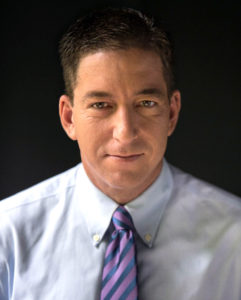
Glenn Greenwald

You may have heard that Glenn Greenwald, the founder of the Intercept, has been charged with cybercrimes by the Brazilian Federal Government. Glenn’s the reporter who broke the story of how Brazil’s ex-President Lula was taken down by Brazilian prosecutors. Moro, the chief prosecutor, was later rewarded by Bolsonaro with appointment as the Minister of Justice. All polls indicated that Lula would have defeated Bolsonaro.

The logic of the case is the same as the logic used by the US government to go after Assange, by the way: That Greenwald was in contact with and counseled hackers. Those people who are supporting Greenwald but don’t support Assange are hypocrites: Brazil is using the Assange precedent to go after Greenwald.

I support Greenwald, of course, as I have supported Assange, Manning, and Snowden.

Now this is the part of the piece where people (and with respect to Assange, I’ve done it) cavil a bit and say something like: “Despite Mr or Ms. X being problematic,” or some-such.

And it’s that I want to talk about, but not to condemn it. To explore it.

Because it’s almost always the case.

When Greenwald indicated he was going to oppose Bolsonaro, after the election, before he had revealed the evidence of Bolsonaro’s crime, I told him, twice, “This is dangerous.”

Bolsonaro’s so right-wing one might as well just call him a fascist. He celebrates policies of shooting political enemies. He’s a dangerous, dangerous man.

Glenn ignored me. I doubt the danger ever figured into his decision to go after Bolsonaro.

Meanwhile we have Manning, who is in jail for refusing to testify against Assange. When in military prison, Manning tried to commit suicide, she found it so unbearable. Despite that, knowing how awful it would be, she chose to go to jail rather than testify.

That’s bravery. (I note that all the Republicans refusing to testify under subpoena are sleeping at home, and haven’t been hit with fines intended to bankrupt them and cost them their home, as was Manning.)

Snowden pissed off the most powerful intelligence service and country in the world. He ran. Wikileaks helped him run, Greenwald published his revelations.

So I understand the caviling, but the point normal people don’t get is that these are all immensely morally brave individuals. They have actual principles they are willing to suffer for.

Most people don’t. They claim to have values, but they have never sacrificed anything meaningful for them, and never will. That sounds harsh, but it’s true. I’d say that even when it comes to their children, whom most people claim to love more than themselves, actions indicate that, well, they don’t.

People have preferences, not principles.

Most people.

Then you get people like Greenwald, Assange, Manning and Snowden. They are polarizing figures. They are loved or hated. They piss people off.

They piss people off precisely because they have principles they consider non-negotiable. They will not do the easy thing when it matters. They will not compromise on anything that really matters.

That’s breaking the actual social contract of “Go along to get along,” “Obey authority,” and “Don’t make people uncomfortable.” I recently talked to a senior activist who was uncomfortable even with the idea of yelling at powerful politicians. It struck them as close to violence.

So here’s the thing, people want men and women of principle to be like ordinary people.

They aren’t. They can’t be. If they were, they wouldn’t do what they do. Much of what you may not like about a Greenwald or Assange or Manning or Snowden is why they are what they are. Not just the principle, but the bravery verging on recklessness. The willingness to say exactly what they think, and do exactly what they believe is right even if others don’t.

They don’t compromise, and they often act without regard to the risks and dangers and whether or not anyone else agrees with them.

That’s what makes them what they are, and it is very rare that you get the good without the bad.

Ordinary people judge them by their own, ordinary standards. But these people don’t live by the standards of ordinary people, because ordinary people are mostly authority and herd followers. And those courtiers who have betrayed principle over and over again to become senior journalists and editors, well, people like Greenwald, Assange, and Manning are a rebuke to them that they can never even acknowledge consciously.

People with principles and bravery enough to stand on them, even in the face of great risk and against authority and the herd, are rarely comfortable people.


Money would be rather useful, as I don’t get paid by the piece. If you want to support my writing, please DONATE or SUBSCRIBE.

The NYTimes Reveals More than It Means

Watch this video. It’s only 39 seconds. It’s worth it.


What’s interesting to me about this video is NOT what Bernie says, it’s the reaction. It’s how genuinely uncomfortable the people interviewing him (The NYTimes editors) are.

They really think he’s saying something terrible. Something awkward. Something embarrassing.

What is he saying? “I ignore the social niceties, because I’m concentrating on helping people.”

To the people running the most important newspaper in the US, and probably in the world, this is embarrassing. Sanders manner is embarrassing to them.

These are courtiers. These are people who know how everyone should act.

The problem with Sanders, to them, is less the content of his policies (though they despise those too), than his display: his manners. It’s not what he does, it’s how he appears while he’s doing it.

This is straight, fifteenth century Italian courtier stuff. Straight Louis the XIVth Versailles stuff.

These are broken people. They are influential, they have a tiny bit of power, but they are broken. The system has shaped them (no one gets near the top of the NYTimes without having kissed ass all their life) into the perfect servants to power. Their judgment is pure aesthetics; pure look-and-feel. It is nearly void of content. Yes, they oppose Sanders’ policies, but if they became the elite consensus, these people would adapt and defend the elite as fiercely as they do centrist politics.

Broken people. Courtiers. Empty of principle, knowing only aesthetics and the pleasure of being hangers on to power.


Money would be rather useful, as I don’t get paid by the piece. If you want to support my writing, please DONATE or SUBSCRIBE.

Page 282 of 532

Powered by WordPress & Theme by Anders Norén