
The horizon is not so far as we can see, but as far as we can imagine

Category: Theory and Practice Page 2 of 4

Violent Determinants Of Social Hierarchy

There are four primary determinants of social hierarchy. They are productive ability, social ties, ideology and violent ability. All are affected by geography.

None of these operate in isolation. Productive ability directly affects violent ability.  Ideology determines what people will and won’t do but over time tends to move towards what a Marxist would call material determinants, though that time can be a LONG time: it took about two thousand years for the early kings to rise after the introduction of agriculture, so the power of ideology, though not the only factor slowing adoption, shouldn’t be understated. Two thousand years shows a lot of resistance.

To the extent hunter-gatherers tended towards egalitarianism, and there are certainly exceptions, generally based on high surplus, it was based on the fact that one guy with simple wood and stone weapons isn’t much better at violence than any other guy, especially in a society where all men who aren’t shamans are hunters. Oh, the best might be able to take two men at once, maybe even three in exceptional cases, but if a group of other males attacks he’s done. Likewise, though ambushes can change the formula, conflicts between men and groups of men are extremely risky unless one side outnumbers the other.

This changes a lot with early bronze weapons and armor, and it changes even more with organized bodies of men trained to fight together. Professional warrior or soldier classes whip peasants. So when agriculture makes every man not a hunter, but allows for division of labor, the “every man is about as good as another” changes, especially in organized groups.

He who is able to transfer the loyalties of a group of warrior or soldiers to himself can rule. Alternately men good at violence can transfer their loyalty to each other, creating a ruling warrior caste.

Let’s take the case of ancient Greece. The Homeric age emphasizes individual combat, but nobles can train much more for it and have better gear. They rule, but the society is still remarkably flat overall. In the classical period, the primary military arms are the phalanx and the galley. The Phalanx is simple and doesn’t require a lot of training, but it does require fit men with gear acting in groups with high solidarity. If everyone doesn’t push together, in unity, they lose.

Athens citizenship was almost exactly “men who fought in the Phalanx” and “men who rowed the galleys.” The galleys were for poorer men, and the state provided the galleys, but galley rowers had to be highly trained and work in precise unity. Slave rowers could not compete with free men, and highly trained crews of citizens could and did, as with the Athenian navy against the Persians, dominate.

So, while those who rowed were usually of the lowest class of Athenian citizens, they were citizens.

What was also important is that for the phalanx, men provided their own weapons and armor and the state, which was the citizens, provided the ships.

Rome started off similar: legions were full of citizens who served for relatively short periods, and who provided their own arms and armor. As with most of the Greek cities, they returned to their farms or other lives after the wars. They were not professionals: they did not make their living as soldiers, but they were able to beat professionals. Sparta may have been the best for a long period, but they didn’t win every battle, their dominance on land was real, but not determinative. Rome in the early and middle Republican period defeated armies made up of professionals regularly.

The fall of the Republic comes when the army is professionalized: this is now how people make their living, they are provided their weapons and armor, and they are loyal primarily to their generals, because their chance of real wealth is from looting and that depends on the general, including whether and how much he lets them loot.

Crassus, near the end of the Republic, simply raises his own legions without the help of the state.

Rome comes to depend on professionals, not citizens, and those professionals are not loyal to the citizenry, and as such the Roman Republic comes to an end when one of the great generals, Augustus,  defeats all his opponents. The Republic never returns, because the conditions for Republican rule are gone.

As we can see, then, if amateurs can’t defeat professionals and if armies are not raised from the citizenry by the citizenry, Republican or Democratic rule cannot continue.

The great Democracy of the last six centuries or so was Switzerland. Similar to the Greek city states, they relied on pikemen, raised from the general population by the general population and able to defeat professional militaries, including knights who had trained since childhood. Even when operating as mercenaries (as city state citizens sometimes did) they retained their loyalty to Switzerland.

But the heart of it is that they could defeat troops raised in non-free states.

But notice in all these cases: men had the franchise, because they were the ones who could and did fight. Women in Athens were treated particularly badly, indeed they were treated worse than most slaves who didn’t work in mines. Switzerland was one of the last western nations to enfranchise their women.

Let’s talk about that enfranchisement. The main feature of 20th century warfare from the WWI thru Korea was that it was mass conscription warfare. The armies were huge. This meant that women, during war, had to take over jobs done by men who were fighting.

Women thus, while mostly not fighting (WWII Russian women are a rare exception), were absolutely integral to military success. They made much of the weapons and kept society running.

When did women get the vote in the US? 1919.

The US draft ended after Vietnam, and the army was professionalized. Not coincidentally, egalitarian distribution of goods has since then spent over 40 years collapsing. This was due, in part, to the constraints on war in a nuclear armed world. Before nuclear weapons, great powers could win wars against each other and the benefits of doing so were huge as were the costs of losing. (Austria stopped existing, Germany lost a huge amount of its land and became a US Satrapy, as did Japan.)

Going all out, enlisting as many men as possible and increasing war production thru the roof all made sense.

But in Vietnam, the US never went all out, because North Vietnam was a Russian ally. They wanted to win without really winning: without conquering North Vietnam.

You don’t need a mass conscript army for a war where you’re not seriously trying to win and where, indeed, seriously trying to win may provoke a nuclear war. (This also applies to the Ukraine war to some extent.)

It is notable that democracy rises with cheap gunpowder weapons. Mass egalitarian societies, in economic terms, result from WWII, and the policies supporting them come to an end about the time that mass drafts are done away with and armies are “professionalized”, aka, become internal mercenaries.

Worse for the future may be the rise of robotic armies. If you don’t need men for soldiers, if you don’t need mass numbers of women to step in and make the robots, well, perhaps the time of egalitarian societies is done.

Or, perhaps not. Because as important as who fights is who makes the weapons. The great disaster of the war of 1812 is that decentalized American armaments production could not compete with centralized armaments factories. It was the end of the yeoman farmer ideal: the idea that decentralized armies raised from the yeomanry could defeat professional militaries.

But if drones and robots which are effective combatants and effective assassins or area denial weapons can be created by ordinary people easily, and the powers that be are unable to deny people the means of doing so, then robotics may prove to be positive in spreading power among the population.

This is one of the hopes of the future, and you should understand clearly that those who want to restrict your access to the determinants of power do not have your best interests at heart.

We’ll talk about that at a later date: it gets to the heart of much of the culture war around guns, a contentious topic and with good reason, given just how many children are being served up on its altar.

But that is for later, for now: who is good at violence matters and it determines who gets the good life and who doesn’t; who rules and who serves.


My ability to write these articles depends on donors and subscribers so if you value this writing, please DONATE or SUBSCRIBE.
The Bottom Line On Ukraine As An Example Of Decision Analysis

I could write a lot of words on this, but let’s keep it simple.

First: Russia keeps taking land.

Second: Putin has far more reserves he can commit than Ukraine does.

Third: this means that the decision about whether to win or lose is Putin’s.

Which do you think he’ll choose.

Oh, there’s considerations around acceptable costs and a possible guerilla war later, but this it the essence of the invasion.

This is a fairly basic but important style of analysis. Ask yourself:

1) Who makes the decision?

2) Do they have sufficient resources and power to enforce their decision?

3) What do they think the right thing to do is? (This isn’t always about self interest, though it often is.)

4) What decision are they likely to make?

You can add bits to this, like “does anyone have a veto?” but this is the essence of it.

This is why I have said for years that nothing would be done about climate change till too late, because the people who have the power to make the decision don’t think it affects them, and do think that the status quo is good for them, so they aren’t going to do anything.

Most reasonably reliable analysis comes down to simple heuristics like this one. Complicated heuristics for social decision making rarely work.

DONATE OR SUBSCRIBE

The Age Of Assassination

It’s forgotten now, but the invention of effective pistols created a period with a lot more assassinations.  Effective portable bombs made assassins even more effective. Archduke Franz Ferdinand, whose assassination started World War I, is the most famous victim, but hardly the only one.

We’re in the start of a golden Age of assassination. It has gone largely unremarked because the victims have been nobodies, and mostly in the developing nations like Iraq, Afghanistan, Pakistan, Libya, Syria and so on, though hardly limited to those war zones.

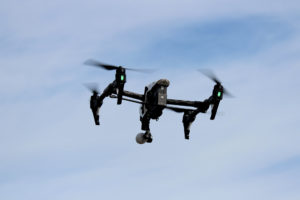
A large group of assassins have been drones (special forces hit squads are the other group.) Drones are not, as I have noted before, a technology of the rich and strong: a good mechanic can make a drone easily enough in their garage. Hezbollah has its own fleet of drones. Iran has invested in them. Turkey, while certainly a powerful nation is not a technological leader overall, but has become a leader in drones and especially autonomous drones.

Drones will get smaller, more deadly and harder to stop. More and more will become autonomous, so that they can’t be jammed.

Meanwhile, the NYTimes has a story about how Israel assassinated Iran’s top nuclear scientist:

Israel’s Mossad used an AI assisted 1 ton machine gun robot. Its parts were detached, smuggled into Iran and assembled inside Iran. The robot used facial recognition to recognize the target.

All of this tech is going to come back to bite our elites in the ass. As Dan points out, there’s no reason these types of technologies can’t be used to kill Western elites, and they will be. The reaction to then try and then clamp down on the technology will do huge harm to tech development, because the items needed to create a drone or stationary robot are simple, not complicated, and will become simpler and less complicated over time.

Ages of assassination aren’t pretty, and they increase political instability substantially. That isn’t always a bad thing, it depends if what’s on offer is better that the status quo, but it’s always a mess.

Technologies are never neutral and that is nowhere more true than technologies of violence. Firearms put a decisive end to the age of the knight, and allowed for the creation of mass democracy. Knights, when they became predominant did the opposite: they entrenched an age of aristocracy, because Knights were expensive as hell, and training to be a knight almost had to start in childhood.

How a technology starts is also not necessarily how it winds up being used predominantly. Consider the machine gun. For the first decades of its existence the machine gun was an offensive weapon: it was used by the Brits and then other colonial militaries to absolutely butcher native forces that dared to oppose them. It helped expand the British Empire and other colonial regimes.

Then came World War I, and it turned out that machine guns were actually a weapon of defense when both sides had them.

Drones have started as weapon by which elites terrorize the weak, and autonomous robots, especially, seem like a dream come true for the powerful. The great problem of power is always the Praetorian one: you need enforcers, and the more you insist on being far richer and out of touch with the commons, the more you need them, but the less you can trust them: whatever the pretense, they become mercenaries, and people who fight for money or for the right to loot and hurt people are never reliable.

Robots seem like the perfect solution, allowing elites to have a much smaller enforcement class; just the people who create and repair them. The real dream is that eventually loyal AIs will design and repair themselves, and non-elite humans will be completely unneeded. The elites will rule alone, with loyal robotic servants and no Praetorian problem or fears that in a revolution, the troops won’t shoot.

But an age of drone and autonomous robots, some of them as small as insects, but still deadly and operating in swarms, is not an age that seems likely to actually favor elites as much as they think, because, as noted earlier, it isn’t actually a hard tech: it’s hard to pioneer, yes, just as were early gunpowder weapons (which were used by Kings to destroy the power of the feudal nobility, since only they could afford enough cannon, and cannon trumped Medieval castles) but once it is pioneered, it will spread and it will be used against elites.

The only way to avoid that is to crack down, hard, on all the precursors, but since the precursors are so simple and basic to a technological society, doing so will make you backwards, and as with Japan completely controlling firearms, this only works if everyone does it everywhere in the world, otherwise one day the “White Ships” show up and you realize you’re helpless before them.

Simple, cheap, effective autonomous or semi-autonomous killing machines are an epochal military technology which is going to change everything if we can maintain societies capable of fielding them. Even in a semi-collapse, we may be able to do so, because they are, actually, simple.

The results are in the air, to be sure. No one in 1500, even, could predict all the results of firearms and the printing press.

But elite who think this will all to their way may find out, as they bleed out their last, just how wrong they were.


(My writing helps pay my rent and buys me food. So please consider subscribing or donating if you like my writing.)

Why Elites Are Creating Surveillance States

It’s commonplace now to note that China is a surveillance state.
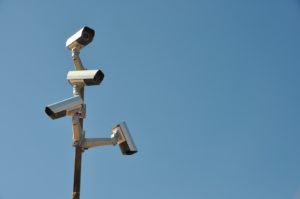
But most other countries–including the UK and the US–are on their way. Cameras proliferate everywhere, virtually everyone carries a phone which is tracked constantly (and 5G networks will be so precise they can tell which room of a building you are in), and audio surveillance is increasingly being added. (That much of this surveillance is private, rather than government, changes little.)

AI + various recognition algos (face, gait, etc…) and cheap long term storage means that, increasingly, it is possible to know where people were, when, and store that information for years. Cameras and phones and other devices which listen in, plus access to all chat, phone, email, and other messaging means we know what they were doing and saying.

1984 was nothing on this. Big Brother couldn’t store information (no video tape even) and someone had to actually be watching the camera and listening in when you did something The Powers That Be didn’t like. If no one was watching, you got away with it.

The endgame, as I’ve been pointing out for years, is a society in which where you are and what you’re doing, and have done is, always known, or at least knowable. And that information is known forever, so the moment someone with power wants to take you out, they can go back through your life in minute detail. If laws or norms change so that what was okay ten or 30 years ago isn’t okay now, well, they can get you on that.

Surveillance societies are sterile societies. Everyone does what they’re supposed to do all the time, and because we become what we do, it affects our personalities. It particularly affects our creativity, and is a large part of why Communist surveillance societies were less creative than the West, particularly as their police states ramped up.

Surveillance societies also just suck to live in: paranoia, fear, little freedom.

So why create them? I mean in one sense the answer is obvious: Surveillance is control, and powerful people always want small people under their thumb, and small people can be sold on arguments like, “This stops crime!” and “Oh, think of the children!”


(I am fundraising to determine how much I’ll write this year. If you value my writing and want more of it, please consider donating.)


But there are three specific reasons for this upsurge in the surveillance state beyond, “We can, so why not?”

The first is that elites have become very aware that modern military technology is mostly not in their favour. Iraqis fought the US to a standstill. The US military had to pay militias to let it leave. You don’t do that if you won. The Taliban is straight up winning in Afghanistan. The biggest and arguably the most expensive military in the world has lost to opponents who don’t have one percent of its budget. Israel lost to Hezbollah the last time it invaded Lebanon, and even lost the e-lint war.

The issue is that a big military like America’s can’t be defeated on the battlefield by rabble, but technologies of area denial (most notably IEDs) mean that large parts of any sizeable country can be made into no go zones. The state can’t rule them and neither can the militias really (because air power can be used to devastate them).

Meanwhile technologies like drones, and, I suspect, in the longer run, weaponized robots, are actually technologies that will be more useful to the weak than the strong. Bombers that cost a billion bucks and can only be made by huge firms or government organizations, and then require teams of specialists to run and maintain? Those are weapons of the strong.

But drones and weaponized robots and IEDs are or will be technologies that any competent mechanic/engineer will be able to make.

What is even scarier is that, as Bush and Obama made clear, drones are weapons of assassination. Like daggers and pistols in earlier eras, they make it possible to kill important people and are really hard to stop.

That will remain true as they disperse out to non-state actors, which is already happening.

They are also excellent weapons of sabotage. A few drones shut down Heathrow Airport, Britain’s most important airport, for days, without having to do anything beyond buzz about.

So, the technological soup to which we are coming makes assassination, sabotage, and area denial easy (as does cyber warfare). A single ransomware attack can shut down an entire bureaucracy, private or public.

The only way our elites can see to stop this is to know what everyone is doing all the time. Oh, there is one other way, but they are ideologically opposed to it.

The Rise of Inequality

The other way to stop people from sabotage, assassination, and insurgency is to make life good. People who are happy, expect the future to be better than the past, and have great social ties (love/friendship) don’t commit violence except when it is socially acceptable violence.

But this requires actually letting ordinary people have stuff: money and good futures. It means not treating them badly at work. It means sharing power (because there is no shared wealth without shared power over time). It also means, in an increasingly small world, actually giving developing country inhabitants decent lives–equality within and between societies.

If you are the richest rich in the history of the world, you sure don’t want to do that. Moreover, you are aware that you have so much, and that other people want it, and you are scared. Especially because you know serious disruptions to the social order will occur as climate change and ecological collapse worsen.

So, to keep your position, and save your lives when things go bad, you need a surveillance state. People have good reason to hate you, the smarter among you realize that, and know that only real, credible fear will stop them.

Remember, the surveillance state, combined with the technologies we’ve discussed, already means the state can easily kill and capture you. If they know where you are, who all your friends are, and everything you’ve done or do, it’s just a matter of visiting some violence on you, and they have plenty of violent capability. Finding you is the important part. The rest is easy.

A Grand Experiment in Cost

Traditional surveillance societies were expensive. The East German Stasi reputedly had one-third of its population spying on the other two-thirds. That’s ludicrous. It guts productivity, making the state poor. Combined with the creativity effects of surveillance societies, you will eventually lose to healthy, non-surveillance societies.

But what if you only had to pay a few percentage points of people to spy on the others, and, if necessary, kill or capture, the rest of the population. What if most of the work was done by AI, algos, and robots? Even better, this gets rid of the need to keep a large number of internal police and spies loyal, so you need a much smaller class of people to keep your surveillance state running.

But wait! It gets better! (Worse.) What if these new technologies mean that you don’t actually need peons? What if you can do the manufacturing, delivery, and service jobs all with combinations of AI and robots. Who needs workers? Just give the peons a guaranteed annual income large enough for them to buy your shitty goods and services, stick them in sub-par housing, and run the society mostly without them!

Oh sure, the same technology could be used to create a utopia (luxury-automated communism) but why do that? That would mean you wouldn’t be the richest, most powerful elite the world has ever known.

As members of the powerful elite, the problem of peons and minions revolting has always been the thorn in your bowl of cherries.

Finally, finally, technology offers a solution. A possibility of a permanent state where you never can, or will, lose your power.

Give it a little longer and make sure that you get access to the new gene-editing technologies (and the peons don’t), and you can even give yourself another permanent advantage by making yourself and your children actually, biologically superior to the hoi polloi.

The possibilities! The possibilities! If you can just hang on and get all of this into place, this could be the greatest age of aristocracy and autocracy the world has ever seen, and one that has no reason to ever end.

Ahhhhh.

It’s always good to be rich and powerful, but potentially this is the best era ever to be rich and powerful, with the best yet to come!

Drones Are a Weapon of the Weak, #2

So, I imagine how everyone heard how drones shut down Gatwick airport, and the police and military were helpless?
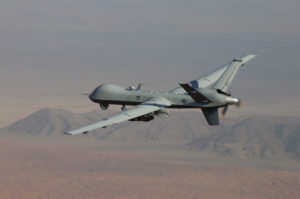
Then there is this nice thread from someone who fought ISIS in Iraq. His end conclusion is that trying to shoot down drones is hopeless, you have to find the drone operator and shoot them.

Though I could be wrong, it looks like right now the only technology which really works, is jamming. The problem is that wide-spectrum jamming shuts down more than just the drones. And jamming won’t work against autonomous drones.

Drones are too small and hard for humans to hit reliably. Real attacks involve swarms of fast moving drones.

And drones are cheap. I wrote back in 2012 that drones would be weapons of the weak, and in 2013 discussed how technology was changing the balance of power between weak and strong in war.

This trend continues. Governments may force drone registration and so on, but they are an easy, cheap tech to make with off-the-shelf parts. Currently, they can’t be stopped easily by conventional militaries, and it will be impossible to harden all targets against them in the perceivable future. They will make both terror attacks and assassinations quite simple.

I always thought the US was foolish for developing this technology. They made it happen much faster than it would have otherwise, and while initially it was (and still is) useful to them, in the end it will be a technology that terrorizes them and other powerful governments.

Combined with IEDs, drones make for a very potent insurgency/rebellion/area denial technology. The only real counter to them right now is indirect: Totalitarian surveillance states with the power to track the makers and users. Fear of this sort of thing is, in fact, part of what is driving the rise of surveillance states.

Especially, for the smarter leaders, the realization that drone assassinations are eventually going to be almost impossible to stop.

I don’t think this is necessarily a bad thing in the long run. Scared leaders and militaries which aren’t invincible are a good thing. But there can be a lot of pain on the way to leaders learning that they can’t just ignore their followers without violent consequences, and a lot of that pain will hit ordinary people.


The results of the work I do, like this article, are free, but food isn’t, so if you value my work, please DONATE or SUBSCRIBE.


Assassination Works Only Under Two Circumstances

For years, decades even, the US has had a policy of assassination. Americans believe that if you kill the leaders, you kill an organization.
This is delusional. It only works when it almost isn’t necessary. How many times has the US killed the man of the Taliban? Did killing Osama stop Al-Qaeda? Assassinating Yamamoto in WWII was not just meaningless, it was a bad idea (he wasn’t a great admiral, but he did oppose war with both the US and China.)

Assassination ONLY works when the organization is unhealthy OR when much of it doesn’t agree with the current leader but is following them anyway.

In a healthy organization, someone else just steps up and leads, and they’re about as good as whoever was there before. It’s not that leadership doesn’t matter, it’s that healthy organizations create lots of people who are capable of leading. Very few leaders are actually genius leaders; most of what looks like genius is leading a good organization, and know-how. Sometimes, someone is the first person to really figure out how to lead an organization, but if they’re good, they train successors, or people learn from watching them.

The second time it works is if there is a genuine disagreement in organization. Perhaps some are willing to make peace, and some aren’t, and if you kill a few of the key leaders who don’t want to make peace, you can get peace.

The problem with all this, however, is that it’s often hard to tell who is actually a genius leader and which people actually believe in the organization. A lower ranking leader, gunning for the first spot, is often not public about disagreeing with , and if he is, may be lying to get followers. It’s just hard to tell. As for genius: It’s rare, and people are good at faking it–until crunch time. Who was America’s last genius general put in real command? I am not aware of one from the last 20 years (Petraeus certainly wasn’t.)

Hannibals, Caesars, and Subotais are truly, genuinely, rare. Genius political leaders are truly rare as well. And genius politicians often are terrible leaders (not the same thing). You may want them in charge.

But the bottom line is simple: A good organization produces a surfeit of good leaders who agree with the organization’s mission. Decapitation only works on unhealthy organizations.

Managers in the US (the US doesn’t have many leaders) lead unhealthy organizations rife with disillusionment, designed to promote time serving managers who don’t take risks, who actively work to harm the rank and file of the organization, and who believe in nothing but themselves.

Such managers find it difficult to get anything done. They have to use fear, coercion, and lies to get the rank and file to follow orders, because their orders are usually both evil and against the rank and file’s self interest.

They know that managing organizations is difficult from their own experience, and they think that all organizations are like that.

But organizations like the Taliban or Hezbollah (not to conflate, I don’t regard Hezbollah as equivalent in many ways) actually believe in what they are doing. People join because they believe in the mission. Even large drug cartels have a belief in a mission and a winnowing of fools and poltroons that often (though not as often as belief organizations) allows them to replace leadership.

When real leadership meets real mission, people fall over themselves to join. They want to belong. They believe. They will work for virtually nothing. They will beg to be part of something bigger than them.

Most Americans have NEVER experienced this. They cannot understand it at a gut level. It is alien to them.

Assassination works only when organizations are unhealthy, and run by managers, not leaders, or during the early stages of a charismatic cult. (A healthy charismatic cult, like the early disciples of Jesus, will quickly create enough leaders to survive a decapitation strike.)


The results of the work I do, like this article, are free, but food isn’t, so if you value my work, please DONATE or SUBSCRIBE.


Free and Prosperous Societies Occur Only When the Basis of Power Is the People

Any apparent exception will end quickly, and is usually a legacy from a time when the people were needed.

Franchise tracks the dominant military arm pretty close to exactly. The Swiss are free because of their fights in Pike formations.  Most of Dark Ages and Medieval Europe’s were not free, because the dominant military arm was cavalry. As the dominant military arm moves to infantry, the franchise and freedom expand.

When a society becomes militarily mass-mobilized, all the men get the vote. When a society is militarily mass-mobilized and it’s industrialized, all the women get the vote because they are needed to run the industry while the men are away fighting.

Militarily mass-mobilized societies require that the citizens be healthy enough to fight. In WWI, the British were aghast at the number of men who were ineligible for the draft because their health was too weak, or they were too short, and so on. They did something about it.

Agricultural societies tend towards the patriarchal, because much of the work requires men’s heavy muscles. Horticultural societies, where women can do the work, tend towards egalitarianism. Likewise, hunter-gatherer societies in climes where gathering provides most of the food, tend towards egalitarianism; the exception here is when the most valued food is gathered by the men. In traditional Eskimo society, for instance, where the men provided essentially all the meat and the women processed it, was not egalitarian.

Humans have three sources of power: military, productive, and (in modern societies) consumptive. Consumers are not useless in our society, but consumption is still the weakest leg of the tripod. The rich are happy to consume more, after all.

The conditions for widespread prosperity have faded. We no longer have mass-mobilized armies, but professional standing armies, and we are moving towards smaller armies with more robots, both autonomous and remote-guided.

Technological progress has made manufacturing far more efficient, and it requires far less people. The rest of the economy, unless it is required for manufacturing, now matters far less. Most service work is not highly valued and does not translate into military power, and extraction labor is a minor part of most economies.

The final source of power for ordinary individuals is simply the threat they pose to elites. As we move away from the mass-mobilized “just need a rifle” military, this fades as well. To the extent it still exists, it is being managed by the time-honored “oppression” method, with new technology allowing for a Panopticon State which would have made Orwell pine for the weak and limited surveillance of Big Brother.

This is not to say the commoners are entirely powerless. The full power of denial of area techniques shown in Iraq, Afghanistan and elsewhere hasn’t been properly appreciated.  These strategies would have worked just fine in the First World. Drones are cheap, and, in principle, could be manufactured by ordinary technicians. These aren’t F-16’s; you can make them in your garage.

Still, mass mobilization warfare is no longer the model, factories are not begging for more workers, there exists no longer any large expanses of land needing to be conquered in the name of colonialism, administered, or farmed.

As for money, banks make it, not people. We may move to a world where we fully appreciate that money is made out of thin air and reclaim control of money for the public, but so far the movement has been in the other direction–printing more and more of it for rich people.

At this point, most people are superfluous. As such there is no reason for elites to allow them freedom, power, or prosperity.


If you enjoyed this article, and want me to write more, please DONATE or SUBSCRIBE.

Why Registering Drones with the Government Matters

DroneSo, drones must now be registered with the Department of Transportation in the US.

Drones are a big part of the future of war. They are cheap, easy to make, and drones will be a chosen weapon of the weak and relatively poor. They are also going to become more and more effective. A drone whistling by at 45 miles an hour is very hard to hit by a person with a gun.

A lot of people focus on an “armed population,” but future wars will be fought more and more with robots: autonomous or guided (which is what a drone is).  These robots will eventually be more effective than human soldiers and can already do things humans can’t.

And they are cheap.

This is being done by the Department of Transport, presumably for safety reasons, but those who worry about the tracking and confiscation of guns, if they were really smart, would worry about the tracking and confiscation of drones.


If you enjoyed this article, and want me to write more, please DONATE or SUBSCRIBE.

Page 2 of 4

Powered by WordPress & Theme by Anders Norén