
The horizon is not so far as we can see, but as far as we can imagine

Category: Age of War and Revolution Page 2 of 33

Understand China’s Plan To Become A Full Socialist State

“The banks, as we know, are centres of modern economic life, the principal nerve centres of the whole capitalist economic system.”

–Vladmir Lenin

Deng had four principles for his changes to Chinese Communism:

  • Upholding the socialist road (or socialist path).
  • Upholding the people’s democratic dictatorship (originally often referred to as the dictatorship of the proletariat; the phrasing was later standardized as “people’s democratic dictatorship”).
  • Upholding the leadership of the Communist Party of China (CCP).
  • Upholding Marxism-Leninism and Mao Zedong Thought.
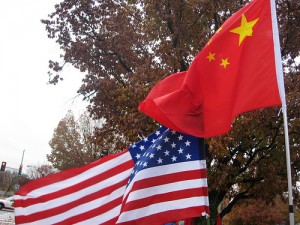
    Chinese and American flags flying together

In Marxist thought the capitalist industrial stage is necessary before the final condition of a state completely controlled by the workers, without class.

This is because a significant surplus is required for everyone to have a good life, and it’s capitalist industrialism which creates that.

You can easily create a heavy industrial state in a command economy: both the Soviets and the Chinese under Mao did so. What they could not do was create a state with a lot of consumer goods.

Mao created the pre-conditions: heavy industry, basic infrastructure, and an educated people.

But notice the principles are all “stay socialist and stay in charge.”

The major banks in China are state controlled. The banks that aren’t state controlled are under strong supervision, and in most cases have party members in leadership positions.

Banks (and various shadow banks in the West) are the main way firms get money. If the banks won’t loan, your business won’t happen or won’t survive. If they will loan to you at preferential rates because you are doing what the Party wants, usually based on the five year plan, then you’ll have a good chance of success.

When I wrote my article on principles for running a left wing government I included taking control of the banks and taking control of media as absolute, immediate, necessities.

China has kept control of both.

This issue became especially urgent after the fall of the USSR and the CPC spent a LOT of time studying why the Soviet Union fell.

But despite Deng’s principles what was happening before Xi was the corruption of the CPC and its mingling with the new capitalist rich: after all, if as a party official you helped a firm, they could kick back to you and you’d get rich. Do enough of this and you could become obscenely rich.

This imperiled all four of Deng’s principles, as decision making around loans and regulation was increasingly made not in alignment with the CPC’s goals, but to make people rich. (One example is the massive housing bubble which Xi has since popped.) This is not the issue the Soviets had specifically, but is related: people with power no longer really believed in Communism or put the Party’s power first. (Gorbachev deliberately removed power from the party.)

When Xi took charge his first and most important programs was anti-corruption. At the time I cynically assumed it was a way of taking out his enemies, and that he would tolerate corruption for his faction.

I was, mostly, wrong. Xi’s anti-corruption is real. He’s a sincere Communist who wants to keep the CPC genuinely in charge and not let it be corrupted.

The goal is simple enough: stay in charge, make China vastly prosperous and transition to full socialism. Markets are useful for this, but must be kept under control or they will take control of the party, and capitalists aren’t going to be committed socialists.

Xi, in this light, is just an extension of Deng: actually making Deng work. Deng’s policies caused rapid technological advance and improved light industry massively, but the principles were not actually being enforced.

Xi enforces them. Not just anti-corruption but changes in how the party recruits and trains and promotes, all intended to keep the CPC on the path to socialism.

Will they succeed? Well the transition will come, if it does, with the next leader, most likely. Xi is putting his successor in a good position. AI and robotics are being directed towards physical activities, there are dark factories with no workers, and so on.

Genuine socialism means people shouldn’t have to work a lot if they don’t want to, and should still live a good life. AI and automation, done properly, offers that possibility.

Of course huge problems around distribution and production remain and will have to be figured out. If China stays the course they’re trying to create something which has never existed: something genuinely new. Westerner’s might call it “fully automated luxury communism” though I don’t know if it’ll get that far.

But the ducks are in a row: massive productive capacity, ways to reduce the amount of workers needed, and keeping control of politics and the economy.

This is the plan. No one knows if it will succeed, but it’s not a stupid plan or one that will obviously fail, IF China can deal with resource depletion, ecological collapse and global warming (all of which it is doing more to mitigate than any other country, though it’s far from perfect.)

China is the future. It’s success or failure will determine what political/economic models are considered usable and successful. The age of liberal democracy is near its end.

What I write here is for the benefit of everyone, but alas, I live in capitalism and I, and the site, take money to keep running. If you value the writing here and can, please subscribe or donate.
America Almost Out Of Long Range Strike Munitions

Why did Trump call off his big attacks? Why did the US stop attacking suddenly?

he U.S. Army has used up much of its stockpile of highly accurate long-range missiles during its five-month war with Iran, according to three people familiar with the data, raising concerns about the military’s ​readiness for future conflicts.
The missiles are principally the Army’s surface-to-surface weapons, known as Army Tactical Missile Systems (ATACMS) and Precision Strike Missiles (PrSM). The U.S. has used “virtually all” of these weapons, according to two of the sources.

There are also claims that the US is running out of long range air to ground munitions as well.

Combined these two things mean that if America wants to keep bombing Iran, they have to actually fly over Iran and put themselves in much more danger from Iranian anti-air, and by all accounts the Iranians still have plenty left.

This problem comes from the same place virtually all US problems come from: rather than optimizing for results (production) everyone optimizes for profits. Selling fewer missiles for much more money is a better business deal, yes?

And that the US cannot significantly increase the production is due to de-industrializing: sending most of America’s key industries to China, because hey, it doesn’t matter where things are made.

China is now the US in WWII. They could, in a war, easily retool to produce literally millions of drones. They can produce a hundred warships per warship the US produces. Etc.

These are systematic issues. De-financialization is politically impossible. Without de-financialization re-industrializing is not possible, as it would require companies to make far lower profits. Chinese companies are MUCH bigger than American ones, and make less profit (not revenue, but profit) and have far lower valuations.

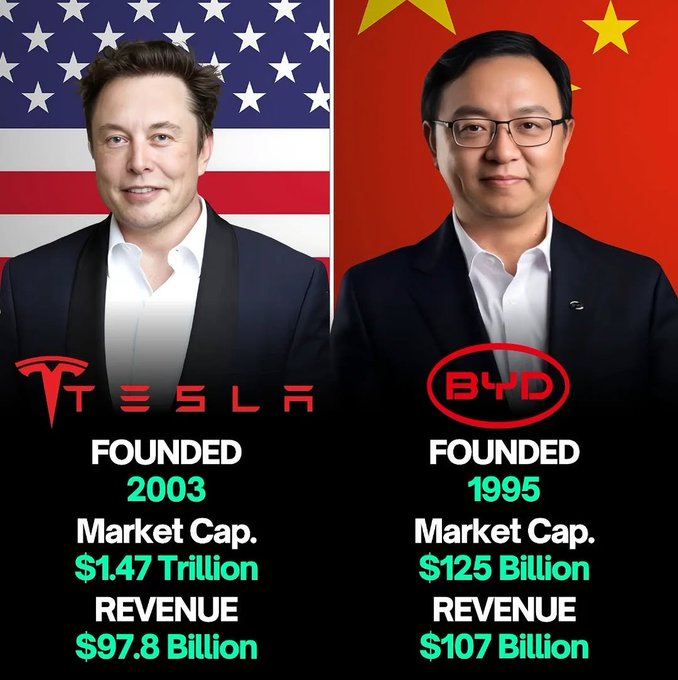
In 2025 BYD sold 2.26 million cars. Tesla sold 1.64 million. And China has many auto companies.

The mindset for scaling and the mindset for profit-maxing are very different. American elites are all looking for moats: they all want to be able to charge more for a product than it is worth because no one is competing with them on price. (This is why Chinese EVs aren’t allowed in America: they compete on price and the American car industry would cease to exist on contact.)

America lost the Iran war over fifty years as it changed from an industrial power to a financial power. Power comes from what a country can actually do. What it can buy from other countries is a minor consideration unless it has the ability to force them to sell, and that ability comes from what the country can do. Against Venezuela and Cuba, the US is still strong enough. Against a middle power which prepared for war and knows how to use geography, not so much.

In general terms, everything that is happening was predicted decades ago by objective people looking at the trends. Power comes from capability, America was systematically getting rid of that capability to optimize for the number of rich people it could generate.

Military decline, industrial decline, technological decline: all of this comes from making profits the end-goal, rather than the mean by which worthwhile goals were achieved.

“We need to make a profit do X” is very different from “we do X to make a profit.”

What I write here is for the benefit of everyone, but alas, I live in capitalism and I, and the site, take money to keep running. If you value the writing here and can, please subscribe or donate.

“Nothing Ever Happens”

Oh?

Almost everything is on track.

  • Covid?
  • The financial crisis?
  • This war? China officially leading the US in tech and industry?
  • Global warming coming on faster than expected?
  • Massive wildfires every summer?
  • Trump being President?
  • The Ukraine war?
  • That little genocide in Palestine?
  • The US being unable to build enough weapons?
  • The complete breakdown of international law and (more seriously) the WTO trade order?
  • A revolution in war making technology which has allowed middle powers to fight great powers?
  • Multiple payment systems challenging dollar privilege.
  • Serious collapses in animal and insect populations, so much so that bug splat doesn’t exist in much of the world any more and that I rarely see songbirds.
  • Constant, inexorable rises in food prices, even before the war.

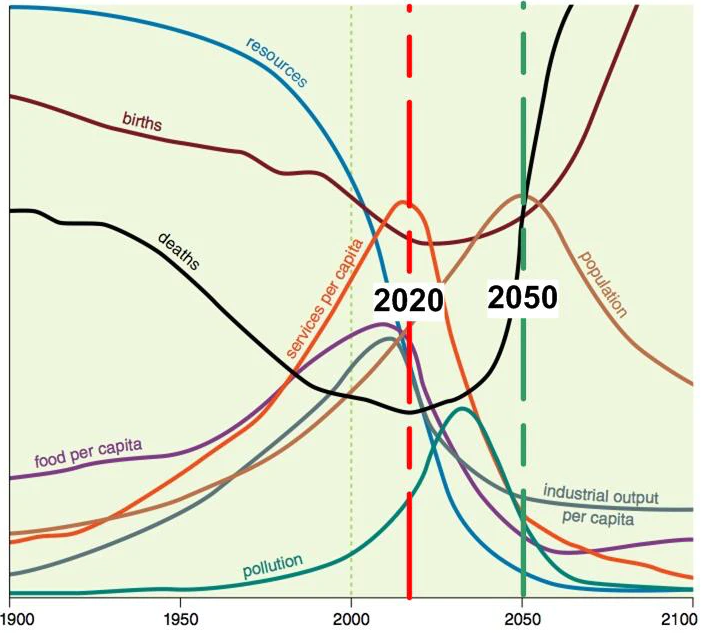
Notice that food per capita line. Remember all the screaming about fertility rates and look at the births line (though I think the collapse is more severe than modeled.) Industrial output is still increasing, as the chart suggests, but China’s about to go over a demographic ledge and I expect it will peak within ten years of the chart’s prediction. Resources are very definitely being depleted, though less fast than predicted. Still, it’s happening. Just read in detail about oil production.
Collapse happens slowly, then all at once. The post-USSR order has collapsed. It’s gone. The trade order has collapsed. Military supremacy is gone. Every summer we get wildfires and smoke in major cities, which did not happen before about 2019. This is a textbook example of climate change re-ordering the environment. What will grow up afterwards will be a different mix of plants and animals.

Things are happening. Big things. If you want the official “big collapse” well, it’s not here yet for the first world, but the death by a thousand self-inflicted wounds continues. As much as I admire what China has done, and as impressed as I am by solar and so on, they are still an industrial society based on planned obsolescence and over-production and are about to hit a demographic cliff (good in the long run, but it will cause issues.) The only escape from much of the resource trap would be large scale off world mining. Musk isn’t going to manage it. The Chinese are taking a shot, we’ll see. That wouldn’t, by itself, fix ecological collapse, however and won’t supply all necessary resources. It’s also unlikely to come on line in time, if at all.

You’re living thru an epochal period, similar to the WWI thru WWII period: everything is changing, but this time including serious environmental issues. There’s also all the social issues related to AI, phones, the collapse of reading and reasoning ability in some societies, mass surveillance and the rise of authoritarianism, even as civil liberties are contracting in almost every country in the world.

The post-war and post-cold war orders are dying or dead. The negative consequences of the industrial revolution are hitting home after we got the goodies for a couple centuries.

Things are happening. More things will happen over the next couple decades. If you can’t see that, you’re blind.

What I write here is for the benefit of everyone, but alas, I live in capitalism and I, and the site, take money to keep running. If you value the writing here and can, please subscribe or donate.


America’s Losing the AI Race Hard

Amazing stuff, and sooner than even I expected. China’s Kimi is now about equal to GPT and Claude:

For the first time, a Chinese model Kimi K3 has taken on the Frontend Code Arena and is scoring at or near the frontier on other benchmarks.

And the majors are noticing:

Meanwhile Trump is talking about banning Chinese AI. 

Alternatively, the smart lads at Open AI have a regulatory plan:

I would guess that the Trump Administration will at some point realize that their best strategy here would be to create large amounts of regulatory risk around the use of open-weight Chinese models. You don’t need to “ban open source” (one of the dumber motifs of AI policy discussion). You just need to direct every agency to issue soft law that creates FUD. “A Federal Reserve Advisory Bulletin found that there may be backdoors in Chinese AI models.” It needn’t be that well justified. You just create enough regulatory risk that every regulated enterprise backs off. You probably don’t want to create so much regulatory risk that you scare off the hyperscalers from serving Chinese models; this will just drive startups to sketchier providers. There’s a happy middle ground here. I’d assume they will do some version of this.

Even more fun, the Feds want to approve all AI releases and not allow everyone the full models.

The Trump administration has taken new steps to assert more control over the rollout of future artificial intelligence model releases by dictating which companies and entities are allowed access to the latest frontier models, two people familiar with the matter told CNBC…

….

This week, the administration launched its own program, dubbed “Gold Eagle,” aimed at collaborating with the private sector to find and fix cyber vulnerabilities.

The so-called clearinghouse would put the White House in charge of greenlighting which companies can access new AI models, according to a person familiar with the matter, who spoke on condition of anonymity in order to discuss information that is not public.

China is going to eat America’s lunch on this. If they ban Chinese AI (harder than it seems, given it’s open source) all that means is writing off the rest of the world. And since American models are handicapped, smaller American companies will be stuck with worse AI.

Since Chinese AI is far cheaper, as well, I’d expect American companies to set up subsidiaries overseas to use it, rather than be stuck with American AI.

The entire situation is a complete clusterfuck. Major companies have taken on serious debt in order to build data centers which have a lifecycle of five to seven years, and often less (since new generations of GPUs are much better.)  But the Chinese product is cheaper, open source, lacks nearly as much sovereign risk and I’ll bet multiple models will soon be about as good as Anthropic and OpenAI’s.

Where’s the business case that spending all these trillions of dollars is going to produce enough revenue from US AI to pay for all of it?

There isn’t one. It doesn’t exist.

And that means that, at least in America, this is an AI bubble. All bubbles burst and this will not be an exception. If the government bails them out it will be the last major US bailout.

This is also very likely one of the last major tech revolutions which will start in the US (which it did.) Going forward they China will produce the vast majority of them.

This is the endgame. The turning point where China obtains not just the industrial base but the absolutely undisputed tech lead. From now on China will like America in the 1950s — it’s where almost everything new is created, the dynamic center of the world, and soon people will be competing to move there, because everyone knows it is the future.


What I write here is for the benefit of everyone, but alas, I live in capitalism and I, and the site, take money to keep running. If you value the writing here and can, please subscribe or donate.


Text of the Iran/US MOU

From Dropsite:

Paragraph 1: (end military ops including in Lebanon: this is the one that may blow it up.)

The United States of America and the Islamic Republic of Iran and their allies in the current war by signing this M.O.U. declare the immediate and permanent termination of military operations on all fronts, including in Lebanon, and undertake from now on not to initiate any war or any military operation against each other, and to refrain [from] the threat or use of force against each other and ensuring the territorial integrity and sovereignty of Lebanon. The final deal will confirm the permanent termination of the war on all fronts, including in Lebanon and other provisions of this paragraph.

Paragraph 2:

The United States of America and the Islamic Republic of Iran undertake to respect each other’s sovereignty and territorial integrity, and to refrain from interfering in each other’s internal affairs.

Paragraph 3: (This ain’t final, more to negotiate.)

The United States of America and the Islamic Republic of Iran commit to negotiating and achieving the final deal in maximum 60 days extendable with mutual consent.

Paragraph 4: (Immediate end of US blockade, Iran has 30 days. US to remove forces.)

Immediately upon the signing of this M.O.U., the United States of America will begin the removal of its naval blockade and any disturbances or impediments against the Islamic Republic of Iran, and will fully end the naval blockade within 30 days. During this period, the traffic of vessels will be in proportion to the numbers of prewar traffic being restored by the Islamic Republic of Iran. The United States of America further undertakes to remove its forces from the proximity of the Islamic Republic of Iran within 30 days after the final deal.

Paragraph 5: (no charge for passage thru the strait. At least for 60 days, I suspect Iran/Oman will try and have charges after that.)

Upon the signing of this M.O.U., the Islamic Republic of Iran will make arrangements using its best efforts for the safe passage of commercial vessels with no charge for 60 days only from the Persian Gulf to the Sea of Oman, and vice versa. The traffic of commercial vessels will immediately start, and considering the need for removing the technical and military obstacles and demining by the Islamic Republic of Iran, will be instated within 30 days. The Islamic Republic of Iran will conduct dialogue with the Sultanate of Oman to define the future administration and maritime services in the Strait of Hormuz, in discussion with other Persian Gulf littoral states in line with the applicable international law and the sovereign rights of coastal states of the Strait of Hormuz.

Paragraph 6: (US pays 300 billion in restitution. This is why Iran agreed to no fees for passage, at least for now.)

The United States of America undertakes with regional partners to develop a definitive, mutually agreed plan with at least U.S.D. 300 billion for the reconstruction and economic development of the Islamic Republic of Iran. The mechanism for the implementation of this plan will be finalized as part of a final deal within 60 days. All required licenses, waivers and permissions needed for the relevant financial transactions will be granted by the United States of America.

Paragraph 7: (End of sanctions.)

The United States of America undertakes to terminate all types of sanctions against the Islamic Republic of Iran, including the United Nations Security Council resolutions, I.A.E.A. Board of Governors resolutions, and all unilateral U.S. sanctions, primary and secondary, in an agreed-upon schedule as part of the final deal. The Islamic Republic of Iran and the United States of America acknowledge the critical importance of the sanctions termination issue above mentioned, and express their intentions to immediately address these issues in the negotiations in order to achieve mutual agreement on them.

Paragraph 8: (No nukes for Iran. Downblending in Iran under IAEA supervision.)

The Islamic Republic of Iran reaffirms that it shall not procure or develop nuclear weapons. The United States of America and the Islamic Republic of Iran have agreed to resolve the disposition of stockpiled, enriched material pursuant to a mechanism that will be mutually agreed upon in accordance with the schedule mentioned in Paragraph 7, with the minimum methodology to be down-blending on site under the supervision of the I.A.E.A. The two parties also agreed to discuss the issue of enrichment and other mutually agreed matters related to the Islamic Republic of Iran’s nuclear needs, based on the statutory framework being agreed upon in the final deal. The final deal will confirm the provisions of this paragraph. The United States of America and the Islamic Republic of Iran acknowledge the critical importance of the nuclear issues above mentioned, and express their intention to immediately address these issues in the negotiation in order to achieve mutual agreement on them.

Paragraph 9: (No new sanctions, no new nuclear program.)

Pending the final deal, the United States of America and the Islamic Republic of Iran agree to maintain the status quo. The Islamic Republic of Iran will maintain the current status quo of its nuclear program, and the United States of America will not impose any new sanctions, and will not deploy additional forces in the region.

Paragraph 10: (Again, end of sanctions: this time for oil products.)

The United States of America undertakes that immediately upon the signing of this M.O.U., and until the termination of sanctions, U.S. Department of Treasury will issue waivers for the export of Iranian crude oil, petroleum products and derivatives, and all associated services, including banking transactions, insurances, transportation, etc.

Paragraph 11: (Release of all frozen funds.)

The United States of America undertakes to make fully available for use the frozen or restricted funds and assets of the Islamic Republic of Iran upon the implementation of this M.O.U. The United States of America and the Islamic Republic of Iran will mutually agree on the procedures related to the release of these funds during the negotiations. Such funds, whether retained in the original account or transferred, shall be made fully usable for payment to any ultimate beneficiary designated by the Central Bank of the Islamic Republic of Iran. The United States of America undertakes to issue all necessary licenses and authorizations accordingly.

Paragraph 12:

The United States of America and Islamic Republic of Iran agree that an executive mechanism will be established to monitor the successful implementation of this M.O.U. and the future compliance of the final deal.

Paragraph 13: (Negotiation not over yet.)

After signing this M.O.U. and subject to the beginning of the implementation of Paragraphs 1, 4, 5, 10 and 11 of this M.O.U., and the continuing implementation of these measures, the United States of America and the Islamic Republic of Iran will start negotiations regarding the final deal exclusively on the other paragraphs.

Paragraph 14:

The final deal will be endorsed by a binding U.N.S.C. resolution.


Commentary:

This is a decisive victory for Iran and a loss for Israel and America, though I’d argue that the US ending sanctions and military efforts in the Middle East is good for America. Still, there’s no question that this is the sort of deal that gets signed when one side (Iran) won and the other side (Israel and the US) lost.

I mean — 300 billion in reparations. The US end their blockade first. The US says it’ll get move forces out of the region. The US ends pretty much all sanctions and gives Iran back their money.

Massive win for Iran. Iran is now a great power in the region, and no one can deny it.

The obvious problem here is Israel. If Iran is serious about an end to violence in Lebanon, then this will wind up as a dead letter unless the US tightens Israel’s leash (which it can do, Israel is entirely dependent on US aid). Alternative the US could simply shrug, and make the deal only between them and Iran, and say “if Israel wants to keep fighting, it’s on its own.)

The question here is the power of the domestic lobby, and whether or not Israel has enough blackmail on Trump. (Signing this deal at all makes it look like the answer to , which I thought was “absolutely” may well be “nope, not enough.” We’ll see.)

The US is no longer a superpower. The world no longer has any superpowers. It’s still a great power with worldwide reach, but the days where it was the world’s “super cop” are over. It can still push around weak nations, but not strong regional powers. Took a little less than 30 years from the fall of the USSR for American elites to screw up a completely dominant position.

What I write here is for the benefit of everyone, but alas, I live in capitalism and I, and the site, take money to keep running. If you value the writing here and can, please subscribe or donate.

Americans Today Have Little To Be Proud Of

Pride in one’s nation is one of the weakest and most pathetic types of pride because a nation’s greatness is a result of so many different people’s contribution. Unless you are FDR level, you contributed very little.

But American pride in being American is ridiculous.

Americans have nothing to be proud of, not today’s Americans anyway. The people who made America great are all dead. The people in power today are those who threw away the greatness their predecessors: their betters, created. The same is true of the English. Victorians or even Regency English would despise their descendants pathetic weakness, foolishness and stupidity.

What are you proud of, exactly? Getting you asses whipped by Iran? Impoverishing 60% of your own population? Helping Israel commit genocide? Killing millions in Iraq for no goddamn reason, since Iraq never attacked America? Gutting the Bill of Rights? Having the most corrupt President in American history?

One can criticize FDR and the post-war liberals of the 40s and 50s and 60s for various reasons: but they built an America which was great in many ways: that worked for more and more people, that delivered a good life for many, and which became more fair over time (civil liberties, for example, and increased rights for women.)

Americans were given the best hand in the world: the industrial and tech lead, and they pissed it away. They literally, voluntarily, shipped their industry to China acting as if making a an extra percentage point more profit was all that mattered.

America’s always been evil. All Empires are, and so are all settler colonial states. It’s just the way it is. But Americans of previous generations were competent, and starting with FDR, they at least took care of their own people. They were an American Athens, where immigrants were welcome, where people could make something of themselves, where the world’s great scholars and scientists wanted to be.

America had it all, and pissed it away.

No country, like no person, is of a piece. There is always good and evil, things to be proud of and things to be ashamed of.

But everything great in America was created by people who are dead or old, or are downstream of the post-war liberal period. The tech for the internet was created by post-war government agencies. The world wide web was invented by a government scientist working in an agency created by post-war liberals. Modern GUI interfaces were created in the early 70s and everything that flows from all this, including cell and smart phones is a result of technologies created by government or Bell Labs.

The great tech revolutions of the 80s, 90s and 2000s were all matters of exploiting fundamental discoveries and work done in the post-war era and the cupboard is now bare. America is cutting spending on research, burning its seed corn, even as China ramps up research. America is impoverishing its own people, even as China forces housing prices lower and works to improve wages and living standards for the majority.

To be proud of being American today is pathetic. What is there to be proud of? Destroying the bill of rights? Having a president who openly takes bribes in office? Losing the the tech and industrial lead? Making most of the population poor? Being the attack dog of Israel, with most politicians doing the bidding of a foreign country to the detriment of their own people?

Everything great about America is a legacy of the past, not a product of the present and being proud of being American is like being proud your parents left you a billion dollars, and you’re now worth a hundred million.


What I write here is for the benefit of everyone, but alas, I live in capitalism and I, and the site, take money to keep running. If you value the writing here and can, please subscribe or donate.

The Year of Chaos: 2027

Every society is three meals from chaos

-Vladimir Lenin

On May 4th I wrote that a year of hunger and famine is baked in for most of the world.

This was based on the effects of Six Week War and the continued blockade of the Strait of Hormuz. But, in addition, we have the strongest El Nino is a hundred and fifty years incoming:


I’ve personally seen my food prices, before any of this is baked in, rise about 20% this year. I just saw a 33% increase in the price of tomatoes, beef is up over 40%, and so on. Almost nothing isn’t more expensive and this is BEFORE the absolutely catastrophic harvests we will have this year.

It’s easy to say that America and the West won’t have a famine because they can outbid most of the world for food, but the prices will be extremely high and a lot of people are going to go hungry.

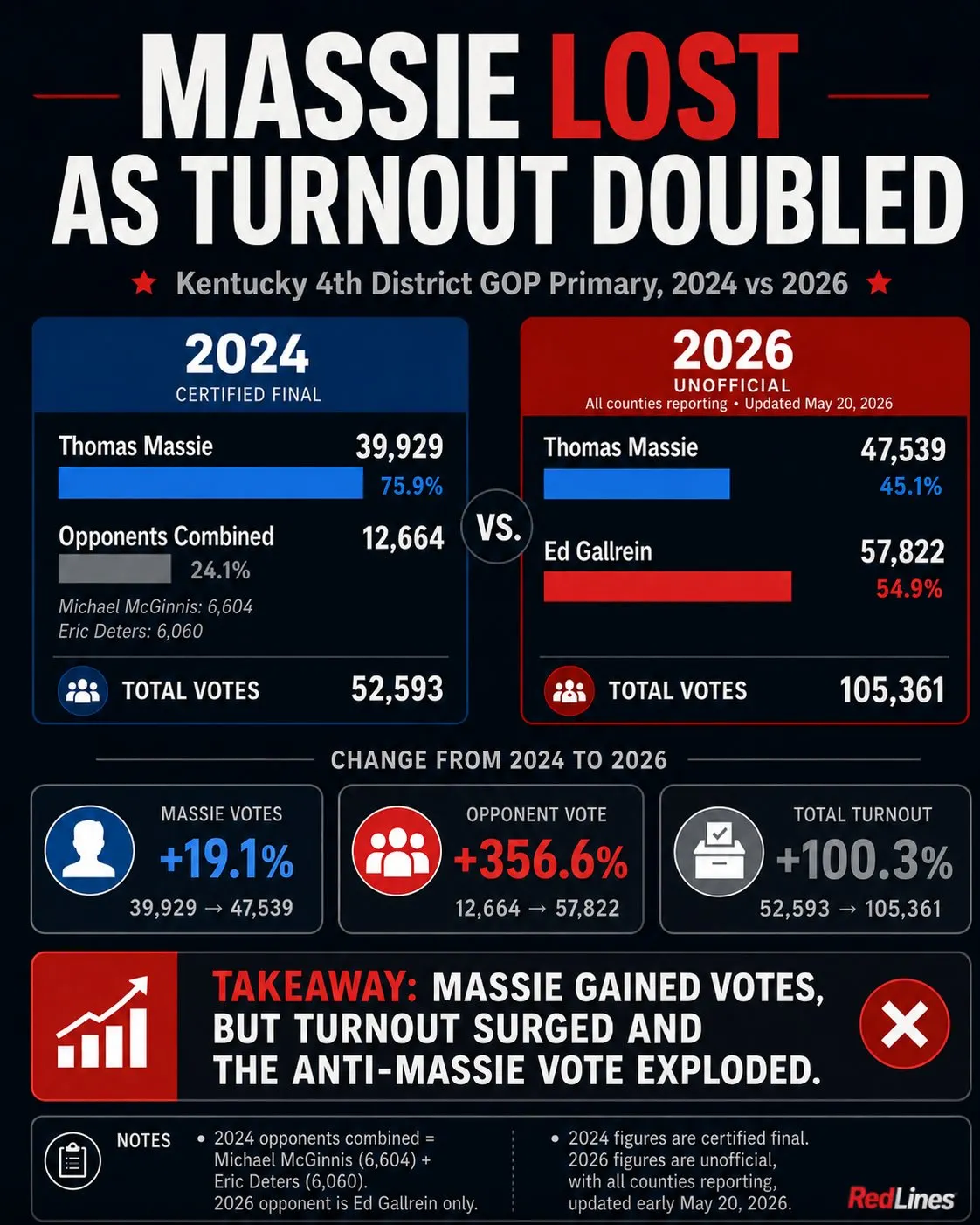
I’ve been wondering for a long time what it would take to get Americans to actually do anything about their elites. The recent defeat on Thomas Massie (a noted Israeli critic) in his Republican primary has made it very clear that the powers of reaction in America are extraordinarily strong still.

Thomas Neuburger has an excellent article asking if the election was stolen. 

I don’t know if it was stolen, and I’m not sure that it matters much. If it wasn’t, well Jews spent 30 million and bought the election. If it was, well Jews spent 30 million and bought the election. (The most expensive House primary in American history.)

“Those who make peaceful revolution impossible will make violent revolution inevitable.”

-John F. Kennedy

America has few problems it can’t, in theory, fix. It has no significant problems it can fix if current elites remain in charge, and its foreign policy can’t be improved as long as Israel controls Congress, and most State governments, which it does. (I don’t regard this as in question. Anyone arguing against it is arguing against massive evidence to the contrary.)

Opposing Israel is political suicide. That’s why AOC dances around pretending to be anti-genocide while actually covering for it. It’s why Mamdani has kissed the ring repeatedly.

They will come for you. If they fail, which is rare, they will try again. Eventually they will destroy you.

And that means that peaceful change is impossible.

Combined with the continued impoversishment of Americans, the building of AI centers in communities where the majority is opposed, mass lay offs due to AI, a very likely financial crisis next year, rising fuel prices, shortages of diesel, bunker and jet fuel, I’m going to be very interested to see how many riots there are and how many people  decide to go after politicians and CEOs.

As for the rest of the world: oh yes. There are going to be riots, revolutions, civil wars and coups in multiple countries. The question is how badly first world countries will be effected.

I remind readers to stock up now on as much as they can and I remind rioters that your job is to riot in the neighbourhoods of rich people, or industrial or office areas, not in your own neighbourhoods. Burning down your own homes is foolish.

I will also add that any competent government that cared could easily have made sure that most of the planting happened. Prices were the primary issue, and prices can be controlled and government can decide who gets how much diesel, prioritizing, y’know, tractors and trucking related to agriculture. This is something every western government could and would have easily handled in the 1950s.

Letting people go hungry and starve is entirely a result of government action (a war that was unnecessary, fought for Israel, not America), and government inaction. If people go without food next year, the people who caused it are known: they live in Washington, Tel Aviv and in every country which failed to take effective action they are your politicians the people who bribe them to not care about ordinary people.

You know who they are. They are you enemies. Their actions will kill or impoverish you, if they haven’t already.

And you know what you should do to enemies.

Everyone reads these articles for free, but the site and Ian take money to run. If you value the writing here and can, please subscribe or donate.

It Doesn’t Matter What Europe’s GDP Is

Well, mostly.

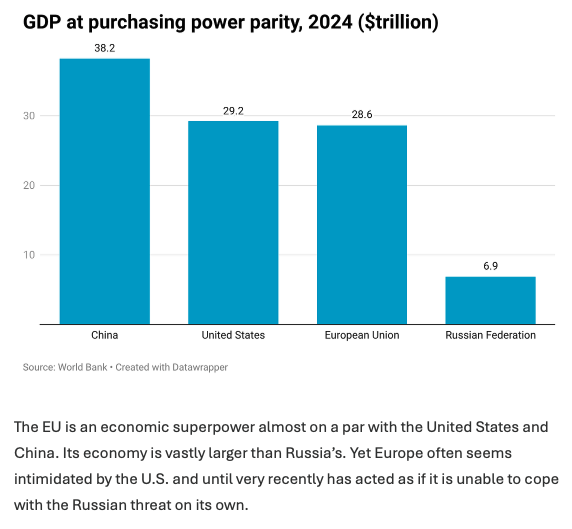
Krugman shared this chart, as part of an argument that it’s ridiculous for Europe to be scared of Russia:

GDP indicates the value of the parts of the economy which are subject to money. (If you do something but don’t use money, it doesn’t get measured.) As such it theoretically measures how much you can mobilize using money. Back when most people lived off commons, before that was enclosed, and didn’t need to do much paid labor, you couldn’t mobilize much.

But that’s theoretical ability. It’s important, but what matters is what you do with it.

And the thing is that Russia does with it is build drones, advanced missiles, advanced jets and other weapon systems. And they build them in large amounts. Europe’s production of weapons is much smaller, and they’re less advanced than the Russian weapons. Russia also produces lots of oil and natural gas and has a huge refinery sector. They have a lot of rare minerals and resources in general. And they do still have both heavy and light industrial sectors.

Meanwhile Europe is hemorrhaging industrial jobs and its industrial energy costs are much higher than Russia’s.

So Europe may have more theoretical economic capacity, but it can’t translate that capacity into state capability where it matters. Russia is stronger than Europe.

It’s not that it necessarily has to be this way, but for Europe to match Russia it has to maintain and expand its industry, find cheap energy, and source natural resources that are scarce in Europe. It also needs a lower cost structure than it has in general terms.

These are not trivial problems. Europe is pushing on renewables, to be sure, but has some way to go and effectively has to buy those from China. It needs to get resources like oil and minerals from other countries and the closest and cheapest source of hydrocarbons, which it needs during the transition, is far more expensive than it otherwise would be. American oil and natural gas is FAR more expensive.

The other traditional source of resources was Africa: mostly ex-French colonial possessions. France never forgave their debts, had military bases all over and often forced them to sell resources at very low prices. But now that Africa doesn’t need European goods, they’re kicked the French out and raising prices and moving to do primary processing domestically.

So sources of cheap minerals are drying up.

All of this could be worked around, if Europe was a technological leader, but…

Now legacy industry matters. Machine tools. Steel. Chemicals. Stuff that Germany is good at. (Automobiles are dying, because yes, the future is EVs.) But Germany and Europe are losing those industries. And they aren’t producing the industries of the future. Everything they have is basically legacy industry, developed in the late 19th and 20th centuries. They aren’t creating, mostly, the industries of the 21st century.

GDP only matters if you can use the resources it suggests you have to produce what you need. When it comes to competing with Russia, Europe’s ability to do so is limited. Not non-existent, Germany has significantly increased artillery shell production, for instance, but not what it needs to be.

Without a colonial empire and without resource rich nations willing to trade Europe the resources it needs at reasonable prices, and without a tech lead, What does Europe have?

Very little.

And this is why Europe’s in for a long fall. There’s no easy route out and no one is even talking about doing what’s right. The center still thinks that the problem is that workers have pension and time off, the rising right are complete idiots who think the US is a good model and the left is not, in most cases, in contention. Germany’s AfD will not make Germany better off, it will continue destroying Germany. The same is true of UK’s Reform part and France’s right wing.

GDP is a stupid stat. It conceals more than it reveals. It doesn’t tell you much about the structure of a country. India, which in GDP terms is a great power just lost a minor war to Pakistan. High GDP can actually be bad, since it includes waste, billionaire income that does nothing for the country, and all the money earned in harmful industries like finance and private equity.

Europe’s high GDP isn’t meaningless, precisely, but it isn’t what matters. If it was, Ukraine would have won the war already and the EU wouldn’t constantly be on its knees groveling to America.

What matters is what an economy CAN do. And Europe’s economy can’t create what Europe needs.


Everyone reads these articles for free, but the site and Ian take money to run. If you value the writing here and can, please subscribe or donate.

Page 2 of 33

Powered by WordPress & Theme by Anders Norén