The horizon is not so far as we can see, but as far as we can imagine

Category: Trump Era Page 1 of 20

America’s Leaders In Waiting Have Identified Themselves

This was the situation when they fired:

Right hand holding his phone. Left hand on the ground. Zero threat to anyone. His gun, holstered, which he never went for, had been removed by an agent.

This is an execution. The Agent has not been positively identified (though there’s a possible ID floating around), and was immediately removed from Minneapolis. The ICE agents attempted to keep local police from the scene.

This is the best summary I’ve read:

an ICE agent physically assaults an annoying woman who is whistling at him to antagonize him, Pretti steps between the officer and the woman to protect her, Pretti is the restrained by 5 officers on his hands and knees, one of the officers notices he is armed and yells “gun,” an ICE officer disarms Pretti and while running away accidentally discharges the weapon, then another ICE agent reacts to the negligent discharge by shooting Pretti in the back multiple times while he is on his hands and knees.

No one has been charged, I can’t tell if there’s any investigation into the shooting: there certainly isn’t a federal one, and the local governor and mayor appear to be wimping out: going thru the motions without any attention of charging anyone.

This isn’t the first ICE execution, and who knows how many have occurred that weren’t filmed. Then there are all the people dying in detention, where they routinely keep 80 people in a cell, lights on all the time and beat people who ask for medical aid.

One of the ICE agents applauded when Pretti was killed. When Renee Good was killed the agent who shot her called her a “fucking bitch” and refused to let a doctor help her.

Police in the US are almost always bad. The job attracts authoritarians who like the idea of being able to push people around, but even the minimal safeguards were let loose on ICE and the Border Patrol—they took the job because they like being able to hurt people without even the remotest possibility they might be held accountable.

This is part of a larger pattern. The Trump administration ignores about a third of all court orders against it. Just ignores them. The rule of law has completely broken down in America at the elite and enforcer levels. It was already mostly broken, but there was a final red line: elites smarter than Trump weren’t willing to obviously ignore courts. Perhaps important people might ignore Congressional subpoenas, but Congress wouldn’t actually institute contempt against them, so the facade remained.

Now law is gone entirely. The first, second and fourth amendments are in tatters. Habeas Corpus is dead, ICE and the BP just routinely ignore it. This a common law protection, centuries old. (In the UK they’re making it illegal for jurors to not convict people if the judge disagrees, ending jury nullification.)

Civil liberties seem like “nice to have”, and so does the rule of law, but they aren’t. Without them a society can’t function. That whole “high trust” thing goes away, and no one trusts anyone else. The economy grinds to a halt and civil society collapses.

The silver lining here, the hope, is that Minnessotans have come together to resist this. Thousands of people, not just protesting, but feeding those who can’t leave their houses, helping legally, and putting their bodies on the line. There are good people left in the US, but what they need to recognize is that fixing this requires replacing almost every member of the current elite: Walz has failed, Congress has failed, business has mostly been supine to trump as have universities. Everyone who’s in a position of power, whose duty and responsibility it is to resist has either failed or not even tried.

What needs to be done is to note the ones who tried or resigned rather than engage in illegality and immorality. Go after everyone else, replace them and if they actively engaged in evil, convict them and send them to prison. Put the people who did resist back in, not just politicians but prosecutors and judges and city councillors and so on, and then fill the rest of the ranks with people who went out on the streets in Minnesota and elsewhere and put their bodies in the way of evil, or who otherwise meaningfully resisted.

These are the people who proved themselves. When the brownshirts came,  they are the ones who stood up. We now know who is actually moral, who is actually brave and who can actually be trusted when the chips down. This is the new leadership cadre, if Americans are wise.

Not saying this will be done, but these are the slivers of hope. The Brownshirts came.They were resisted. Those who actually resisted proved themselves.

Those should be your leaders. Anyone who failed should be out or in prison.


This site is only viable due to reader donations. If you value it and can, please subscribe or donate.

Just How High Can Silver Really Go?

~by Sean Paul Kelley

Everyone is talking about gold topping $5k an ounce. The yellow metal is captivating and big moves by it tend to suck all the oxygen out of the media space regarding other metals. In 2025 gold rose a whopping 64% against all comers, i.e the dollar, the S&P 500, oil, Bitcoin and on and on.

Gold’s meteoric rise last year is a fucking piker compared to what silver did. Silver was the best performing asset of 2025 rising an astonishing 147%. Yeah you read that right. 147% from January 1, 2025 to December 31, 2025. This raises some important questions, such as why did silver, after decades of disappointing performance, blow past every asset this planet has to offer and consequently how high can it go? Does silver have a ceiling?

So, questions asked, let’s now examine the known and/or knowable variables affecting silver prices at present.

First, what’s silver’s all time inflation adjusted high? This depends on who you ask and how you measure inflation. By our current CPI measurement silver’s all time, inflation adjusted high was roughly $150 an ounce. This was in February 1980 when the Hunt Brother’s tried to corner the silver market. Now, as most of you know, Ian and I both distrust current inflation measures, like the CPI, because it overweights consumer goods with stable or falling prices, using accounting legerdemain like hedonic pricing which equates increasing computer chip power and/or efficiency as disinflationary. At the same time the CPI underweights prices of goods that are rising, like food and other non-durables.

Seriously, I defy anyone to tell me food prices are stable or falling: you can’t do it. The CPI does this primarily to avoid COLA adjustments on entitlements, cheating retirees.

Other measures of inflation, indices, weighting using purchasing power parity or other yardsticks, delivers an all time silver high closer to $190. So, I’m going to channel King Solomon and split the baby in half and call the all time high at $170. But however you measure inflation it’s clear silver isn’t even close to its 1980 Hunt Brother’s high.

Second, price moves in gold and silver are not coupled and have not been for at least 150 years. They don’t correlate. Gold is considered a safe-haven against fiat currency hyper-inflation or economic collapse. Silver, on the other hand, is essential to modern electronic manufacturing. So gold had a nice run last year, but silver was number one by a very, very wide margin, outperforming gold, the way Shohei Ohtani outclasses everyone else on a baseball diamond. Even as silver and gold have been decoupled since the late 19th century evidence is mounting that last year’s silver move might have been the opening act of their long awaited re-coupling.

Perhaps a précis on how and why they decoupled and what a re-coupling would look like is in order.

The first question is to ask, “how long were gold and silver coupled?” Well, from ancient times—yes, fucking Greeks and Romans ancient times—until the 19th century silver and gold traded at a 15:1 ratio.

Don’t believe me?

Consider then how the 1792 US Coinage Act established a 15:1 ratio between the two in our newly constituted republic. That said, during the next century—the 19th—a handful of rare developments coalesced to break the two thousand year old linkage between the two royal metals, thereby widening the ratio nearly exponentially.

First, the gold standard for measuring currency values between nations was established. It soon became the, well, gold standard for all international trade.

Second, the conventional wisdom prophesied the end of America’s silver boom—never mind that the aggregate value of silver mined in Arizona and Nevada had a notional dollar value greater than the California, Yukon, Deadwood, Montana and Alaska gold rushes combined. Gold’s price during the 19th century, due in large part by its merciless acquisition by European banks, blew out the ratio, decoupling the two metals for a century and a half. The ratio between the newly decoupled metals had widened from 15:1 to 50:1 by the turn of the 20th century. By the turn of the 21st the gap was nearly 100:1, in large part due to US government manipulation of silver prices. The US government sheltered a rentiers market in silver bullion for decades. Wholesalers got silver at spot prices. They then charged retail buyers high premiums and pocketed the sizable difference. This cozy arrangement, due to silver’s recent price moves is breaking down, and fast. Good I say.

That said, I argue, based on a reasonable man’s assumption, that the spread, now roughly 50:1, will continue narrowing and sometime in the next few years complete a reversion to its 2,000 year historical mean. That puts a potential price of an ounce of silver at $320 an ounce and might even overshoot a little bit, as reversions are wont to do at times. Overcorrections are a real thing. Hitting the Hunt Brother’s high of $170 an ounce is just a mental milestone, nothing more. The silver bugs are getting their revenge and how.

Now, my assumption is based on a single premise, a reversion to the mean/norm. Not a bad premise to base an assumption on, but not enough for intellectual coherence and honesty. So, let’s explore another variable: silver’s supply versus demand forecast.

What is the global supply versus demand picture like? In short, extremely unbalanced. The numbers are staggering. Aggregate global demand per year is 1.3 billion ounces. Annual global mining supply maxes out at roughly 850 million ounces. Let’s be generous and toss in recycling raising global supply to 1 billion ounces of silver a year available for industrial purposes.

The maths paints a grim supply picture: a whopping 23% gap between supply and demand. Because silver is the single most important industrial metal—it is in every electronic we own— demand is not going down any time soon. A single tomahawk missile requires 500 ounces of .999 grade silver. Yes, 500 ounces. See where I’m headed with this demand equation?

Why is it in everything? It’s the goldilocks of metals. Silver might not be as conductive as some but it’s less resistant than most. It doesn’t overheat like some and burn through plastic coating, but its best left exposed and uninsulated. It’s place in the bell curve of the electrical performance of all metals is right before the big bulge grows. Most of the time we want things good and fast. In reality, however, we must choose between good or fast, but silver? Well, silver gives you good and fast together. Goldilocks!

One big variable exists concerning global silver supply that has no easy short or even medium term fix. It’s physically impossible for global mining companies to ramp up mining production enough to even begin closing a 23% gap between supply and demand in any time frame less than 2-3 years. And this assumes no economic growth leading to increased global demand. That is some wicked nasty inelastic demand for silver and it has zero supply side answers, except very high prices that lead to retail silver owners cashing out. Central banks would have to print precisely three metric shit-tons of fiat currency to induce silver bugs to sell. I know some of them—they make rabid dogs seem like puppies—and they are adamant: no selling until the ratio reverts to 15:1. Until they get their ring there will be no huggy or kissy.

Another fundamental we ought mention are draconian export controls on bullion instituted by the Chinese central government. Note: China is the world’s leading consumer of industrial silver. It also has an extremely long and complex history using silver as its monetary base. Much, much less so with gold. If you want a book recommendation on the subject just ask.

Then there is our southern neighbor, Mexico, our number one supplier of silver to this day, is considering retaliatory tariffs on silver for United States because of Trumpian fuckery. Much fuckery there and I applaud Mexico’s president for sticking to her guns.

Consider as well dollar weakness and potential QE. Both point directly towards higher silver prices. Add to all this a wildcard fundamental hiding in plain sight: the magic price point that compels the addition of physical silver to the portfolios of Central, Commercial and Investment Banks around the globe. It’s a simple equation: storage costs fall as prices rise. At $40 an ounce there is no reason to hold silver in a vault. At $170? We’re getting close. At $300? Bingo! You’re goddamned right there is a reason. Such a development would spike demand by an order of magnitude as it would reinforce the powerful upward trend already in place. This is the dynamic that could at long last force the reversion of the gold to silver ratio back towards 15:1. Gold’s present price of $5000 an ounce implies a target of $333 per ounce of silver. In my opinion, and this is not investment advice, this is where we are heading. Right now. It may take 18-24 months, but it’s going to happen.

These are just some of the fundamentals. I can’t cover them all. If you think I missed an important one, add it in the comments, please.

Let’s talk about some technicals followed by sentiment.

Late in 2025 silver achieved a triple top breakout. Triple top breakouts are very rare in any asset. But when they occur they are an extremely bullish signal, conveying that there is no predictable upper limit to the assets potential advance. This is silver today. Silver hit $50 in October, backed down to the low $40s, made another run in November to try and overcome $50 and didn’t make it. But then in late November and all of December during the Santa Claus Rally silver blew through $50 and ended the year at $72.05. Market observers I respect, all unsure but all equally intuitive, explained the triple top breakout as the result of a handful of factors coalescing in the short term, such as Chinese export control tightening, high retail demand, Mexico threatening tariffs on silver, and a short squeeze on the Comex. This confluence makes sense to me.

The underlying technicals that lead to triple top breakouts are usually either a short squeeze or a gamma squeeze. In late 2025 silver underwent a short squeeze. But in early 2026 led by a bank frenzy to cover what were in essence some very large naked shorts in the SLV and PSLV ETFs, coupled by a bizarre change in margin requirements—from a straight percentage to one based on the notional value of the contracts (I mean, WTF?)—backfired spectacularly, leading to the rarest of rare technical developments, one I’ve only seen once in my life as an investor—the mythical unicorn, the gamma squeeze.

In short, a gamma squeeze “is a rapid [asset] price surge from [futures] trading, where heavy retail (read: investment banks, spk) call buying forces market makers to buy shares to hedge risk, creating a feedback loop that pushes the price even higher.” A gamma squeeze can be viewed as one powerful force intent on creating and sustaining an upwardly positive feedback loop “[where the] cycle escalates because as the [asset] price rises, market makers must buy more [futures or the hard asset] to cover their increasing delta risk, driving prices up further and attracting more call buying, often in low-float, i.e. low-volume [assets].” Silver is now, for all intents and purposes, in a virtuous rising feedback loop, leading to higher prices which force more buying to cover expected demand thus leading to higher prices. When it comes to shorting a gamma squeeze FAFO. You will lose your ass.

These developments all serve to reinforce my call late last year that silver is not on a cyclical bull run. It is engaged in a secular bull stampede.

Cyclical trends last between 3-5 years, represent basic price discovery and a market composed of two healthy opposing forces: supply and demand. Cyclical bull or bear runs tend to predict the business cycle as well, serving as a leading economic indicator.

Secular trends, however, are a different animal altogether. Like Earl Campbell, that human rhinoceros, running over middle linebackers like they were children, a secular bull or bear is powerful, based on large scale structural economic rearrangements, demographic realignments, and/or crushing but ‘unforeseeable’ externalities—like the Arab Oil Embargo of the 1970s or losing wars like Vietnam, Iraq, and Afghanistan——that leave robust long-term consequences, like inflation, busted supply chains, broken armies, revanchist politicians, rising internal violence and other variables, in their wake. Secular bulls or bears last decades, some as long as 40 years.

Now a word on sentiment. Sentiment is a fickle bitch, much like the muse. Nothing can bankrupt an investor with more rapidity and totality than a sudden turn in sentiment. Two forces, ultimately rule investing: fear and greed. Beware the latter and respect the former, said my mentor at Morgan Stanley.

Right now silver is flying under the radar. Everyone is talking about gold. It’s gold, why the hell not? Gold makes people febrile. I’ve literally seen it with my own eyes. I’ve felt my forehead warm up and my fingers get a sudden subtle itch when I’ve held certain gold coins in my life. I had a Julius Caesar gold aureus in the palm of my hand once. Wow! So I get why silver remains the red headed step-child of the metals market. And the lack of commentary on silver reinforces my conviction of silver’s inevitable rise to $250-$300. As I used to say when I worked on Wall Street, “buy the rumor, sell the news.”

It worked every time. And right now silver is hardly a whisper much less a rumor.

So, realistically at what price would I begin selling my silver?

$275-$300 an ounce.

I’m patient.

And certain.

There Is Only One Fast Route Back After Trump

Trump’s administration is routinely ignoring court orders. It’s often refusing to let attorney’s see clients. It’s not respecting Miranda rights. It claims the right to enter homes without warrants and routinely searches without cause. It’s violating habeas corpus every day. ICE and the border patrol (the border patrol is often lumped in with ICE, but many of the worst abuses have been theirs) are brownshirts or Gestapo, whichever analogy you prefer.

The Supreme Court has let most of Trump’s crimes thru, and Trump has massively increased in his wealth in just one year of the Presidency. Trump routinely blackmails Americans, forcing them to do what he wants or he’ll use the power of the Presidency against them

The rule of law is broken in the US. Law is not just about following the letter, though that level is broken, it’s about intent. The fourth amendment is a dead letter in America. Let’s be clear, it’s been in danger for a long time. The exception to the 4th amendment allowing warrentless searches within 100 miles of the border, which pre-dates Trump, was obviously bullshit and meant that two-thirds of the American population is subject to warrantless searches.

The rule of law’s obvious break-down began with pardoning Nixon. When Iran-Contra happened, the people involved had mostly worked for Nixon. They were not indicted. When Bush lied the country into war with Iraq his administration was full of men who had been with Nixon and involved in Iran Contra.

Biden pardoned his own son, an act of sickening nepotism which in a functioning country would lead to him being removed from office before his term end.

On the non-governmental side the crimes of the rich are almost never prosecuted. There was vast fraud leading up to the financial crisis, and no one was indicted for it. After the financial crisis banks systematically used fake signatures on documents containing fake information to foreclose on homes they had not right to. This was not just allowed, but encouraged by government.

The rich and powerful are almost immune to the force of law, but all along the effective rights of ordinary citizens have been under assault. Most people accused of a crime don’t get a trial and they are told that if they insist on one, rather than taking a plea bargain, they will spend much more time in prison. Mandatory sentencing laws have removed most of judge’s discretion and power has moved towards prosecutors. Step by step Mirana rights have been weakened by the Supreme Court. Warrants are often served without knocking, in violent fashion, and we all know that cops lie routinely on the stand and under oath.

Many of the worst abuses started overseas. Detainees were tortured, they couldn’t see lawyers, they have no rights. Thomas Neuburger makes the case that there is now a black site in Minnesota. What starts overseas eventually comes home.

The US is an oligarchy. An oligarchy where there is no rule of law if someone powerful enough wants to break the law.

There is only one road back from this.Mass prosecutions, starting at the top, with Trump and Vance and the cabinet members and family members who engaged in corruption like Jared Kushner and going right down to every ICE brownshirt who violated citizens rights and every prosecutor who went along. Every violation of rights, every major corrupt action.

Of course this means first that the Supreme Court and other parts of the judiciary which aided and abetted by ignoring clear constitutional directives need to be impeached and removed and if possible then themselves tried for crimes. Clearly draconian laws like the one allowing warrantless searches within 100 miles of the border must be repealed.

I don’t pretend that this suggestion is easy or likely. I think the odds of it happening are tiny. But it’s what’s necessary if the Bill of Rights, the Constitution and common law protections for for ordinary people are to mean anything. And it MUST include the powerful. If it’s just a few ex ICE agents getting their knuckles rapped it will mean nothing.

Precedents have been set for over 50 years now that the powerful can get away with doing almost anything awful to ordinary people.

End those precedents with a new one that they can’t, or lose all of your actual rights.

All rights come only from power. If you cannot enforce your rights you have them only if those with more power than you want you to. Every right that you allow someone else to lose, because you aren’t in the group losing rights, you will eventually lose.

More than anything else except stopping American participation in genocide, if I were American this would be my priority. Not even the economy is as is important, because without functioning and fair rule of law nothing else can or will work. If America, internally, is 100% “the strong do as they will, and the weak suffer as they must” everyone in the US who isn’t an oligarch is cooked and even if the rich don’t realize it, so is America as a nation.

This site is only viable due to reader donations. If you value it and can, please subscribe or donate.

Carney’s Speech Transcript + Comments: Time For the Truth & For the Middle Powers To Align

I think this is worth posting in full. Once again Carney and Canada are moving faster than any of America’s vassals, which is fascinating because Canada is the most vulnerable to the US of all the vassals. But then, that’s why, plus some luck.

Carney was the UK’s and Canada’s central banker. He did a terrible job, blowing two housing bubbles. I backed him in the last election because he was saying the right things, and the alternative was a Trump style conservative with a room temperature IQ who would spread wide for Trump.

Carney spends much of his time in this speech pointing out that the old order was full of hypocrisy. He should know, he had to say all the mealy mouthed lies, you can’t have the jobs he had otherwise. But he didn’t have to say this now, he didn’t have to point this out, he could have just moved to the fact that there’s a rupture.

His point is that the old world provided a lot of benefits to many nations like Canada and Europe, and even though everyone knew it was in many ways unjust, if the price of admission was hypocrisy, then so be it. But that world is dead, the benefits are gone and we don’t have to pretend it wasn’t in some ways awful. We also shouldn’t pretend that world is coming back or that the benefits of that world some nations received can be regained by appeasing Trump and America.

As for Carney’s plan, it’s simple: the middle powers should ally with each other so they can’t be pushed around. In other words, don’t just switch vassalage over to China. But certainly do cut deals with China.


Carney’s Speech

Every day we are reminded that we live in an era of great power rivalry. That the rules-based order is fading. That the strong do what they can, and the weak suffer what they must.

This aphorism of Thucydides is presented as inevitable — the natural logic of international relations reasserting itself. And faced with this logic, there is a strong tendency for countries to go along to get along. To accommodate. To avoid trouble. To hope that compliance will buy safety.

It won’t.

So, what are our options?

In 1978, the Czech dissident Václav Havel wrote an essay called The Power of the Powerless. In it, he asked a simple question: how did the communist system sustain itself?

His answer began with a greengrocer. Every morning, this shopkeeper places a sign in his window: “Workers of the world, unite!” He does not believe it. No one believes it. But he places the sign anyway — to avoid trouble, to signal compliance, to get along. And because every shopkeeper on every street does the same, the system persists.

Not through violence alone, but through the participation of ordinary people in rituals they privately know to be false.

Havel called this “living within a lie.” The system’s power comes not from its truth but from everyone’s willingness to perform as if it were true. And its fragility comes from the same source: when even one person stops performing — when the greengrocer removes his sign — the illusion begins to crack.

It is time for companies and countries to take their signs down. For decades, countries like Canada prospered under what we called the rules-based international order. We joined its institutions, praised its principles, and benefited from its predictability. We could pursue values-based foreign policies under its protection.

We knew the story of the international rules-based order was partially false. That the strongest would exempt themselves when convenient. That trade rules were enforced asymmetrically. And that international law applied with varying rigour depending on the identity of the accused or the victim.

This fiction was useful, and American hegemony, in particular, helped provide public goods: open sea lanes, a stable financial system, collective security, and support for frameworks for resolving disputes.

So, we placed the sign in the window. We participated in the rituals. And largely avoided calling out the gaps between rhetoric and reality. This bargain no longer works. Let me be direct: we are in the midst of a rupture, not a transition. Over the past two decades, a series of crises in finance, health, energy, and geopolitics laid bare the risks of extreme global integration.

More recently, great powers began using economic integration as weapons. Tariffs as leverage. Financial infrastructure as coercion. Supply chains as vulnerabilities to be exploited. You cannot “live within the lie” of mutual benefit through integration when integration becomes the source of your subordination. The multilateral institutions on which middle powers relied— the WTO, the UN, the COP—the architecture of collective problem solving — are greatly diminished.

As a result, many countries are drawing the same conclusions. They must develop greater strategic autonomy: in energy, food, critical minerals, in finance, and supply chains. This impulse is understandable. A country that cannot feed itself, fuel itself, or defend itself has few options. When the rules no longer protect you, you must protect yourself. But let us be clear-eyed about where this leads. A world of fortresses will be poorer, more fragile, and less sustainable.

And there is another truth: if great powers abandon even the pretense of rules and values for the unhindered pursuit of their power and interests, the gains from ‘transactionalism’ become harder to replicate. Hegemons cannot continually monetize their relationships. Allies will diversify to hedge against uncertainty. Buy insurance. Increase options. This rebuilds sovereignty— sovereignty which was once grounded in rules—but which will be increasingly anchored in the ability to withstand pressure.

This classic risk management comes at a price. But that cost of strategic autonomy, of sovereignty, can also be shared. Collective investments in resilience are cheaper than everyone building their own fortress. Shared standards reduce fragmentation. Complementarities are positive sum.

The question for middle powers, like Canada, is not whether to adapt to this new reality. We must. The question is whether we adapt by simply building higher walls — or whether we can do something more ambitious.

Canada was amongst the first to hear the wake-up call, leading us to fundamentally shift our strategic posture. Canadians know that our old, comfortable assumption that our geography and alliance memberships automatically conferred prosperity and security is no longer valid.

Our new approach rests on what Alexander Stubb has termed ‘values-based realism’ — or, to put it another way, we aim to be principled and pragmatic. Principled in our commitment to fundamental values: sovereignty and territorial integrity, the prohibition of the use of force except when consistent with the UN Charter, respect for human rights. Pragmatic in recognizing that progress is often incremental, that interests diverge, that not every partner shares our values.

We are engaging broadly, strategically, with open eyes. We actively take on the world as it is, not wait for the world as we wish it to be. Canada is calibrating our relationships, so their depth reflects our values. We are prioritizing broad engagement to maximize our influence, given the fluidity of the world, the risks that this poses, and the stakes for what comes next. We are no longer relying on just the strength of our values, but also on the value of our strength.

We are building that strength at home. Since my government took office, we have cut taxes on incomes, capital gains and business investment, we have removed all federal barriers to inter-provincial trade, and we are fast-tracking a trillion dollars of investment in energy, AI, critical minerals, new trade corridors, and beyond. We are doubling our defence spending by 2030 and are doing so in ways that builds our domestic industries.

We are rapidly diversifying abroad. We have agreed a comprehensive strategic partnership with the European Union, including joining SAFE, Europe’s defense procurement arrangements. We have signed twelve other trade and security deals on four continents in the last six months. In the past few days, we have concluded new strategic partnerships with China and Qatar. We are negotiating free trade pacts with India, ASEAN, Thailand, Philippines, Mercosur.

To help solve global problems, we are pursuing variable geometry— different coalitions for different issues, based on values and interests. On Ukraine, we are a core member of the Coalition of the Willing and one of the largest per-capita contributors to its defence and security. On Arctic sovereignty, we stand firmly with Greenland and Denmark and fully support their unique right to determine Greenland’s future.

Our commitment to Article 5 is unwavering. We are working with our NATO allies (including the Nordic Baltic 8) to further secure the alliance’s northern and western flanks, including through unprecedented investments in over-the-horizon radar, submarines, aircraft, and boots on the ground.

On plurilateral trade, we are championing efforts to build a bridge between the Trans-Pacific Partnership and the European Union, creating a new trading block of 1.5 billion people. On critical minerals, we are forming buyer’s clubs anchored in the G7 so that the world can diversify away from concentrated supply. On AI, we are cooperating with like-minded democracies to ensure we will not ultimately be forced to choose between hegemons and hyperscalers.

This is not naive multilateralism. Nor is it relying on diminished institutions. It is building the coalitions that work, issue by issue, with partners who share enough common ground to act together. In some cases, this will be the vast majority of nations. And it is creating a dense web of connections across trade, investment, culture on which we can draw for future challenges and opportunities. Middle powers must act together because if you are not at the table, you are on the menu. Great powers can afford to go it alone. They have the market size, the military capacity, the leverage to dictate terms. Middle powers do not.

But when we only negotiate bilaterally with a hegemon, we negotiate from weakness. We accept what is offered. We compete with each other to be the most accommodating. This is not sovereignty. It is the performance of sovereignty while accepting subordination.

In a world of great power rivalry, the countries in between have a choice: to compete with each other for favour or to combine to create a third path with impact. We should not allow the rise of hard power to blind us to the fact that the power of legitimacy, integrity, and rules will remain strong — if we choose to wield it together.

Which brings me back to Havel. What would it mean for middle powers to “live in truth”?

It means naming reality. Stop invoking the “rules-based international order” as though it still functions as advertised. Call the system what it is: a period where the most powerful pursue their interests using economic integration as a weapon of coercion.

It means acting consistently. Apply the same standards to allies and rivals. When middle powers criticize economic intimidation from one direction but stay silent when it comes from another, we are keeping the sign in the window.

It means building what we claim to believe in. Rather than waiting for the hegemon to restore an order it is dismantling, create institutions and agreements that function as described. And it means reducing the leverage that enables coercion.

Building a strong domestic economy should always be every government’s priority. Diversification internationally is not just economic prudence; it is the material foundation for honest foreign policy. Countries earn the right to principled stands by reducing their vulnerability to retaliation.

Canada has what the world wants. We are an energy superpower. We hold vast reserves of critical minerals. We have the most educated population in the world. Our pension funds are amongst the world’s largest and most sophisticated investors. We have capital, talent, and a government with the immense fiscal capacity to act decisively. And we have the values to which many others aspire.

Canada is a pluralistic society that works. Our public square is loud, diverse, and free. Canadians remain committed to sustainability. We are a stable, reliable partner—in a world that is anything but—a partner that builds and values relationships for the long term.

Canada has something else: a recognition of what is happening and a determination to act accordingly. We understand that this rupture calls for more than adaptation. It calls for honesty about the world as it is.

We are taking the sign out of the window. The old order is not coming back. We should not mourn it. Nostalgia is not a strategy. But from the fracture, we can build something better, stronger, and more just. This is the task of the middle powers, who have the most to lose from a world of fortresses and the most to gain from a world of genuine cooperation.

The powerful have their power. But we have something too — the capacity to stop pretending, to name reality, to build our strength at home, and to act together. That is Canada’s path. We choose it openly and confidently. And it is a path wide open to any country willing to take it with us.

Trump’s Attack On Defense Contractors & The Fed

This is another case of Trump doing the right thing in theory. From Matt Stoller:

Trump also issued an executive order to ban buybacks, dividends, and cap executive compensation for defense contractors. The rumor is that DOD deputy secretary Steve Feinberg complained about the unwillingness of the contractors to do competent work. Feinberg is a private equity guy, and he proposed this crackdown.

“Many large contractors,” goes the order” “while underperforming on existing contracts — pursue newer, more lucrative contracts, stock buy-backs, and excessive dividends to shareholders at the cost of production capacity, innovation, and on-time delivery.”

Now this is all good policy. In fact I’ve called for similar policies (I would allow reasonable dividends) on all corporations, without exception. Corporations are run, right now, to make the most money possible for those who control them, which usually means the executives, with some exceptions. Since stock options are how much of the excessive pay is delivered, and since stock-buybacks drive up stock prices, instead of spending money on organic corporate growth executives juice stock prices and thus their compensation.

American defense contractor performance during the Ukraine war has been embarrassing. Russia increased its production of weapons and munition massively, while the US has barely increased production at all. This has led to Russia having massive artillery, drone and missile advantage.

This is an attempt by Trump to force defense contractors to use their profits to increase production and re-invest in things like quality and research.

Trump often does the right thing conceptually, he just almost always screws up the details, as he did with tariffs. I rather doubt this will work much better. Still it’s a step in the right direction, though I don’t think increased production of American weapons is good for anyone.

Combined with Trump’s proposed 50% hike in the military budget this makes the Trump administration’s play obvious, if it wasn’t already. The only thing the US has left right now is its military. It’s behind in 89% of techs, the dollar is well on its way to losing reserve and primary trade currency status, and China has far more industry.

But the US still has the world’s best expeditionary and force projection military. This has been demonstrated in Venezuela, not so much by Maduro’s kidnapping, as by the attempt to blackmail Venezuela with a naval blockade to give control of its oil to D.C. (I don’t think this is going to work out very well for the US, for a variety of reasons, but it may work for a few years.)

If all you’ve got is a big stick, well, that’s what you will use. But if defense contractors don’t get their act together you could spend three times as much money and get almost nothing for it, since they can’t build any large amount of weapons or ammunition or ships in any amount of time that isn’t measured in years. Longer than Trump’s remaining term.

(Note that China has a veto over all this. They can shut down almost all weapon production any time they choose just by restricting military use tech and resources like rare earths. They can do what FDR did to the Japanese with ban on oil sales any time they choose, and they’re not stupid, they know it. The more they disentangle themselves from the US, the more they may consider doing so, as America keeps attacking their trade partners.)

Now on to the Fed. The DOJ has charged the head of the Federal Reserve with perjury.

Here’s a transcript of Powell’s video statement.

Good evening. On Friday, the Department of Justice served the Federal Reserve with grand jury subpoenas, threatening a criminal indictment related to my testimony before the Senate Banking Committee last June.

That testimony concerned, in part, a multi-year project to renovate historic Federal Reserve office buildings. I have deep respect for the rule of law and for accountability in our democracy. No one-certainly not the Chair of the Federal Reserve-is above the law. But this unprecedented action should be seen in the broader context of the Administration’s threats and ongoing pressure.

This new threat is not about my testimony last June or about the renovation of the Federal Reserve buildings. It is not about Congress’s oversight role. The Fed, through testimony and other public disclosures, made every effort to keep Congress informed about the renovation project. Those are pretexts.

The threat of criminal charges is a consequence of the Federal Reserve setting interest rates based on our best assessment of what will serve the public, rather than following the preferences of the President. This is about whether the Fed will be able to continue to set interest rates based on evidence and economic conditions, or whether, instead, monetary policy will be directed by political pressure or intimidation.

I have served at the Federal Reserve under four Administrations-Republicans and Democrats alike. In every case, I have carried out my duties without political fear or favor, focused solely on our mandate of price stability and maximum employment. Public service sometimes requires standing firm in the face of threats. I will continue to do the job the Senate confirmed me to do-with integrity and a commitment to serving the American people. Thank you.

The problem here is that we have two bad actors colliding. Trump wants to set interest rates based on his political needs, but the Federal Reserve’s policies for over 45 years now have blown multiple asset bubbles, bailed out rich people repeatedly, and deliberately kept unemployment higher than it would otherwise have been. Powell has been no better than his predecessors, his policies have favored the rich and Private Equity.

As a philosophical matter I don’t believe in central bank independence. It should be controlled by elected officials. But these charges are, as Powell notes, obviously political bullshit, just another weaponizing of law enforcement against Trump’s enemies. The irony is that Trump could get what he wants using his actual powers: he can’t replace the Federal Reserve Chair, but he can fire every other board member for cause. Even if the Supremes decide not to back him, which is unlikely, he’d have his own people in place for quite a while before they could act and they could outvote Powell.

And, since Trump is an incompetent boob, control of the Federal Reserve wouldn’t make things better.

As Stoller notes none of this is likely to amount to much because Trump’s team is deeply infiltrated by the usual suspects, people who don’t really want to control prices, reduce inflation or reduce the amount of money rich people get. Even if Trump wants to, his team won’t execute and he’s not the type of executive who’s capable of riding herd on uncooperative subordinates.

Still, there’s a clear policy direction here: an attempt to make the levers of government work for the administration. Lower prices domestically (won’t work) and make the military more effective so that the US can use it as a club, since all other sources of American power are in decline or outright failing.

Trump could screw up boiling water, but there’s a lot of legacy strength still left in the US. Expect things to get worse for weaker powers and American citizens for some time to come.


This site is only viable due to reader donations. If you value it and can, please subscribe or donate.


America Is Ruled By Reddit Trolls

Normally I ignore the style of government rhetoric and concentrate on the substance. But the Trump administration is so pathetically juvenile it beggars belief:

I mean, what? This sounds like something from a schoolyard. Womp, womp? Imbecilic morons?

Of course, the fish rots from the head:

“If there’s nothing incriminating in the files, sir, why not—” Lucey began to say as the president took questions aboard Air Force One.

Before she could finish, however, Trump pointed his finger at her and barked, “Quiet! Quiet, piggy.”

“This reporter behaved in an inappropriate and unprofessional way toward her colleagues on the plane. If you’re going to give it, you have to be able to take,” a White House official told the Daily Beast.

There was, of course, nothing inappropriate or unprofessional about Lucey’s question.

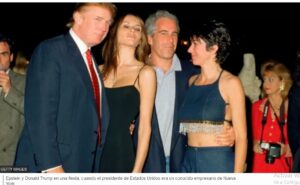
America is ruled by stupid, foolish children. Almost everything Trump has done has backfired, harming America’s economy and position in the world. And he’s scared, as he should be, because he was Epstein’s best friend for years, and there’s no way he didn’t know what was going on. Nor is the man who leered at Teen USA contestants and grabbed women by the pussy (his words) likely to have not partaken in Epstein’s wares.

Trump was always, obviously, a sexual predator, a rapist and scum. Unlike other scum he’s barely even tried to conceal it. People voted for him because he didn’t sound like a normal politician (which is good) but were fools, because what he sounded like was a profoundly stupid, greedy and selfish man without an iota of concern for other people who enjoyed belittling and hurting them.

It is both profoundly sad and amusing to watch him hurt those who voted for him, like farmers, the most. And costs keep soaring:

Stop voting for obvious frauds, politicians suffering from dementia, and those who get off on hurting other people. “Different” isn’t enough, it has to be different in the sense of “actually wants to help people.” I have sympathy, but complete disdain for anyone who thought Trump would be good for ordinary Americans “like them.” He has governed exactly like one would expect: vastly corrupt, cruel and almost entirely to the benefit of other billionaires.

Democracy works when, at the least, ordinary people vote their own interests. Americans, and most Westerners, seem entirely incapable of doing so. (And yes, there were other options. Stop whining about how third parties can’t win, and stop voting for the duopoly. For the slow of wit, Biden was also human garbage.)

Pathetic

This site is only viable due to reader donations. If you value it and can, please subscribe or donate.

Yes, Canadians Did—Did Think America Was A Friend & Yes, Trump Is Good For Canada

These numbers are astounding:

36 per cent of Canadians currently view the United States as a friend, compared to 60 per cent at the end of 2020 and 89 per cent in 2013, and that 27 per cent of Canadians presently view the U.S. as an enemy, a number that stood at 11 per cent in 2020 and as low as one per cent in 2013.

Notice that 1% figure regarding the US as an enemy in 2013, and 60% viewing it as a friend as late as 2020. When I say I was a lone voice screaming that we couldn’t trust America, I’m not exaggerating by much.

My position was half “America has never been trustworthy to anyone, and it ignores NAFTA rulings and destroyed our aviation industry” and half “countries have interests not friends.”

The moment it wasn’t in America’s perceived interest to be friends, it wouldn’t be, and empires are always implicitly enemies of their vassals, seeing them as useful tools, not friends.

But I want to emphasize how grateful I am to to Trump. If he had played along, given the appearance of friendship while slowly screwing Canada over, the way most recent administrations have, Canada would have gone along with it. If the past 45 years have taught us anything, it should be that people will tolerate a slowly eroding situation for ages, the metaphorical frogs in the slowly heating pot. (Frogs aren’t actually that stupid, not being humans.)

Canada spent the 90s and 00’s making nice with China, then reversed on a dime under US pressure, arresting the daughter of Huawei’s CEO for America and slapping 100% tariffs on Chinese EVs.

Then came Trump with his talk of annexation and his lies about Fentanyl (the same lies being used against Venezuela, you’ll note. Trump is not very imaginative. One lie for all seasons.) The truth is that Canada is exactly the sort of trade partner that America should want: yes we have a surplus, but it’s because we sell oil and minerals to the US. In the far more important manufactured goods area, we’re net importers.

If we were to cut the US off from Canadian crude, multiple refineries would be shuttered and there wouldn’t be enough gasoline. (Ironically, Venezuela is the other big supplier of the sort of heavy crude these refineries are set up to use.) You don’t want it? You don’t have to buy it, it isn’t competing with US crude.

But lately Trump may have gone too far for even Canadian politicians, though to be fair, Canada has been far more resistant to tariff blackmail than almost any other country except China. Japan and the EU buckled far more easily.

Two important events: first Stellantis said it was going to move a factory to the US from Canada. Reshoring industry and all that. Canada and America’s auto industries have been integrated since World War II under the Auto Pact. This is why Canadian politicians were ready to hit China with that 100% EV tariff, they were protecting Canadian jobs since Chinese cars are half the price of American made ones.

Then, in response to Ontario Premier Rob Ford’s ad quoting Reagan as against tariffs, Trump slapped on another 10% tariff on Canadian goods, and stopped all trade talks.

Thank God for Trump. Canadian politicians want to capitulate, if they can get surrender terms that don’t amount to “you won’t be re-elected” and he keeps not letting them.

So word is that the Feds are considering ending the 100% tariff. Presumably the idea is to try for the same sort of deal Mexico got: assembly plants in Canada for Chinese EVs.

If we can’t have American car manufacturing jobs, why not Chinese? Bonus, happy consumers/voters when they can get better cars for half the price.

Trump just keeps giving, just not to anyone who voted for him who isn’t worth 7 figures. Canada should have been pivoting to China hard years ago, and now, thanks to Trump it may well happen.

I just hope that after Trump gets on his knees and begs Xi to let him off the China trade war hook, that he doesn’t let us off the hook and give Canadian pols a way to avoid the pivot.

All praise Trump. He’s a genocidal monster, has the attention span of a dementia patient and betrays anyone stupid enough to trust him who can’t afford to bribe him, but he may just save Canada yet.

We’re near the end of our fundraiser, and now about $1,500 out from our fundraising target. If you read regularly and value the site and have the money to spare, please consider subscribing or donating. Over 10k people read this site every day, and it’s free, but it and Ian do take money to run. Huge thanks to all who have given so far, a number which is now slightly over 100 people.

Are We A Week Away From An American Invasion of Venezuela?

We’re about 4 weeks into our annual fundraiser. Our goal is $12,500 (same as last year). So far we’ve raised $9,735 from 82 people out of a readership of about 10,000. 

If you read this blog, you’re usually ahead of everyone else. You know, years in advance, much of what’s going to happen. The intelligence from this blog is better than what people pay $10,000/year for. Without donations and subscriptions, this blog isn’t viable. If you want to keep it, and you can afford to, please give. If you’re considering a large donation, consider making it matching. (ianatfdl-at-gmail-dot-com).

In a week, about a quarter of the entire US Navy will be off Venezuela. Trump has made claims about Venezuela smuggling Fentanyl to America, but this is completely laughable and anyone with a room temperature IQ knows its a lie. (Though, who knows, Trump may believe it, not having a room temperature IQ.)

Anyway, Venezuela has the world’s largest oil reserves and Trump does love other people’s resources.

But I think the geopolitics are more important. The entire world outside of America’s direct vassals are throwing off the West’s shackles. Madagascar, for example, has said it is ending ALL ties to France. Yemen successfully defied America. America isn’t toothless yet. Syria and Lebanon attest to that, and Egypt and Turkey’s groveling acquiescence shows the America whip, though dulling, is still feared by some.

Still, Brazil told America to go take a hike when Trump tried to interfere in their legal system. Colombia’s President said he is willing to end all military cooperation with the US and that the only thing Colombia would miss is the helicopters. (Russia or China or even Iran can make this up, it isn’t advanced tech.)

What made America an Empire was the declaration of the Monroe Doctrine and the ability to enforce it. Every country in the Americas had to bow to the whip, except Canada and other British possessions. They fell under the whip after World War II. In Canada’s case the carrot was the auto-pact (you can manufacture some cars) and the whip was “and you will give up your aviation industry, because it is more advanced than ours and that is unacceptable.”

Oh there were rebellions and the Cubans even managed to make it stick, at great cost, but by and large if you didn’t do what America wanted a coup would happen, or your leader would wind up eating a bullet, and the wives of the opposition would be raped by dogs, as in Peru. People learned to fear the whip, and not to rebel too far. America was the monster next door, who’d kill you, torture your family and rape your women. They’d even kill priests and nuns. (No, you don’t get to pretend America isn’t responsible for its proxies.)

But the calculus is changing. Once half of Africa lived in fear of France’s regime change and “anti-terrorism”. Like the Americans, there was no evil they would not commit. And the Americans had their bases too, and everyone with sense feared the whip, especially after the USSR fell and there was no countervailing force.

But now there is. The dual alliance: China and Russia. In the old days the whip was supplemented with a simple fact of life. If you wanted any advanced technology, including cars, anti-biotics, electricity or planes, it had to come from the West.

But China can sell you all of that now. And Russia, well, their mercenaries can keep the peace. Yeah, they’re nasty, but they don’t turn on their host governments (or not so far.) And a nice Russian base is excellent inoculation against a case of American or French base. Meanwhile the Chinese have better fighters, better missiles and better drones. China or Russia can supply your military, and China will build you ports, hospitals, railroads, schools… whatever you want. When they lend you money, the interest rate is lower than anything the West offers and they don’t require IMF readjustments which destroy your economy and impoverish your people.

So all the US and the West have left is the whip. Thing is, the whip’s getting dull. America weapons are no longer the best. America can’t make its weapons with supplies from China, some of which, the rare earths, were just cut off. The US Navy is getting smaller. The Chinese navy is getting larger. The US can’t meet recruitment quotas.

America’s in terminal decline and everyone knows it. But like Britain in the 1930s, that doesn’t mean it isn’t still powerful and couldn’t fuck you up.

The smart people in Trump’s administration, I think, see that their military force is a wasting asset. The longer they wait to use it the less they have, and the more their enemies have. Russia and China could get enough gear and advisors to Venezuela to make attacking it a complete no go, in principle, and given time, they will. Same with almost every other reasonable sized country.

So if America wants to attack Venezuela it has to be soon.

Of course, even if it works, it’ll be a complete fiasco. A proxy government gets propped up, can’t suppress the opposition effectively in a huge country with jungles and mountains made by God for guerilla warfare and a peasantry and urban poor who are hostile and well organized. Either they lose (probably experiencing a colonel’s coup) or the Americans have to go in themselves. First it’ll be mercs, of course, but they won’t be enough. The oil won’t flow, because it’s easily interdicted and damaged by a competent insurgency, Venezuela will become even more of a basket case, and so on. Eventually the Americans will leave. Perhaps they’ll get a semi-stable puppet government running, but it won’t last, for the simple reason that as time goes by, siding with the US instead of China will be stupid. China and its junior partner Russia, just offer so much more.

Venezuela, the like the Gaza genocide and land grab, are among the last gasps of America empire. Empires die bloody. If we get away without a nuclear or world war, we’ll be doing well.

May America then break up into multiple states and never again be a unified nation capable of exerting its will upon the rest of the world.

Page 1 of 20

Powered by WordPress & Theme by Anders Norén