With the toxic and stupid Trump 2.0 regime collapsing in the polls and the useless Democratic establishment licking their chops at the prospect of another electoral gimme in 2026, it’s more important than ever to rub shitlibs’ faces in the abysmal and inexcusable record of the murderous Biden administration.
If we keep voting blue no matter who, we’re gonna keep getting what we got.
In the interest of the public good, therefore, I make my humble offering, attempting to chronicle the three mass death events the senile husk of Joe Biden nominally presided over in his four years in the White House.
I covered COVID first. That was a debacle that many Democrats exclusively blame on Donald Trump and many GOPers and Independents have concluded was a hoax or some shit, but the reality is (as brilliantly documented by Lambert Strether at Naked Capitalism in real time) that Biden’s deliberately negligent policies resulted in the death and disabling of over one million Americans.
Next I covered Biden’s role in provoking the Ukraine War from 1992-2008 as a powerful US Senator who never met a war that didn’t give him a stiffy.
Now we’re going to get to the grit, because Vice-President Biden had Ukraine as part of his portfolio under POTUS Obama from 2009-2016 and we all know what he did as President, even if some dumbasses still insist he bears no responsibility for the disaster he spent decades making.
No, Ukraine Is Not ‘Winning’
First I want to establish some facts about the current state of consensus reality by citing some very pro-Ukraine, pro-war authorities who are throwing in the towel.
I’m going to save a few thousand words by using images of the relevant headlines.
Up first, from The Spectator (UK) one of the most blood-thirsty, Russia-hating publications in the English speaking world:
From the “liberal” Wall Street Journal:
From former Google CEO Eric Schmidt, who’s made killing Russians his passion project for years now, in the Jeff Bezos-owned Washington Post (who had to give it multiple headlines so as not to upset sensitive pro-war liberal readers):
HT Simplicius
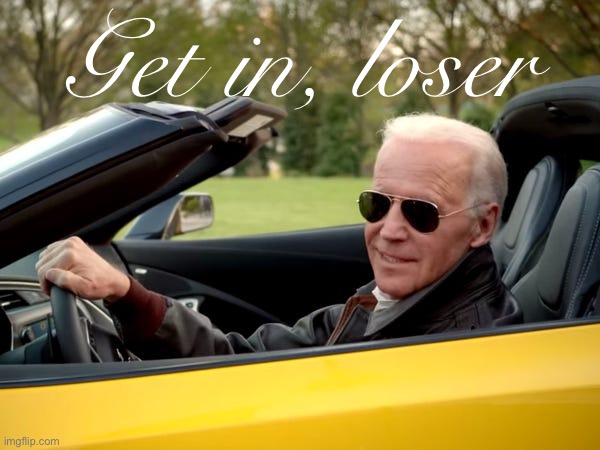
With that out of the way, let’s get into the time machine, loser, and go back with me to a time when a young Black President that so many Americans had invested with their “Hope and Change” fantasies needed to have an old racist white guy next to him at all times to make idiots and assholes feel comfortable patting themselves on the back for voting for a Black president.
And note, the point isn’t to excuse Putin for his actions. I’m not Russian, Putin’s not my responsibility. I do have the sense to treat Russia with respect, because I’m a student of history and I don’t know of a single instance where fucking with Russia ever ended up in anything but disaster whether for the Swedish Empire, Napoleon’s France, or Hitler’s Germany.
I’m an American and I’m concerned with the conduct of the elected officials who are supposed to be representing me.
Get In, Loser, We’re Going to Kyiv
Biden wasted no time in building upon the disastrous actions of the Bush/Cheney regime at the 2008 Bucharest summit which called for Georgia and Ukraine to be invited to join NATO. By July 2009, on his first trip to Ukraine as Vice-President Biden was already in Kyiv (we spelled it Kiev back then) lecturing Ukraine’s leadership and then flying off to Tbilisi telling them that NATO membership would be cost free (this is after they’d already had their heads cracked in the 2008 Russo-Georgian War that followed immediately on the heels of the Bucharest summit. Anyone remember John McCain saying “We’re all Georgians now”, as he tried to campaign for President on his desire to drag America into a war in a place few had heard of?).
Here’s some of what Biden said on that first visit to Kyiv in 2009, per the Christian Science Monitor which gave Biden that kind of tough guy headline (“Biden’s tough love for Ukraine”) that got him all riled up and gropy with the females on his staff:
Vice President Joe Biden had some surprisingly pointed comments for Ukrainians yesterday.
Speaking in front of 400 Ukrainians in a speech that was billed as an address to the nation’s citizens, Biden chastised Ukrainian officials for, among other things, their immaturity in dealing with inter-party conflicts. Evoking poet Taras Shevchenko, a national icon, Biden said Shevchenko would likely “be wondering why the government is not exhibiting the same political maturity as the people.”
Reforms have stalled and political bickering has become widespread after Ukraine‘s 2004 Orange Revolution. Coupled with neighboring Georgia‘s Rose Revolution a year earlier, the Orange Revolution was a source of hope for Western countries that democracy could take hold in states of the former Soviet Union.
Frustrated by the stalemate and lack of progress, Ukrainians have showed signs of throwing their support to opposition leader Viktor F. Yanukovich, a move that would more closely align the country with Russia and, according to some, could tip the country back toward authoritarian rule.
Biden’s remarks seem to indicate that Ukrainians aren’t the only ones who are frustrated. The vice president was expected to address Washington’s concerns only behind closed doors, according to the Wall Street Journal, and the weight of his public remarks were unexpected.
“Centuries from now, what will Ukrainians say of this time?” he said. “What will they say of their leaders? Will they say they returned to the past, or will they say the beginning of the 21st century launched a period of prosperity, freedom and independence?”
But lest the news out of Ukraine been seen as all harsh, Biden was also overheard praising the country’s women. “It’s certain you have so many beautiful women,” Biden is reported to have told President Viktor Yushchenko at an unscheduled visit to a Kiev pub.
What a charmer. Note that bit about the “color revolutions” in Ukraine and Georgia. At the time I thought all that shit was organic and awesome. I also thought Gene Sharp was the greatest man since Gandhi.
I’d love to get a poll of Ukrainians today on whether they think following the US and NATO down the garden path to war with Russia was “the beginning of…a period of prosperity, freedom and independence?”
But let’s keep moving.
How’d That Russian Fleet Get In Crimea? Oh Yea, Legally
Turns out the Ukrainians did, in fact, democratically elect the pro-Russian President Yanukovych. Biden’s visits to the country cease for the full duration of Yanukovych’s term.
Yanukovych signed something called the Kharkiv Pact, which extended the Russian Navy’s lease on Sevastopol for 25 years to 2042 in return for a major discount on natural gas. The Accord easily survived an opposition attempt to renounce it in 2013 in the Rada.
The Yanukovych administration also oversaw the passage of a law that forbade Ukraine from entering into military alliances with anyone. Neutrality is always the first step to fascism, war, and disaster, as all Swiss people know.
2013: Ukraine Caught Between the EU and Russia in Trade Tug of War
Shit hit the fan in November 2013 when Yanukovych backed out of the EU Association Agreement, suggesting instead the “creation of a tripartite commission of Ukraine, the EU and Russia, which would work to remove barriers in mutual economic cooperation and trade liberalisation.”
Yanukovych’s reasons couldn’t have been more sinister and inexplicable, per the OSW:
In the context of the upcoming presidential elections in early 2015, where victory is a priority for Ukraine’s ruling elite, President Viktor Yanukovych’s most important task is to stabilise the increasingly difficult economic situation. To this end, it is necessary to ensure Ukrainian goods’ continued access to the Russian market, and to guarantee external financial support. The Ukrainian government is hoping that, in exchange for the postponement of its rapprochement with the EU, it will manage to come to an agreement with Russia on the issue of a stabilising loan and renegotiating the gas contract.
The crazy cat also blamed the IMF for the collapse of the deal with the EU — and certainly everyone knows that the economic hitmen at the IMF and their ilk only bring prosperity in their wake — per the NYT:
Prime Minister Mykola Azarov of Ukraine told enraged opposition lawmakers on Friday that his government’s decision to walk away from far-reaching political and trade agreements with the European Union was based on fiscal imperatives, and ultimately prompted by the International Monetary Fund’s overly harsh terms for an aid package.
…
Protests against the government’s decision were held in several Ukrainian cities, including Lviv, the largest city in western Ukraine and a hotbed of anti-Yanukovich sentiment, where more than 5,000 people joined a rally in the main square, led by Mayor Andriy Sadovy. Kiev, the capital, was pulsing with emotion that officials and commentators said they had not seen since the Orange Revolution of 2004.
On Friday evening, about 1,000 people protested in the rain in Independence Square, the revolution’s central gathering point, waving European Union flags and chanting, “Ukraine is Europe!” A bigger rally was set for Sunday. The jailed former prime minister, Yulia V. Tymoshenko, issued a statement urging people “to react to this as they would to a coup d’état” and take to the streets.
Note that it was western Ukraine that was the hotbed of protest. Good old Western Ukraine, home of legendary freedom-lovers.
Maidan Protests, Entirely Organic, Break Out
I’ll use the definitely not edited by the CIA Wikipedia entry on the Maidan Protests to tell the next part of the story:
The scope of the protests widened, with calls for the resignation of Yanukovych and the Azarov government.[90] Protesters opposed what they saw as widespread government corruption, abuse of power, human rights violations,[91] and the influence of oligarchs.[92] Transparency International named Yanukovych as the top example of corruption in the world.[93] The violent dispersal of protesters on 30 November caused further anger.[5] Euromaidan was the largest democratic mass movement in Europe since 1989[94] and led to the 2014 Revolution of Dignity.
During the uprising, Independence Square (Maidan) in Kyiv was a huge protest camp occupied by thousands of protesters and protected by makeshift barricades. It had kitchens, first aid posts and broadcasting facilities, as well as stages for speeches, lectures, debates and performances.[95][96] It was guarded by ‘Maidan Self-Defense’ units made up of volunteers in improvised uniform and helmets, carrying shields and armed with sticks, stones and petrol bombs. Protests were also held in many other parts of Ukraine. In Kyiv, there were clashes with police on 1 December; and police assaulted the camp on 11 December. Protests increased from mid-January, in response to the government introducing draconian anti-protest laws. There were deadly clashes on Hrushevsky Street on 19–22 January. Protesters then occupied government buildings in many regions of Ukraine. The uprising climaxed on 18–20 February, when fierce fighting in Kyiv between Maidan activists and police resulted in the deaths of almost 100 protesters and 13 police.[71]
And about those protests, much like the 2004 Orange Revolution, I’d love to see the US State Department’s books on how much of the $5 billion Obama (and Bush and Clinton and later Biden) State Department official Victoria Nuland bragged about investing in Ukraine between 1991 and 2013 went to that kind of crap. I think there are some words for when one country spends immense fortunes to cause civil unrest in other countries; oh yea, it’s called subversion. Unless the US is doing it, then it’s just spreading freedom and democracy to a grateful world.
Crazy that some Ukrainians still wanted to be neutral and do business with Russia, who offered $15 billion in cash and a massive reduction in what Ukraine paid for natural gas. Evil Rooskies. Always up to something sneaky like that.
America’s investments in peace and democracy were bearing their fruits in the Maidan Protests in Kyiv, but a bipartisan pair of peace-loving US Senators went to the Ukrainian capital to help those fruits ripen even faster.
John McCain (R-Hell) and Chris Murphy (D-CT) addressed a crowd estimated at ~200,000 people saying, “We are here to support your just cause… And the destiny you seek lies in Europe.”
McCain shared these noble sentiments while standing shoulder to shoulder with one of Western Ukraine’s most notorious freedom lovers:
Those Putin-puppets at FAIR were still bitching about it in 2018, when then-Washington Post columnist (and current never-Trump freedom lover and Substacker) Jennifer Rubin got to singing McCain’s praises for his sterling human rights record, under an unfortunately chosen photo:
The Washington Post (8/27/18) published an op-ed by conservative staff opinion columnist Jennifer Rubin praising the late Sen. John McCain for his supposed commitment to “human rights.”
Rubin waxed poetic on the ostensible “lost champion” of human rights, who “model[ed] for others the behavior of a free society.” She declared, quite paradoxically, “With the possible exception of the US military…no group was more indebted to Sen. John McCain (R-Ariz.) than the human rights community.”
There was an, er, optical problem, however: For the header image on this column, the Washington Post used a photo of McCain speaking next to the notorious Ukrainian neo-Nazi leader Oleh Tyahnybok.
Tyahnybok, a longtime fascist, has called for a war on the so-called “Muscovite-Jewish mafia” (BBC, 12/26/12). The far-right leader has attacked the role of “Jews-Bolsheviks” in his country’s history, and claims that there is still today a cabal of “Jewish oligarchs who control Ukraine” (JTA, 3/25/09).
John McCain met with Tyahnybok and stood next to him as the senator gave a speech in Ukraine in late 2013, as Business Insider (12/16/13) reported at the time. The Washington Post indicated in the caption on its header image that McCain was “wav[ing] to protesters during a mass rally of the opposition in Kiev, Ukraine, on December 15, 2013.” But it failed to identify the man standing next to the Arizona senator—or his extremist politics, which are the antithesis of human rights.
Follow and support my work at NatWilsonTurner.com.
Read More
 Ouch.
Ouch.