The horizon is not so far as we can see, but as far as we can imagine

Category: Financial Crisis Page 1 of 13

Too Big To Fail Fails In China

Roughly speaking there are two types of corporations in China. State owned (SOE) and private. During the policy driven real-estate bust, the countries biggest builder, Evergrande, went under.

But there was an assumption that the government would bail out real-estate SOEs.

Well the largest one, Vanke, is going under, and the central government is going to let it. Moreover, Shenzen’s (China’s Silicon Valley, but on steroids) has repeatedly bailed it out and that means that not only is the central government not bailing out a SOE, they’re letting a municipal government (arguably the most important in the country) take a huge hit. That will send a message to all other municipal and provincial governments.

The biggest mistake of the US financial collapse was the bailout of participants. Every firm which had financialized should have been allowed to go under. The few that were truly necessary should have been put back on their feet AFTER the shareholders and bondholders took their hits, and after being broken up. Collateral damage (those companies not responsible, but simply getting hit by the backwash, such as GM, could receive bailouts in exchange for a government stake.)

Capitalism has issues even when run properly, but it is a simple proposition at heart: people who allocate resources well should be rewarded with more resources to manage, and those who allocate resources badly should lose their ability to allocate resources. Every participant in over-financialization had made bad allocations of resources. For the American economy to operate, they needed to no longer be participants.

Take over the banks and brokerages, and either shut them down, or break them up. That included the bond rating agencies like Moodys.

The failure to do this meant that decision makers know (or believe) they can make risky bets that cause systemic economic issues, bets that damage the economy as a whole and expect to be bailed out rather than be required to take their lumps. (And, ideally, be investigated for fraud, which most of them were guilty of.)

An economy where economic decision makers are incentivized to take big risks which hold the entire economy hostage (because they might not be bailed out if the risk isn’t systemic) cannot work and doesn’t. The US economy requires a backstop that amounts to the full expectation that the Fed will print trillions on demand to bail out bad actors. (The current main bad actors are the AI cartel.)

China is, oddly, the only major economy in the world that runs markets more or less right. (Though they let their own real estate casino run for too long.)

This site is only viable due to reader donations. If you value it and can, please subscribe or donate.

Short Take on What I’d Be Doing To Prepare for the Pending Economic S**t-show

I’ll keep this mercifully short. One commenter in my Friday night econ news post asked, in a kind of oblique way, what would I do in this environment.

Okay, I’ll play — but not without stating firmly and loudly that I am not dispensing investment advice, nor am I licensed any longer to do so. We clear on that?

A liquidity crisis is already here. But this may not be like your father’s ’08 crisis. In ’08, the USD rose — counterintuitively — against every other major currency. Why? The need for USD to cover credit losses was global, and NYC became a literal blackhole for USD. I made an absolute killing on the USD during the ’08 crisis, and afterwards even more on the banks and zero coupon bonds. I made several people fortunes they still retain.

But the crisis now unraveling doesn’t look like one of confidence, it looks like an animal out of a medieval grotesque, certainly not something the Fed can backstop.

Fire in the hole!

Sure, the Fed might do QE. But Congress can’t do a bailout with almost $1trillion in interest payments on US debt imminent and Trump offering $2k bribes to every citizen in America. It’s impossible. What would one call inflation with QE?

What would you call that?

Hyperinflationary?

It’ll be damned ugly whatever happens; whatever you want to call it.

Were I still advising investors I’d be putting them in Yuan interest bearing accounts, I’d be buying silver on the dips, JPY, SKW, and buying way out of the money puts on S&P 500 and NASDAQ. In short, if you can find an affordable way to buy puts on things that are impossible to happen, buy them, because one or two will hit big, and you’ll rake in the money. 

Silver’s in what’s called a secular bull market, not a cyclical one — cyclical means three to five year cycles, whereas secular means, “We don’t fucking have any idea how long ‘dis bitch is going up or down.” This particular secular bull is being driven by a massive externality: China’s draconian export controls of the metal. The problem, right now, from a technical trading perspective, is a failed double-top breakout. This is bearish in the near term, so an under $40 buying opportunity might be realistic. As a side note: China has a VERY long history with the white metal, but not so much the yellow one. I can recommend a good book if you are interested. 

You can invest in the Yuan in several US banks/investment firms. Some accounts are interest bearing, others are just a pure play on the currency. If you want specifics, send me a DM. But the current T-bill replacement is silver, but buy it under $45 if you can. Under $40 is best.

But, for fuck’s sake, avoid paying premiums for silver. What does that mean? If you buy silver coins, buy 99 percent silver grade coins — not the overpriced ones from the US Mint. Buy the off-market ones. Otherwise, the US silver cartel will clean out your gains before you even begin.

Your Late Friday–ermmm, Early Saturday–Dose of Crap Economic News

~by Sean Paul Kelley

Good heavens, the economic bad news is piling up like a bad car wreck. So, let’s do some serious rubbernecking, folks, because there is a lot of fucked up shit to watch. Just don’t step in it, okay?

We begin with widepsread reports of large institutional investors (hedge funds, investment banks, boutique investment firms) selling off services stocks like leisure, luxury, hotels, and some retail outlets, like Home Depot. That’s a lot of cash leaving equities. But for what safe harbor? It certainly isn’t private credit, like Blackrock which lost 100 percent on one investment. UBS also lost 100 percent on another private credit deal. Now, Blackrock lost $150 million on the deal, which, for Blackrock, is naught but a silly little rounding error, but as they say, $150 million here, a $150 million there and pretty soon you’re talking real money. That cash won’t go into US treasuries, that’s for damn sure. Seriously, who’d invest in US dollars? I wouldn’t fuck a US treasury with Magic Johnson’s dick.

Yeah, I said it. It needed to be said.

Want news even more ominous: JP Morgan Chase, Goldman Sachs and my alma mater (for full disclosure) Morgan Stanley were the lead underwriters of a $1 billion increase in AI firm Coreweave’s $2.5 billion revolving credit facility. The term sheet expands the maturity date from 2028 to 2029. Just a year? Did they attempt any due dililgence on Coreweave’s burn rate? It’s gotta be a fuckton fast — see, Americans can do metrics. FTW!

But really, you know that kind of high-tech equipment becomes obsolete and depreciates faster than that loan reaches maturity. There is zero, zilch, nada, niente, nyet, nein, no way Coreweave’s earning increases that rapidly. To quote Yoda, “Coreweave, Apple certainly not you are.”

Apple’s so profitable it prints money.

I mean, seriosuly, Christ on a popsicle stick: Where’s the due diligence? Do investment firms even have compliance departments any more? Where are the regulators?

Yeah, yeah, I know, I know.

But it gets worse: On Nov. 4, Meta agreed to an off-balance sheet $27 billion loan (also known as a Special Purpose Entity, henceforth SPE) from Blue Owl Capital (OBCD). This is financial shenanigans and identical to the accounting legerdemain that led to Enron’s ruin. Pay attention, people. This is getting ugly. Enron butt-hurt ugly is how bad this is starting to look. Let me break this down for you, in case you forgot. An SPE is off-balance sheet. That means the company is under no obligation to report it on its SEC required filings. Get it now? Investors have absolutely no way of knowing how much off-balance sheet debt a particular company has. SPEs = bad juju.

To wit: Oracle has a debt-to-equity ratio approaching 500 percent, and that’s just what’s on the their balance sheet. Has Oracle borrowed any money where the debt is accounted for in an SPE?

Guess what, folks? There is literally no way to know if Oracle has any SPE loans outstanding.

My bet: They do.

Speaking of shit credit, or is it credit shit?

Whatever. Moving on.

JP Morgan notes AI-linked debt now accounts for 14 percent of its investment grade corporate index (CGI IG), surpassing US commercial banks as the dominant sector. Who the fuck knew US commercial banks have turned into stingy mozafukas? Can haz dolerz, puleeze?

“What does it mean?” you query, doing your best to ignore my increasingly insulting expletives.

“I know I’m right about the housing market,” he says, repeating it like a mantra.

Well, it means that not only are AI firms taking on loads of traditionally-financed debt, they are also bulking up with the anabolic steroid equivalent of debt: unknowable and NON-REPORTABLE SPE debt. They pump this iron to finance AI hyper-scaling. No wonder the main character of the (mostly) true movie, The Big Short, Michael Burry, is closing his fund. Dude shorted Palantir and Nvidia and got caught with his pants down. Sadly, Burry forgot John Maynard Keynes keen paroemia (from the ancient Greek, meaning maxim or proverb) from when he lost all his money in the 1929 crash: “Markets can remain irrational longer than you can remain solvent.”

Also: Beware neologisms created on Wall Street. Today’s new phrase is “data center credit.” Sounds positive, aye? It ain’t. It’s a bullshit phrase referring to debt financed for the AI sector by private credit shops. Tons and tons of bullshit, yes?

“Ha-ha,” he said. “Stupid, stupid!”

There is also news that insurers are placing more than 50 percent of the assets needed to guarantee/backstop annuities and life insurance policies into private credit shops. This is a terrible idea. Annuities are insurance policies designed to pay out in the event you live too long. Life insurance is, well, insurance against not living long enough. This is stupid. Epic stupid and civilization-ending risky. It’s like giving the nuclear football to Beevis and Butthead stupid.

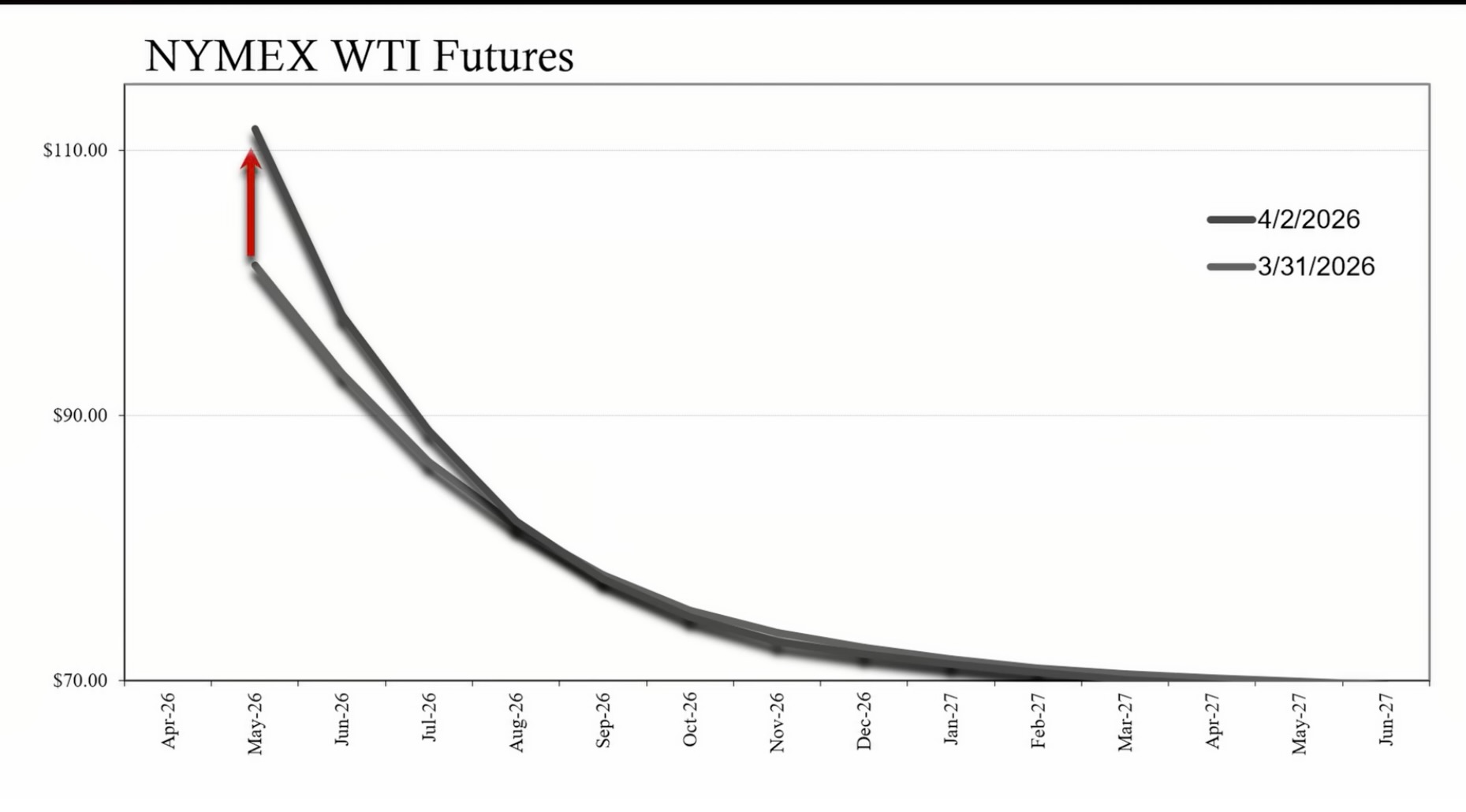
Oil prices are soft/down to flat. Texas rig counts are down again this month (rig counts are considered a leading economic indicator).

Now to news out of the Big Apple tonight, that absolutely shrivels me testes. Say it with me like a pirate! As my little sister used to say to me, “You are so not fun.”

Anywho: The head of the NY Fed convened an emergency meeting of bank heads to discuss one of the Fed’s key lending facilities. I’m almost certain this is in response to the rising private credit losses, and how they resemble Bear Stearns blowing up two subprime hedge-funds in 2007, the precise moment the 2008 financial crisis began.

Most distressing is today’s down volume high. It’s one like we’ve never seen before. The downward volume and amount of stocks closing on the downside blew out a 35 year high. This screams louder than Rob Halford singing “Victim of Changes” live at the US Festival in 1983. It’s also an indicator of deeper stresses affecting equity markets.

This is what we now call, in the algorithm-trade dominated age, a mechanical sell-off. All of Wall Street’s proprietary algorithms saw red and initiated the mother of all sell offs. This already spectacularly, terrifyingly narrow advance is getting narrower, and it is growing more brittle by the day. Why worry? Are markets worried about private credit shops lending to off-balance sheet AI SPEs? Is liquidity getting tighter? Risk limits getting ripped to shreds? Doesn’t really matter. It’s a big signal that should overpower the noise. But it won’t. 

Wall Street’s useful idiots will do their duty and cheer until the real crisis begins to unravel. Sooner now, than later. You can bank on that. Just don’t do it in US dollars. That would be dumb. Epic-like dumb. 

Piling the shit higher and higher: Sallie Mae off-loaded $6bn worth of student loans to KKR recently. How better to clean up a balance sheet than selling debt with a 10 percent non-performing rate? Makes sense to me, but I’m just some guy in pajamas.

More great economic news: Large corporate bankruptcy filings, as of mid-November, rise to a 15 year high. That’s higher than the COVID-19 crisis. To date, 655 public companies have filed for bankruptcy. Good times, aye?

Finally, a positive thought, in a manner of speaking. The only thing the equity markets have going in their favor right now is this: the almost impossible to prevent or deny Christmas rally. It’s damn near as reliable as the Monsoons.

So, if the econ shit does hit the fan, it’ll happen after January 1.

The Next Big Crash Is On Its Way

Ever since Greenspan took over the Fed and the 87 crash when they figured out their playbook, the US has only had unavoidable stock market crashes. The Fed is always there to juice markets higher and to jump in at the least sign of a normal (pre-Greenspan) market correction.

But sometimes the irrational stupidity overwhelms even the Fed, because they are both stupid and ideologically unwilling to ever force a correction. This happened twice: the dot-com boom and crash and the Mortgage backed security boom and crash (if we bundle shitty mortgages based on lies together, they become not shitty, because we’re pretending they aren’t all basically the same thing!)

Now we’re going to get the AI Boom crash. I’m well over 90% on this. The AI booms is in the “wildly stupid over-claiming” stage. It’s not that token based AI isn’t a real tech, or that it doesn’t have some uses, but the claims of it completely changing everything (replacing a third of the workforce, acting without human help to run things, being able to cure cancer and make huge theoretical breakthroughs) are obvious over-reaches. So far every academic study that comes in shows that AI isn’t even good at the one thing everyone anecdotally agreed it was good at: writing code. Right now it seems to mainly be a good way to cheat at university, to have a fake relationship, or to bypass Google’s shitty search (which is what I use it for.) It hallucinates, the hallucinations cannot be removed because they are integral to the tech, and the code it produces, even when it works, is a huge mess that will cause massive maintenance issues.

In addition:

  • Since it doesn’t actually mostly reason, it requires data sets bigger than all the data in the world if it is to keep improving;
  • If it uses the data it itself produces, it experiences model collapse.
  • None of the American AI companies make money per query. Every query costs more than they can charge.
  • It requires a vast build-out of energy and data centers, of the “over a trillion dollars” variety. There literally isn’t enough money to pay for OpenAI and Anthropic’s dreams, and there isn’t a product at the end of it that could pay back all that money.
  • About 40% of the US stock market is now based around NVidia and the AI companies.
  • NVidia has now invested in Open AI, so that they can turn around and buy more NVidia cards.
  • The Chinese offer an open source AI which is almost as good and with costs somewhere between one fifteenth and one-thirtieth as much, so that it might actually be profitable AND since it’s open source, Trump can’t have a mini-stroke and decide to cut you off at his whim.

It’s my annual fundraiser. This allows us to cover the changeover of hegemony from America to China, environmental collapse, internal US fascism, what a better society would look like, Gaza, AI, the coming stock market crash and various other issues. As of this writing we’ve raised about $2,700 out of a $12,500 goal, from over 25 people. It’d be great if you can help out (please don’t donate if your financial situation is dire.) You can Subscribe or Donate here or contact me at admin-at-ianwelsh-dot-net if you need another way to donate (mail, usually. A lot of cash apps don’t work in Canada.)


Throwing all this money at AI if it really was the epochal “tech to end all techs, the singularity, dude” that the tech-bros claim it is might make sense. But I don’t see the evidence that this is the case, and even if it is, why not use the Open Source Chinese variety?

In fact, my guess is that this version of AI, based on this model and this generation of chips, is not even as big a deal as the internet was. Everyone was right that the internet was going to be HUGE, they just over-invested before it was and before people knew who the winners (Google, Facebook, Amazon) were going to be.

But so far AI doesn’t even look as important as the internet, but the spend is way larger than the internet build-out of the turn of the millennium.

But even if AI turns out to be a HUGE deal, it’s going to crash out of this bubble and we’ll find out later who can make money doing what.

The Fed will paper the AI market crash over, making hundreds of billions or even a trillion out of thin air to save the rich from their own stupidity and greed. Again. But this will be the LAST crash the Fed will be able to save the capitalists from. The one after will either wipe the capitalists out, wipe out America, or both.

Big Picture Financial Collapse

Though newer readers will be forgiven for disbelieving it, during my early online career I was primarily considered a finance and economics blogger, though I’d write about almost anything. Among other things, I predicted the financial collapse, including the DOW bottom and the month it would happen in. A correspondent once went thru the Wayback machine and found that there were less than forty people who made the prediction in advance.

I lost interest somewhere around 2010 and moved my primary focus to other topics: at the time mostly ideology and how it interacted with the political economy. There was no reason in continuing: my goal had always been change, and the Fed, Congress and Obama had all confirmed that the only change was to be the end of any real spar of capitalism.

So I’m not going to write about the proximate cause of the current financial collapse, but instead look at the bigger picture that lead here.

First we have the offshoring of real industry, primarily to China. There is a real economy, and financial skyscrapers, no matter how high, are based on them. The bottom line is that the West no longer has the industry to hold up the skyscraper.

Second is that the 80-now long bull market was entirely a creation of government policy: mostly thru the Federal Reserve, but with serious assists from Congress and the President. There was a time when stock buyback were illegal, for example. There was a time when the Fed didn’t run a “the markets must always go up” policy: in fact, during the 50s and 60s the stock market traded sideways, even though real economic growth was, by every measure, higher than in the post 80 period.

Third is the response to the 2008 financial collapse. Not the collapse itself, but the response, which was to bail out the people and institutions which had caused the crash, to immunize thru fines and agreements those who had engaged in massive and widespread fraud, to force the burden onto homeowners by allowing banks to steal houses; and in general terms to ensure that the same people who had caused the crisis were in charge afterwards, but more powerful and controlling larger institutions.

Then they patted themselves on the back and said they’d saved the world. Capitalism isn’t a system I like, but one of its virtues is that if you fuck up you go out of business: if you’ve made a lot of bad decisions you aren’t allowed to keep making bad decisions. Bernanke, the Fed, Congress and the Presidency put an end to that dynamic and essentially ended even the shadow of real capitalism in America, and indeed, in the West.

This meant that resources were terribly misallocated, and that further economic decline was inevitable, since there was no possibility of a new economic elite rising based on actually producing good products and solving real problems. It also mean that further financial crises were inevitable, and that in the end those crises would not be able to be papered over, because, Virginia, there may be no Santa Clause but there is a real economy where things have to actually be made and built and grown and dug up and refined.

The fourth factor is the decline of US dollar hegemony. It isn’t obvious in the numbers yet, but it’s real and those who are making long term bets against it will regret doing so. I won’t go on about this, since I’ve written a dozen articles or so on the topic in the last two years.

We’re at the end of somewhere between two and five centuries of European/Western world superiority and dominance. It’s going to suck for Europe, the Anglosphere and most of our allies. There’s just no way around that, and the decision points are past. A recovery is theoretically possible, and I could even write an article giving the outlines of what’s necessary, but there’s no political possibility of doing it and our current elites are too incompetent to make it work anyway. A revolution which throws out our entire leadership class is a pre-condition and by the time we got that done, the day would have passed anyway.

All of which is, I suppose, just a long way of saying “economic decline sucks and isn’t going to stop,”


My writing happens because readers donate or subscribe. If you value that writing, and you can afford to, please support it.

Why Economists Are Wrong About How Good The Economy Is, And Regular People Are Right

Practically every day I read an economist like Paul Krugman or Brad DeLong talking about how the economy is the best ever, but ordinary people just don’t get it, and must be idiots influenced by propaganda.

Someone’s an idiot on this subject, but it’s not ordinary people.

Mish Shedlock had a good article on medical inflation. Here’s two charts from his article. First, costs:

Second, CPI for medical:

You might be noticing a—slight disconnect. The cost of medical care services (which is what you care about as a patient) are dropping, according to the Bureau Of Labor Services (BLS).

Mish has the extended explanation, and you should read his whole post.

Now, back in 2020 I wrote an article on how inflation statistics are bullshit. One example was automobile costs. Here’s the chart from that.

Yeah. right.

The inflation statistics, at the this point, are complete bullshit. Absolutely worthless in entire categories.

When it comes to how good people feel two things matter: how many people have a job, and how much money they’re making. When economists look at wages, they look at “inflation adjusted wages.”

How much your money buys. So, since the inflation numbers are garbage, the inflation adjusted wages are garbage.

A long time ago Stirling Newberry gave me a rule of thumb, which is that people are fooled in generalities but not in specifics. Which is to say, people know what hurts or feels good in their own lives, though may be completely clueless about the generalities. But when you take a survey asking people how the economy is doing, what you’re really asking is “how does it feel for you and people you know.” The answer is “shitty.”

I’ve personally seen, in Toronto, Canada, foodprices increase at least two-thirds. If I buy the shopping basket I bought for $30 in 2020, it now costs me about $50. A lot of things have doubled in price. Rent is way up for most people.

And when I talk to other people, no matter where in the US or Canada they’re from, I hear the same thing. So I’ve never believed the BS talk about the “best economy ever.”

Back in the 90s, there was a rather good book titled, “Economists are bad for your health.” Economists are clueless. North of 99% of them missed the 2000’s housing and financial bubble, for example. The advice they give on how to run economies is almost always not just bad, but terrible, at least for 96% or so of the population.

The most important requirement to understanding the world is accurate perception. Truth, if you will. If you don’t know the truth, you’re going to draw the wrong conclusions. Economists believe BLS stats, so they’re full of it. Add to that the fact that Economics as a discipline is mostly wrong about almost everything macro, and economists are out to lunch in a very dangerous way.

(Note that I predicted the financial crisis, publicly, in advance and spent years before that writing about the bubbles. All the necessary information was available, if you didn’t think nonsense like markets being self-regulating and housing prices always going up. A correspondent once did a search to find out how many people predicted the crash in advance. He found 39. Where were all the economists, who are supposed to understand the, well, economy?)

Anyway, ordinary people are right. Their wages haven’t increased enough to make up for the increases in key prices. You can skip on a lot of things, but not food and shelter, and skipping on medical services is bad too. As for autos, well, most people need them or they can’t get to work or go shopping.

We have late imperial disconnect: the elites live in a world where everything is great, while ordinary people live in the real world, and it sucks.


Donors and subscribers make it possible for me to write, so if you value my writing, please DONATE or SUBSCRIBE

Delusion Regarding the Fall of Neoliberalism and Globalization

So, the article below was published December 8th, 2015.

The pull quote is:

Neo-liberalism is nearing the end of its cycle. It will kill a lot of people dying, but its death is now ordained and can only be slowed by fanatical levels of police state repression in a few countries. And its death convulsions and the birth pangs of the new system will create a new age of war and revolution which will kill far more.

This is now as close to inevitable as human affairs, endlessly complicated and subject to unexpected shocks, can be.

Nothing has changed, the process has simply continued. Notice the repression going on in the US right now. Since I wrote it, the UK left the EU, there was massive resistance to Macron in France, and so on. We have massive fires all over the world: Australia, California, South Africa the Amazon and more. Wealth continues to concentrate at the top, etc, etc…

These convulsions take time. Slap the start of the actual fall as 2020, with the UK’s Brexit, and we’ve got 12 to 20 years to go. This one’s going to be bad, really, bad, simply because of climate change and our vast over-exploitation of limited resources. There’s going to be a lot of real hunger and lack of water, and so on.

The next age is undetermined, but one possibility is a centrifugal period. It is hard to imagine a future in which, India, for example, survives as a unified nation. For that matter, I’m not sure I’d put my money on China holding together over the middle run: 50/50 it’s fallen into warlordism by 2050 to 60.

The simple way to make your guesses is ask if a country can feed itself with domestic production AFTER the effects of climate change. If it can’t even feed itself now (or only barely); or if it is going to have serious water issues (water, obviously affects agriculture, so it’s not really two things), then the smart money is that it’s going to break up or lose effective control of various hinterlands.

And if you’ve got resources a more powerful nation on your border wants, well, that could go very badly for you. (My fellow Canadians, who seem clueless about how violent Americans are, should take note here.)

On the upside, this will be a very interesting period to be alive, if you can stay that way.


Natalie Nougayrède writes in the Guardian about The Front National’s victory in France:

Marine Le Pen has no solution for France’s problems, her economic programme is all about retreating from the outside world and Europe. Her social vision is of a mythical, homogeneous France that never existed. What she has to sell is an illusion. It’s only because so little else is on offer that people are buying.

This analysis is, there is no kinder way to put it, delusional.

And Nougayrède should know it, because she writes:

The impact of globalisation marked the end of what the French demographer Jean Fourastié coined Les Trente Glorieuses (The Glorious Thirty), the 1945-1975 period when France was modernising and increasing its international influence. There is much twisted nostalgia in the rise of the National Front.

Nougayrède blames this on the oil shocks, which the entire West failed to handle (note that Japan, far more vulnerable to the oil shock, DID handle it. Their later failure had other causes). She notes that France’s elites have not, since 1975, been able to turn things around, something I have noted as well.

But she is wrong about a retreat from globalization being delusional. The simple fact is that in France and almost every other country (including, by the way, most African countries), growth was better before globalization, and the proceeds of that growth were distributed to their populations much more evenly.

This is a fact, and you can only argue against it by invoking China (which used classic mercantalist policies, and was not meaningfully party to the 1945-1975 consensus economy.)

There will always be trade. There will always be global movement in goods, capital, and ideas, but more is not always better.  In fact, one can easily argue that more is rarely better.

As for “Europe,” the fact is that increased integration has not been to the benefit of most Western Europeans. That assertion is, again, extraordinarily hard to argue against and is especially true of the creation of the Euro.

Nougayrède wants France’s leaders to fix things, and not to fail, but she is very nearly as delusional as them. She admits that their failure has led to the rise of Front National, but cannot admit that their policies have failed, economically, along the lines that Marie Le Pen says they have.

Just because someone is a near-Fascist does not mean they are wrong about everything. I have no tolerance for LePen’s brand of Imperialism and cultural supremacy, but she, like Trump, is telling a lot of truths to a lot of people who feel like their country has been on the wrong track for a long time. (In the U.S., white, working class male salaries peaked in 1968. No matter how much you scream about white privilege, you are a fool if you expect white males to gravitate towards anyone who doesn’t at least pay lip service to reversing that.)

As an economic project, the EU is a failure for many of its members, including France. There are exceptions (Germany, Poland, etc.) but the losers cannot be expected to just sit there and take the beating forever. The “beating” has been exacerbated by Europe’s deliberate imposition of austerity. It is not just that Europe’s elites have failed to create a good economy, it is that they have deliberately made the economy worse for the majority of residents in many of its countries.

Until we can honestly evaluate the failures of neo-liberalism, and gut globalist cant which claims more trade and capital flows are always a good thing (and, even if they aren’t, are “inevitable”) we cannot fix the economy.

France, like about half of the EU, should leave the Euro. It should re-impose tariffs on a wide variety of goods and produce them in their own countries. Yes, they would cost more, but wages would be higher. It should also move radically to non-oil-based energy (as is true of, well, almost everyone).

These basic policies are not difficult. Corbyn is not wrong to say “make the necessary adjustments so it will work today, and go back to post-war policies.”  It failed,  yes, but it was the last economy which spread money evenly through the economy.  Make sure it’s not sexist and racist, update it for new energy technology, and try it. It may not be the best solution (I’d like some fairly radical changes), but it’s certainly not crazy, given that it did give France those 30 great years.

The failure to deal with the oil price shock doomed the post-war world, yes. But it is 40 years later and we have technology and knowledge they did not have.

Until the developed world’s sanctioned intellectuals (as opposed to pariahs like myself and my ilk) and their masters come to grip with these facts, the population will continue to turn elsewhere. They may turn to sane and reasonable people like Corbyn, or they may turn to people like LePen and Trump, but people will not put up with “it’s going to get worse for the forseeable future” forever.

We can have reasonable policies, which will make the world better for everyone (even if that means there will be a lot less billionaires–the Corbyn solution), or we can have the rise of fascists and their left-wing equivalents.

The room in the mushy middle for those who aren’t willing to do something radical to fix the economy and other problems is narrowing. It will continue to narrow.

Our current elites will not adjust, so the question is: Who will we get? Corbyn and FDR? Mussolini, LePen, Trump?

Neo-liberalism is nearing the end of its cycle. It will kill a lot of people dying, but its death is now ordained and can only be slowed by fanatical levels of police state repression in a few countries. And its death convulsions and the birth pangs of the new system will create a new age of war and revolution which will kill far more.

This is now as close to inevitable as human affairs, endlessly complicated and subject to unexpected shocks, can be.


If you enjoyed this article, and want me to write more, please DONATE or SUBSCRIBE.

What Negative Interest Rates Mean and What We Should Do

Alright, so Germany has now introduced a zero interest bond. That means, given inflation, people will get back less effective money than they started with.

At this point, outside the US, the average interest rate is negative.

As Stoller pointed out, that means that people with money can’t figure out anything productive to do with it which will make a profit.

That means that capitalists and banks, including central banks, have failed. It is their function, in a capitalist society, to allocate resources. Money represents resources: people, stuff, and land.

Now if we lived in a utopia, with no real problems, this would make sense, but we don’t. There are tons of real problems which need solving, lots of money floating around, and other capacity indicators show there are people and resources which are not being used, or which could be redeployed.

So capitalism is failing to do what it’s supposed to do, and so are capitalists.

The correct action in a situation like this is to get that money working. The government could borrow it massively, and do what needs to be done. It could (and I would suggest this is the better option) tax it away, and then spend it.

If capitalists absolutely insist on private enterprise doing the work, then they should massively raise taxes on any income or capital gains not used productively, and not count less productive things like loans–they should stipulate that the money must be invested into business activity. They should make stock option grants, stock buy-backs, and all similar activities intended to allow cash-outs impossible. They should get rid of private equity; just make it illegal. Almost all of its activity destroys viable business to create a pay day for a few people.

Heck, you should do away with all those things anyway.

People are very confused about profit. Profit is mostly socially constructed. It is not an independent variable. Taxes, laws, and regulations determine what is profitable and what isn’t. Billions of subsidies, tax breaks, and favorable land deals make extraction industries profitable, for example. Banks get to print money. Media companies like Disney rely on characters and ideas which, in the past, they would long have lost control over. Companies are allowed to pollute for free, to use vast amounts of water for nominal prices, and so on.

Meanwhile, a vast array of regulations and nickel and dime costs makes it impossible for small business to compete. Try starting a bank. Yeah, good luck with that.

This, too, is by design. Before Reagan, regulations were set up to make small businesses easier to start and keep running.

The point is that if investors can’t find anything in which to invest, government has failed to tweak profits correctly. You shouldn’t get rich in land speculation unless you’re building stuff that should be built. You should get rich in alternative energy, but mostly you don’t. You should get rich in making homes that are healthy and energy neutral, but instead we keep building unhealthy and environmentally-degrading housing.

You should make money rebuilding infrastructure, or building high speed trains, or reducing carbon, or reforesting, or making fish and phytoplankton stocks recover.

Yet, you don’t, so these things which need to be done in order to, like, avoid a few billion deaths, don’t get done.

That’s government failure.

Capitalism does not work without effective government control, if it is the dominant economic mode in a society.

So. We have lots of stuff that needs to be done. We have lots of resources and money which aren’t doing those things and, indeed, resources and money which apparently can’t find anything to do

Only a moron can’t look at those facts and know what to do.

Oh, and the 2008/9 bailouts made this situation far, far worse than it should have been. This endless printing of money is only to keep the useless rich afloat when they serve no useful, productive function. They are actually counterproductive, as they are actively stopping productive activity from happening.

Tax them. Stop propping them up and let incompetents die. Destroy, utterly, those members of the ruling class who are actively destructive, like Private Equity. Alter the rules so that productive activity is profitable, and while you’re doing all that, just have governments do the most important stuff themselves, with negative real interest rate loans.

None of this isn’t obvious to anyone who pays any attention.

Yet we don’t do it, because governments have been captured by failed rich people.

Normal. But not acceptable when the cost of inaction could be billions of dead people.


The results of the work I do, like this article, are free, but food isn’t, so if you value my work, please DONATE or SUBSCRIBE.


Page 1 of 13

Powered by WordPress & Theme by Anders Norén