
The horizon is not so far as we can see, but as far as we can imagine

Category: Book Reviews Page 3 of 5

Fiction We Loved as Children and Teenagers

The response to my last post reviewing the Roman Republic Mystery series SPQR, made me think a post on fiction I’ve loved would be appropriate. After some writing, I decided to limit it to books and series I loved before I left high school to keep the word count down to something reasonable.

I make no particular claim that any of these books have any literary merit, only that that I loved them when I read them. Please add your own fiction loves, especially from when you were young, in the comments. Any comments not on the topic of fiction will be removed as I see them.

Patricia McKillip – The Riddle Master of Hed trilogy

In grades six and seven I loved the first two novels of this trilogy, The Riddle Master of Hed, and Heir of Sea and Fire, like crazy. I read each multiple times. Like no one else I’ve read since, McKillip got the feel of magic and myth right. Her world is lyrical and her magic is magical, not technology in drag.

I’ve read them every decade since, and they hold up. McKillip went on to write a lot of books. In some the prose becomes too dense for me, and I feel these are the best she ever wrote, though it may just be a case of imprinting. Nonetheless, highly recommended.

Marion Zimmer Bradley – The Darkover Series

Bradley became famous outside science fiction with The Mists of Avalon, which is actually where I stopped reading her, and post-death some nasty sexual allegations have come out. All that said, her Darkover series, about a lost colony world being rediscovered by more technologically advanced Terrans made a huge impression on me.

It’s an excellent meditation on colonialism and what happens when a more technologically advanced civilization effects a less advanced one with cultural institutions and traditions that aren’t always inferior. It has psionics and some aliens which shift genders and it’s full of 70s era feminism, and it all winds up feeling both heavy and adventurous, because Bradley could tell an adventure story too when she wanted to.

I read these novels when I was ten to 12 years old, and I haven’t read them since, but they made a huge impression on me at the time.

Harper Hall Trilogy, Anne McCaffery

The first two books in particular imprinted me: DragonSong and DragonSinger, about Menolly, a young girl growing up in a sea-hold where girls weren’t supposed to do music. In the second book Menolly makes it to Harper Hall, where music is allowed, but where the first girl Harper is not looked on favorably by all.

These books are both coming of age novels to the tee, that’s what they do, and they may do it better than any other books I’ve read. Menolly is relatable, and the supporting characters shine.

Great for kids and teenagers, but I think adults can still enjoy them.

Desmond Bagley novels. Bagley was a thriller writer who died in the early 80s. His novels were bestsellers, but he’s forgotten now. Not all of his novels are good. I would avoid Juggernaut, Wyatt’s Hurricane, Bahama Crisis, Windfall, and maybe Flyaway.

Flyaway’s not a good novel, but it is a good paean to the North African desert. The protagonist isn’t very interesting, but the real central character, the desert, is.

Bagley is sexist by today’s standards, but not those of the 1950s through the 1970s.

But Bagley has that magical alchemy that allows first person narrative to work. His characters are people one wants to spend time with. They aren’t interesting or complicated, but they are people who are easy to like.

God Stalk, P C Hodgell

If I had a favorite book as a teenager, this was it, hands down. I probably read it 25 times before I left high school. A partially amnesiac heroine winds up in a city with thousands of Gods where the most powerful institution is the thieves guild. A monotheist herself, the existence of so many gods challenges her faith, and the book chronicles her both becoming a thief, and trying to understand the nature of divinity.

This was a fun, fun, book, but it was also philosophical, character-driven in the best way, and so on. I’ve read it since and enjoyed it, but it does have some coming of age vibe.

Dick Francis Novels

So, Dick Francis only ever really had one protagonist despite their differing names, and in certain senses only ever wrote one novel, just over and over again. They’re all first person, the protagonist is always calm, insightful, capable and inhumanly impossible to push around.

But, if you like that person and that novel, Francis mixes it up enough to make it fun to read over and over again, and Francis was a very good writer. Comfort food books, despite being mysteries often involving death.

White Wing, Gordon Kendall

You’ll probably have trouble finding this one. It’s about a galaxy where Earth was destroyed by alien invaders, and some of the remaining humans fight as mercenaries for a group of worlds opposing those invaders. It’s a book about alienation and about family. It is, in fact, the first book I ever read about polyamory, the White Wing’s squads also being families with more than two adults in them, but I didn’t know what polyamory was, nor care.

Good plot, good characters, good world building (not technologically realistic, but culturally so) and quite heart warming, since it’s really about a family healing its wounds and coming together. Oh, and space fighters with BattleStar Galactica/Star Wars-style battles.

The Girl from the Emeraline Island, Robert S. Blum

Yet another coming of age novel with a female protagonist. This is set in a post-apocalyptic earth, and the Emeraline Isle is dotted with shrine schools which only boys are allowed to go to. The protagonist, of course, has disguised herself as a boy and gone to shrine schools. The book starts as she is discovered.

The rest develops more or less as you would expect, but for some reason this book made a huge mark on me when I read it. It ends well, resolving what needed to be resolved while not destroying the integrity of its world. Sometimes you can win, and the world doesn’t change, or even accept you, and that’s not exactly ok, but it is what it is.

Witch World Series, Andre Norton

Norton was one of the most prolific science fiction and fantasy novelists to ever write and her books show it, they are very uneven, and they aren’t always good.

That said, I read almost everything she wrote, and enjoyed even the bad ones. Her main creation was the “Witch World,” a world with powerful magic, mostly forgotten by mortals, and a multitude of odd races including old ones now long gone.

The Witch World had a feeling common in fantasy at one time (Moorcock had it also) of layering of history that goes back and back and back into myth and legend, with old artifacts and lost gods and cities and secrets and lore that no one could know entirely, with eldritch powers that one could approach but never entirely understand.

Magic was not always reliable or to be trusted; it certainly wasn’t always understood. It was mysterious and sometimes fickle and could be very dangerous to those who approached it without care.

It is this feeling that drew me to the Witch World novels. They don’t feel like modern Americans (or 60s Americans) plunked down in a fantasy world, and the fantasy world doesn’t feel like ours but with magic.

I can’t recommend these novels as highly as some of the others in this post, but I can still recommend them. Start with Witch World or with The Crystal Gryphon and go from there.

Concluding Remarks

I read a ton when I was younger. I know that as of age ten I was reading in excess of ten books a week, because the library lending limit was six, we went once a week, but I also took books out of the school library.

In my teen years, when on holiday, I’d read two or three books a day. In some ways, much of my life can be characterized as reading books with some other stuff happening between books. I always had a book with me, and I was always reading, even in class, to the annoyance of many teachers (but most let it lie since I could answer their questions when called on).

Because they weren’t fiction, I didn’t include the following books above, but in grade 4, I discovered mythology and read every myth I could find, which meant Greco Roman and some Norse. Bullfinch’s mythology, of course, but others. It’s possible that that reading mattered more to me than anything I’ve read before or since.

Because I read so much, I read everything. I remember a series of “nurse novels” from the 60s which I loved, for example, though I don’t remember the names. I read all the SciFi standards like Heinlein, Asimov and Clarke, as well as many who are long forgotten now like E. E. Doc Smith (better than he reads, because most of the stereotypes he wallows in weren’t stereotypes when he invented them.)

And since my father preferred thrillers I read those too, as a way of getting around that pesky library borrowing limit, which is how I discovered Bagley and Francis, among others.

I read books for escape, no question. To this day I’ve little interest in books that are about wallowing in despair or existential angst and so on; if I want to wallow in that I can read the news or walk down the street. I spent a fair bit of time in places like Bangladesh and Calcutta, I don’t want to spend my free time wallowing in elegantly written middens, I’ve seen the real thing more than I wanted to and I can have an existential moment any time I want to and many I don’t.

One thing I regret about computers it that I read less books, fiction and non fiction. But  lately, that’s changed, as I got an e-reader and it turned out to be book-crack because of how easy and convenient it is.

And that has pleased me. I’ve gone back and re-read a lot of older novels, some I haven’t read in decades, and also read new stuff. And I like that, and as I knew was true, it turns out to be a lot more fun than hanging out on the internet.

Let us know what books you loved when you were young below in the comments.


The results of the work I do, like this article, are free, but food isn’t, so if you value my work, please DONATE or SUBSCRIBE.
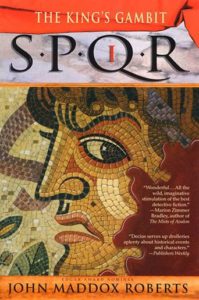
Review: The SPQR Series by John Maddox Roberts

Amidst all the non-fiction, I thought it would be nice to review some fiction.
This is a series of detective novels set in the late Republic. It starts just before the Cataline conspiracy and runs, as of now, until somewhat after Caesar’s assassination.

The detective is Decius Caecillius Metellus, who starts out as a young man whose family is a powerful force in the Senate.

I’ve loved this series since the 90s, when I stumbled across it. Decius feels Roman, while still being sympathetic to moderns. He loves gladiatorial games and chariot races–he’s very relaxed about violence, but he lacks cruelty and is pushed forward by a sense of obligation to his fellow Romans without spite to non-Romans.

And he’s funny. The stories of SPQR are lovely mysteries, not the greatest, but what really makes the series shine is Decius’s first person narrative and its absolute lack of reverence to the subjects.

Because Decius is of the Plebian nobility, and from an important family, he can call on all the major figures anyone familiar with the period knows: Caesar and Cato and Crassus and Pomey and Milo and many many more. Decius sees these people as his social equals, without the gloss of history. Caesar in the years before his rise to power is described as someone who is known mainly for his debts, the marvel of all Rome, and for almost certainly having been buggered by the King of Bythnia.

Cato is treated as an honorable boor, cruel besides, who is the butt of jokes. Cicero is treated with more respect, but his weaknesses are clearly outlined.

And Deciu’s best friend is Milo, one of the gang leaders fighting for control of Rome, and protected by Cicero.

I’ve never read a series of books that makes a time and place come quite as alive as SPQR does, and SPQR moreover is fun, and often irreverent, without glossing on the cruelties of Rome, but without dwelling.

To Decius this is how things are, and he may disapprove of some of it, but he accepts it as we accept our world. He lives in it, and he takes us with him, and he’s no prude: He wades in, enjoying the food, the fleshpots, and the violence with an honest glee that allows us to see the world with him.

For years, I used to carry two or three of these novels with me whenever I traveled, and I’ve read the first half dozen of them over 15 times each.

For some reason, they’re quite popular in Germany. They’re not so popular in the US, but you may find in them something you enjoy as much as I do.

I hope so.

(The earlier ones are generally better, and while you don’t have to read the series in order, I think it is best enjoyed thus.)


The results of the work I do, like this article, are free, but food isn’t, so if you value my work, please DONATE or SUBSCRIBE.

Book Review: Pandora’s Seed by Spencer Wells

There have been a number of technological revolutions during humanity’s existence. Perhaps the most important was the stone age tool revolution, really, but that’s not one we tend to focus on, it being so far in the past. Instead, we focus on the agricultural revolution and the industrial revolution.
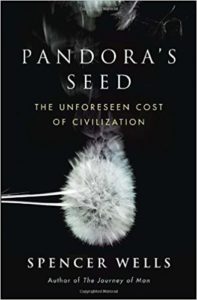
Pandora’s Seed is about the agricultural revolution. As the title suggests, Wells thinks the agricultural revolution was something of a disaster.

This isn’t a novel argument any more, most people have heard it made, and certainly any long time reader of this blog knows I think it is essentially true.

The argument is simple enough: When we look at hunter-gatherers from before the agricultural revolution, they’re healthier and they live longer. After the agricultural revolution, and especially later, after the hydraulic revolution, we are sicker and die sooner. We have a lot more disease. We have gum disease and tooth decay. We are shorter. Women’s hips are narrower, meaning childbirth is harder and the women are less healthy (hip size correlating quite nicely with overall health in women).

Most of these metrics don’t recover for thousands of years. It is not until Hellenic civilization that most of them are exceeded, and when Hellenic civilization collapses, the growth in those metrics ends.

Women’s hip width has STILL not recovered.

And remember that average age statistics include childhood deaths. Take them out, and the average lifespans of many ancient societies look a lot better. It’s a misunderstanding of the general consensus that the natural lifespan was 35 years. The life span was actually about 70, and people who didn’t get to that age didn’t get there due to privation, disease, violence or death in childbirth.

We evolved as hunter-gatherers. It is that simple. We are adapted for that sort of lifestyle. We have made some genetic adaptations to the agricultural lifestyle, without question, but we are not fully adapted to it. The use of cultural change instead of genetic change has led us to be ill-adapted for the way we live.

This becomes, in certain respects, even more extreme post-industrial revolution. It is unquestionable, for example, that we have far more mental illness than our forbears. Humans handle living in industrial society even worse than they do in agricultural societies. We have rampant obesity, because humans are not meant to have easy access to this much sugar and empty carbohydrates all while sitting on their asses all day.

When we do perform labour, whether agricultural labor or industrial, it is generally bad for us. The human body is made for hunting and gathering, not for rote, unnatural repetitive movements, over and over and again.

So in agricultural or industrial societies we eat in ways to which we aren’t adapted, and we work in ways to which we aren’t adapted. And it makes us sick and unhappy.

That is not deny to the obvious benefits of industrialization in particular, simply to note its underside.

As for agriculture, it prevailed because those who took it up (or herding) tended to win wars. Hunter-gatherers were happier, healthier, and lived longer, but they lost wars, and because they didn’t shit nearly as much where they ate, they didn’t have the disease resistance of sedentary agriculturalists. Just going near agricultural settlements would have often been a death sentence.

The core point here is simple: Social and technological advancement are not the same things as increases in human welfare. Mistaking one for another is vastly stupid. Social or technological advancements win if they out-compete other models, and that competition is not based on “is nicer,” it is based, ultimately, on violence. (Most of the world, having been conquered by Europeans after the industrial revolution, is real, real clear on this.)

The agricultural revolution didn’t run humanity off a cliff. But the industrial revolution and our advancements in military technology (aka. nukes) offer us the ability to “win” ourselves to extinction, while making ourselves vastly unhappy doing so.

Perhaps it is time to learn how to take to conscious control of our technology and society, before our unconsciousness causes catastrophes we cannot handle.

This is an important book, to nail into our heads the facts about how advancements work, in a time period long enough ago that we can hopefully look at it with the faintest shred of objectivity.


The results of the work I do, like this article, are free, but food isn’t, so if you value my work, please DONATE or SUBSCRIBE.


Review: Cities and the Wealth of Nations by Jane Jacobs

Jane Jacobs came to prominence with the publication of The Death and Life of Great American Cities, which examined what made cities succeed and fail in extremely minute detail–such as how pedestrians walk on sidewalks and what makes parks safe. It’s a brilliant book, and reshaped urban planning, but I’ve always found her economic duology, The Economy of Cities and this book more useful to my interests.
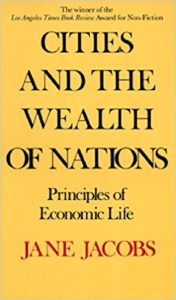
Cities and the Wealth of Nations was published in 1984, and starts with the observation, and case, that the economy of much of the world seemed to have gone off track in a semi-permanent fashion: Something had changed from the post-WWII economy, something which downshifted the economy.

When I first read this book, around 1990, I didn’t think much of that position, but I now know it’s true: Between 1968 and 1980 a vast variety of economic and social metrics all shifted to new tracks; bad tracks. From inequality to wage growth to productivity to growth in the third world, it all went bad.

Jacobs thinks that the way we analyze economies is wrong from the bottom up. Nations, to Jacobs, make no sense as economic units. Canada and Singapore and Britain have almost nothing in common except the fact that they are sovereign units.

To Jacobs, as one would expect, cities are the fundamental economic unit. It is in cities that new work, new industries, are created. It is cities which generate economic forces, forces which affect non-city regions unevenly.

When you lump cities together with non city regions, economics gets ugly. Part of this is feedback: Because cities are the fundamental economic units, when they grow, they should receive the feedback of imported items growing cheaper; and when they are stagnant or shrinking, imported items should become more expensive.

Put simply, cities should have their own currencies, but don’t. They are lumped together with other cities and with non-city regions, and the import/export effects of those regions swamp what each city needs.

In sovereign areas, with multiple economically active cities, this tends to crush all cities but one: You can see this most clearly in England, which used to have many economically active cities and which, as of Jacobs’ writing, was down to two: Birmingham and London.

London, basically, drove the value of the pound. This was inappropriate to the needs of other cities and strangled them, turning them economically inert: They were cities only in the sense of their populations, they were not economically viable cities where large amounts of new work was still generated.

Large hinterland regions do the same thing: If you have a lot of agriculture or a lot of mineral resources or anything else from your hinterlands, the exchange rate will tend to be propped higher than the city(s) need, again strangling growth.

Workarounds for this are always inefficient. You can do what the US did in the 19th century and have tariffs, but that hurts agricultural and resource regions–they simply aren’t receiving what they should from their labour, and is doesn’t eliminate the multiple cities problem.

So, ideally, cities should have their own currencies, and so should non-city regions, so that everyone is getting the feedback they require (steps must also be taken to ensure that currency rates are driven almost entirely by export/import, and not by speculation or by central bank/government manipulation).

This is hard to do in the real world, for obvious reasons, but I agree with Jacobs we should find a way to do it.

Jacobs also spends a lot of time detailing how cities influence non-city regions; almost always in ways that deform the non-city regions and often harmfully.

The first of these influences are supply regions, which produce something cities want. In the modern era, the foremost of these might be Saudi Arabia: It’s rich, because it has oil, but with almost nothing else it is doomed to poverty once oil is no longer important. Economically productive cities want the oil and want nothing else Saudi Arabia produces. When those cities stop wanting that oil (or enough of it), doom will fall. (Jacob uses the example of Uruguay, which was once very prosperous, but never had economically active cities.)

The second influence is regions workers abandon–a place where everyone leaves to go to cities, because there is no work in the region. Examples are distressingly common, and all the screams in the US about immigrants are essentially about such regions in Mexico and further south–places where people can’t make a living, and have to leave.

A variation on this is clearances. New technology displaces workers out of regions. The classic case was peasants forced off their land in Britain, so landowners could enclose the land and grow crops or tend sheep for more money. But this happens all the time in the third world, where subsistence workers are forced off the land for plantations, and is a regular occurance today in China, where people are cleared out of a place so that suburbs or mines or whatnot can be built.

The next type is capital for regions without cities. Jacobs uses the example of the Volta dam in Ghana. It has a huge hydroelectric power supply, but there’s no real value to it, because there is no industry to take advantage of it. All the while, the dam itself destroys local agriculture, hunting, and fishing. Large amounts of money also often go into picturesque regions used for vacations, driving out most of the people who were there before the money arrived, distorting their economy.

Then there are places that were once cities; economically productive, which lose their productivity. Jacobs gives ancient Egypt as an example: the heart of a technologically sophisticated civilization, eventually reduced to mostly subsistence agriculture and no longer one of the beating hearts of the ancient world. A better example, I think, is Europe in the Dark Ages. When the Arabs cut off trade, Europe swiftly became a backwater hole, losing almost all of its advanced cities and spending centuries sinking into poverty before it started growing and advancing again the Middle Ages.

Economically active cities, in short, are powerful, and they often do nasty things to regions that are not cities. Even when what they do seems good, as with demand for oil, or Uruguay’s produce and minerals, it is a boon that can disappear at any time.

Jacobs points out one other thing of note: Backwards cities are best off trading with each other, rather than with the more advanced cities. This was, by the way, a more prevalent pattern in the post-war period before neoliberalism, and in that period growth was faster. The argument is simple enough: Advanced cities often don’t need the goods produced by backwards cities, but other backwards cities do.

Overall, this is an important book. One of the most important I’ve ever read. The point about broken feedback and economic units not making sense is absolutely fundamental and explains a simple fact: City states which can manage to survive the political-military environment, almost always do very well. The ideal economic circumstance is a world of city states, but we don’t have that due to military political reasons (they can’t defend themselves).

That doesn’t mean we shouldn’t figure out a way to get the results of city states while allowing for defense.

To me, then, it’s a must-read book, and perhaps Jacobs’ most important.


The results of the work I do, like this article, are free, but food isn’t, so if you value my work, please DONATE or SUBSCRIBE.

Book Review: The Spirit Level

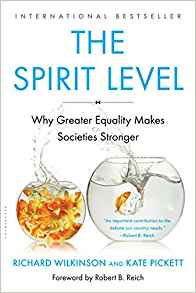
Given all the controversy around inequality, this is a must read book.
About three-quarters of it is what I call “proving the obvious”–that inequality is, in fact, bad in every way imaginable.

Inequality correlates to almost every bad social metric you can imagine. Health, lifespan, performance, violence, happiness, and so on. The more unequal a society, holding other stuff even, the worse the society is to live in.

It really is that simple, and The Spirit Level goes to ludicrous lengths to provide the evidence, because in our society the ludicrously obvious is disputed by people with a lot of money.

But The Spirit Level also has some non-intuitive information to share, of which the most interesting to me was that high inequality is bad for the people at the top. People in, say, the top one percent in a more equal society are better off than those in the top one percent in a more unequal society–even though those in the latter would have more money.

You’d think having more money would mean that you “win,” but, in fact, your life span is shorter, you are more unhealthy, and you are more unhappy than those in the same relative position in a more equal society.

Another interesting fact is the performance effect of being unequal: Simply being told they are lesser destroys people’s performance. This is quite robust. You can test them, then tell them they’re unequal, test them again, and see it happen.

The causes of inequality’s other effects are hard to tease out, but the most likely reason is stress: Being unequal is stressful. It’s more stressful for people on the bottom, constantly worried and being ordered around, but it’s stressful even for those on top. The more unequal the society, the more people below you are stressed and angry and the more you have to do to defend your situation.

And, of course, unhappy people just aren’t nice to be around, and if your society systematically makes people less happy, that’s going to feed back into you, because you live in the society.

I really do think everyone should read this book. It’s not that it’s earth-shattering, it’s that it makes you one hundred percent confident that, yes, inequality is just bad, whether or not the people at the bottom have a TV.


The results of the work I do, like this article, are free, but food isn’t, so if you value my work, please DONATE or SUBSCRIBE.

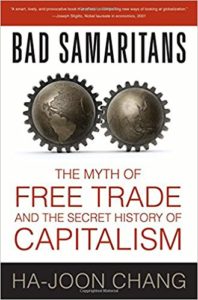
Book Review: Bad Samaritans, by Ha-Joon Chang

So, if you’re going to read only one book about free trade and neoliberalism in relation to developing nations, this is the one to read.

The bottom line is this: The standard advice given by Western economists and experts about how to modernize or industrialize is wrong, actively harmful, and hurts countries.

Countries that do industrialize through mercantile policies (there are maybe four, including Russia), almost without exception, do not engage in free trade; they engage in managed trade behind protective barriers.

This was true of Japan, Korea, and China, among others. (China used iron-like control over currency as its barrier: Trump is wrong now, but not wrong for the key industrialization period.)

Moreover, growth in developing countries was better, generally speaking, under Bretton Woods, which allowed developing countries tariffs and so on. Once neoliberals took over and took it as their mission, in the IMF, World Bank, and elsewhere, to bust tariffs and subsidies and create “free markets,” growth slowed in countries trying to develop using a non-mercantile policy.

In other words, again, if you did what Western experts wanted done, you got hurt bad.

The advice was truly horrendous, based on what should be an essentially niche matter — “comparative advantage.”

Comparative advantage is garbage. Japan’s original comparative advantage was silk production, not cars or advanced electronics. If they had chosen to emphasize their existing comparative advantage, rather than change their comparative advantages, they would be a third world country still.

Those countries which did follow this advice, were usually told that their comparative advantage was in cash crops or commodities. True enough.

Unfortunately, most developing countries have an advantage in cash crops or other commodities. When they all started taking that advice at the same time, it led to increases in supply, which collapsed prices.

To make most cash crops, you have to shove subsistence farmers off their land and set up plantations. The money from exports which was supposed to feed those people didn’t show up, and governments were required to stay the course, going further into debt, rather than being able to pay off their debts with all the money they had been told they would earn.

(Aside: The removal of people from subsistence farming is one reason I doubt the extreme poverty stats, which are based on money. When Mexicans were shoved off their farms due to NAFTA, into slums, they wound up eating less nutritious food for which they had to pay. They had more money, but it’s not clear to me they were better off.)

Chang goes into all of this in far more detail than I can, and the book is well worth reading as a sort of “bullshit inoculation” for common economic nostrums. Most of what we are told causes development simply does not; what does work is known, and as much as possible the world system is set up today to not allow it.

If you want to develop, you either need to be big enough to do mercantalism whether the US likes it or not, be able to bribe US elites (China is both big and bribes US elites) or you need to be a nation the US considers a key ally (like Japan or South Korea), which it is willing to allow to industrialize behind various protections. (Japan’s first industrialization was done as a British ally.)

That’s it, that’s all.

Worth reading.


The results of the work I do, like this article, are free, but food isn’t, so if you value my work, please DONATE or SUBSCRIBE.

Book Review: Confucius and the Chinese Way, by H. G. Creel

Statue of Confucius from Rizal Park in ManilaAmong ideologies and religions, one of the longest lasting and most influential was Confucianism. Confucianism was the most important ideology of the Chinese for about two thousand years, and China was either the first or second most advanced region of the world for most of that time (India being the other contender.)
The review is of an older book, published in 1949, before Confucian influence was so heavily hit by the rise of Communism.

Confucianism, by that time, was seen as an essentially reactionary philosophy: Everyone should know their place and stay in it, worship their ancestors, obey their parents, and so on, but Creel argues, convincingly, I believe, that Confucianism was a radical project at the start.

Confucius lived in a period of warring states. Huge armies were raised, battles were frequent, taxation and levies were harsh, and maiming and torture were common. Ordinary people were much afflicted, as noble families fought it out to see who would unify China.

Confucius believed that the welfare of the common people should be the goal of ruling, and he set out to do something about it. That something was to create a philosophy, and a teaching, which produced officers for the lords, officers who had been trained to believe the common weal was the goal of rulership.

Confucius astutely noticed that there was no formalized training for officials and created it. He wasn’t the only one to so notice: The legalists and the Mohists did as well, but in the end, it was his system that worked.

Confucius decided to build off human nature as he observed it: He noted that parents tend to love their children and care for them, and that children love their parents. He tried to take that love and transfer it to officials and rulers. Rulers were to treat those below them as beloved children, and those below were to obey their rulers as parents.

Confucius wasn’t a fool, of course. He understand that this could be abused, so he noted that if a ruler didn’t act like a loving parent, with beneficience to those he ruled, then he wasn’t actually a ruler, but a tyrant, and duty was to oppose him.

A ruler should pick the best officials, and leave the governing to them, with an eye to flourishing of all.

Confucians should act out of benevolence no matter the circumstances, or even the results. Confucius recognized that one could try to do good, and though “Heaven” could frustrate one, the merit lay in trying. Thus, a man who tried could feel secure that he had done his duty, whether he succeeded, or even was ever appointed at all. Willingness and ability to serve was enough.

Interestingly, Confucianism was most successful in two periods: before the unification of China and for something over a hundred years afterwards. The Confucians were quite popular with the people, and princes wanted their support. When the first Emperor of China won, he did it primarily through Legalist doctrines (individuals exist only to serve the state, and the Emperor is the absolute ruler), but his dynasty was soon overthrown with the aid of Confucians, and the first few Emperors were good Confucians, until an ambitious and smart one came along who decided to gain control over the Confucians.

How he did so is a lesson which should resonate though history: He formalized teaching of Confucianism with appointed masters and teachers with stipends and so on. He chose them, he controlled their finances. Confucianism seemed to benefit from this, but, of course, it put Confucians and Confucianism largely under Imperial control. From that point on, Confucianism (very generally speaking, we’re talking about two millenia of history) was never again so beneficial for the people, and much more of a prop for the ruling class.

The Confucian sages and scholars had been, to use the modern word, co-opted.

A few summers ago, I read a large number of books on Confucianism, and for my purposes this was the best, because what interested me most was the life cycle of the ideology: How it rose, how it gained power, and how it fell.

Confucius, famously, died thinking he was a failure (as Jesus may have, and many other reformers). Only after his death did his teachings become influential, and the day they truly took power, it seems to me, is when the days of their full benefit became numbered.

This is normal for ideologies, and Confucianism got a far, far longer run, than most at being beneficial.

Seeing this cycle play out millennia ago is a nice antidote to studying more recent rises and falls; such as the relating to the end of New Deal liberalism with Reagan/Thatcher, or the end of the world system put in place after Napoleon.

It is also, in some ways, a master class in the details of ideology creation: Confucius created a system which had innate rewards for those individuals who followed it, which was beneficial to the governments which adopted it, and which was able to create a large group of people who wanted it to continue, while ensuring a wide support base in the population.

All of this makes for fascinating reading, and I recommend this book highly, though it’s old and may be hard to find a copy.


The results of the work I do, like this article, are free, but food isn’t, so if you value my work, please DONATE or SUBSCRIBE.

Book Review of “Dark Age Ahead,” by Jane Jacobs

This isn’t the best book by Jacobs, the famous theorist of city planning, economies, and morals, but on re-reading it for the first time since it was published, I thought it made points worth sharing.

Jacobs defines a “Dark Age” primarily as a great forgetting: Society loses the skills and culture known to one’s forbears in a widespread way.

She follows Henri Pirenne in naming the key point where Europe’s decline turns into a Dark Age as being when Mediterranean trade ended with the Muslim conquests–but the forgetting had been going on for years. Roman craftsmen in the 3rd century could not make items that their forebears could make in 0 AD, and by the fifth century, cities and culture were in noticeable decline under an autocratic state which allowed very little economic freedom. This state, with its remains of a much higher Roman and Greek culture, impressed the barbarians on its borders greatly, but it was a shell of what it had once been.

Once the Dark Ages descended in full, well, things got ugly. There was the loss of the three-field system, the loss of a skill as simple as bread-making (so much so that the staple food around Paris in 1000 AD was gruel), and the loss of most iron-making abilities, so that people were plowing with wooden plows. Archaeologists say the bones of French peasants show that they ate grass–which even showed up in their teeth, so they must have eaten rather a lot.

That’s a Dark Age.

Jacobs had recently read Jared Diamond’s Guns, Germs and Steel, which is about why some areas do well, and others don’t. The answer basically comes down to: “Those that start with the most just keep winning.” Jacobs noted that Diamond didn’t explain why such regions sometimes stop winning, such as the Fertile Crescent (the core of civilization for almost 8,000 years) and sets out to provide her own answer.  (Diamond later wrote his answer, which came down to (and I agree, in part, nor is he the first to make the point): “Advanced regions stop winning when elites are insulated from the effects of their actions.”)

I think that Jacobs’ answer, which she is not the first to give, is somewhat more interesting, however, if perhaps less fundamental.

Jacobs, as the book title suggests, saw signs that we in the West were moving towards a Dark Age. This was due to forgetting–not being able to do what we had done in the past. In this case, it is not about losing technical skills (yet), but in losing certain scientific skills and in not understanding how it is that our economies actually produced the civilization in which we live and thus being unable to do what our predecessors had done.

Jacobs hits five points as examples, starting with families. She notes that the median family can no longer afford the median house in most of North America; that the decline of community and extended family means that child-rearing has fallen far more on fathers and mothers than in the past; while median wage stagnation combined with fixed costs rising has meant people need to work more. These are all conditions that push the family towards failure, and indeed, that can be seen in the very high divorce rates.

As anyone who has read her knows, Jacobs thinks suburbs are very unhealthy: They don’t create community (no walking, no street life), and they don’t foster real economic growth due to zoning regulations. The large is often the child of the small, and we have deliberately pushed people into neighbourhoods which, by design, cannot be communities. There are other causes of the decline of community and family, and many are deliberate policy choices, like making housing prices rise faster than wages (this is policy, and has been since, at the latest, 1983).

Because society is made up of families, and families are the most responsible for the important work of raising the next generation, the failure of families indicates a deep malaise in society. Note that at the same time as families are under stress, alternatives like schools and community groups and libraries are also in decline; as parents need more help, less help is available.

Jacobs second point is that education at the post-secondary level is no longer education, it is credentialing. I shan’t go into that at great length, but it’s worth reading, because Jacobs was alive during the Great Depression, and personally remembered the GI boom, and so on. She was there when universities became credentialing institutions and not educational facilities, that is, places where you get a piece of paper that lets you apply for a job rather than an actual education. On a personal note, I have never found that in any social science, except perhaps political science (which I do not find useful), that I do not know more than almost any person with a B.A. in the subject. They’ve had four years of specialized instruction, and they know less than an autodidact.

Jacobs’ third point is about science. She starts with a review of the basic theory of science (testing hypotheses), and the work of Thomas Kuhn on how paradigms guide science and are overthrown. She then eviscerates traffic engineers (this is an old Jeremiad of hers, starting with The Death and Life of Great American Cities in 1961). Their fluid dynamics model of how traffic should operate (constrict it one place, it goes somewhere else) is not supported by the data, which shows that if you constrict traffic in one place, it often just disappears. She goes on into much technical detail about proper street use, but her point is simple: What traffic engineers say works, doesn’t work if you actually look at the data. That they don’t recognize this indicates bad science.

She then looks at the Chicago heat wave of 1995. 739 people more died that week than during an ordinary week, mostly old people. The Center for Disease Control sent in a team of 80 researchers, and they did a huge study which came to the conclusion that they had died because they ran out of water, didn’t have air conditioning, didn’t go somewhere that did, and weren’t checked in on.

As Jacobs points out, that’s what everyone already knew. Not useful.

Meanwhile, a single sociology student noticed something interesting. Death rates in certain parts of the city were much higher than others. Turns out that people who lived in low-density, low-income neighbourhoods were less likely to have air conditioning, more likely to lose water pressure because of kids opening hydrants, had fewer stores with air conditioning nearby, and fewer friends–especially local friends. They didn’t answer the door when checked on, and didn’t want to leave their homes, because they were scared of crime.

The CDC had not looked for what tied the people together as a group. Instead of looking individual characteristics, the CDC should have been noting where they lived, and to a large extent, their socioeconomic status.

Since the goal of the study was to figure out what to do next time, the second set of data was far more useful than the first.

The last part of this chapter is taken up with noting that economists don’t really understand what causes growth (creation of new work in cities and import replacement splurges in cities) and, as such, were mystified by periods of large growth in Canada which did not accomodate their models (in Vancouver in the early 90s, and Toronto in the 2000s), but I’ll leave that be. (See my review of The Economy of Cities to learn more.) The fact that economists don’t understand economies will surprise no one who remembers that most economists said there was no housing bubble.

Jacobs’ fourth point is about taxation, in particular, that the parts of government which have the ability to tax the most are the farthest removed from the people they serve and the least responsive to people. Our taxation system lacks subsidiarity and fiscal accountability.

Subsidiarity is the principle that government works best–most responsibly and responsively–when it is closest to the people it serves and needs it addresses. Fiscal accountability is the principle that institutions collecting taxes and disbursing taxes work most responsibly when they are transparent to those providing the money.

In other words, the more local the authority, the better it spends its taxes. This is one (only one) of the reasons why city states tend to be successful. People who spew over Singapore make me laugh: Of all the forms of government in the world, running a city state is the easiest as long as one can solve the violence problem (i.e., not getting taken over by someone larger).

Jacobs believes that these issues have been getting worse: More and more spending decisions are made further and further away from local government and those decisions are more and more opaque. She targets property taxes as the basis of city government in particular.

I am in broad agreement with her, actually, and would put primary responsibility for taxes on the local level, with mandated transfers up and out to rural areas, rather than our current system of federal governments doing most of the taxing and then deciding how much money they want to give local areas.

It’s not clear to me how much of this is new, but Jacobs is probably right that it’s getting worse and worse as populations increase. Cities can’t keep up with the taxes they have; federal and state/provincial governments would rather spend the money on items that don’t help the cities, and the next thing you know BART is 40 years old and dying, or Toronto’s subway and transit system can’t keep up with the population either.

Jacobs’ final example is about professional self-policing. She uses the decline of the accounting profession (right after their failure to notice Enron’s problems before it collapsed) as her case example, but arguments could be made for many professions, certainly including the clergy, medicine, and American psychologists. It’s very hard for government to regulate professionals properly, because they don’t understand the profession, so it is ideal for professionals to do it themselves. If they can’t, then the government must, and something important is lost. (Alert readers will notice the relationship to subsidiarity.)

Having tackled these five areas in much more depth than I can cover, Jacobs turns to the question of how to fix these self-reinforcing downward spirals, using as her example housing, which was her first point when dealing with how families are being set up to fail. She runs through the history of how we got into this mess and suggests that with appropriate changes to zoning laws, suburbs can be turned into high-density, productive neighborhoods with solid communities, reducing both the cost of housing and bringing back community.

Jacobs concludes the books with thoughts on the patterns of Dark Ages; how agrarian societies were gutted and lost their culture due to industrialization, how successful societies are in the most danger, because they cling to the ways of their success, and how some societies, like Japan, managed the transition from agrarianism to industrialization, under armed threat, and still maintained their culture and did not fall into a memory hole dark age. I’m not sure she has much in the way of prescription, other than, “Add to what you had,” but perhaps that’s appropriate: Jacobs’ prescription was given in her section on how to turn suburbs into communities and reduce housing prices at the same time, thus aiding the family.

To Jacobs, the small details matter as much as the big, and while every problem is related, each problem needs its own solution. If you want to fix X, you need to really understand the problem. Having spent her life studying cities, housing, and urban economics, Jacobs tackled the problem she knows how to handle and hopes that we can see, in her solution (take the old and turn it into something new, build off what is there) a pattern to use to fix problems in the areas of our own expertise.

As I said at the start, I don’t think this is Jacobs strongest book, and if you’ve read her other works, perhaps a third of it will have you thinking, “Oh, that topic again, my she loves to grind this axe,” but it may be her most timely book, given the times which lay ahead of us. The rest of her work covers principles which should still be useful a thousand years from now, assuming we haven’t become post-human or scavengers in a glowing post-apocalyptic wasteland.

And thinking of a “Dark Ages” as a loss of culture, a loss of learning, technology, and science, focuses our eyes on what we are losing as we move forward and what we might not be able to regain (for example, through offshoring manufacturing, we lose culture and know-how that will be extremely difficult to restore).

Worth your time if the topic interests you.

(I will review one more of Jacobs books, Cities and the Wealth of Nations.)

Note on the book review series. During last year’s fundraiser, I promised 20 book reviews. Clearly, not all will be done this year, but all will be done. The “Construction of Reality” e-book is two-thirds complete (of the text that will not be substantially revised) and that will be released as well.


The results of the work I do, like this article, are free, but food isn’t, so if you value my work, please DONATE or SUBSCRIBE.


Page 3 of 5

Powered by WordPress & Theme by Anders Norén