The horizon is not so far as we can see, but as far as we can imagine

Category: Age of War and Revolution Page 4 of 31

Understanding the Competent Concierge: Canada’s Prime Minister Mark Carney

Carney gave an important speech yesterday, which you can read here. That lead to a lot of people praising him for his honesty in noting that the rules-based order was accepted by developed nations because they benefited from it, even though everyone knew it was bullshit: if you weren’t in the club, the rules didn’t apply to you. And even if you were in the club, the rules didn’t always apply to you, but most of them did and overall the benefits outweighed the costs, at least as far as our ruling class was concerned.

Carney points out that this deal has been violated in a rupture. The old world order is dead. People who say that it died in Gaza are WRONG. Mass murder of brown people in a non-developed country is acceptable to the rules based order. (It would not be acceptable in South Korea or Japan.)

But there’s something very important in Carney’s speech: he brags about having dropped taxes and that’s a clue.

Carney is clear eyed and honest enough to recognize the hypocrisy of the old system. He was a participant, but he was one of the rare powerful participants who was able to function and realize some of the injustices of the old system. He knew it was bullshit. Most people need to entirely believe in a system, they can’t handle the moral dissonance. To Carney the trade off was worth if it you were part of the Global North, and he was willing to live with that and participate in it.

Now long before Carney was Prime Minister I had criticized him. As a central banker he blew two housing bubbles, one in Canada and one in Britain, which massively hurt ordinary people and he bailed out bankers and rich people during the financial collapse. In fact, his performance in Canada was abysmal, in that it set up a new housing bubble basically immediately.

But housing bubbles are good for rich people. They get the benefits, not the costs.

And that’s the key to understanding Carney. He’s not a left winger. He’s not a post war liberal. He’s a neoliberal technocrat, and the job of neoliberal technocrats is to keep making the rich richer. It really is almost that simple and if you use that as your guide to their actions you’ll be right most of the time.

Let’s go back to those taxes. One of Carney’s goals is to reindustrialize Canada. It’s a real goal, he’s taking action on it, spending money on it and cutting deals pursuing it. But low corporate taxes and low marginal top individual tax rates undercuts that goal. The higher corporate taxes are the more it makes sense to reinvest earnings in production. If top individual rates are low, the rich want money cashed out thru stock buybacks (which should be illegal if you want industrial growth, because they too encourage wasting money that could be reinvested in production) or dividends.

You should also have high capital gains taxes on short term gains. Ninety percent if cashed out under five years, dropping 10% a year after that is a good benchmark, with exceptions for primary residences and a few other niche cases. Again, you want people investing for the long term, and this also cuts out a lot of the bullshit that happens due to stock options.

So if Carney’s only goal was re-industrializtion, and he was method-agnostic, not an ideologue, he would raise certain taxes rather than lowering them.

But he didn’t do that, because Carney, like most politicians and senior technocrats in our system, is a concierge for the rich. His job is to make them better off. They don’t want to be annexed by the US or to have to live in fear of a fickle US changing deals at a whim. But they still want to be super rich. In the old world order that meant having access to the US, because US returns were outsized compared to non-US returns. Every elite in every other country wanted access to US financial markets. But that access is not worth the price any more.

What makes Carney different from most current elite concierges is that he is actually competent, not a worthless courtier, and that he’s able to see the hypocrisies of the system. He’s self-aware.

I supported Carney in the last election and I still support him because while he’s far from what I want, he’s at least doing some of the right things. Enough of the right things to be worth supporting. That doesn’t mean I like him, or even think he’s a good person. He isn’t. But he’s competent and has enough guts to move away from the US. While he does so he’s making a lot of compromises like joining the Board of Peace. That’s an evil act and I’m sure he knows it is, being clear eyed, but it’s a minor evil act because Canada doesn’t have a potential veto on how Palestinians are treated.

I wish he was better and my support is very conditional. Perhaps I’m not as pure as I should be. Feel free to flay me in the comments. But a man who helps break up the American Empire, and that’s what Carney is doing by being the first to make a real break with the US and with his speech calling for the middle powers to abandon America, is doing enough to make it over to the “on the balance, more good than evil” book in my mind. Now if he had a veto on Gaza the way an American President does, it’d be different.

He doesn’t and he’s helping destroy the old world order while being by far and away the best current option for Canada.

We need better if we’re ever going to move back to a truly good economy in western countries or a more good than evil world order. Carney’s still a concierge for the rich. But in helping protect Canada’s rich, he’s helping destroy the American Empire and that will be good for billions of people, including Palestinians, and he’s protecting Canada from America and some of what he’s doing will be good for ordinary people.

Even if Carney’s motives for helping destroy the old order are crass, the fact that he’s doing so is enough for me.


This site is only viable due to reader donations. If you value it and can, please subscribe or donate.
Carney’s Speech Transcript + Comments: Time For the Truth & For the Middle Powers To Align

I think this is worth posting in full. Once again Carney and Canada are moving faster than any of America’s vassals, which is fascinating because Canada is the most vulnerable to the US of all the vassals. But then, that’s why, plus some luck.

Carney was the UK’s and Canada’s central banker. He did a terrible job, blowing two housing bubbles. I backed him in the last election because he was saying the right things, and the alternative was a Trump style conservative with a room temperature IQ who would spread wide for Trump.

Carney spends much of his time in this speech pointing out that the old order was full of hypocrisy. He should know, he had to say all the mealy mouthed lies, you can’t have the jobs he had otherwise. But he didn’t have to say this now, he didn’t have to point this out, he could have just moved to the fact that there’s a rupture.

His point is that the old world provided a lot of benefits to many nations like Canada and Europe, and even though everyone knew it was in many ways unjust, if the price of admission was hypocrisy, then so be it. But that world is dead, the benefits are gone and we don’t have to pretend it wasn’t in some ways awful. We also shouldn’t pretend that world is coming back or that the benefits of that world some nations received can be regained by appeasing Trump and America.

As for Carney’s plan, it’s simple: the middle powers should ally with each other so they can’t be pushed around. In other words, don’t just switch vassalage over to China. But certainly do cut deals with China.


Carney’s Speech

Every day we are reminded that we live in an era of great power rivalry. That the rules-based order is fading. That the strong do what they can, and the weak suffer what they must.

This aphorism of Thucydides is presented as inevitable — the natural logic of international relations reasserting itself. And faced with this logic, there is a strong tendency for countries to go along to get along. To accommodate. To avoid trouble. To hope that compliance will buy safety.

It won’t.

So, what are our options?

In 1978, the Czech dissident Václav Havel wrote an essay called The Power of the Powerless. In it, he asked a simple question: how did the communist system sustain itself?

His answer began with a greengrocer. Every morning, this shopkeeper places a sign in his window: “Workers of the world, unite!” He does not believe it. No one believes it. But he places the sign anyway — to avoid trouble, to signal compliance, to get along. And because every shopkeeper on every street does the same, the system persists.

Not through violence alone, but through the participation of ordinary people in rituals they privately know to be false.

Havel called this “living within a lie.” The system’s power comes not from its truth but from everyone’s willingness to perform as if it were true. And its fragility comes from the same source: when even one person stops performing — when the greengrocer removes his sign — the illusion begins to crack.

It is time for companies and countries to take their signs down. For decades, countries like Canada prospered under what we called the rules-based international order. We joined its institutions, praised its principles, and benefited from its predictability. We could pursue values-based foreign policies under its protection.

We knew the story of the international rules-based order was partially false. That the strongest would exempt themselves when convenient. That trade rules were enforced asymmetrically. And that international law applied with varying rigour depending on the identity of the accused or the victim.

This fiction was useful, and American hegemony, in particular, helped provide public goods: open sea lanes, a stable financial system, collective security, and support for frameworks for resolving disputes.

So, we placed the sign in the window. We participated in the rituals. And largely avoided calling out the gaps between rhetoric and reality. This bargain no longer works. Let me be direct: we are in the midst of a rupture, not a transition. Over the past two decades, a series of crises in finance, health, energy, and geopolitics laid bare the risks of extreme global integration.

More recently, great powers began using economic integration as weapons. Tariffs as leverage. Financial infrastructure as coercion. Supply chains as vulnerabilities to be exploited. You cannot “live within the lie” of mutual benefit through integration when integration becomes the source of your subordination. The multilateral institutions on which middle powers relied— the WTO, the UN, the COP—the architecture of collective problem solving — are greatly diminished.

As a result, many countries are drawing the same conclusions. They must develop greater strategic autonomy: in energy, food, critical minerals, in finance, and supply chains. This impulse is understandable. A country that cannot feed itself, fuel itself, or defend itself has few options. When the rules no longer protect you, you must protect yourself. But let us be clear-eyed about where this leads. A world of fortresses will be poorer, more fragile, and less sustainable.

And there is another truth: if great powers abandon even the pretense of rules and values for the unhindered pursuit of their power and interests, the gains from ‘transactionalism’ become harder to replicate. Hegemons cannot continually monetize their relationships. Allies will diversify to hedge against uncertainty. Buy insurance. Increase options. This rebuilds sovereignty— sovereignty which was once grounded in rules—but which will be increasingly anchored in the ability to withstand pressure.

This classic risk management comes at a price. But that cost of strategic autonomy, of sovereignty, can also be shared. Collective investments in resilience are cheaper than everyone building their own fortress. Shared standards reduce fragmentation. Complementarities are positive sum.

The question for middle powers, like Canada, is not whether to adapt to this new reality. We must. The question is whether we adapt by simply building higher walls — or whether we can do something more ambitious.

Canada was amongst the first to hear the wake-up call, leading us to fundamentally shift our strategic posture. Canadians know that our old, comfortable assumption that our geography and alliance memberships automatically conferred prosperity and security is no longer valid.

Our new approach rests on what Alexander Stubb has termed ‘values-based realism’ — or, to put it another way, we aim to be principled and pragmatic. Principled in our commitment to fundamental values: sovereignty and territorial integrity, the prohibition of the use of force except when consistent with the UN Charter, respect for human rights. Pragmatic in recognizing that progress is often incremental, that interests diverge, that not every partner shares our values.

We are engaging broadly, strategically, with open eyes. We actively take on the world as it is, not wait for the world as we wish it to be. Canada is calibrating our relationships, so their depth reflects our values. We are prioritizing broad engagement to maximize our influence, given the fluidity of the world, the risks that this poses, and the stakes for what comes next. We are no longer relying on just the strength of our values, but also on the value of our strength.

We are building that strength at home. Since my government took office, we have cut taxes on incomes, capital gains and business investment, we have removed all federal barriers to inter-provincial trade, and we are fast-tracking a trillion dollars of investment in energy, AI, critical minerals, new trade corridors, and beyond. We are doubling our defence spending by 2030 and are doing so in ways that builds our domestic industries.

We are rapidly diversifying abroad. We have agreed a comprehensive strategic partnership with the European Union, including joining SAFE, Europe’s defense procurement arrangements. We have signed twelve other trade and security deals on four continents in the last six months. In the past few days, we have concluded new strategic partnerships with China and Qatar. We are negotiating free trade pacts with India, ASEAN, Thailand, Philippines, Mercosur.

To help solve global problems, we are pursuing variable geometry— different coalitions for different issues, based on values and interests. On Ukraine, we are a core member of the Coalition of the Willing and one of the largest per-capita contributors to its defence and security. On Arctic sovereignty, we stand firmly with Greenland and Denmark and fully support their unique right to determine Greenland’s future.

Our commitment to Article 5 is unwavering. We are working with our NATO allies (including the Nordic Baltic 8) to further secure the alliance’s northern and western flanks, including through unprecedented investments in over-the-horizon radar, submarines, aircraft, and boots on the ground.

On plurilateral trade, we are championing efforts to build a bridge between the Trans-Pacific Partnership and the European Union, creating a new trading block of 1.5 billion people. On critical minerals, we are forming buyer’s clubs anchored in the G7 so that the world can diversify away from concentrated supply. On AI, we are cooperating with like-minded democracies to ensure we will not ultimately be forced to choose between hegemons and hyperscalers.

This is not naive multilateralism. Nor is it relying on diminished institutions. It is building the coalitions that work, issue by issue, with partners who share enough common ground to act together. In some cases, this will be the vast majority of nations. And it is creating a dense web of connections across trade, investment, culture on which we can draw for future challenges and opportunities. Middle powers must act together because if you are not at the table, you are on the menu. Great powers can afford to go it alone. They have the market size, the military capacity, the leverage to dictate terms. Middle powers do not.

But when we only negotiate bilaterally with a hegemon, we negotiate from weakness. We accept what is offered. We compete with each other to be the most accommodating. This is not sovereignty. It is the performance of sovereignty while accepting subordination.

In a world of great power rivalry, the countries in between have a choice: to compete with each other for favour or to combine to create a third path with impact. We should not allow the rise of hard power to blind us to the fact that the power of legitimacy, integrity, and rules will remain strong — if we choose to wield it together.

Which brings me back to Havel. What would it mean for middle powers to “live in truth”?

It means naming reality. Stop invoking the “rules-based international order” as though it still functions as advertised. Call the system what it is: a period where the most powerful pursue their interests using economic integration as a weapon of coercion.

It means acting consistently. Apply the same standards to allies and rivals. When middle powers criticize economic intimidation from one direction but stay silent when it comes from another, we are keeping the sign in the window.

It means building what we claim to believe in. Rather than waiting for the hegemon to restore an order it is dismantling, create institutions and agreements that function as described. And it means reducing the leverage that enables coercion.

Building a strong domestic economy should always be every government’s priority. Diversification internationally is not just economic prudence; it is the material foundation for honest foreign policy. Countries earn the right to principled stands by reducing their vulnerability to retaliation.

Canada has what the world wants. We are an energy superpower. We hold vast reserves of critical minerals. We have the most educated population in the world. Our pension funds are amongst the world’s largest and most sophisticated investors. We have capital, talent, and a government with the immense fiscal capacity to act decisively. And we have the values to which many others aspire.

Canada is a pluralistic society that works. Our public square is loud, diverse, and free. Canadians remain committed to sustainability. We are a stable, reliable partner—in a world that is anything but—a partner that builds and values relationships for the long term.

Canada has something else: a recognition of what is happening and a determination to act accordingly. We understand that this rupture calls for more than adaptation. It calls for honesty about the world as it is.

We are taking the sign out of the window. The old order is not coming back. We should not mourn it. Nostalgia is not a strategy. But from the fracture, we can build something better, stronger, and more just. This is the task of the middle powers, who have the most to lose from a world of fortresses and the most to gain from a world of genuine cooperation.

The powerful have their power. But we have something too — the capacity to stop pretending, to name reality, to build our strength at home, and to act together. That is Canada’s path. We choose it openly and confidently. And it is a path wide open to any country willing to take it with us.

European Leaders Realize They’ve Put Themselves In A Vise

It seems that EU leaders have realized that the US can squeeze them, not just with tariffs, but with natural gas supplies. It used to be that Europe got most of its natural gas from Russia, till the pipelines were blown up, probably by the US. Now they pay much more to get shipped LNG from America.

Trump has hit European countries who oppose him annexing Greenland with increased tariffs. That’s not a big deal, but an LNG squeeze would be. It’s not that Europe wouldn’t be able to get enough LNG, if it wasn’t sold to them directly, they’d get it indirectly, just as they have continued to get a lot of Russian hydcrocarbons, but they’d pay more and energy prices are squeezing European (German) industry to death.

At the end of the day Ukraine is not a member of NATO or the EU. Denmark belongs to both. For Ukraine and the US, the Euros submitted to de-industrialization. They also sent almost all their weapons and ammo to Ukraine, and are damn near disarmed.

This policy is essentially hysterical, based on cold War trauma and driven hard by various Eastern Europeans and the Baltics.

But the situation the EU finds itself in is fundamentally simple. They’re de-industrializing. France is losing its overseas vassals, and with them cheap resources. They can’t get cheap resources from Russia and the expensive resources from America are controlled by a hostile and untrustworthy power whom it is impossible to cut a deal with. Say what you will about Russia, but they keep their deals and even after everything has happened if they were to agree to sell to Europe, they’d keep the deal.

Now I want to be very clear about the stakes here. Europe has no resources at scale other than farm goods to sell to the world. It has a very high population for its land mass, and its industry is legacy industry. When you look at tech lead lists, the EU as a whole is not even in the top four. (China, America, Japan, South Korea.)

To put it simply if they mishandle this the European standard of living is likely to crash by half in twenty years. 

A deal must be cut with both China and Russia. Of the two Russia is more important. This is currently impossible because the Eastern EU nations will not allow it and the way the EU system is set up they have enough power to stop it from happening.

At the same time they are essentially welfare recipients, receiving stipends from Germany and France, who are the two real EU powers. Most of them should never have been allowed into the EU in the first place, especially the Baltics, who are undefendable and offer nothing.

Germany and France need to decide what to do to save themselves. If that means changing the EU or leaving it and forming a new association that’s what they need to do. They need to re-arm with their own weapon stack, not American weapons, and in the meantime they should probably buy Chinese weapons, but to do so they’d have to leave NATO or kick the US out of it, which, again, they’re going to need to do anyway, because, as the line goes, “the threat is inside the house.”

If they don’t sort this out and soon, they will suffer a catastrophic loss of standard of living. If that happens they face internal revolution.

The current EU leadership is some of the most pathetic in the world. Trained and raised as American vassals they just cannot understand that the world has changed. It’s not just Trump, Biden was draining them dry too, his administration was just smart enough to, as it were, “boil the frog.”

While the EU still has an industrial base it needs to act to save that base.

As for current tactics, what should be done is simple enough. Counter-tariffs make no sense. Break the DMCA and go after American internet and tech companies which make vast amounts of money in the EU. Force Ireland to cooperate. Let people break the digital locks on American tech, and give them right of repair. If it goes far enough break patents and start producing in the EU. (The US broke Germany’s chemical patents in WWI and basically US chemical industry is based on those broken patents.)

The other step is to stop EU money from flowing into America and force EU wealth to be used inside the EU to create industry and improve tech. The EU sends vast amounts of investment money to the US. Stop that, repatriate as much as possible and get to work with real industrial policy. This will hurt Trump’s real base, the oligarchs, and help Europe.

Europe must end its US vassalage and cut deals with its “enemies” because the US is a greater threat than China or Russia. And if the Eastern EU states aren’t willing to go along with this, cut them loose. They offer very little and are a drain on the actual productive parts of Europe. (Not just Germany and France, but Italy, the Nordics and the low countries.)

The Euros don’t have a lot of time to deal with this, there in severe decline that will end in, not just disaster, but catastrophe.

(And no, I don’t think they’ll do most of this, but there’s value in laying it out.)

This site is only viable due to reader donations. If you value it and can, please subscribe or donate.

Canadian LapDog Breaks For Exit After Trump Declares Dog Is On The Menu

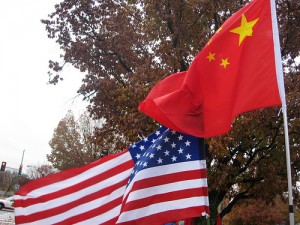
Canada has cut a trade deal with China. This is what I have been suggesting for ages, and it’s finally happening. (Not, of course, because Carney reads me, but because it’s the obvious play and of all Western leaders he’s been the most resistant to Trump’s threats and blackmail.) Canada cuts a deal:

Chinese leader Xi Jinping and Canadian PM Mark Carney have announced lower tariffs, signalling a reset in their countries’ relationship after a key meeting in Beijing.

China is expected to lower levies on Canadian canola oil from 85% to 15% by 1 March, while Ottawa has agreed to tax Chinese electric vehicles at the most-favoured-nation rate, 6.1%, Carney told reporters…

In the deal struck on Friday, Canada will allow only 49,000 Chinese electric vehicles into the Canadian market at the 6.1% tariff rate.

The cap is in response to Canadian automakers’ fears of an influx of affordable Chinese EVs.

As well as relief for canola producers, there will also be reduced tariffs on Canadian lobsters, crabs, and peas.

I would expect that if the Chinese are willing to manufacture in Canada we’ll give on other things. The limit on autos is to get China to manufacture here. US manufacturers of automobiles are no longer reliable and Stellantis has started to pull out of Canada, there are no major “Canadian” manufacturers, so US manufacturers they must be replaced. The 100% tariff on EVs was to please the US (Trump can’t be pleased), and to protect Canadian jobs. Since those jobs are now at risk and almost certain to be lost, well…

The BBC says this move is in reaction to Trump’s on and off again tariffs, but that’s only half true. I keep noticing this in much of the media, they talk about tariffs and not about the annexation threats and both are a factor. You can’t have your primary trade partner be a nation which wants to invade you or break you up with covert actions and color revolutions. Then, of course, there’s Trump’s comments that the US doesn’t need anything from Canada. OK then, if you don’t need it, guess we’ll have to sell it to someone else, and since that has to go two ways, guess we’ll phase out buying American cars and buy Chinese instead.

This will break the ice for many nations. As I have argued for ages, even before Trump came to office, everyone needs to cut a deal with China because it’s the rising power. It’s already the most powerful nation in the world in many ways, and it will be in all ways that matter in less than ten years. Perhaps five.

But it’s also that you can make a deal with the Chinese. They keep their deals unless you cross very clear red lines like supporting Taiwanese independence. Even before Trump the US did not keep its deals. As a Canadian I’m aware that America just ignored trade rulings against it in favor of Canada even twenty years ago. America is simply untrustworthy, they don’t really believe they have to obey even rules they themselves have agreed to. Trump is “ignore inconvenient rules on steroids” but pretending he hasn’t just ramped up an already existing American characteristic would be delusional.

It’s also worth noting that this is, in the words of commenter Carborundum, “seismic”. Canada has been extremely hostile to China ever since Justin Trudeau was elected, including arresting the Huawei heiress for America, slapping on those 100% tariffs and multiple other incidents. We did this in order to keep America happy, calculating that we needed America more than China. (I never agreed, but I was in the minority). Under Justin Trudeau we were America’s second most faithful lapdog (no one can ever beat the UK when it comes to lick-spittle toadying.)

So this is, if not a 180 degree turn at least a 100 degree turn. Carney said all the usual bullshit about human rights and Hong Kong, but they were pro-forma. They won’t get in the way of a deal, and I suspect that public scoldings and statements along those lines will become much less frequent. The issues will be given a nod when some journalist asks about them and little more.

Canada was the first of America’s lapdogs to make a break for the exit after Trump decided dog was on the menu. We’ll see who goes next. Because when Carney said that this was preparation for the new world order (down, conspiracy types) he was right: the old world order is all but dead, and everyone has to re-orient away from the setting sun of America towards the rising sun, China.

This site is only viable due to reader donations. If you value it and can, please subscribe or donate.

Eyes On The Big Picture: Dollar Decline & The Great Forgetting

Amid all the bad news, all the thrashing of a dying Empire, I re-iterate that while one needs to maneuver through this period deftly, the big picture remains unchanged.

There was a slow decline from 2014 to 2022, which could have just been part of normal perambulations. But from 2022 to 2025 the US dollar has dropped from 50% of reserves to 40%. That’s FAST. Right now there is no alternative reserve currency, everyone’s piling into gold. However trade is increasingly being done in local currencies.

This is exactly as predicted. It will continue to accelerate. Venezuela is in part an attempt to shore up the US dollar. It might make a slight bump, but it’s irrelevant to the trend or larger picture.

There’s a comment from Some Guy I want to highlight in whole:

The Interstate Bridge crosses the Columbia River, connecting Oregon and Washington State. It has a moderate length, about 1km, and was built first in 1917 and then twinned in 1958.

There has been talk of replacing it for decades, but it was reported today that the estimated cost has risen to a range of $14bn – $18bn (USD), with the new estimate so high that is simply may not be feasible to replace the bridge. Part of the eye-watering price tag is the expected timeline for construction, with the replacement taking 20 years and finishing in 2045.

By way of comparison, and barely scratching the surface, China completed the Huajiang Canyon Bridge a few months ago. The bridge is not particularly long by Chinese standards, 2.8km, but is noteworthy for being the highest bridge in the world. It was constructed in under 4 years, for a cost of roughly $300mn USD.

Nothing more really needs to be said, in my opinion.

The US is done. Done. Done. It will, as I keep saying, die ugly. But it is a walking corpse. This is really basic stuff. China can build infrastructure for less than 5% of the cost of America, and in less than a quarter the time. (Often 10% of the time.) This is a general Western problem, by the way, all of us are expensive and slow. Until we fix this very basic issue, nothing else matters. In fixing something this basic we will have to fix almost everything else.

It’s not just that China is ahead in tech, it’s that we are no longer even able to do things we could do twenty, forty or in many cases a hundred year ago in any reasonable time frame at any reasonable cost. This is, in Jane Jacobs’ term, a “Dark Age”, a forgetting. Dark Ages are when you lose the ability to do what you used to be able to do. That’s us. It goes far beyond building: we had defeated multiple infectious diseases like Mumps and Measles, for example, which are coming back. We literally can’t make products we used to make 30 years ago, because we sent all that industry to China and we DO NOT have the know-how any more. That know how is embodied in people and those people are dead or sixty or seventy or eighty years old.

Modern generative “AI” slop cannot actually learn. It is a copying mechanism. We do not have the people it can copy from. It cannot solve this problem for us, whatever the insane boosters say, and we have just laid our entire bankroll on the table in one huge bet, which we will probably lose and which even if we win will still not solve our fundamental problems.

If there was ANY sign of reversal, that’d be great, but there isn’t. In fact we are doubling down: we are deskilling even faster than we were before and giving up on research. We aren’t re-shoring industry, we’re still losing it.

Venezuela sucks. Gaza sucks. Greenland will suck. None of it matters to the big picture. State power since the Industrial Revolution is a function of industrial power and technological level as limited by resources and population. Population and resources are limiters, they are not useful by themselves except in rare cases that are weakening over time. (aka. mass infantry for horrific attrition warfare.)

If you’re in the West, prepare for the continued decline. If you’re elsewhere, know the the days of suffering at America’s hands are now running down. If you live another twenty years you WILL see the end of most of this nonsense. Trump has announced he wants to increase the military budget by 50%, but it doesn’t really matter, because money cannot buy what the US needs unless it fixes its real problems, which defense spending done the way Trump or Democrats will do it will not.

Empires die ugly. But this Empire IS dying and it is accelerating towards its end.

This site is only viable due to reader donations. If you value it and can, please subscribe or donate.

Understanding America’s Plan and Venezuela’s Possible Submission

So, some stuff has begun to come out though so far it’s all from the US and I haven’t seen Venezuelan confirmation. First, Trump:

Second, the oil blockade per Hegseth (Secretary of War):

And third, Miller:

Meanwhile a Russian flagged oil tanker was seized. I’m not sure that it’s legitimately Russian flagged, there’s some indication they may have changed the flag in the last two weeks, but if it was, the Russians now have a quandry. The only real response is something symmetrical: seize a US bound freighter, like Iran has. We’ll see if Putin has the guts. He’s overlooked too many red lines in the past for me to be confident in his response.

Anyway, the play is obvious: no oil gets in and out of Venezuela without going thru the US first. The current government may or may not be allowed to stay in charge, we’ll see, but the Venezuelan economy can’t survive without oil exports so the US expects submission.

If neither Russia nor China are willing to intervene and Venezuela isn’t willing to take horrific losses (they’d probably win, but they’d get hurt doing so), then this is what will happen. If I were China I’d probably just end all military and dual use exports including all rare earths while there’s any blockade. What America is doing is clearly piracy. US law does not determine whether other countries can trade with each other—not de jure, anyway.

If there’s to be any remaining shred of freedom of trade it’s going to have to be enforced.

The next question is Greenland. If the US seizes that, then NATO is finished. Anyone MAGA friendly in Europe will be annihilated. Everyone will fall into China’s grasp, there’s no other alternative and there will be a mad scramble of nuclear proliferation. (Should have happened long ago, but people didn’t want to admit the US was an evil overlord.)

Trump may be able to coerce Venezuela (though China could stop him, it seems unlikeley they will) but he is accelerating the collapse of the American Empire something fierce. Again, the US is auto-catabolic in economic terms, and this is just the mad thrashing of a dying Empire, dramatic as it is.

Venezuelan crude is heavy oil. It will be of little value to the US economy, China can replace it without much difficulty and Russia doesn’t need it. This is seizing a wasting asset, acting like it’s 1935 or 1970 and oil is the most important strategic resource. It isn’t. It isn’t even close any more, as long as you have enough. China is aggressively moving away from dependence on oil, in particular, and China is who matters.

Trump’s just an aggressive moron. None of this will stop or even slow US decline where it matters. Instead it will speed it up, and in the longer term, the US will not keep control of Venezuela either.

No one’s talking about Trump being a pedophile right now, however, so I guess it’s “Mission Successful.”

This site is only viable due to reader donations. If you value it and can, please subscribe or donate.

JOIN OUR NEWSLETTER
And get new posts emailed to you once a day.

Keep Your Eyes On The Long Game of Imperial Collapse

The kidnapping of Maduro is fascinating and it’s interesting to speculate whether it was inside job. Some sources have claimed it, we’ll know by the actions the new leadership takes. If they let the oil majors and American “advisors” in, then the allegations are probably true. Other sources are saying that Acting President Delcy and the new leadership are actually more dedicated Chavistas than Maduro was. Until we see what the Venezuelan government we don’t know which storyline is true.

There’s also talk of taking Greenland and perhaps even Canada or Mexico.

This is all standard late Imperial collapse messiness.

But nothing has changed in the fundamentals. The US is in auto-catabolic collapse and so far there is no sign of the oligarchy losing control, which is the pre-condition for any attempts to change the trajectory. I’ve now seen data indicating China is leading in 89% of key tech fields, up from 80% a couple years ago. US industry is still collapsing. Research funding has been slashed. Final bastions like chips, AI, civil aviation and biotech/pharma are all under assault and will fall like dominoes over the next five to ten years. The US has no ship building capacity to speak of, is behind on drones and missiles (the key weapon systems of modern war) and can’t even make key components in its military chain without Chinese help. Dollar hegemony is no more than five years out from being lost.

None of the trends have changed, and there is zero sign that they will change. Actions against Venezuela will speed up the purchases of Russian and Chinese AA, missiles and drones by other countries to avoid this situation, and while China’s reluctant to send “advisors”, Russia is much less so and once the Ukraine war is over (this year or next) it’ll be happy to do so, with combat proven troops and tech. This is going to make South America more resistant to America and more determined to diversify away, not less.

As I have repeatedly said “Empires die bloody.” The US is no exception. But it is dying and NOTHING has changed which effects that. Imperial power in the modern world is entirely a product of industrial capacity and technological supremacy, with resources and population placing upper limits on what industry can accomplish.

The US is done, this is just the thrashing about of a dying giant. A lot of people will die or be hurt in the process, but, again, nothing of significance has changed.

This site is only viable due to reader donations. If you value it and can, please subscribe or donate.

The Accelerating Nature Of Financialization Collapse

There’s a lot of confusion about the end of the American empire, and the fall of neoliberalism. Many people think the US will just be in “second place” and it’ll be OK.

No.

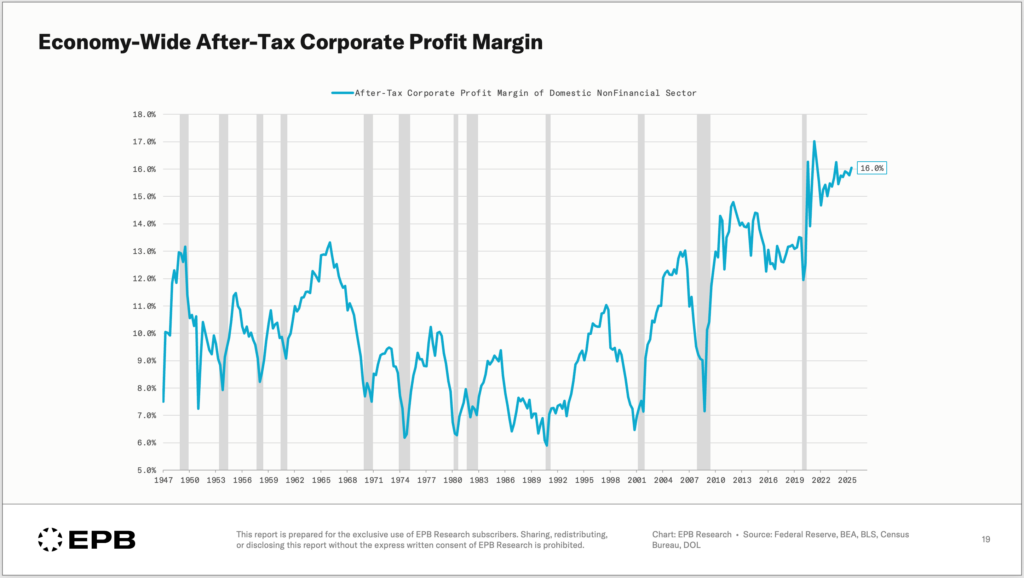
The problem is the nature of America’s decline. Since 1980 the US economy has been progressively financialized. Profits are all that matters, not what is done to make profits. In properly functioning markets the idea is that products fill a need, on net improve human welfare and lead to more growth of real products.

If a company doesn’t make a profit, that means it isn’t growing the real economy with products which are a net positive. In such a case it goes out of business.

This is approximately how the Chinese economy works. It’s how the US economy worked for much of its history. It’s how the British economy worked up till about 1890 or so.

It’s not how the US economy works.

You could say that the US economy is currently auto-catabolic. The more money that is made, the more the real economy is damaged. You see this most purely in Private Equity. They buy up companies, loot the company, load it up with the debt (including all the debt used to buy the company), then the company goes out of business. This is what happened ToysRUs, it is also, contrary to the current storyline, what happened to Blockbuster. The company was trying to pivot to online, but all profits were drained out by PE owners.

This happened to, literally, tens of of thousands of companies.

The sort of monopoly roll-ups which Matt Stoller so ably covers increase prices without increasing product quality. Health care price increases provide no utility (you can get a CT or MRI scan in China for under $100.) All of this damages the economy. Headline GDP goes up, but the actual strength of the economy decreases. I would estimate that fully half of US GDP is essentially “fake”, driven entirely by increased prices and fake profits. The US economy has been smaller than China’s, in real (not PPP adjusted, but “how much do we produce”) terms for at least ten years.

This process continues till there is no muscle left to consume.

The only possibility of the US avoiding the UK’s fate, despite being a continental power, is for the oligarchs to lose power and for there to be a huge compression of asset and service prices. This process will be extremely painful and is currently politically impossible, due to the control of the duopoly. Both parties are owned by oligarchs, the tech bros are rising and none of them have the least interest in creating a good economy when it’s so much more profitable to loot America.

Real innovation is moving to China and will increasingly do so. They are at least equal in pharma and will soon be ahead in biotech. Their markets prioritize increased production (which westerners complain about as “over-capacity.”) The Chinese government does not want high GDP numbers or high profits, they want increased human welfare and a more powerful state and country. So their markets are organized, well, as actually competitive markets, the most “free” in any major economy.

So Americans who are patting themselves on the back, figuring “well, how bad can it get? We’ll still be number 2” are underestimating how bad the economy is going to get. India is effectively a continental power too, and it punches way below its geographical weight.

This isn’t to say there is no hope for the US, but decline has a long way to go yet because reversing it requires the most powerful people in society to give up massive profits, and many of them, in the process, would lose their fortunes. Meanwhile many ordinary Americans are still doing “OK” if not great, and they don’t want radical (change from the roots) change either.

All of this is not a worse case scenario either, it’s the default—maybe even slightly optimistic. The worst case scenario involves some form of civil war, not like the War between the States, but low grade shit wafare that slowly drives a country into the dirt.

The bottom is not yet close.

This site is only viable due to reader donations. If you value it and can, please subscribe or donate.


Page 4 of 31

Powered by WordPress & Theme by Anders Norén